CAN I USE 6+ HDD'S SIMULTANEOUSLY

I don't intend to use it as a RAID device. I'm going to be flashing different firmware which allows JBOD on the card and then using it in conjunction with ZFS.

Aah okay.

But those acronyms will make the OP's head explode.

OP : This is more the kind of thing you want/need. It does cost a pretty penny though.

http://www.drobo.com/
 
Another thing that is often overlooked when putting a lot of harddrives into a PC is the 5V rail. I exceeded mine and had difficulties with my PC booting, random crashes, etc (that was on about 10 drives). I took 3 out and it ran perfectly until my power supply started dying and once again, issues with the 5V rail.
When I bought my replacement, I specifically looked at 5V rail Amperage when choosing a new one, but they don't vary much so you will likely need to run 2 - 3 PSUs for 20 drives.

Why would you need 2 - 3 PSUs? Just get one decent one.

According to this article you'll be looking at max 3.5W on the 5V rail, times that by 20 you have max load of 16A.

The PSU I have has a max rating of 20A on the 5V rail, mine is only a 650W. Looking at something higher and you're good.

What PSU did you get?
 
I would get a big drive. Move data over. Sell old drives.

Yep. Unless they're already big drives.

I just wish drives were as cheap as they were 2-3 years ago. I still remember picking up my 2TB drives for around R600 each. Now they are around R900.
 
Dump the hard drives in cases. They're like 200 each?

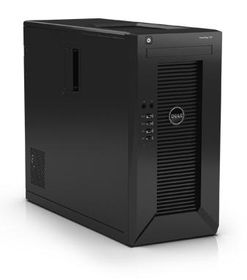
There's also this. I dont think you'll find a microserver now.

https://m.takealot.com/#product?id=PLID32845971

541bd0c314de2-xlpreview.jpg
 
I also couldn't find any places where you can get cases designed for storage servers.

On Amazon you can get this beast (http://www.amazon.com/NORCO-Mount-Hot-Swappable-Server-RPC-4020/dp/B001NO7THO) with 20 bays for $310 which is very reasonable. To ship anything like that over here would cost way too much.
You don't need a case designed for many HDD. I bought a case from frontosa. They have 5.25inch bay converters. Allows you to mount 4 hdd in the space of 3 5.25 inch slots (fan in front of the converter) so the 9x 5.25 inch case I have can support 12 hdd.
 
You don't need a case designed for many HDD. I bought a case from frontosa. They have 5.25inch bay converters. Allows you to mount 4 hdd in the space of 3 5.25 inch slots (fan in front of the converter) so the 9x 5.25 inch case I have can support 12 hdd.

Yes you can, my current m-ATX case can can hold 9, but cooling and cable mess become a big issue. I'm also looking for something that is rack mountable.
 
You don't need a case designed for many HDD. I bought a case from frontosa. They have 5.25inch bay converters. Allows you to mount 4 hdd in the space of 3 5.25 inch slots (fan in front of the converter) so the 9x 5.25 inch case I have can support 12 hdd.
You need a hudge surplus of PSU maximum current, unless you have staged powering option in BIOS, which I doubt.
 
My card has arrived :)

Cost me a bit more than I bargained for, last time I ordered a card (Fibre channel HBA) I didn't pay any customs charges, this time not so lucky. But it's here now and much cheaper than getting it locally.

20150611_114831.jpg
 
Any decent PSU should get the job done. As long as you have at least 20A on the 5V rail you should be good.
I think you need more. Insrush spinning up current can increase over the time due to developing internal friction. Old hard drives can exceed even 200% specs figure.
 
You need a hudge surplus of PSU maximum current, unless you have staged powering option in BIOS, which I doubt.

hmmm. why do you doubt my setup that you know nothing about? Anyway, I have a decent (2000kVA, single rail per voltage) PSU. Single rail is far better as you don't have to split your HDD's equally amongst the different rails.

Also unraid doesn't spin up all the drives. only the ones being accessed. I'm not sure if the BIOS does spin them all up at system boot, but I can't imagine why. seeing as the OS is installed on a flash drive.
 
I think you need more. Insrush spinning up current can increase over the time due to developing internal friction. Old hard drives can exceed even 200% specs figure.

Posted this article earlier: http://www.xbitlabs.com/articles/storage/display/2tb-7200rpm_18.html

The most power hungry drive required maximum around 1A on the 5V rail during start up. With 9 drives that's only 9A, so you should be good. On the 12V rail, you're looking at 2.5A max, times that by 9 and you're looking at just over 20A which most PSUs will have more than enough room for.
 
Posted this article earlier: http://www.xbitlabs.com/articles/storage/display/2tb-7200rpm_18.html

The most power hungry drive required maximum around 1A on the 5V rail during start up. With 9 drives that's only 9A, so you should be good. On the 12V rail, you're looking at 2.5A max, times that by 9 and you're looking at just over 20A which most PSUs will have more than enough room for.
How did you meassure maximum current? With ordinary multimeter? It takes average (or RMS - a better one) value, not a peak value. Power supply protection circuit will activate on a peak value.
 
How did you meassure maximum current? With ordinary multimeter? It takes average (or RMS - a better one) value, not a peak value. Power supply protection circuit will activate on a peak value.

I didn't measure anything. It's in the link I provided. They don't specifically state if it's peak, but I'm guessing so based on this other article (http://www.xbitlabs.com/articles/storage/display/1tb-hdd-roundup_7.html) for 1TB drives which does specify it is peak draw.


EDIT:

And here is a graph from (http://www.pcguide.com/ref/hdd/op/spinPower-c.html), which corroborates this:

z_seagate_12Vprofile.gif
 
I didn't measure anything. It's in the link I provided. They don't specifically state if it's peak, but I'm guessing so based on this other article (http://www.xbitlabs.com/articles/storage/display/1tb-hdd-roundup_7.html) for 1TB drives which does specify it is peak draw.


EDIT:

And here is a graph from (http://www.pcguide.com/ref/hdd/op/spinPower-c.html), which corroborates this:

z_seagate_12Vprofile.gif
Correct, now we are home. They talk about high speed meassuring and I am sure they do it right (ordinary multimeter is useless in such case), but on the startup graph the label is "Power consumption" which I understand it is average value. Power consumption is their concern, not a peak value. So I take 'peak value' from the other article with reservation, as they didn't make it clear, that they mix peak value with power consumption on the same graph.

The later graph brings results I did expected - around 5 times more inrush peak value. To this value you need to add 100% extra when hard drives get old (as per my previous post).
 
I'm a bit confused by the results I'm getting with my new card.

I'm seeing read and write speeds of 200MB/sec. I didn't think the disks could even write that fast. Run multiple tests now and checked live stats using iostat.

These are speeds I got while running 4 tests simultaneously to 4 separate disks.

All I can say is that I'm very happy with my purchase :D
 
Top
Sign up to the MyBroadband newsletter
X