


There are as much evidence against that theory, I believe. Mostly from the "meat is murder and milk is tape" crowd LOLWhen we look at the history of humans, it is very clear we are a carnivorous species. In this video we look at all the evidence as to how we know this and why it matters.
-
- News
-
Categories
- 5G
- ADSL
- AI
- Banking
- Black Friday
- Broadband
- Broadcasting
- Business
- Business Telecoms
- Cellular
- Cloud and Hosting
- Columns
- Cryptocurrency
- Energy
- Enterprise
- Fibre
- Gadgets
- Gaming
- Government
- Hardware
- Industry News
- Internet
- Internet of Things
- Investing
- IT Services
- Motoring
- Reviews
- Science
- Security
- Smartphones
- Software
- Technology
- Telecoms
- Trending
- Wireless
- Press Office
- Forum
- Industry News
- What's Next
- Company hub
- Speed Test
- About us
- Advertise with us
- Contact
- Careers
-
Join the MyBroadband community
South Africa’s biggest forum. Discuss, discover, and connect with thousands of members.
-
Question of the Day: Museums you've been to, would recommend, or want to go to?
You are using an out of date browser. It may not display this or other websites correctly.
You should upgrade or use an alternative browser.
You should upgrade or use an alternative browser.
Carnivore diet
- Thread starter BBSA
- Start date

BBSA
Honorary Master
- Joined
- Jul 11, 2005
- Messages
- 30,230
- Reaction score
- 28,806
- Location
- People's Republic of South Africa

Tim_vb
Expert Member
Any thoughts on one of the internet's preeminent carnifluencers being allegedly felled by a (self diagnosed) malfunctioning immune system triggered by exposure to members of the eukaryotic fungi kingdom. This mishap occurring despite the good doctor eschewing ingestion of any material derived from the plantae kingdom and exclusively ingestion material from highly cultivated animalia.

 www.independent.co.uk
Jordan Peterson ‘taking time off everything’ after mold exposure, daughter says
Mikhaila Peterson claims her father is experiencing a ‘severe’ flare-up of symptoms linked with chronic inflammatory response syndrome
www.independent.co.uk

Not sure what this has to do with carnivore. No diet makes you immune to all diseases.Any thoughts on one of the internet's preeminent carnifluencers being allegedly felled by a (self diagnosed) malfunctioning immune system triggered by exposure to members of the eukaryotic fungi kingdom. This mishap occurring despite the good doctor eschewing ingestion of any material derived from the plantae kingdom and exclusively ingestion material from highly cultivated animalia.
Jordan Peterson ‘taking time off everything’ after mold exposure, daughter says
Mikhaila Peterson claims her father is experiencing a ‘severe’ flare-up of symptoms linked with chronic inflammatory response syndrome
Tim_vb
Expert Member
Here I though cutting out kale and seed oils would make one immune to everything apart from a shot of apple ciderNot sure what this has to do with carnivore. No diet makes you immune to all diseases.
"Peterson’s battle with the concept of normality is embodied in everything down to his diet, which consists of just beef, water and salt. Following this regime, Peterson lost 50lbs (he claims) and told Joe Rogan it cured his gum disease, depression, snoring and eye floaters.
The diet was thought up by Peterson’s 28 year old daughter Mikhaila, who is not a qualified nutritionist, dietician, scientist or doctor. She has no medical qualifications at all, yet sells half-hour sessions on the all-meat diet for the buckshot price of $75 (£56).
Her food blog Don’t Eat That grandly proclaims 'many (if not most) health problems are treatable with diet alone', a statement that would nullify generations of scientific research had it not been plucked straight from the rear of a cow, which as a reminder is the only thing she and her father allow themselves to eat.
If his claim of finding a miracle diet wasn’t superfluous enough, Peterson says when he broke rank and drank apple cider he didn’t sleep for 25 days and had an 'overwhelming sense of impending doom.' Nutritionist Lisa Sasson told The Guardian ‘this is probably the worst diet I’ve ever heard’."

LCBXX
Honorary Master
People cut out refined carbs and seed oils, switching to carnivore and animal-fat-based diets.
People lose weight, feel better and are noticeably more healthy, taking further steps to improve their health through exercise and nutrition.
Others manage to wean off their SSRIs, Statins, and reverse their Type-2 diabetes.
Sleep, energy levels and focus all improve.
Haters: Here's why the carnivore diet is bad.
Dafuq?
People lose weight, feel better and are noticeably more healthy, taking further steps to improve their health through exercise and nutrition.
Others manage to wean off their SSRIs, Statins, and reverse their Type-2 diabetes.
Sleep, energy levels and focus all improve.
Haters: Here's why the carnivore diet is bad.
Dafuq?
BBSA
Honorary Master
- Joined
- Jul 11, 2005
- Messages
- 30,230
- Reaction score
- 28,806
- Location
- People's Republic of South Africa
Is carnivore wrecking your health? What do these two doctors say the impact of carnivore is?
BBSA
Honorary Master
- Joined
- Jul 11, 2005
- Messages
- 30,230
- Reaction score
- 28,806
- Location
- People's Republic of South Africa
In this video is a break down everything cholesterol related in regards to the carnivore diet.
BBSA
Honorary Master
- Joined
- Jul 11, 2005
- Messages
- 30,230
- Reaction score
- 28,806
- Location
- People's Republic of South Africa
Is the carnivore diet safe long-term? In this exclusive interview, I sit down with Dr. Eric Berg to bust some of the biggest carnivore diet myths and dive deep into the truth about eating only meat. From heart health to gut health, scurvy, fiber, and even the controversial MAHA movement.

HAL 9000
Honorary Master
- Joined
- May 27, 2008
- Messages
- 22,567
- Reaction score
- 26,327

1860s Civil War: Union Army physician Dr. James Salisbury is treating soldiers who aren't dying from bullets. They're dying from disease - dysentery, typhoid fever, chronic diarrhea. The military diet is hardtack biscuits, beans, coffee, minimal meat.
Salisbury notices something peculiar. Soldiers who get access to fresh beef - usually officers or those near supply depots - recover from illness faster than soldiers on standard rations. Wounds heal quicker. Energy returns sooner. Digestive issues resolve.
He starts an experiment. Takes soldiers with chronic digestive problems and prescribes pure beef. Three times daily. Minced fine, lightly cooked, consumed with hot water. Nothing else. No hardtack, no beans, no vegetables.
The results are dramatic. Within days, diarrhea stops. Within weeks, soldiers gain weight and strength. Chronic cases that weren't responding to any other treatment suddenly recover.
After the war, Salisbury continues researching. He develops a theory: Most chronic diseases stem from fermentation in the digestive tract caused by eating plant material, especially starches. The bacteria fermenting these foods produce toxins that cause systemic illness.
His solution is simple: Remove the fermentable material. Feed patients pure beef. The digestive tract heals, bacterial overgrowth stops, health returns. He treats patients for 30 years using this protocol. His patient records document successful treatment of tuberculosis, rheumatism, mental disorders, chronic digestive diseases, obesity, gout, anemia, and various other conditions.
The prescription is always the same: Minced beef, cooked lightly, three times daily, consumed with hot water to aid digestion. Continue for weeks or months depending on severity. Avoid all plant foods during treatment.
1888: He publishes "The Relation of Alimentation and Disease" documenting his findings. The medical community takes interest. "Salisbury steak" becomes named after him - originally a therapeutic food, not a convenience meal.
His work gains followers. Some physicians adopt his methods with their own patients and report similar success rates. For a brief period, the all-beef diet is considered legitimate medical treatment.
Then the pharmaceutical industry develops. Antibiotics, new drugs, profitable treatments for the same conditions Salisbury was treating with diet. Medicine shifts from dietary intervention to pharmaceutical management.
By the 1920s, Salisbury's work is largely forgotten. The name "Salisbury steak" remains but divorced from its medical origins. What was once prescribed as medicine becomes school cafeteria food with gravy.
Modern medicine doesn't teach about Salisbury. His clinical records show successful dietary treatment of diseases we now manage with expensive drugs. That's inconvenient for an industry built on ongoing pharmaceutical sales.He treated thousands of patients over 40 years using only dietary intervention. No drugs, no surgery, just removing plant foods and feeding pure beef.
His success rate was documented and published in medical journals. His cure couldn't be patented. So it was memory-holed and replaced with treatments that generate revenue.
BBSA
Honorary Master
- Joined
- Jul 11, 2005
- Messages
- 30,230
- Reaction score
- 28,806
- Location
- People's Republic of South Africa
The Carb-Loading Myth Is Crumbling
High-Fat or High-Carb? These Twins Tested Both for 12 Weeks – Here’s What Worked Best
For adventurers Ross and Hugo Turner, being twins makes them the perfect extreme eating guinea pigs. Their latest experiment? Three months of high-fat versus high-carb dietingwww.menshealth.com
Twins High Fat Vs High Carb diet.
Tim_vb
Expert Member
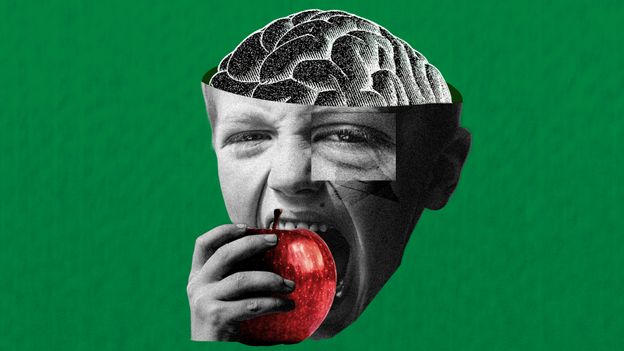
Brain bran: The protective effect that fibre has on cognition
Eating fibre can improve health, lengthen lifespans, and even protect our brains. Yet many of us are still coming up short on this "essential nutrient".
 www.bbc.com
Emerging research shows fibre supercharges the microbiome and influences the gut-brain axis, which is the communication channel that runs between the gut and the brain; slowing down symptoms of cognitive decline.
Increasing fibre intake is one of the most impactful dietary changes for cognitive health, says Karen Scott, professor of gut microbiology at the Rowett Institute, University of Aberdeen. Alternatively, a fibre deficit has been found to be a leading dietary risk factor for ill health.
....
A review which Cummings co-authored found that those who ate the most fibre showed a 15-30% reduced risk of mortality compared to those who ate the least. Sufficient fibre consumption, which the researchers say is about 30g per day, lowers the risk of coronary heart disease, stroke, type 2 diabetes and colon cancer – and translates as 13 fewer deaths per 1,000 people.
BBSA
Honorary Master
- Joined
- Jul 11, 2005
- Messages
- 30,230
- Reaction score
- 28,806
- Location
- People's Republic of South Africa
Fibre might help people whose diets include lots of processed food, but there’s no requirement for fibre in human nutrition, and many people experience better digestion and cognition without it.Brain bran: The protective effect that fibre has on cognition
Eating fibre can improve health, lengthen lifespans, and even protect our brains. Yet many of us are still coming up short on this "essential nutrient".
Emerging research shows fibre supercharges the microbiome and influences the gut-brain axis, which is the communication channel that runs between the gut and the brain; slowing down symptoms of cognitive decline.
Increasing fibre intake is one of the most impactful dietary changes for cognitive health, says Karen Scott, professor of gut microbiology at the Rowett Institute, University of Aberdeen. Alternatively, a fibre deficit has been found to be a leading dietary risk factor for ill health.
....
A review which Cummings co-authored found that those who ate the most fibre showed a 15-30% reduced risk of mortality compared to those who ate the least. Sufficient fibre consumption, which the researchers say is about 30g per day, lowers the risk of coronary heart disease, stroke, type 2 diabetes and colon cancer – and translates as 13 fewer deaths per 1,000 people.
Tim_vb
Expert Member
Fibre seems to be useful thoughFibre might help people whose diets include lots of processed food, but there’s no requirement for fibre in human nutrition, and many people experience better digestion and cognition without it.
That's why the gut microbiota can improve cognition. "The more fibre you eat, the more butyrate is produced, then the better your cognition can be retained."
A 2022 study involving over 3,700 adults found that high dietary fibre intake was linked to a lower risk of dementia among individuals who had the highest fibre intake. Those who ate the least showed an increased risk. Similarly, another study among adults over 60 for instance, found that those who had diets higher in dietary fibre showed increased cognitive function.
While the above findings were correlations, a more recent randomised control trial of twin pairs also identified a causal impact on fibre and cognition. Those who consumed a daily prebiotic fibre supplement showed improved results in cognitive tests in three months compared to those who had a placebo. Prebiotics are simple fibres that benefit bacteria in the gut and can be consumed as supplements. Analysis of stool samples revealed that the fibre supplement changed the participants' gut microbiome, with increased levels of beneficial bacteria, such as Bifidobacterium.

NarrowBandFtw
Honorary Master
vitamin B12 blood test came back slightly below par
doctor told me to eat more meat
best prescription EVER!
doctor told me to eat more meat
best prescription EVER!
BBSA
Honorary Master
- Joined
- Jul 11, 2005
- Messages
- 30,230
- Reaction score
- 28,806
- Location
- People's Republic of South Africa
Yes, probably for someone on a high-carb diet as fiber stabilizes blood sugar. But blood sugar control is not a concern for someone who consumes almost no carbs.Fibre seems to be useful though
That's why the gut microbiota can improve cognition. "The more fibre you eat, the more butyrate is produced, then the better your cognition can be retained."
A 2022 study involving over 3,700 adults found that high dietary fibre intake was linked to a lower risk of dementia among individuals who had the highest fibre intake. Those who ate the least showed an increased risk. Similarly, another study among adults over 60 for instance, found that those who had diets higher in dietary fibre showed increased cognitive function.
While the above findings were correlations, a more recent randomised control trial of twin pairs also identified a causal impact on fibre and cognition. Those who consumed a daily prebiotic fibre supplement showed improved results in cognitive tests in three months compared to those who had a placebo. Prebiotics are simple fibres that benefit bacteria in the gut and can be consumed as supplements. Analysis of stool samples revealed that the fibre supplement changed the participants' gut microbiome, with increased levels of beneficial bacteria, such as Bifidobacterium.
BBSA
Honorary Master
- Joined
- Jul 11, 2005
- Messages
- 30,230
- Reaction score
- 28,806
- Location
- People's Republic of South Africa
You have a good doctor, Narrow.vitamin B12 blood test came back slightly below par
doctor told me to eat more meat
best prescription EVER!
wingnut771
Honorary Master
Stick to beef and lamb.You have a good doctor, Narrow.
BBSA
Honorary Master
- Joined
- Jul 11, 2005
- Messages
- 30,230
- Reaction score
- 28,806
- Location
- People's Republic of South Africa
wingnut771
Honorary Master
There’s only one problem with rib eye at the moment:
