


I think they've done this before if I remember correctly. Years ago.How can you have tyres that don't lose performance while mandating multiple tyre compounds? You'll end up with all teams running the fastest tyre for the whole race except for a single lap done on each of the slow compounds to satisfy the rules.
-
- News
-
Categories
- 5G
- ADSL
- AI
- Banking
- Black Friday
- Broadband
- Broadcasting
- Business
- Business Telecoms
- Cellular
- Cloud and Hosting
- Columns
- Cryptocurrency
- Energy
- Enterprise
- Fibre
- Gadgets
- Gaming
- Government
- Hardware
- Industry News
- Internet
- Internet of Things
- Investing
- IT Services
- Motoring
- Reviews
- Science
- Security
- Smartphones
- Software
- Technology
- Telecoms
- Trending
- Wireless
- Press Office
- Forum
- Industry News
- What's Next
- Company hub
- Speed Test
- About us
- Advertise with us
- Contact
- Careers
-
Join the MyBroadband community
South Africa’s biggest forum. Discuss, discover, and connect with thousands of members.
-
Question of the Day: How much would you be willing to pay for a next-generation gaming console?
You are using an out of date browser. It may not display this or other websites correctly.
You should upgrade or use an alternative browser.
You should upgrade or use an alternative browser.
F1 2022
- Thread starter Hamster
- Start date
- Status
- Not open for further replies.
That stuff was lit SOMETIMESYea, that stuff was lit.

I remember a number of hot pitstops!
How can you have tyres that don't lose performance while mandating multiple tyre compounds? You'll end up with all teams running the fastest tyre for the whole race except for a single lap done on each of the slow compounds to satisfy the rules.
The point is that tyres should be able to follow another car for longer. For example make them perform better at higher temperatures which would encourage close following. Suddenly F1 cars want to be close to the car in front of them.

RedDevil7108
Senior Member
- Joined
- Jul 21, 2020
- Messages
- 713
- Reaction score
- 599


Jean Claude Vaaldamme
Honorary Master
- Joined
- Jan 18, 2020
- Messages
- 10,787
- Reaction score
- 11,712
Sir PimpAlot ii

Naks
Honorary Master
- Joined
- Jun 3, 2009
- Messages
- 10,138
- Reaction score
- 6,108
Red Bull has fix in place for Bahrain F1 fuel system problem: https://www.autosport.com/f1/news/r...e-for-bahrain-f1-fuel-system-problem/9277130/
"... While some of F1’s fuel pump components that teams run in 2022 are defined by the FIA as standard parts, it is understood that what went wrong was not related to these items.
Although no further details have been forthcoming about what exactly went wrong inside the Red Bull fuel system, it is understood that the team is satisfied it has got to the bottom of the problem and has put in place fixes to prevent a repeat from this weekend’s Saudi Arabian GP.
The late nature of the Verstappen and Perez retirement prompted some wild theories that the drivers had simply run of fuel, amid suggestions that Red Bull may have been tempted to under-fill in a bid to keep car weight down.
However, team insiders are adamant that this is not the case.
Furthermore, the fact that Verstappen stopped a number of laps before the end, plus after a safety car period when drivers often save fuel, makes it highly unlikely that the problem could have come from not having enough fuel on board.
Instead the problem that hit both cars is far more likely related to the way that the fuel system failed to pick up the final few litres of petrol in the tank. ..."
"... While some of F1’s fuel pump components that teams run in 2022 are defined by the FIA as standard parts, it is understood that what went wrong was not related to these items.
Although no further details have been forthcoming about what exactly went wrong inside the Red Bull fuel system, it is understood that the team is satisfied it has got to the bottom of the problem and has put in place fixes to prevent a repeat from this weekend’s Saudi Arabian GP.
The late nature of the Verstappen and Perez retirement prompted some wild theories that the drivers had simply run of fuel, amid suggestions that Red Bull may have been tempted to under-fill in a bid to keep car weight down.
However, team insiders are adamant that this is not the case.
Furthermore, the fact that Verstappen stopped a number of laps before the end, plus after a safety car period when drivers often save fuel, makes it highly unlikely that the problem could have come from not having enough fuel on board.
Instead the problem that hit both cars is far more likely related to the way that the fuel system failed to pick up the final few litres of petrol in the tank. ..."
Naks
Honorary Master
- Joined
- Jun 3, 2009
- Messages
- 10,138
- Reaction score
- 6,108
Gary Anderson: Mercedes' F1 engine defence doesn't add up: https://the-race.com/formula-1/gary-anderson-mercedes-engine-defence-doesnt-add-up/
"... We have caught sight of the lower-drag Mercedes rear wing in Jeddah already ahead of this weekend’s Saudi Arabian Grand Prix. A lower-drag wing is what you would expect for a faster track. But I’m surprised about how Mercedes has gone about it.
It appears Mercedes has taken the Gurney flap off, which will make the rear unstable and with that make braking a bit more of an experience.
What I don’t understand is why you would trim down the trailing edge? Yes, it will reduce drag but with quite a dramatic effect on the load the rear tyres feel. Basically, you are more or less moving the rear wing forward when you have spent your life maximising the leverage.
I really find it difficult to believe that for a top team either of these is the best solution for their top-speed problems from Bahrain. It’s too big a coincidence for all of Mercedes’ power unit users to struggle with straightline speed just because they ran too high a rear wing level, especially with such visually different car concepts. Personally, I still suspect Mercedes has not got the best from its new power unit just yet.
Exactly why is unclear, but remember Mercedes has talked about the changes this year being the biggest of the 1.6-litre V6 turbo hybrid era thanks to the switch to containing 10% E10 renewable ethanol. So perhaps this has created some problems for it?
Meanwhile, Red Bull with the assistance of Honda has mastered it while Ferrari has stated it has recovered the losses from the switch to E10.
It wouldn’t be a surprise if we saw some playing to the regulations this year when it comes to engines too.
Remember, you can modify components that are already homologated on reliability grounds. Could we see any manufacturers just running the engine turned down a bit in preparation for a failure later in the mileage life cycle when it is finally turned up?
That way, it gives more time to come up with a performance improvement that’s labelled as a reliability change. These engines, once signed off, are theoretically with us until the end of 2025. ..."
"... We have caught sight of the lower-drag Mercedes rear wing in Jeddah already ahead of this weekend’s Saudi Arabian Grand Prix. A lower-drag wing is what you would expect for a faster track. But I’m surprised about how Mercedes has gone about it.
It appears Mercedes has taken the Gurney flap off, which will make the rear unstable and with that make braking a bit more of an experience.
What I don’t understand is why you would trim down the trailing edge? Yes, it will reduce drag but with quite a dramatic effect on the load the rear tyres feel. Basically, you are more or less moving the rear wing forward when you have spent your life maximising the leverage.
I really find it difficult to believe that for a top team either of these is the best solution for their top-speed problems from Bahrain. It’s too big a coincidence for all of Mercedes’ power unit users to struggle with straightline speed just because they ran too high a rear wing level, especially with such visually different car concepts. Personally, I still suspect Mercedes has not got the best from its new power unit just yet.
Exactly why is unclear, but remember Mercedes has talked about the changes this year being the biggest of the 1.6-litre V6 turbo hybrid era thanks to the switch to containing 10% E10 renewable ethanol. So perhaps this has created some problems for it?
Meanwhile, Red Bull with the assistance of Honda has mastered it while Ferrari has stated it has recovered the losses from the switch to E10.
It wouldn’t be a surprise if we saw some playing to the regulations this year when it comes to engines too.
Remember, you can modify components that are already homologated on reliability grounds. Could we see any manufacturers just running the engine turned down a bit in preparation for a failure later in the mileage life cycle when it is finally turned up?
That way, it gives more time to come up with a performance improvement that’s labelled as a reliability change. These engines, once signed off, are theoretically with us until the end of 2025. ..."
Naks
Honorary Master
- Joined
- Jun 3, 2009
- Messages
- 10,138
- Reaction score
- 6,108
Verstappen will receive first upgrades from Red Bull this weekend: https://racingnews365.nl/verstappen...-van-red-bull-tijdens-gp-saoedie-arabie#close
"... The first change was spotted in the pit lane in Jeddah by RacingNews365 technical analyst Paolo Filisetti. The RB18 has a different nose. The nose cone has been modified to include a modified version of the front air intake.
The 'naked' nose of the Red Bull was not yet painted in the team colors at that time. It was clear to see that the top profile appears flatter and less rounded than before.
Linked to this nose is a modified front wing, with a lower angle of the horizontal wing elements that are also narrower than before.
On Friday, Red Bull will make a direct comparison of air resistance between a car with a low downforce rear wing, used for the first time this weekend, against the rear wing used in Bahrain during free practice on Friday.
It is currently unknown whether the upgrades are only intended for Verstappen, or whether Sergio Perez will also have access to the new parts. ..."

"... The first change was spotted in the pit lane in Jeddah by RacingNews365 technical analyst Paolo Filisetti. The RB18 has a different nose. The nose cone has been modified to include a modified version of the front air intake.
The 'naked' nose of the Red Bull was not yet painted in the team colors at that time. It was clear to see that the top profile appears flatter and less rounded than before.
Linked to this nose is a modified front wing, with a lower angle of the horizontal wing elements that are also narrower than before.
On Friday, Red Bull will make a direct comparison of air resistance between a car with a low downforce rear wing, used for the first time this weekend, against the rear wing used in Bahrain during free practice on Friday.
It is currently unknown whether the upgrades are only intended for Verstappen, or whether Sergio Perez will also have access to the new parts. ..."

Craig_
Honorary Master
- Joined
- Feb 22, 2016
- Messages
- 31,195
- Reaction score
- 30,186
@Icemanbrfc prepare to be shocked....
Driver #2 in Ferrari this weekend instead of Sainz:
View attachment 1276908
That would be a fck up, he shoudl rather stick to the merc, they'll eventually overcome their issues, hopefully fast enough to still be in contention for the championships.

Vettel won't be able to drive in Jeddah, still no negative Covid Test (German News)
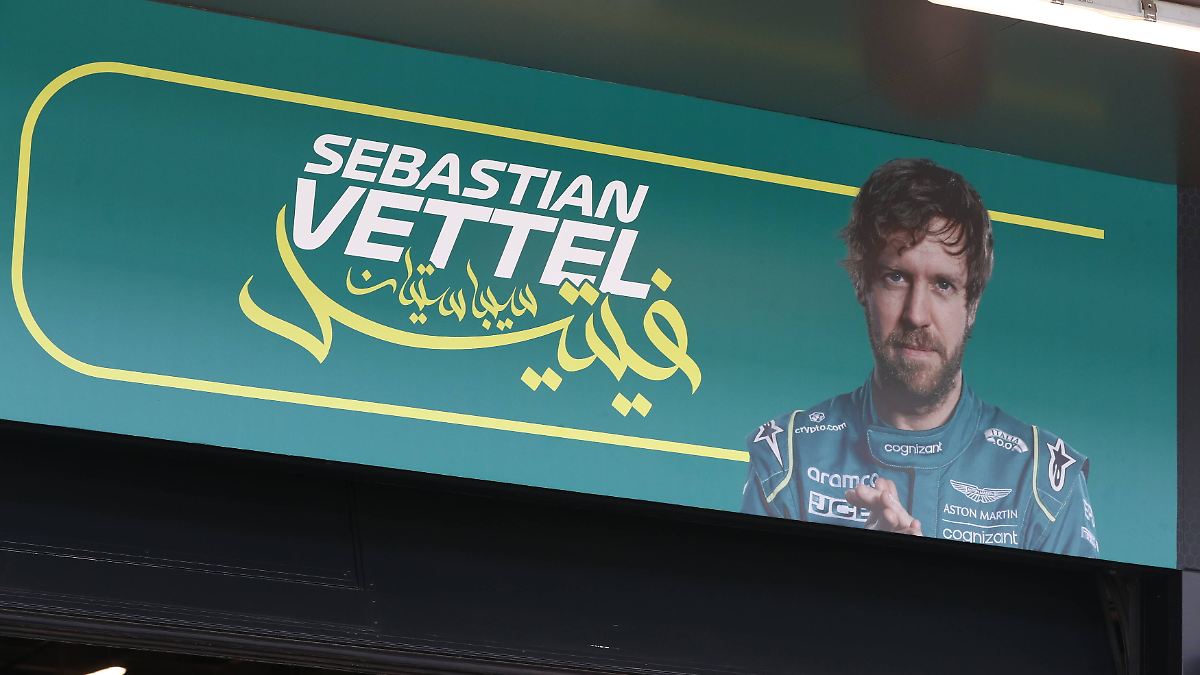
 www.n-tv.de


Sebastian Vettel darf nicht in Saudi-Arabien fahren
Für Sebastian Vettel könnte der Start in die neue Formel-1-Saison nicht schlechter laufen. Der Aston-Martin-Pilot fehlt nach ntv-Informationen infolge seiner Corona-Infektion auch beim zweiten Rennen. In Saudi-Arabien vertritt erneut Nico Hülkenberg den vierfachen Weltmeister.
Last edited:

Defonotaltaccount
Expert Member
- Joined
- Oct 13, 2016
- Messages
- 4,180
- Reaction score
- 1,497
Defonotaltaccount
Expert Member
- Joined
- Oct 13, 2016
- Messages
- 4,180
- Reaction score
- 1,497

medicnick83
Paramedic
Streaming FP1 on Babbelbekkie for those interested.
MuterOfWorlds
Expert Member
- Joined
- Feb 6, 2020
- Messages
- 1,299
- Reaction score
- 1,196
Huh?Streaming FP1 on Babbelbekkie for those interested.
Sry, am one of the uninitiated.
Naks
Honorary Master
- Joined
- Jun 3, 2009
- Messages
- 10,138
- Reaction score
- 6,108
Anyone here with a Roku and managed to get the F1TV app to install?
medicnick83
Paramedic
I made a boo boo earlier (sorry, busy day at work)
FP1 is now streaming on my discord server for those interested.

 discord.gg
FP1 is now streaming on my discord server for those interested.
Join the Babbelbekkie Discord Server!
A proudly South African gaming server where we really want the members to become more than just members, they must become FRIENDS! We care about each other. | 709 members

*sigh*@Icemanbrfc prepare to be shocked....
Driver #2 in Ferrari this weekend instead of Sainz:
View attachment 1276908
Does he have to try so hard to be different? He's already won 7 WDCs.

Dave
Honorary Master
*sigh*
Does he have to try so hard to be different? He's already won 7 WDCs.
What do his clothes have to do with his WDC's?
- Status
- Not open for further replies.