F1 2026

Uh oh... I see another Paris Hilton sex video on the horizon starring F1 Champion Lando Norris in the driver's seat.

While they're doing it Lando will have to abide by the 2026 regulations, so he'll tell Paris, ooh baby, just hang on a bit while I charge my battery, I need to harvest some energy first... and not long now baby I'll be speeding up soon with some boost... and babes I'll have to make a few pit stops along the way for some new rubber... etc. 😜

Well, and here I thought there couldn't be anything worse than a possible kadashin sex tape, and you now topped that.
 
Uh oh... I see another Paris Hilton sex video on the horizon starring F1 Champion Lando Norris in the driver's seat.

While they're doing it Lando will have to abide by the 2026 regulations, so he'll tell Paris, ooh baby, just hang on a bit while I charge my battery, I need to harvest some energy first... and not long now baby I'll be speeding up soon with some boost... and babes I'll have to make a few pit stops along the way for some new rubber... etc. 😜

Will give new meaning to the phrase, "Box box. Box box"
 

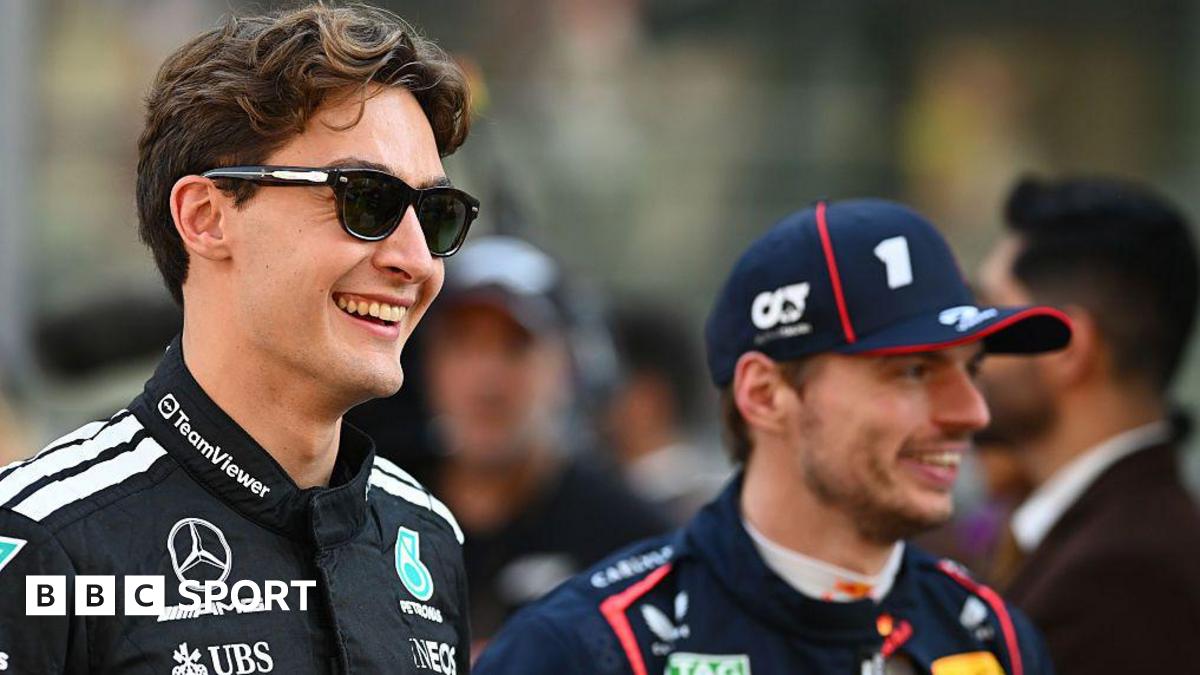
George Russell says Formula 1 "would not want to lose" Max Verstappen - but he would "understand" if the four-time world champion decided to leave the sport this year.

Verstappen said at the Japanese Grand Prix that he was considering his future in F1 because of his dissatisfaction with how the cars behave under new rules introduced this year.

Russell, who has had a difficult relationship with Verstappen in the past, said: "Formula 1 is bigger than any driver, so you wouldn't want to lose Max, because I think we all enjoy racing against Max."
 

"Ferrari’s V6 is estimated to be around 30 hp down on Mercedes, putting it more than 4% behind and firmly in ADUO territory. But those concessions are not guaranteed to stay.

If Ferrari’s updated engine cuts the gap to around 10 hp by July, the FIA could reduce its extra upgrades, bonus dyno hours, or other ADUO advantages."

HGLt-c-WQAAsP2L
 
1776703105051.png
  • Adjustments to energy management parameters, including a reduction in maximum permitted recharge from 8MJ to 7MJ, aimed at reducing excessive harvesting and encouraging more consistent flat-out driving. This change targets a maximum superclip duration reduced to approximately two to four seconds per lap.
  • Peak superclip power increased to 350 kW, previously being 250 kW, further reducing the time spent recharging, and reducing driver workload on energy management. This will also be applied in race conditions.
  • The number of events where alternative lower energy limits may apply has been increased from eight to 12 races, allowing greater adaptation to circuit characteristics.
  • The maximum power available through the Boost in race conditions is now capped at +150 kW (or the car’s current power level at activation if higher) limiting sudden performance differentials.
  • MGU-K deployment is maintained at 350 kW in key acceleration zones (from corner exit to braking point, including overtaking zones) but will be limited to 250 kW in other parts of the lap.
  • These measures are designed to reduce excessive closing speeds while maintaining overtaking opportunities and overall performance characteristics.
  • A new ‘low power start detection’ system has been developed, capable of identifying cars with abnormally low acceleration shortly after clutch release.
  • In such cases, an automatic MGU-K deployment will be triggered to ensure a minimum level of acceleration and mitigate start-related risks without introducing any sporting advantage.
  • An associated visual warning system is being introduced, activating flashing lights (rear and lateral) on affected cars to alert following drivers.
  • A reset of the energy counter at the start of the formation lap has also been implemented to correct a previously identified system inconsistency.
  • Tyre blanket temperatures for intermediate tyres have been increased following driver feedback in order to improve initial grip and tyre performance in wet conditions.
  • Maximum ERS deployment will be reduced, limiting torque and improving car control in low-grip conditions.
  • The rear light systems have been simplified, with clearer and more consistent visual cues to improve visibility and reaction time for following drivers in poor conditions.
These final proposals will now be put before an FIA World Motor Sport Council e-vote before their planned implementation.
 

"In addition to a practically brand-new car, Ferrari will shed weight in Miami

👉Specifically, they'll lose around 1/10 of their weight. Therefore, the SF-26 will weigh below the minimum

👉 A new floor, a COMPLETELY NEW front wing, a Macarena rear wing, the deflectors on the halo (this time in carbon fiber), and more will arrive"
 
View attachment 1902280
  • Adjustments to energy management parameters, including a reduction in maximum permitted recharge from 8MJ to 7MJ, aimed at reducing excessive harvesting and encouraging more consistent flat-out driving. This change targets a maximum superclip duration reduced to approximately two to four seconds per lap.
  • Peak superclip power increased to 350 kW, previously being 250 kW, further reducing the time spent recharging, and reducing driver workload on energy management. This will also be applied in race conditions.
  • The number of events where alternative lower energy limits may apply has been increased from eight to 12 races, allowing greater adaptation to circuit characteristics.
  • The maximum power available through the Boost in race conditions is now capped at +150 kW (or the car’s current power level at activation if higher) limiting sudden performance differentials.
  • MGU-K deployment is maintained at 350 kW in key acceleration zones (from corner exit to braking point, including overtaking zones) but will be limited to 250 kW in other parts of the lap.
  • These measures are designed to reduce excessive closing speeds while maintaining overtaking opportunities and overall performance characteristics.
  • A new ‘low power start detection’ system has been developed, capable of identifying cars with abnormally low acceleration shortly after clutch release.
  • In such cases, an automatic MGU-K deployment will be triggered to ensure a minimum level of acceleration and mitigate start-related risks without introducing any sporting advantage.
  • An associated visual warning system is being introduced, activating flashing lights (rear and lateral) on affected cars to alert following drivers.
  • A reset of the energy counter at the start of the formation lap has also been implemented to correct a previously identified system inconsistency.
  • Tyre blanket temperatures for intermediate tyres have been increased following driver feedback in order to improve initial grip and tyre performance in wet conditions.
  • Maximum ERS deployment will be reduced, limiting torque and improving car control in low-grip conditions.
  • The rear light systems have been simplified, with clearer and more consistent visual cues to improve visibility and reaction time for following drivers in poor conditions.
These final proposals will now be put before an FIA World Motor Sport Council e-vote before their planned implementation.

When you have to fix something that wasn't broken.
 
Top
Sign up to the MyBroadband newsletter
X