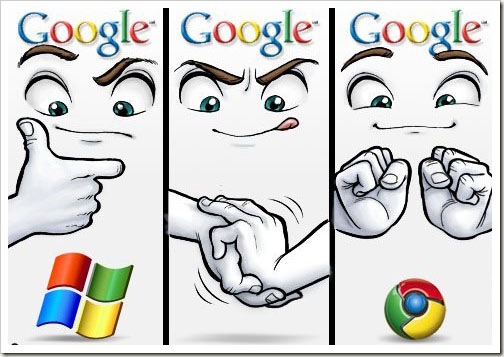
Google drops Chrome support for H.264

hmmm,
this is a bit of a quandary.
I create a lot of h.264 content both for online and offline. it is my go-to codec, however I know that it will not last forever (here will always be something better).
This replacement WebM that Google proposes is apparently a lower quality (it will improve over time if it is adopted, I am sure) but I do not want to pay for H.264 content generation for the web, especially if I am not going to get paid for the content.

When I do get paid then the licensing fees will be included in the price for the content - so in the end it will be the client that will foot the bill for licensing.

ever heard of x264Encoder? I wonder if that would fall under the h.264 licensing sytem.

Phillip
http://synapticlight.com/
 
The only company that's winning in these format wars is Adobe.

Flash is the go-to media player of the web at the moment and judging by this story, it'll still be for a while to come.
 
Pretty sad. I wish MPEG-LA would relinquish their greed and see the bigger picture. h.264 was created by humans for humans - it belongs to humanity, not a consortium of greedy corporations!
 
hmmm,
this is a bit of a quandary.
I create a lot of h.264 content both for online and offline. it is my go-to codec, however I know that it will not last forever (here will always be something better).
This replacement WebM that Google proposes is apparently a lower quality (it will improve over time if it is adopted, I am sure) but I do not want to pay for H.264 content generation for the web, especially if I am not going to get paid for the content.

When I do get paid then the licensing fees will be included in the price for the content - so in the end it will be the client that will foot the bill for licensing.

ever heard of x264Encoder? I wonder if that would fall under the h.264 licensing sytem.

Phillip
http://synapticlight.com/

It uses the H.264 patents. Therefore, yes, you do need to pay the MPEG LA for the encoder.
 
There's 2 sides to every story - I see this as a play from Google to try and push Chrome adoption. The people who made the (inferior) VP8 codec didn't do it for the joy of humanity, they made a bootload of money when Google bought them out. And Google isn't giving it away out of charity, it's a cheap way to win browser market share.

R&D is expensive, and from what I read it costs $0.20 to license a h264 encoder, which means those people who want to make commercial h264 video (be it from a camera, video editing software, etc) will have a massive $0.20 added to the price of their hardware/software package. Is it really that big of a deal? For the end users, it's business as usual - decoding is free.

There's an interesting article here http://x264dev.multimedia.cx/archives/377 that Google (who knows nothing about codec making) has finalised the spec in a bad state, so it'll never reach h264 levels of quality in its current form, and is reluctant to change it. And it seems that VP8 is based on questionable work anyway, and Google might not be able to uphold their "patent free forever" promise due to circumstances under their control.

Whenever I see Google doing something these days, I often question their motives, because their "do no evil" mantra is tired and so obviously just lip service. As a consumer, I just want to use the best tech. The companies all love making patents, let them sort out all those $0.20 between them, don't bother me with the details, and just let me have the good stuff!

Edit: Why is Google being dickish about it anyway? This is only going to hurt end users. Why not go the route MS is going with IE9, and use ANY CODEC that's on the PC. A great solution would be a "you don't have the right codec. Click here to get it" in the video window. Billions of people have accepted this as a solution for Flash video, why not HTML5 video?
 
Last edited:
There's 2 sides to every story - I see this as a play from Google to try and push Chrome adoption. The people who made the (inferior) VP8 codec didn't do it for the joy of humanity, they made a bootload of money when Google bought them out. And Google isn't giving it away out of charity, it's a cheap way to win browser market share.
I doubt that. If they just wanted to push Chrome adoption, they'd incorporate every codec available, and cough up the cash to make it so.


a massive $0.20 added to the price of their hardware/software package. Is it really that big of a deal?
The principle of it is a big deal. Do you really want the world depending on a technology owned and controlled by a corporate consortium with the legal legs to change, restrict, or charge whatever they like in future?

There's an interesting article here http://x264dev.multimedia.cx/archives/377 that Google (who knows nothing about codec making) has finalised the spec in a bad state, so it'll never reach h264 levels of quality in its current form, and is reluctant to change it. And it seems that VP8 is based on questionable work anyway, and Google might not be able to uphold their "patent free forever" promise due to circumstances under their control.
Alternative codecs will always be restricted in quality if their aim is to be patent free. There are only so many methods of achieving efficient video compression, and if those methods are patented, humanity is going to be stuck with those patents, or something inferior. The patent freeness of VP8 has yet to be challenged in court. Ultimately we should be urging the relinquishment of patents, not squabbling over Google's actions.
 
This replacement WebM that Google proposes is apparently a lower quality
WebM is the container format & audio & video, VP8 is the video codec.

You'd have to look really hard to see a difference. Even in side by side comparisons its difficult to see a difference in most cases. That article is like 6 months old...they've been improving it constantly during that time.

Besides the convenience of an open source browser supporting HTML5 + open source video out of the box is worth some sacrifices.

It uses the H.264 patents. Therefore, yes, you do need to pay the MPEG LA for the encoder.
If you're only using to create free content then you can use h264 royalty free.
 
Last edited:
I doubt that. If they just wanted to push Chrome adoption, they'd incorporate every codec available, and cough up the cash to make it so.

I disagree. Remember Google owns the biggest video site in the world. I reckon their long-game is to move Youtube to VP8, then put up big banners everywhere "Hey, this would look better with Chrome!" - they've done this on a number of their sites when you visit with other browsers, it's their standard strategy.

The principle of it is a big deal. Do you really want the world depending on a technology owned and controlled by a corporate consortium with the legal legs to change, restrict, or charge whatever they like in future?

I don't really mind a consortium controlling standards, and they have every right to make money from the massive amounts of R&D they put in. Obviously free and open would be better, but the biggest internet company in the world trying to force an inferior standard on me... I'll take the consortium for now, until a better offer comes along, thank you. This free (for now) and open (for now) offering from Google isn't one I'd want to use.

Alternative codecs will always be restricted in quality if their aim is to be patent free. There are only so many methods of achieving efficient video compression, and if those methods are patented, humanity is going to be stuck with those patents, or something inferior. The patent freeness of VP8 has yet to be challenged in court. Ultimately we should be urging the relinquishment of patents, not squabbling over Google's actions.

It's clear you agree that expensive R&D is the way that all this cool tech gets made - that comes with the handicap of patenting. Even though there are "only so many methods of achieving efficient video compression", these clever people who get paid to do so keep coming up with them! I agree 100% that patents suck, but this article is about Google, and this is the wrong move from them. They should embrace everything and let the market decide what they want to use, not try and strong-arm everyone into using their product.
 
The only company that's winning in these format wars is Adobe.

Flash is the go-to media player of the web at the moment and judging by this story, it'll still be for a while to come.
+1
So if Adobe would include support for VP8 and Theora in Flash, we would suddenly have the situation where h.264 isn't needed anywhere at all!
 
I disagree. Remember Google owns the biggest video site in the world. I reckon their long-game is to move Youtube to VP8, then put up big banners everywhere "Hey, this would look better with Chrome!" - they've done this on a number of their sites when you visit with other browsers, it's their standard strategy.
You have a point, but they can still do that while keeping h.264 and the users that it brings...


It's clear you agree that expensive R&D is the way that all this cool tech gets made - that comes with the handicap of patenting.
I don't need to agree how (some) cool tech gets made - that's an implicit fact. I do disagree that it has to come with the handicap of patenting though, and it is fact that not all cool tech required expensive R&D.


I agree 100% that patents suck, but this article is about Google, and this is the wrong move from them. They should embrace everything and let the market decide what they want to use, not try and strong-arm everyone into using their product.
Google is part of the market too, and they don't want to use h.264. You're not forced to use Chrome either, so if it's h.264 you want, why not stick to IE?
 
It's clear you agree that expensive R&D is the way that all this cool tech gets made - that comes with the handicap of patenting.
I'm also inclined to challenge you on what h.264 cost to develop. Do you know? How much was it? One thing that is well known is the cost of patent applications, and the lawyers' fees to support them for the duration of their validity. What a waste.
 
If mweb did that they would still have to pay for local peering ;)

Speaking of which, I was actually wondering the other day, what would happen if the community WUGs linked into JINX/CINX, etc? Free (local) internet access? And now that MS and Google have LARGE local presences, there's a lot you could do!
 
Last edited:
I'm also inclined to challenge you on what h.264 cost to develop. Do you know? How much was it? One thing that is well known is the cost of patent applications, and the lawyers' fees to support them for the duration of their validity. What a waste.

No, but it's common knowledge R&D is ***ken expensive, it accounts for billions of dollars and a significant percentage of the top companies profits. These numbers are disclosed on their balance sheets. You're not just paying for h264, you're paying for these companies to be able to employ guys to make other tons of useless crap (google wave, clippy), in the hopes that one day they'll make something useful (gmail, kinect). The act of the sharks making money off a product allows the best and brightest in the world to free their minds and use their big noggins to create awesome tech and experiment without worrying about money.
 
Top
Sign up to the MyBroadband newsletter
X