


Chevron
Serial breaker of phones
Just for those who missed it.
4770k, that's a gaming CPU and it wrecks the FX8350 everywhere. And it's not 10k...
10% more performance, for 50% more cost. Yeah that's a great deal

South Africa’s biggest forum. Discuss, discover, and connect with thousands of members.
Just for those who missed it.
4770k, that's a gaming CPU and it wrecks the FX8350 everywhere. And it's not 10k...
It's not a gaming CPU, point.
6 Cores, 12 threads.
It's designed for video/audio and image processing and even has slightly different features than a normal i7, which makes it significantly faster for the tasks it was designed for, but sacrificing it's performance in other areas like gaming.
It's also an enthusiast card, so it's an enthusiast specialized card making it rather completely pointless as an example because gamers are the last person that would be interested in such a card.
All that article proves is that it's stupid to buy an overly expensive CPU for the wrong purposes.
So how much is it then? Oh wait, I see Chevron already answered that. The only valid point is that you have to compare price points as well and not cherry pick processors across different camps. AMD will always beat Intel within the same price camp and when overall system cost is taken into account they simply own them.Just for those who missed it.
4770k, that's a gaming CPU and it wrecks the FX8350 everywhere. And it's not 10k...
So how much is it then? Oh wait, I see Chevron already answered that. The only valid point is that you have to compare price points as well and not cherry pick processors across different camps. AMD will always beat Intel within the same price camp and when overall system cost is taken into account they simply own them.
10% more performance, for 50% more cost. Yeah that's a great deal
As I said more options isn't necessarily good. Intel's "options" comes from way too many socket designs. A new socket for every processor design isn't something that puts you ahead of your competition. It limits your upgrade potential increasing long term spend. AMD is actually expected to consolidate their socket designs. You also don't just buy a processor but a whole system including motherboard. Intel motherboards (the good ones) are more expensive than AMD's. Something the Intel fanboys continually forget to factor into the comparison.Same price camp?
Look how little difference there is between a second generation i5 and FX-8350
http://www.tomshardware.com/reviews/battlefield-4-graphics-card-performance,3634-10.html
There's also a nice market for secondhand i5 and i7 CPUs.
Where you can get a good i5/ i7 for around R1300/R3000
There's really nothing special about the AMD, apart from less options. There's way more support for Quad Core.
Yeah, not just cherry picking cpus but posts as well. Instances where it beats AMD won't negate those where it doesn't. And I can guarantee you those results wouldn't be consistent either. Those games can run on AMD just fine so there isn't more options. If you were comparing games on Linux vs Windows you would have a valid point.Options in terms of games. Most games support Quad Core, Battlefield 4 is the only game I know of that was actually made with mantle in mind, uses all the cores so it's suppose to be king there, but it barely proves itself.
Here's a whole list of benchmarks for some newer games.
http://www.neogaf.com/forum/showpost.php?p=144745096&postcount=1652
A 3k i5 just beats it in just about every benchmark.
That's why you budget for an i5 instead and throw everything else into the rest of the system.

The SOC comes from AMD though.
All I hear is butthurt
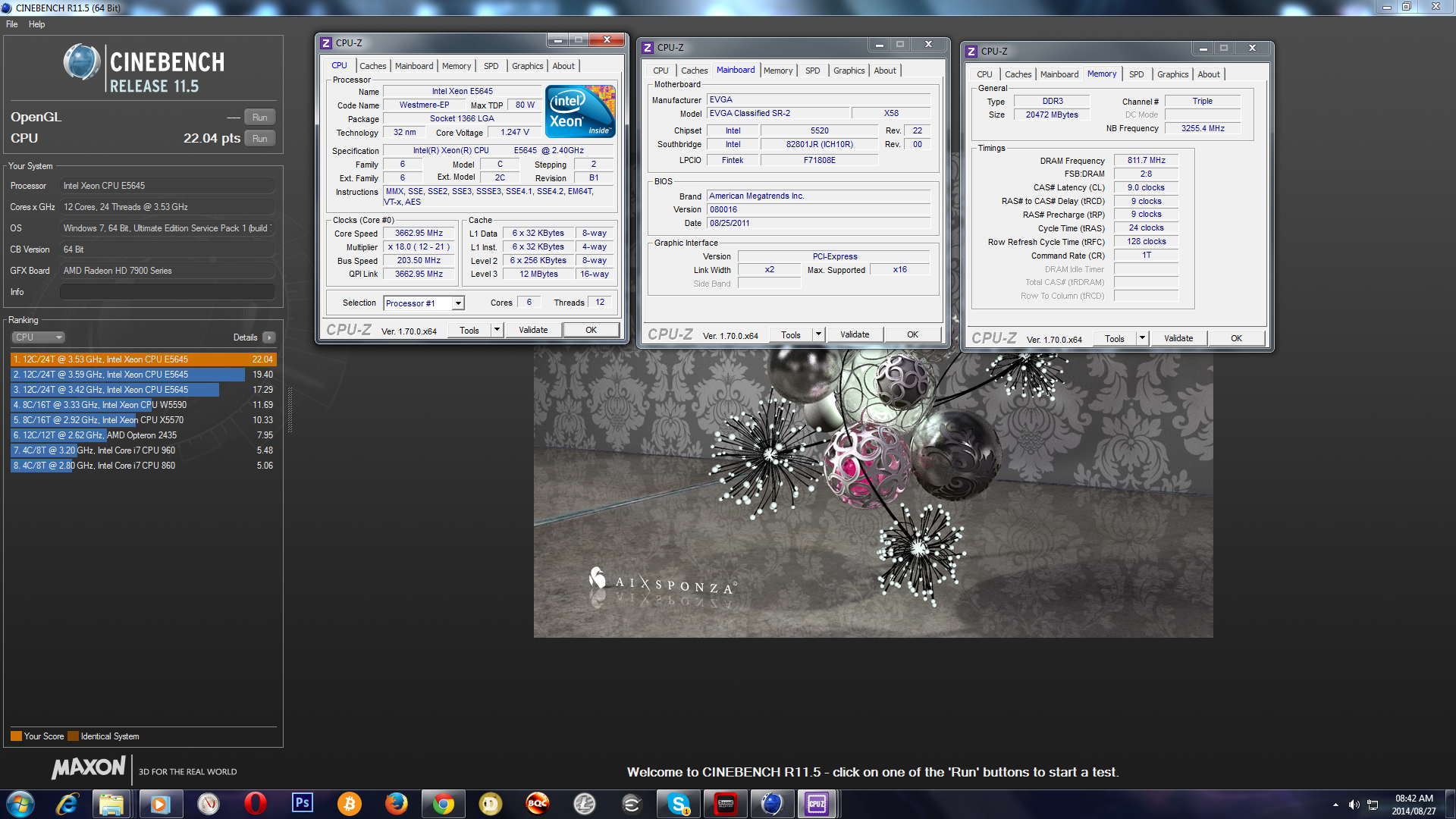 ). The FX-8350's best score is almost 2m22s at 7.4 GHz.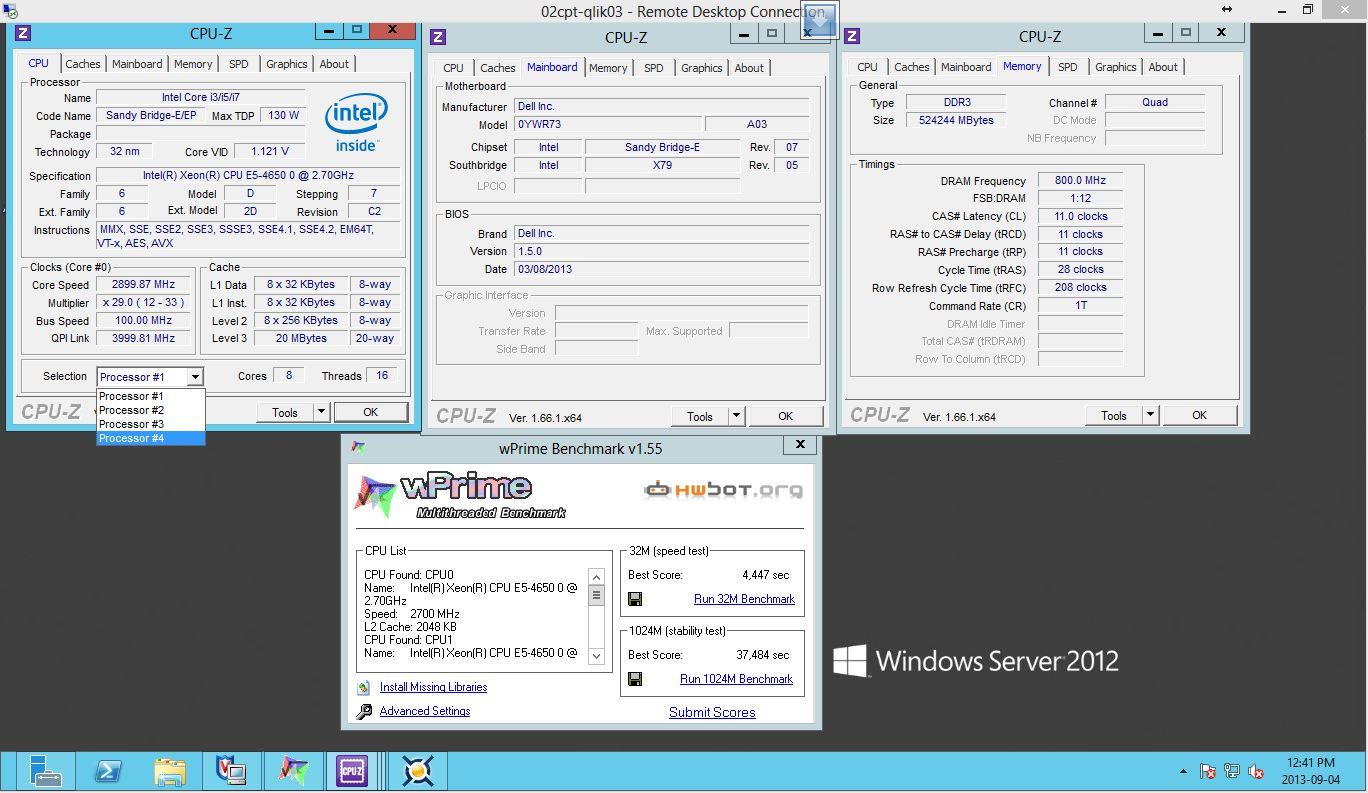
Intel's "options" comes from way too many socket designs. A new socket for every processor design isn't something that puts you ahead of your competition.
As the original equipment manufacturer AMD sets the price for its custom units. I would say Foxconn only assembling the units their margins are tighter but by far the ones with the tightest margins are the resellers which in this case is Sony and Microsoft.One component. Foxconn assembles the entire unit, they have more room for margins than AMD does.
It doesn't really matter. You get what, a 10% increase in one area? That is called performance sacrificing and it's not something you pay a R5000 premium for. Just makes Intel look even more bad.What, because the OP is comparing a HEDT CPU, which is NOT designed with gaming in mind, to a much cheaper AMD system? That's like comparing the Quadro K6000 ($4,999) to the Radeon R9 295X2 ($999) and laughing at Nvidia because the Radeon whips the Quadro into a previous dimension in gaming. Gaming is not the intended purpose of either the HEDT CPUs or the Quadro cards.
One with a cheaper cpu and motherboard. So you are prepared to sacrifice on a cheaper Intel cpu and include a higher end gfx card but you won't do the same for an AMD system? That's one thing artificial benchmarks don't include but with the money saved on both the cpu and motherboard you can easily add a more expensive gfx card that will have a much bigger impact on gaming performance than the cpu.For what it's worth, what AMD system can do what my Intel does?
The FX-8350 at almost 7.7 GHz scores little more than half of that. My PC is used almost exclusively for photo/video/3D editing, so yes, the above benchmark is VERY much real world. If I didn't have what I have, the Core i7-5960X would be on my list of wanted components. If I were a hardcore gamer, I'd be looking at something more along the lines of a Core i3 or Core i5, maybe even from a previous generation, and a high end gaming card.
TLDR; (.)(.)
As the original equipment manufacturer AMD sets the price for its custom units. I would say Foxconn only assembling the units their margins are tighter but by far the ones with the tightest margins are the resellers which in this case is Sony and Microsoft.
It doesn't really matter. You get what, a 10% increase in one area? That is called performance sacrificing and it's not something you pay a R5000 premium for. Just makes Intel look even more bad.
 For what it's worth, AMD isn't offering a large performance jump with each new generation, in fact I showed that the FX was actually an IPC DOWNGRADE in performance compared to the 1100T - http://carbonite.co.za/f20/ivy-bridge-tested-i7-3770-a-27274-post184374/#post184374
One with a cheaper cpu and motherboard. So you are prepared to sacrifice on a cheaper Intel cpu and include a higher end gfx card but you won't do the same for an AMD system? That's one thing artificial benchmarks don't include but with the money saved on both the cpu and motherboard you can easily add a more expensive gfx card that will have a much bigger impact on gaming performance than the cpu.
A budget they agreed to. AMD also didn't develop the tech exclusively for MS and Sony. They aren't doing anything new. They offer custom orders at a price point the market would allow. Something microchip makers have been doing for decades. That only two companies that have had a loss from consoles are using it and nobody else yet suggests to me they've set their margins on a pretty comfortable level.AMD was given a budget to work within.
I didn't say anything about having to upgrade every generation. It's got nothing to do with that.Not sure I see the point you're trying to make. Who says you have to upgrade your CPU every generation? For gaming, that's an epic waste of money. Spend your cash on the graphics card rather, or even a good sound card or monitor. The six year old Core i7-920 is still a very capable CPU when it comes to gaming, why would you upgrade to a 2600K, 3770K, 4790K... etc for gaming?
Can't seem to find one new for under R3300. Round about the same as the FX-8350. Actually the 8350 is slightly less going for R2900 on Takealot. But this is what you don't understand, you don't just buy a cpu alone. Intel motherboards are in general more expensive. You can go for the R600 cheapies but then you get what you pay for. A R1500-R2000 AMD motherboard is usually top of the line where you have to go that much with Intel to get something that's just good. If I want a good AMD motherboard it's ~R1000.First link I found for gaming benchmarks between the FX-8350 and Core i7-2600K, which can be picked up for under R2k with motherboard - http://www.bit-tech.net/hardware/2012/11/06/amd-fx-8350-review/6. The Intel beats the AMD at stock speed, at 4.8 GHz the AMD is still far behind the stock 3.4 GHz 2600K in Skyrim and 20 % ahead in Shogun (both games are pretty damn heavy on the CPU). That's why I specifically said I'd even consider an older Intel CPU. A new FX-8350 is about 50 % more expensive than that combo (in fact, a 3770 and board went for R2k recently on Carbonite, both still under warranty).
A budget they agreed to. AMD also didn't develop the tech exclusively for MS and Sony. They aren't doing anything new. They offer custom orders at a price point the market would allow. Something microchip makers have been doing for decades. That only two companies that have had a loss from consoles are using it and nobody else yet suggests to me they've set their margins on a pretty comfortable level.
A budget they agreed to. AMD also didn't develop the tech exclusively for MS and Sony. They aren't doing anything new. They offer custom orders at a price point the market would allow. Something microchip makers have been doing for decades. That only two companies that have had a loss from consoles are using it and nobody else yet suggests to me they've set their margins on a pretty comfortable level.
I didn't say anything about having to upgrade every generation. It's got nothing to do with that.
Can't seem to find one new for under R3300. Round about the same as the FX-8350. Actually the 8350 is slightly less going for R2900 on Takealot. But this is what you don't understand, you don't just buy a cpu alone. Intel motherboards are in general more expensive. You can go for the R600 cheapies but then you get what you pay for. A R1500-R2000 AMD motherboard is usually top of the line where you have to go that much with Intel to get something that's just good. If I want a good AMD motherboard it's ~R1000.
Now this is where your logic breaks down. You would go for a cheaper Intel cpu and spend the saving on a gfx card but not do the same by going for AMD. Without even going for a cheaper AMD cpu there's a saving that can be spent on gfx card that would give a much better boost to gaming than a cpu would. The artificial tests don't prove anything. A true use case scenario would involve a better gfx card for the AMD rig to bring it up to the same price point as the Intel one.
Intel has also had a lot more socket upgrades in their lifetime. AMD has had more socket upgrades recently than previously but still they've managed backwards compatibility. So instead of upgrading both the motherboard and cpu you could manage upgrading just the cpu to a new generation.
It isn't exclusive period. It is called a custom order. R&D costs go into making the technology and that was done for their current line of APUs. It's a matter of piecing it all together from existing desktop and laptop technology. The margins would not be slim and profit made would actually help subsidise the cost of R&D.The tech isn't completely exclusive (Jaguar family), but the specific SoCs are. It has very different specs to any other SoC AMD has made, so there would have been R&D costs involved. AMD was in a position where every cent they made counted; while the margins aren't public knowledge, they are slim.
I didn't mention anything of the kind. I mentioned a performance increase implying it to be over the regular desktop line.Then why did you mention a 10% performance upgrade from one generation to the next for R5,000? Upgrading every generation doesn't make sense unless you're doing it just to remain cutting edge, for everyone else it will be a larger performance increase as they'll be upgrading every 2-4 generations.
It's the new units that set the market price and says a lot about what each company is capable of. Besides you are not being fair. You are comparing second hand Intel prices to new AMD prices. Sorry for being crass here but that's really scraping the bottom of the barrel in order to force Intel into a good light.Why do you HAVE to buy new when you can get brilliant performance second hand? I mentioned that several posts ago, it's not like I changed my mind to suite... And as I said, you can get a 2600K and board (P67/Z68) for less than the price of AMD's finest desktop CPU (the FX-8370 is the exact same CPU with a slightly higher clock multiplier, it has the exact same IPC as the FX-8350. For the sake of being fair, we could also compare the 2600K with board to the price of the FX-8320 [again, the same CPU but with a lower stock multiplier], but at R2,162 on Takealot it is still more than the faster Intel in question)... And it'll be faster.
What you're still ignoring is that it doesn't do so at the same price point. The AMD cpu is less expensive than the Intel and so are the AMD motherboards. If there's any platform where you can actually afford a more expensive gfx card it's AMD and then it would beat the Intel one.Because as I have shown, an older Intel CPU can beat AMD's finest - both at stock and with a heavy overclock. The AMD CPU in question alone is more expensive than a faster Intel motherboard/CPU combo, so in all fairness if ANY platform should have a more expensive graphics card it would be the Intel setup. If a three generation old Intel setup is beating AMD's latest and greatest, why do you need to compare anything newer? The AMD setup doesn't offer anything that the 2600K can't.
The AM3 socket was introduced in 2009. The AM3+ was introduced in 2011. There are other reasons for the performance bottleneck we are currently seeing like the switch to full computer design where previous chips were manually tweaked. This will allow more complex designs in future though. At some point Intel will experience the same bottleneck when AMD has moved past it. We can already see this happening. The Bulldozer architecture didn't offer the performance people were expecting where some of their earlier processors performed better in some regards. It's successors however did show the performance increases we expect to see if AMD was producing better chips.And even though it may have been trolling, there is truth to my statement that AMD has an old socket with old performance. The 2600K came out in the very beginning of 2011 on a new socket and beats the FX-8350 which came out almost two years later on a socket that dates back almost six years (yes, it works on many AM3 non-plus motherboards with a BIOS update).
And as we've seen it's hard to justify buying a more expensive Intel cpu and motherboard when the money can be spent on a gfx card that will possibly own the Intel rig of the same price.It's hard to justify the purchase of a new AMD CPU when a much older Intel CPU is faster :/
AMD was ahead of Intel for a long time and Intel is still behind AMD when it comes to the productivity of their resources. If Intel can't get the same performance for the same price it's a good indication they are spending more to get the performance which means they aren't being as productive. On the subject of making decisions Intel is where they are today due to what's essentially stolen technology and unfair tactics. They used their dominance to sue a couple of companies. They did lose the frivolous cases but the cash strapped companies which had better technology than Intel at the time were forced to sell it off and most of it to Intel. AMD is one company that survived but they reached a cross licensing deal with Intel.Had AMD stuck with Thuban, added SSE 4.2, added an extra two cores and bumped up the clock speed a bit it would have had a winner - maybe not enough to topple Intel's chips, but it would have been at least 30 % faster. Bulldozer and onwards are failures compared to what AMD had.
AMD, unfortunately, is not the best at making decisions. This dates back to their conception at the end of the 1960s. Buying ATI for about twice its market value is one example. Sitting close to idle while they held the performance lead for close to half a decade with the Athlon64 is another (when Intel released the Core 2, AMD had nothing to counter it). A decade ago the market was very different, with AMD dominating the huge failure that was Netburst. Unfortunately, they have not since dominated again. Chances are high that they could have, had they been working on a K8 replacement sooner.
Here's a few things you either don't know or have forgotten./snip
10% more performance, for 50% more cost. Yeah that's a great deal

