Hubble Batteries

I was quoted on Hubble for my system, what are good alternatives?
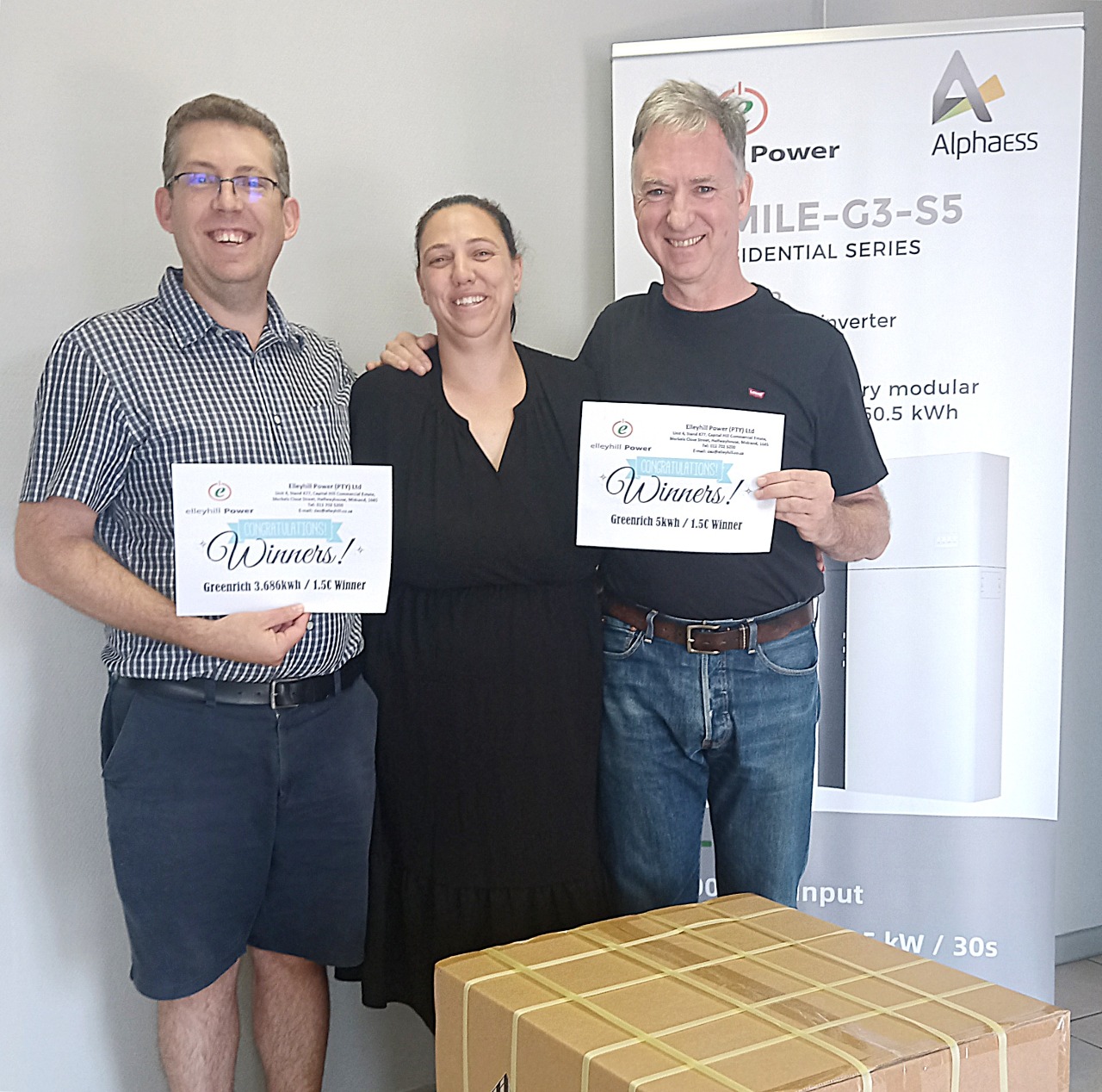
Greenrich. PowerForumStore are giving away a few.

 
All these are built with "second life" cells. I'd expect there to be a decent amount of returns for all brands so my suggestion is to go with the brand you believe will still honour the guarantee many years later.
Am-2s are not 2nd life batteries. Hubble S-100 use 2nd life cells.
 
I believe the new pylon us5000 is either 0.8C or 1C, can't remember exactly which one.
Yeah I think the Pylons have certain conditions for certain things. They're also mostly compatible with each other across the range and have been around for a long time. If I was starting off now and knowing what I do, it's probably the one I'd go for...
 
You don't need a Cloudlink to update firmware. The Cloudlink is useful for Hubble to be able to do remote diagnostics and monitoring (the latter if you can find anyone doing support that is remotely even interested in monitoring, so don't hold your breath).
Yes, I just checked they closed a ticket for my father's batteries that are not reaching 99-100% SOC. Fsckers. |Also i have a relative that is having an issue where his 2 x hubbles only last about 4 hours. With a base load of 300-400W. He bought a Riot just for this case and hubble tuned him that they cannot do a firmware update over the RIOT. WTF I thought that was possible. But anyway he got the USB to RS232 cable also so he requested the firmware files. Will see how it pans out.

I am very happy with my 2 x hubbles. If I had to buy again I would probably look at the Freedom Won e-towers.
 
Yes, I just checked they closed a ticket for my father's batteries that are not reaching 99-100% SOC. Fsckers. |Also i have a relative that is having an issue where his 2 x hubbles only last about 4 hours. With a base load of 300-400W. He bought a Riot just for this case and hubble tuned him that they cannot do a firmware update over the RIOT. WTF I thought that was possible. But anyway he got the USB to RS232 cable also so he requested the firmware files. Will see how it pans out.

I am very happy with my 2 x hubbles. If I had to buy again I would probably look at the Freedom Won e-towers.
Mine also take a while to reach 100%, after 90% they just slow the charge rate down to about 2A per battery, the problem is that they do this over like 7-8 hours, so by 09H45 they are 90%, and then the extremely slow crawl to 100% at 17H00...
 
If it weren't for Freedom Won that I'm very happy with I'd go for Sunsynk or Greenrich
 
BSLBatt.

Really excellent so far (had one battery for 18 months, the other two are quite new still)
 
You have to deal with an installer. They don't engage with the general public for support. Find an installer in your area.
Yip, if you have no installer, they do not honour any warranty. If your installer died, so did your warranty. Stay waaayyyy clear of Hubble. I had first hand experience and fortunately can help myself, but not all have the means to get the money back, so rather get Pylontec as many here had said.
 
All these are built with "second life" cells. I'd expect there to be a decent amount of returns for all brands so my suggestion is to go with the brand you believe will still honour the guarantee many years later.

Nothing wrong with 2nd life in solar or backup use.

I don't think Hubble AM-2 or AM-5 are second life.

They're NMC cells which is absolutely kak chemistry for storage batteries. NMC is designed for high output bursts such as in electric scooters etc which is why they can market at "1C" but the useable life is terrible. LiFePO can't give max currents as high as NMC but it's useable and cycle life is vastly superior. Oh and NMC can have thermal runaway.

For 1C, not many options.

There's Pylon, Freedom Won, Dyness, Revov, Shoto etc. from the more well known brands. They're 0.5C but they're LiFePO4 which many might argue is the better chemistry...

People really need to get off this "C" rating as a measure of quality, it's not. The max charge/discharge number is equivalent to the max speed of a car, basically irrelevant in everyday use cases and anyone who has a set up that is charging or discharging per battery at 100A continuously has a bad set up.

Need to look at the continuous current which is what the cells and BMS will actually be able to handle.
 
Last edited:
Are Hubble batteries made in ZA?

Assembled yes.

And so this doesn't just look like competitor bashing it should be noted their rackmount and upcoming AM-2PLUS and AM-10 are LiFePO.

After doing a ton of research into this, besides being patient and waiting for mine, I'd go with Shoto or Pylotech as they are vertically integrated making their own cells. Everyone else is buying cells and BMS and slapping them together in an enclosure, including me.

Honorary mentions to BSL Bat, freedom won and sunsynk.

Greenrich on the other hand... Some deceptive marketing there, they claiming the first 1.5C battery, But the UP-3686 is only 72Ah which works out to 100A max discharge, hardly a revelation: https://cdn.shopify.com/s/files/1/0538/4470/5457/files/Greenrich_3.68kW_Datasheet.pdf?v=1635848935

The UP-5000 on the other hand I had to spend ages digging around for the spec sheet: https://marcelssolar.co.za/wp-content/uploads/2022/04/U-P5000-宣传卡-2022-01-24.pdf

"Max.Discharge Current 150A"
"2)For better battery life cycles,we suggest discharge in 43A(0.5C @25℃)"

So yeah...

EDIT: fark me the Greenrich uses 18650 cells and no mention of LiFePO, just "Lithium-ion", so could be Lithium polymer! That's terrifying. And a perfect example of why C ratings tell you nothing, sure this'll discharge at 140A, once, and then it'll burn your house down.
 
Last edited:
Nothing wrong with 2nd life in solar or backup use.

I never said there was. But they are used and typically have lost 20% of their capacity.

You cant tell me no matter how much testing you do that doesnt come with a higher failure rate than new batteries? Especially over a 10+ year expected life.
 
EDIT: fark me the Greenrich uses 18650 cells and no mention of LiFePO, just "Lithium-ion", so could be Lithium polymer! That's terrifying. And a perfect example of why C ratings tell you nothing, sure this'll discharge at 140A, once, and then it'll burn your house down.

Its a pretty slim chance that they are 18650 cells. If I had to guess based on the cycles Id say maybe 37200 LFP but as you say its not in the datasheet.
 
Hmm, thank goodness for forums.

Batteries seem to be the modern snake oil - every person you speak to has a different opinion.

Are there any certified standards at all that one can rely on for solar installations? Surely it can't be as unregulated as it seems with the consumer having no independent standards body to turn to and basically being at the mercy of whichever installer happens to be operating in your area?
 
Hmm, thank goodness for forums.

Batteries seem to be the modern snake oil - every person you speak to has a different opinion.

Are there any certified standards at all that one can rely on for solar installations? Surely it can't be as unregulated as it seems with the consumer having no independent standards body to turn to and basically being at the mercy of whichever installer happens to be operating in your area?
That's why I prefer to do things through established companies. If something happens, you crap on them. If nothing gets done, you crap on their name.

You do have to get a COC from any installer which gives you some legal backing, but going through a company gives you that extra layer through public opinion. Nobody is going to care if you crap on Kobus Koekemoer here because something broke and he's no longer in business.

On the topic of batteries, just stick with LiFePO4 through an established brand if you want tried and tested reliability, performance and support...
 
I never said there was. But they are used and typically have lost 20% of their capacity.

You cant tell me no matter how much testing you do that doesnt come with a higher failure rate than new batteries? Especially over a 10+ year expected life.

Which is why you engineer around it and add extra cells per pack in order to meet the specs.

Yes 1st life cells are better, they also cost more, it's a trade off as in all things. If you can afford 1st life packs go for it, that's why we're developing them but won't be at the current prices.

Its a pretty slim chance that they are 18650 cells. If I had to guess based on the cycles Id say maybe 37200 LFP but as you say its not in the datasheet.

On mobile so not going to be able to find it but the seller who gave the sample battery to powerforum lists it as using 18650 cells.
 
People really need to get off this "C" rating as a measure of quality, it's not. The max charge/discharge number is equivalent to the max speed of a car, basically irrelevant in everyday use cases and anyone who has a set up that is charging or discharging per battery at 100A continuously has a bad set up.

Need to look at the continuous current which is what the cells and BMS will actually be able to handle.
Nobody said it has anything to do with quality, I never did?

Just that it might be a factor that some might consider. Being able to discharge at 1C, even temporarily, could be the difference between those annoying trips or not. It's not really an issue as you scale your bank, but for those who only have 1 or 2, it could be a factor...
 
Top
Sign up to the MyBroadband newsletter
X