New The PC Build Thread

Nah this is for Intel to wrestle with, AMD can power through on raw power... it makes much more sense to not put AI on the CPU or GPU anyway, rather put it on a dedicated separate PCIe device that is GPU agnostic.

AMD's raw power is running a bit hot ain't it? Having separate devices would mean that tooling is expanded, again, too many SKUs. The dedicated workstation/AI GPUs are the Instinct series. Same cloth as the consumer GPUs.

The point is, people don't only use their GPUs to game anymore; many apps are GPU accelerated.

Well I generally consider 4080+ to be high end and 4090 to be gratuitous.... most people don't need anything more than 4070 for 1440p and 4k is in many ways still a luxury pipe dream. Hell the 7900GRE is more than enough for most people and cheaper than the 4070+ unless the prices have shifted again.... if nothing else I myself am considering not buying nvidia again out of sheer spite for their extortionary practices so I am biased.


Next year will be the real test probably as these products mature to market.


Ja boet I saw the 20 series and wondered wtf

I like the 7900 GRE, but the RTX 4070 Super is not that much more. Comparing XFX to Palit. For CUDA alone I would pay that ~R 1000 premium. These same arguments are made all the time, go take a look at Reddit, yet, it is Nvidia who own the lion's share.

Maybe AMD will get it right with RDNA 5. RDNA 4 being a bug remedy to RDNA 3 will not cut it on the productivity end. Perhaps it is not a hardware issue at all...
 
Intel products are also adopting BTF.


It is a concept, but I am sure that BTF will be pushed into mainstream. Though it is not possible to determine at this time, it can be assumed to be a slow adoption. What is highlighted is that new PC buyers should consider buying a BTF-ready case to allow an upgrade path. From what I have seen at Montech showcases, some existing models will adopt BTF.

Modular cases may potentially receive BTF modules.

What I would dislike seeing in the immediate is board partners changing over to BTF. Asus, MSI and Gigabyte made a great deal about BTF, and ASUS is pushing SFF. There could be potentially wastage, though it is by large recyclable. PC cases have evolved over time, so it is nothing new.

When you buy a new PC, take it under consideration. I personally only expect the phase out to start in 3 years time. It can be said with no certainty whether the market will move into that direction at this time.
 
I saw ppl talking about mini-pcs for Plex and then I read that you can also have it plugged in and left in a corner cos there's apps to access it, so no screen, keyboard / mouse!
So I could use this to queue downloads and stream from but with a good enough wifi antenna.

Any recommendations please on a miniPC that can handle streaming Plex or downloading movies?
Oh I guess then that it would need a big Hard drive OR could I have a smaller capacity drive for the OS and programs but use cloud storage to host all my older content?
 
I saw ppl talking about mini-pcs for Plex and then I read that you can also have it plugged in and left in a corner cos there's apps to access it, so no screen, keyboard / mouse!
So I could use this to queue downloads and stream from but with a good enough wifi antenna.

Any recommendations please on a miniPC that can handle streaming Plex or downloading movies?
Oh I guess then that it would need a big Hard drive OR could I have a smaller capacity drive for the OS and programs but use cloud storage to host all my older content?

I can't recommend a miniPC, but yes, it is totally doable. Nowadays, I recommend having a NAS device which supports the encoding and transcoding that you require. Not all NAS devices have built-in Wi-Fi.

Plex has an article on it:


Somebody else may be able to answer your question more directly.
 

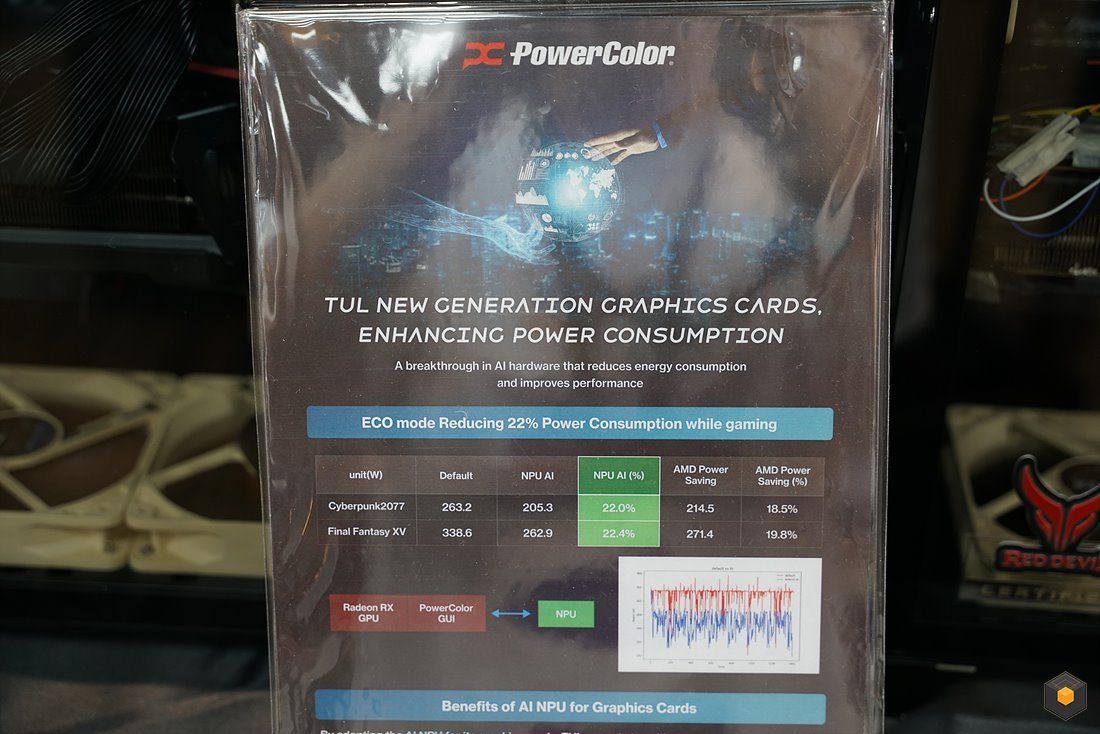
PowerColor's new tech uses the NPU to reduce gaming power usage — vendor-provided benchmarks show up to 22.4% lower power consumption​


GPeqO2KbAAAfVrN


In real-world testing, as shown during the PowerColor demo, it was clear that power consumption was significantly reduced. However, this also affected the framerate.
  • AI NPU Disabled: 118 FPS, 51°C, 338W, 1918 RPM
  • AI NPU Enabled: 107 FPS, 61°C, 261W, 1037 RPM
The enabling of the NPU also contributes to higher temperatures due to decreased fan speed.

I am sure that the NPU could be put to better use. Undervolting still works the charm.

In the demo at Computex the NPU was an external module. It is a work in progress. Though an NPU works in parallel, sure Nvidia and AMD could put their AI cores to better use to optimise load in gaming? Though it would require better app integration. AMD's own settings suck to be honest, you need to custom tune, whilst Nvidia is improving on that end as showcased at Computex.


GPeqO2KbAAAfVrN


I am sure that the NPU could be put to better use. Undervolting still works the charm.

In the demo at Computex the NPU was an external module. It is a work in progress. Though an NPU works in parallel, sure Nvidia and AMD could put their AI cores to better use to optimise load in gaming? Though it would require better app integration. AMD's own settings suck to be honest, you need to custom tune, whilst Nvidia is improving on that end as showcased at Computex.

I somehow do not trust PowerColour. Always had bad experiences with their products.

I like the MSI/Asus brands of GPU's and Asus ROG mainboards a lot. Quality stuff that lasts.
 
I somehow do not trust PowerColour. Always had bad experiences with their products.

I like the MSI/Asus brands of GPU's and Asus ROG mainboards a lot. Quality stuff that lasts.

Every AMD GPU I have ever purchased was a Sapphire, every Nvidia GPU I have ever purchased was an EVGA. I have always only had ASUS motherboards. I am considering moving to Gigabyte or Asrock motherboards.

I lied, my one AMD GPU was an XFX.
 
Every AMD GPU I have ever purchased was a Sapphire, every Nvidia GPU I have ever purchased was an EVGA. I have always only had ASUS motherboards. I am considering moving to Gigabyte or Asrock motherboards.

I lied, my one AMD GPU was an XFX.

Gigabyte and ASRock never gave me any issues for decades with their mainboards.

Older gen AMD gpu's were kuk. The newer versions are slightly less kuk but much better than it was :)
 
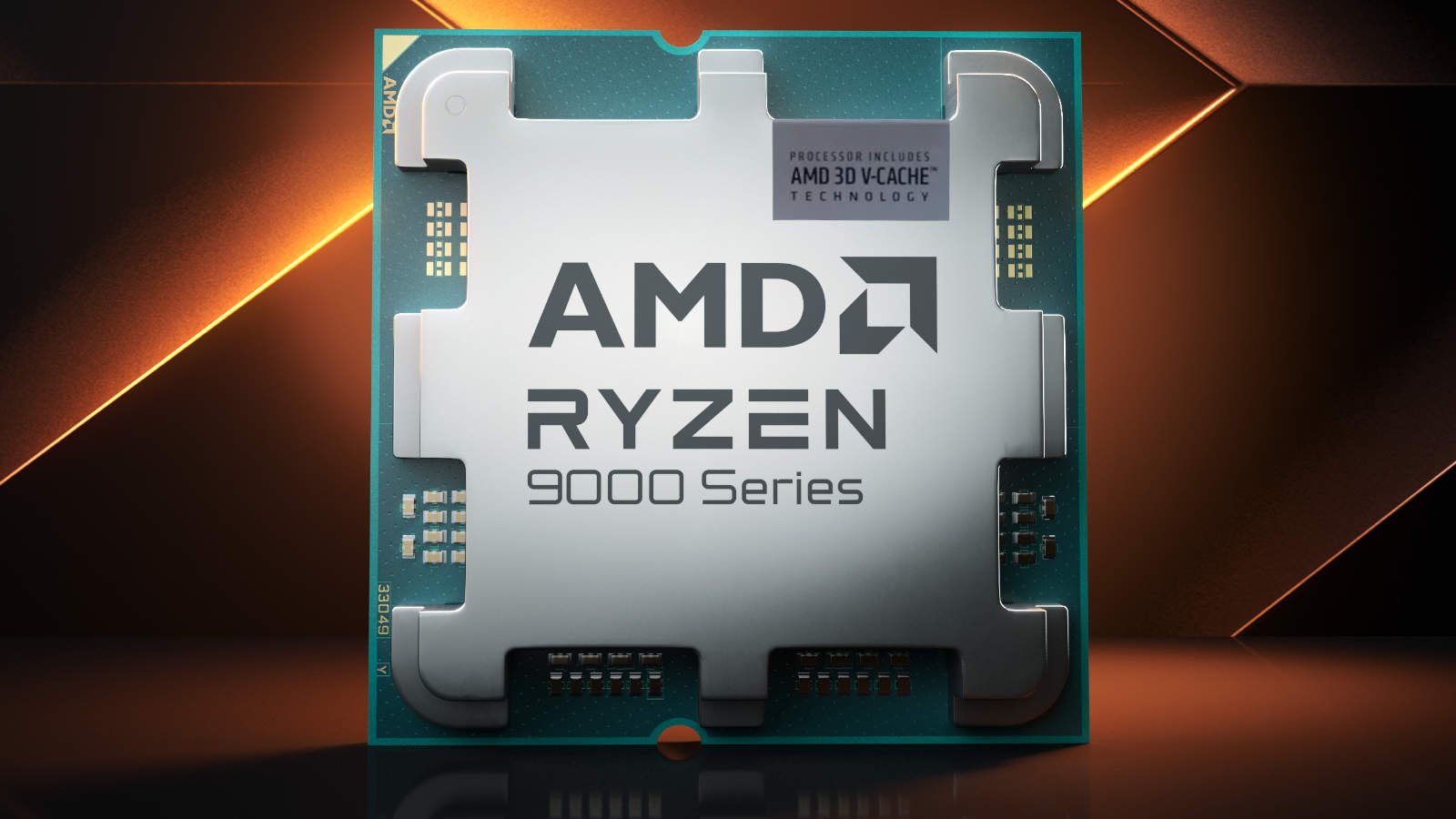
Sooner than I thought. I was expecting the 9000X3D CPU to arrive 2025 Q1.


AMD’s next-gen X3D CPUs target September release​

...

Our source on the Computex show floor tells us AMD plans to launch 9000X3D processors in September. This matches the staggered release of X870E motherboards that we anticipate will arrive the same month. There’s no hard indication of which CPUs will arrive first, but an educated guess from historical releases suggests it’ll likely start with Ryzen 9 9950X3D and possibly Ryzen 9 9900X3D.

There was a level of confidence behind our source’s words, and they’re trustworthy enough to put stock into. That said, familiarity with how nebulous AMD’s launch schedules are urges taking this with a pinch of salt. Nothing’s confirmed until you have a sample in your hand as dates can easily change.
 
For the life of me I have never trusted AMD (chips or gpus). I've always stuck with Intel till this day and no hassles.
 
For now in my opinion, Ryzen and Nvidia are the best combo. A pure gaming PC, without needing Nvidia's bells and whistles, AMD Radeon is still a good value buy.

I have an idea that Nvidia's G-Assist may prove to be popular. The use case tackles multiple issues. It won't make people abandon discussion boards and gaming media, but as a general assistant it will do well. Potentially it can enable people with disabilities to play more games too.
 
The 5090 will be a untamed compute animal:


GB202 12*8 512-bit GDDR7
GB203 7*6 256-bit GDDR7
GB205 5*5 192-bit GDDR7
GB206 3*6 128-bit GDDR7
GB207 2*5 128-bit GDDR6

Rumour have it that the GB207 won't be limited to GDDR6. Never trust graphs, but Micron put this out:


Ignoring ray/path tracing and rasterization, GDDR7's increased bandwidth and reduced power consumption could push the compute power to unexpected boundaries. Any improved latencies will be a game changer, but I won't know until this is available on consumer GPUs, PAM3 signalling is indicative though I haven't seen it in real-world tests.

For now it is still rumoured that RDNA 4 will continue use GDDR6.
 
Whatever they do.... the problems on the ground will be PCIe speed and VRAM.

It must be some bubble causing corporates to think almost no one still uses PCIe 3 mobos. 8x speed only makes sense on PCIe4 mobos.
 
Top
Sign up to the MyBroadband newsletter
X