


CB40
Expert Member
- Joined
- Jun 20, 2009
- Messages
- 2,201
- Reaction score
- 1,298
Or your tyres are fckedAir does not leak out of rubberIf you are having to add air to your cars tyres regularly then you have a leak somewhere.
South Africa’s biggest forum. Discuss, discover, and connect with thousands of members.
Or your tyres are fckedAir does not leak out of rubber

Are you dum?Air does not leak out of rubber
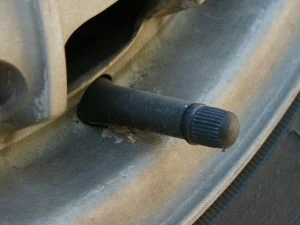
 www.utires.com

hahah! I mean, it makes sense to me! Especially when you have some people on this thread some how linking this to covid? ShameIt's because nitrogen becomes solid when in the dark
/prove me wrong

Are you dum?
Why Your Tire Loses Air Slowly and How to Fix It
Learn why car tires lose air over time and how to prevent it. Our guide covers common causes, maintenance tips, and expert advice to keep your tires in top shape.
Damn it, we need the nitrogen in our fuel tanks, not our tires.Nitrogen in tyres tested — with disappointing results
The debate around filling tyres with nitrogen instead of compressed air is fast and furious, but we noticed no difference during our testing.
Many garages and tyre retailers will encourage the use of nitrogen, even charging extra for it, touting benefits such as reduced wear, less heating, and even less pressure change due to heat.
Odd. Your post to which I replied was neither specific or pedantic.I'll assume you didn't read my earlier post where I stated that the OP I was responding to was referring to osmosis or permeation of the air through rubber which I don't consider to be a leak. So to answer your question, no, I am not dumb, I am just very specific and pedantic in my middle age.
Odd. Your post to which I replied was neither specific or pedantic.
@rietrot, be sure your CO2 is VERY dry, as the you'll be making soda water on steroids that'll happily eat your rim and copper from the valve (any metal) it can reach.Nah, we should use hydrogen. Being the lightest element, this puts less weight on the axles, thus making for a lighter car and better fuel economy.
Trust me, I'm a scientist


Indeed. You will get better benefits from actually maintaining your car better. More oil changes especially.Scam
Mine were like 78% Nitrogen, and didn't go flat. The battery, on the other hand...2 months into the pandemic and people with no nitrogen had semi flat tyres, wonder why

Are you dum?
Why Your Tire Loses Air Slowly and How to Fix It
Learn why car tires lose air over time and how to prevent it. Our guide covers common causes, maintenance tips, and expert advice to keep your tires in top shape.
Ey?To be fair, there isn’t any rubber in modern tyres.
Tyres are made of silicone, not rubber.
Various branches of industry supply the tyre manufacturing industry with raw materials, which are used to create the necessary compounds.
Steel. The steel industry supplies high-strength steel. This serves as the starting material for the manufacture of steel belts (steel cord) and of bead cores (steel wire).
Chemicals. The chemical industry is a major tyre ingredient supplier. In particular, synthetic rubber and materials used to reduce wear, increase grip and extend the life of a tyre.
Natural rubber. Rubber is extracted from special trees grown in large plantations. The milky fluid (latex) that flows out coagulates when acid is added to it. It is then cleaned with water and pressed into solid bales for easier transportation and storage.
Bales of natural and synthetic rubber are sectioned, cut into portions, weighed and mixed with other ingredients according to precise recipes. Up to twelve different rubber compounds are used in modern passenger car tyres.
Textiles. The textile industry supplies base materials (rayon, nylon, polyester and aramid fibres) for the manufacture of cords that serve as reinforcement in tyres.
continental.co.za
Tyres are made of silicone, not rubber.
It’s essential synthetic rubber and not actual rubber from trees.

 www.michelinman.com
How Are Tires Made? | Michelin
How are tires made? Tires are more complex to design and build than you may think. Learn more about the tire-making process, how design impacts performance, and more.
"
Over 200 ingredients go into a tire. They play vital roles in safety, fuel efficiency, performance and eco-friendliness.
These components fall into five groups:
"
- Natural rubber: the main component of the tread layers
- Synthetic rubber: part of the treads of car, van and 4x4 tires
- Carbon black and silica: used as a reinforcing agent to improve durability
- Metallic and textile reinforcement cables: the "skeleton" of the tire, forming the geometric shape and providing rigidity.
- Numerous chemical agents: for unique properties like low rolling resistance or ultra-high grip
Still the main component; not sure the actual % splits.
A modern tyre is around 70% synthetic rubber and the remainder is carbon black (fine carbon powder) and other chemicals to make up the rest of the recipe.
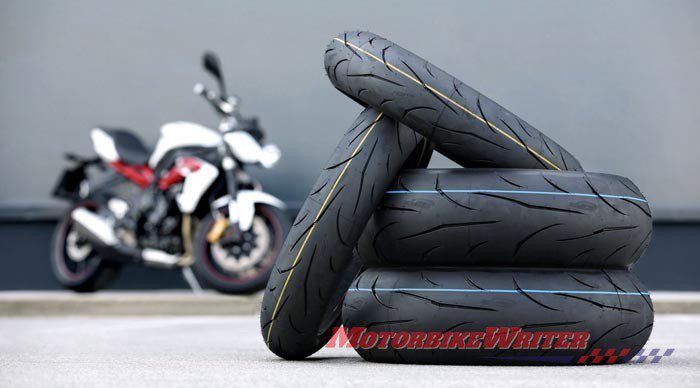
Far too many tests apparently run by amateurs on this website.So much anger in this thread.... you guys should let out some... air... "ba'dum-tss"
/leaves
