RTX 2080 Founders Edition Review

Think he means second hand, those go for R8.5-10.5k depending on the card, the 2080 starts at R13700 new. Still not the R7.5k.

The RTX 2080 is basically the pick here due to the price being the same.
1541505147728.png
1541505166992.png
Tried to find both as Gigabyte.
The Ti goes for ~$800 new mostly. The 2080 is ~850 starting, with the 1080 Ti being slightly more powerful, just without the Ray Tracing capability.
And I still disagree with you all saying more capability, if the added features are useless, then you can't really factor that in.

And a problem with a lot of benchmarks is that they're using the founder's edition of the 1080 Ti, which is dumb, since the aftermarket ones are quite a bit better.
 
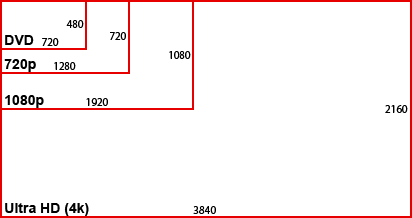
resolutions-ultra-hd-4k-1080p-720p-dvd.png

1920*1080 = 2073600
3840*2160 = 8294400
Ratio of 4:1

Do you think that at 4k you can have a game using Ray Tracing? Very simple question.
Now, in that "unoptimized game" and note that "unoptimized" was for certain levels and sections, not for the entire game.
Then also take into account that a 2080 Ti is between 25 and 40% faster than a 2080 depending on the game/scene etc.

Do you think that the 2080 can give a smooth playback with ray tracing enabled at 4k? 1440p? 1080p? Probably no to all of those, it might be able to give a small touch, but would you really enable it if it forces you to move from e.g. 1440p to 1080p while being extremely likely to cause frame rate drops that will be noticeable?

Do you get my point?

You can argue ray tracing at 1080p with the 2080 Ti, and that is iffy as most people should have a 4k set-up if they're already spending that much on a graphics card, but with a 2080 you're probably on 1440p or 4k as well, why would you lower your resolution and have frame drops?

And you argue it's unoptimized, that's why we're all arguing to wait for at least the next gen of cards. Most games (besides now 3?) that feature this most probably won't be launched until the 2nd gen of these cards are out.

For now, ray tracing is a gimmick because they needed something new. At the 2080 performance point, it's not worth. At the 2080 Ti it's a gimmick that will force you to drop your resolution, so it's a compromise.

For now, ray tracing is not worth the premium tag you'll be paying, and that's why we all argue to get a 1080 Ti instead if you're in that price bracket as it's the same/slightly faster, especially if you pick up second hand where you can get a substantial reduction on price.

Your point is you can't play on maximum detail settings at 4K resolution and get 60 FPS, which has largely been the case throughout history. The GTX 1080 Ti was the first card which really made it an option, before that people were used to having to compromise somewhat if they wanted 4K/60. It'll be just like before, where you have to choose between absolutely maxing out everything at 4K, or having 60+ FPS.

The following is mainly opinion and not very scientific, but hear me out:

Give 100 people the option of 4K without RTRT or 1080p with RTRT and I'm sure 99 of them will choose the latter. In fact, give 100 people the option of 1080p and 4K side by side and I'm sure most of them won't be able to tell there's any difference at all. At the same time, each and every one of them should be able to tell the difference between rasterization and ray tracing.

I'm sure there are about to be 1000 people about to say that they can tell the difference between the two, I've uploaded an image to this post. I'd like you (the 4K guys) to tell me how many dots are on the left and bars on the right WITHOUT zooming it (and without scaling enabled in Windows). Don't sit and count them slowly, try to give an immediate number. You don't have to open the image, it is tiny. I've also made it best case in order for you to actually stand a chance - high contrast pure black on pure white.

res.png

Now imagine adding even the slightest bit of motion to the mix in a lower contrast situation and tell me if 4K is really that important compared to a complete overhaul in image generation. Here's an example of lower contrast (it's the same number of dots and lines - here I'm not trying to catch you out but rather just illustrate the point).

res2.png

RTRT comes with a performance hit. You will likely not be able to play at 4K for the foreseeable future. What you will be able to do, however, is easily tell the difference in image quality.

If you really, really want that 4K resolution you always have DLSS.

After all is said and done, you've still missed this part of my post:

In short, slow paced games can focus on the beauty of the environment, while faster games can focus on optimization. Don't base an entire technology on one game demo.

If a game needs a high frame rate, like BFV, the rendering can be optimized as such at the expense of image quality. If a game is slow paced, like Tomb Raider, you don't need 60+ FPS. Most of the motion will be slow enough that even the current, un-optimized, 30 FPS will be quite playable.
 
Battlefield V is about to get a huge ray tracing performance boost, Nvidia says
After these updates drop, Nvidia says the graphics card should surpass 60 fps at 1440p resolution with the game’s DXR Raytraced Reflections setting set to Ultra. The $700 RTX 2080 will also hit 60 fps at 1440p with reflections set to Medium quality, as should the $500 RTX 2070 at 1080p resolution and reflections set to Medium quality. Assuming those claims hold true, that’d be a huge increase in ray tracing performance.

Here’s how Nvidia says the gains were achieved:

  • “Made stability improvements while running the game with DXR Ray Tracing on.
  • Improved performance of several components of the ray tracing implementation.
  • Improved ray tracing performance against foliage and vegetation.
  • Using frame buffer data, where applicable, to increase overall ray tracing quality.
  • Removed inactive geometry from ray traced scenes.
  • Fixed medium quality setting not applying correctly.”

https://www.pcworld.com/article/332...-v-ray-tracing-performance-update-nvidia.html
 
That's cool, but still a bit lame that you'd have to set it down to medium to get 60fps on a 2080.

The settings mentioned apply to DXR only so you can have ultra textures with medium DXR. It's not that bad though I personally don't find it that compelling (in the BF5 implementation) anyway.

It makes sense that there are big performance improvements coming through with a technology this new - these guys must be learning a helluva lot in this early period. The next gen tech and games might be able to have more DXR than just reflections hopefully.
 
Last edited:
That's cool, but still a bit lame that you'd have to set it down to medium to get 60fps on a 2080.

Yeah it's like @Neoprod said. You still put all the settings on ultra except the DXR on medium.

I tried it out last night but my CPU is a serious bottleneck. Will have to upgrade it next year. On my ultrawide (3440×1440) I get average 40 fps on everything ultra except medium DXR. I'll try low DXR tonight.

It looks great though! I really look forward to see what other games will do with the technology.
 
So my results with absolutely everything max at 1440p in battlefield 5. I am getting between 60 -70 fps consistently.

Quite pleased with the results personally.

Unfortunately can't test the new dlss for final fantasy as it only works at 4k :(
 
Top
Sign up to the MyBroadband newsletter
X