The BYD (EV) Thread

BYD Atto 2 electric SUV lands in the UK with an eye on premium rivals

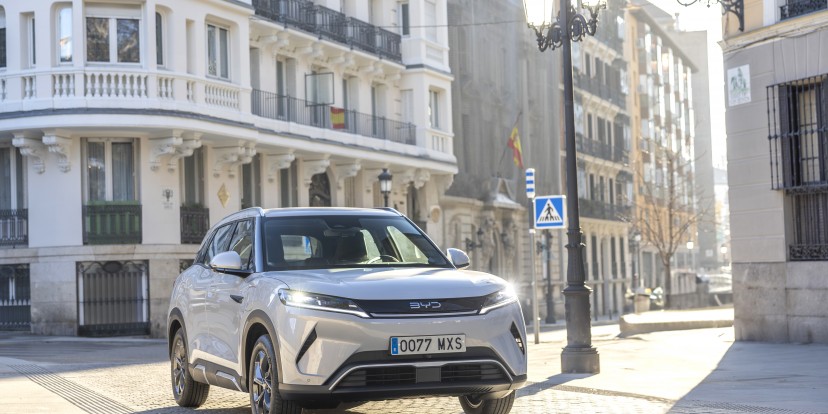
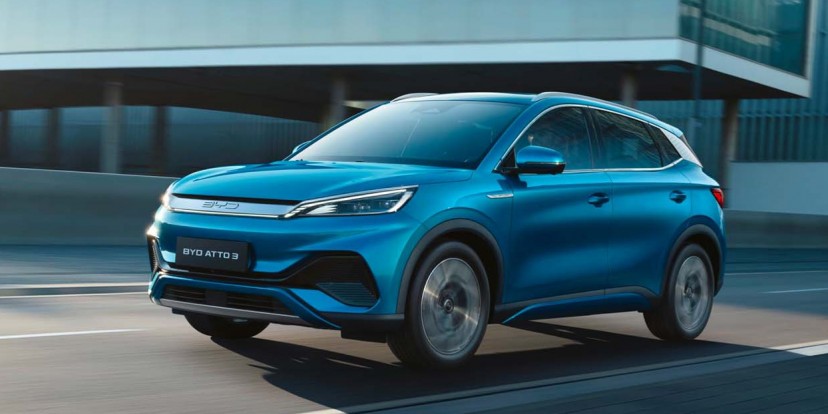
The market for affordable electric cars in the United Kingdom is getting a new contestant. Chinese automaker BYD has officially launched its Atto 2, a compact electric SUV, challenging established players with an aggressive price point and a generous list of standard features. The new model slots neatly into the company's growing European lineup, positioned between the smaller Dolphin hatchback and the larger Atto 3 SUV.

BYD is making a clear statement with the Atto 2's pricing structure. The entry-level "Boost" model starts at €36,170 on-the-road. This price puts it below key competitors like the Hyundai Kona Electric, which starts from €41,035.

As it turns out, BYD's ambitions are aimed higher, though. The Atto 2 is also positioned to lure customers away from more premium electric cars like the Volvo EX30, which carries a starting price of €38,770. For customers wanting more range and features, BYD offers the "Comfort" trim for €40,980.

Buyers will have two distinct powertrain options to choose from. The base Boost model comes with a 51.1 kWh version of BYD's proprietary Blade battery. This configuration delivers a combined driving range of up to 344 km on a single charge. For those whose driving is primarily in urban environments, BYD states the city driving range can extend up to 486 km.

The higher-tier Comfort model comes with a larger 64.8 kWh battery, pushing the combined range up to a more substantial 420 km, making it a better fit for drivers who regularly undertake longer journeys. When it comes to recharging, the electric SUV supports 155 kW DC fast charging, which can replenish the battery from 30% to 80% in approximately 21 minutes.

Inside, all versions of the Atto 2 come impressively equipped from the factory. A large 12.8-inch floating touchscreen serves as the centerpiece of the dashboard, complemented by a wireless smartphone charger and the "Hi BYD" AI voice control system. A particularly useful feature is the standard Vehicle-to-Load (V2L) capability, which allows the car's battery to act as a mobile power source, capable of running everything from a laptop to a coffee maker.

 
BYD Sealion 7 (2025) Review

FAST FACTS

Model: BYD Sealion 7 Performance AWD
Price: R1 299 900 (August 2025)
Engine: Two electric motors
Transmission: Automatic
Power/Torque: 390 kW/690 Nm
0-100 kph: 4.5 sec (claimed)
Claimed consumption: 21.2 kWh/100 km (claimed)
Luggage capacity: 500-1 769 litres

How much does the BYD Sealion 7 cost in South Africa?

The BYD Sealion 7 Performance AWD costs R1 299 900 (August 2025), which includes a 5-year/100 000 km vehicle warranty, 8-year/150 000 km battery warranty and 5-year/100 000 km maintenance plan.

Summary

The mighty performance, comprehensive standard-equipment list and impressive practicality of the top-of-the-range BYD Sealion 7 are undeniably impressive. Rand-for-rand, as a “from new” proposition, it outpunches smaller, premium-badged rivals. At the same time, however, the BYD is pricey relative to what is available in the used market, where “nearly new” BMW iX units, for example, are within reach.

Should you buy a BYD Sealion 7 Performance AWD? We’d answer that question with another: Do you really need a premium battery-electric crossover that produces almost 400 kW?

Sure, it’d give you bragging rights around the braai fire, but with our logical consumer hat on, we think it would be more prudent to save R200 000 and choose the “slower” single-motor Sealion 7 – okay, so you’d miss out on Nappa leather and the head-up display, but you’ll benefit from additional range.

 
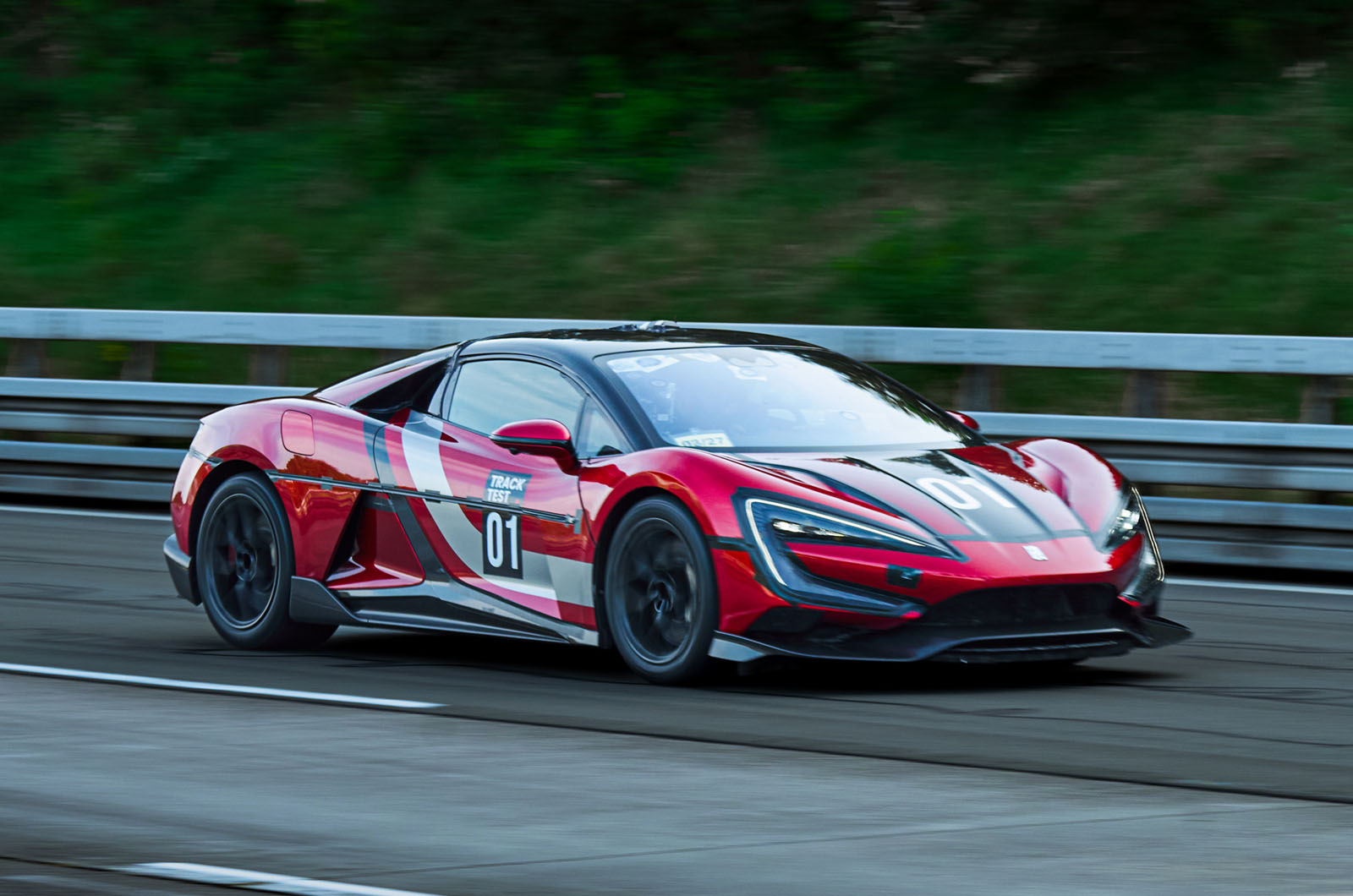
2977bhp Yangwang U9 breaks EV top speed record

Outrageously powerful Track Edition of Chinese supercar hit 293.54mph at the ATP test track in Germany

The 2977bhp Yangwang U9 has hit almost 300mph, smashing the top speed record for an electric car.

The official speed of 293.54mph was achieved at the ATP test track in Germany. It surpasses the 272.61mph set by the Aspark Owl.

The feat was completed by the hardcore Track Edition variant of the Chinese supercar. Each of its four motors puts out 744bhp, meaning power is boosted by 1689bhp over the standard car. This top-rung U9 can hit 62mph from rest in 2.36sec.

Key to the record was the car’s independent torque-vectoring system, said Yangwang. Controlled by road-monitoring sensors, each motor is adjusted up to 100 times per second to maximise grip and performance.

The record achieving U9 also wore special semi-slick tyres developed by Giti Tire, which were optimised to reduce torque loss and wear.

The record was set by German professional driver Marc Basseng, who was behind the wheel for the previous attempt in 2024, achieving a speed of 243mph.

This placed the U9 behind the Owl and the Rimac Nevera R (268.2mph) but was enough for it to become the fastest non-airborne Chinese vehicle ever – surpassing even the 220mph speed of China's high-speed trains.


1756205559137.png

1756205623150.png
 
2977bhp Yangwang U9 breaks EV top speed record

Outrageously powerful Track Edition of Chinese supercar hit 293.54mph at the ATP test track in Germany

The 2977bhp Yangwang U9 has hit almost 300mph, smashing the top speed record for an electric car.

The official speed of 293.54mph was achieved at the ATP test track in Germany. It surpasses the 272.61mph set by the Aspark Owl.

The feat was completed by the hardcore Track Edition variant of the Chinese supercar. Each of its four motors puts out 744bhp, meaning power is boosted by 1689bhp over the standard car. This top-rung U9 can hit 62mph from rest in 2.36sec.

Key to the record was the car’s independent torque-vectoring system, said Yangwang. Controlled by road-monitoring sensors, each motor is adjusted up to 100 times per second to maximise grip and performance.

The record achieving U9 also wore special semi-slick tyres developed by Giti Tire, which were optimised to reduce torque loss and wear.

The record was set by German professional driver Marc Basseng, who was behind the wheel for the previous attempt in 2024, achieving a speed of 243mph.

This placed the U9 behind the Owl and the Rimac Nevera R (268.2mph) but was enough for it to become the fastest non-airborne Chinese vehicle ever – surpassing even the 220mph speed of China's high-speed trains.


View attachment 1843375

View attachment 1843376

What does this mean?

fastest non-airborne Chinese vehicle ever

It competed with drones?
 
Good lord! The Yangwang U9 is now the fastest EV on earth after hitting 293.54mph

Watch out Bugatti, BYD’s all-electric hypercar could be coming for your crown. Now gets 2,958bhp…

Here’s something that we might refer to in the future as ‘a moment’. BYD’s fancy sub-brand Yangwang has been working on a special Track Edition of its U9 electric supercar, and we have just learned that it recently hit a top speed of 293.54mph.

Yep, from now on we’ll probably have to refer to this thing as an electric hypercar, because it really is chuffing quick. In fact, it’s the fastest electric production car on earth. Take that, Rimac Nevera R (268mph) and Aspark Owl (272mph).

German driver Marc Basseng hit that bonkers top speed at the ATP Automotive Testing Papenburg test track earlier this month, just a year after he did 233mph in the ‘standard’ U9.

“Last year, I thought I'd peaked. I never expected to break my own record so soon — but here we are, at the same track, with new technologies that have made it possible,” said Basseng. He didn’t just surpass that previous top end, he absolutely obliterated it. This new 293mph run will even put Bugatti and Koenigsegg on notice.

 
Huh? Drones are airborne. So are fighter jets.

Yeah, don't they have land speed vehicles at all? Although, my initial confusion was that it was the fastest around the track, not just chinese vehicles in general. Speed reading the document there and comprehended like a 30%er
 
Opinion: the Yangwang U9’s 293mph v-max is MADDER than you think

Allow us to sprinkle a little sobering context on the Chinese EV hypercar’s lunge for 300mph

If you’ve just reseated your backside on your chair having promptly fallen off after a Chinese hypercar did a verified 293 miles per hour, can I just invite you to end up on the floor in disbelief all over again?

Yesterday the internet got lathered up over the footage of the staggeringly generic-looking Yangwang strolling up to 472kph (293mph) making it the fastest road-legal EV in the world, and among the top three fastest road cars, full stop.

What alarmed me wasn’t the speed, but the location.

As you know, the world’s not overrun with locations to safely run a car up towards 300 miles per hour. Ehra-Lessien is the obvious German test track, but Volkswagen, (which owns it) isn’t about to let a Chinese upstart have a crack on their patch, are they?

Even Bugatti, which isn’t quite in the VW circle of trust any more since its Rimac merger, is barred. That’s why when it wanted to set an open-roof v-max record with the Mistral last November, it was forced to use a place called ATP Papenburg in north-west Germany.

Alternatives? Nardo, Italy’s high-speed bowl, is a constant corner and too bumpy for these nutty speeds. Millbrook in the UK? Forget it. You might as well use the Monaco GP circuit. And road cars can’t put their power down on the Bonneville salt flats.

So, Papenburg’s high-speed test oval has become numero-uno-speed-record-crucible. The Bugatti Mistral did 282mph there in light drizzle.


1756294459552.png
 
BYD overtakes Tesla in Europe as electric car sales reach new record

Europe's car market showed surprising strength in July, posting its best monthly growth in over a year as sales climbed 5.9% to 1.09 million vehicles. The boost for the auto industry wasn't driven by a renewed love for gasoline engines, but by a massive surge in demand for electric cars.

This electric wave also brought a major shift in the market's hierarchy. For the first time, Chinese automaker BYD sold more EVs in Europe than its well-known American competitor, Tesla.

The switch to electric power is happening faster than many predicted. Data from the European Automobile Manufacturers' Association (ACEA) shows that in the European Union, nearly 60% of all new cars sold in July were electrified in some way. This includes fully electric cars, plug-in hybrids, and standard hybrids.

That figure, 59.8% to be exact, is a big jump from the 51.1% market share these vehicles held just one year ago. Sales of pure battery-electric cars (BEVs) saw their largest jump since August 2023, rising by 39.1%. Plug-in hybrids (PHEVs) had an even better month, with sales increasing by 56.9% - the biggest leap since the ACEA started reporting that specific figure in early 2023.

Much of this growth can be traced to Europe's largest car market: Germany. The German government introduced a new incentive plan in June to encourage people to buy electric cars. The effect was immediate. In July, sales of fully electric cars in Germany leaped by 58%, while sales of plug-in hybrids rocketed up by 83.6%.

This strong performance in a single country highlights how government action can directly influence consumer choices and accelerate the move away from fossil fuels. Overall, car sales in Germany grew by 11.1%, helping to lift the entire continent's numbers.

 
Top
Sign up to the MyBroadband newsletter
X