The Home Improvements Thread (2)

Status
Not open for further replies.
I have done this before i.e. multiple contractors - it becomes tricky, and lot's of finger pointing

I have recently used a really good contractor for 2 bathrooms, complete revamps, he was excellent. The scope was extensive, plumbing, flooring, lighting, tiling, screeding, rhino-liting etc. so it was a very good test of his work.
Full Turn-Key solution, obligation free quote, the owner manages the project. I can PM you his details, get him out, get a quote and see what you in for, he also provided some really good advice and his quotes are itemised.

PS: I originally found him via the CTM contractors service, but have used him privately since
Please PM your contractors details. I'm also looking at doing a complete revamp of our bathroom.
 
Here is the article I wrote on:
HOW TO SELECT THE CORRECT CONTRACTOR TO QUOTE ON YOUR HOME IMPROVEMENT PROJECT.
I wrote another on how to chose the right Contractor once you have the quotes.
Please let me know if you want me to post that one too...

I. How to find the right contractor to quote on your Home Improvement Project

Introduction:

There are many horror stories from people who engaged a Contractor to perform home improvement/renovations & the project ended in disaster.

This article will hopefully help you, the Home-Owner, minimize your chances of having your project ending in a disaster.

Over my 30 years in the industry, I have heard hundreds of stories of projects ending badly, in fact, barely a week goes by that I’m not told of another one, usually as I have been called out to assist with the aftermath.

Over the years I have noticed certain ‘common threads’ through all these stories & finally decided to draw up guidelines to avoid being a victim of a project gone wrong.

Notes:

1. On large projects, like building a new home, new building or a new wing to an existing home where plans need to be drawn up & approved, it is advisable to hire a project manager (the architect sometimes performs this role) & do the project under the JBCC guidelines.

These large projects may involve Health & Safety officers, Quantity Surveyors, a BoQ (Bill of Quantities), Payment Guarantees, Late Complement Penalties etc. The advice below will still apply, however you should largely be protected by the JBCC & the Project Manager.

2. Whilst the advice below will help on smaller jobs. Like those with a value below R10 000, this advice is primarily aimed at projects of higher value.

Here is my advice:

Starting Out:

Right, so you’ve decided to embark on a Home Improvement Project, be it to:

Repaint the Exterior of the house, or

Repaint the Interior, or

Repaint the roof, or

Have a crack in one room repaired & the walls repainted, or

Retiling, or

Renovating a Bathroom or Kitchen, or

Having gutters &/or fascia’s replaced, or

Knocking down a wall to create an open plan space, or

Building a new lapa/entertainment area.

Replacing the low front fence with a higher wall, or

Repaving, or

Whatever….

Once you’ve decided exactly what you need done, your next step is to find someone to do it.

Selecting a Contractor to Quote:

Firstly you need to find a Contractor, the most common place these days (with the demise of the Yellow Pages) is to do an internet search, however, a friend or colleague may have recently done a similar project & have a Contractor they recommend, or you may ask on your neighbourhood/community Facebook or WhatsApp group, no matter where you source the contractor, it is advisable to apply the Star Rating System outlined below.

Remember, if the project has a value north of R10000 it is important to try obtain more than one quote, ideally try get three quotes.


Star Rating System:

1. Website:


No matter where you find the Contractor/s, go look at their website, if they have a Website & it’s fairly decent, allocate a Star * 1st Star


2. Google Reviews:

Check the Google reviews of the Contractor/s, there should be at least 10 reviews. The more reviews the better. The Google Review rating should be between 4.5 & 4.9.

Note that a Contractor with no Google reviews, or one with less than 10 Reviews (especially if they are all 5 Star positive reviews) should raise a red flag. Everyone gets friends & family to write a review, that’s why it is important to see more than 10. Also, read the negative reviews & how the company responded to the negative review – this will tell you a lot about both the Reviewer & the company. Also, on a very negative Review, check out the Reviewer, there are a lot of professional complainers who live to write negative Reviews, so, use your discretion if there is a horrible review from someone who has reviewed many companies & all the reviews are negative.

If there are 10+ reviews and the rating is between 4.5 & 4.9, give a Star *

You may give a Star if the rating is 5.0, but first satisfy yourself that it is legit. 2nd Star

3. Years in the Industry:

Next is to find out how long the company has been in existence; this should be on the Website (or on their Facebook Page) or you can take a guess based on the age of the oldest Google Review.

If more than 5 years, allocate a Star * 3rd Star


4. Other

Look at other areas, for example, on one horror story the client used a company where the Contractors e-mail address was something like [email protected] (for example) yet the company’s name was completely different & there was no painting involved in the project.

So, look for anything that doesn’t add up. Check Hello Peter, google the owner etc.

Allocate a Star * if this ‘Due Diligence’ doesn’t reveal anything negative. 4th Star

Right, so now you should have two or three Contractors with, ideally, 4 Stars * each, contact them. (Note: a phone call is far better than sending a text, using a ‘Contact Us’ form or sending an e-mail. By nature, good contractors are out doing good work, not in the office reading e-mails, or texts), explain what you require them to quote on & arrange for them to come see you.).


The House Doctor 2023
 
Ideally one Contractor, otherwise you become the project manager.

I'm doing a VERY similar job for a client in Lonehill (sans kitchen), look at about 4 month's (16 weeks).

Ideally do the windows now, or never.

You mention the floors, so that means new skirtings.
You do not mention ceilings, but if the walls go you'd need new ceilings throughout surely.

Sounds like a R220k to R360k job.

I have drawn up guidelines on how to choose the correct Contractor for a project like this, it's a bit lengthy, but I'll try post it here later ~ following the guidelines will greatly minimize your chances of telling the horror stories many people have after embarking on a project like this....
Sorry actually this might be a silly question, but I'm struggling to understand how the project could get up to numbers as high as R200k - R300k? How would that number be split?

% allocated to Demolition of x5 Non-load-bearing walls?
% allocated to re-tiling say 50m2 area? (60x60 porcelain tiles)
% allocated to laminate floor in a 20m2 main bedroom
% allocated to plastering/rhinolighting (Total interior floor size is 170m2)
% allocated to paint
% to ceiling, cornice & skirting

I'm mainly referring to the cost of materials, the labour im guessing is a function of the contractor you ultimately go with?

Unless im asking the wrong questions altogether?
 
Last edited:
Here is the article I wrote on:
HOW TO SELECT THE CORRECT CONTRACTOR TO QUOTE ON YOUR HOME IMPROVEMENT PROJECT.
I wrote another on how to chose the right Contractor once you have the quotes.
Please let me know if you want me to post that one too...

I. How to find the right contractor to quote on your Home Improvement Project

Introduction:

There are many horror stories from people who engaged a Contractor to perform home improvement/renovations & the project ended in disaster.

This article will hopefully help you, the Home-Owner, minimize your chances of having your project ending in a disaster.

Over my 30 years in the industry, I have heard hundreds of stories of projects ending badly, in fact, barely a week goes by that I’m not told of another one, usually as I have been called out to assist with the aftermath.

Over the years I have noticed certain ‘common threads’ through all these stories & finally decided to draw up guidelines to avoid being a victim of a project gone wrong.

Notes:

1. On large projects, like building a new home, new building or a new wing to an existing home where plans need to be drawn up & approved, it is advisable to hire a project manager (the architect sometimes performs this role) & do the project under the JBCC guidelines.

These large projects may involve Health & Safety officers, Quantity Surveyors, a BoQ (Bill of Quantities), Payment Guarantees, Late Complement Penalties etc. The advice below will still apply, however you should largely be protected by the JBCC & the Project Manager.

2. Whilst the advice below will help on smaller jobs. Like those with a value below R10 000, this advice is primarily aimed at projects of higher value.

Here is my advice:

Starting Out:

Right, so you’ve decided to embark on a Home Improvement Project, be it to:

Repaint the Exterior of the house, or

Repaint the Interior, or

Repaint the roof, or

Have a crack in one room repaired & the walls repainted, or

Retiling, or

Renovating a Bathroom or Kitchen, or

Having gutters &/or fascia’s replaced, or

Knocking down a wall to create an open plan space, or

Building a new lapa/entertainment area.

Replacing the low front fence with a higher wall, or

Repaving, or

Whatever….

Once you’ve decided exactly what you need done, your next step is to find someone to do it.

Selecting a Contractor to Quote:

Firstly you need to find a Contractor, the most common place these days (with the demise of the Yellow Pages) is to do an internet search, however, a friend or colleague may have recently done a similar project & have a Contractor they recommend, or you may ask on your neighbourhood/community Facebook or WhatsApp group, no matter where you source the contractor, it is advisable to apply the Star Rating System outlined below.

Remember, if the project has a value north of R10000 it is important to try obtain more than one quote, ideally try get three quotes.


Star Rating System:

1. Website:


No matter where you find the Contractor/s, go look at their website, if they have a Website & it’s fairly decent, allocate a Star * 1st Star


2. Google Reviews:

Check the Google reviews of the Contractor/s, there should be at least 10 reviews. The more reviews the better. The Google Review rating should be between 4.5 & 4.9.

Note that a Contractor with no Google reviews, or one with less than 10 Reviews (especially if they are all 5 Star positive reviews) should raise a red flag. Everyone gets friends & family to write a review, that’s why it is important to see more than 10. Also, read the negative reviews & how the company responded to the negative review – this will tell you a lot about both the Reviewer & the company. Also, on a very negative Review, check out the Reviewer, there are a lot of professional complainers who live to write negative Reviews, so, use your discretion if there is a horrible review from someone who has reviewed many companies & all the reviews are negative.

If there are 10+ reviews and the rating is between 4.5 & 4.9, give a Star *

You may give a Star if the rating is 5.0, but first satisfy yourself that it is legit. 2nd Star

3. Years in the Industry:

Next is to find out how long the company has been in existence; this should be on the Website (or on their Facebook Page) or you can take a guess based on the age of the oldest Google Review.

If more than 5 years, allocate a Star * 3rd Star


4. Other

Look at other areas, for example, on one horror story the client used a company where the Contractors e-mail address was something like [email protected] (for example) yet the company’s name was completely different & there was no painting involved in the project.

So, look for anything that doesn’t add up. Check Hello Peter, google the owner etc.

Allocate a Star * if this ‘Due Diligence’ doesn’t reveal anything negative. 4th Star

Right, so now you should have two or three Contractors with, ideally, 4 Stars * each, contact them. (Note: a phone call is far better than sending a text, using a ‘Contact Us’ form or sending an e-mail. By nature, good contractors are out doing good work, not in the office reading e-mails, or texts), explain what you require them to quote on & arrange for them to come see you.).


The House Doctor 2023
Thanks for sharing, really insightful, can already see some 1-star contractors
 
Sorry actually this might be a silly question, but I'm struggling to understand how the project could get up to numbers as high as R200k - R300k? How would that number be split?

% allocated to Demolition of x5 Non-load-bearing walls?
% allocated to re-tiling say 50m2 area? (60x60 porcelain tiles)
% allocated to laminate floor in a 20m2 main bedroom
% allocated to plastering/rhinolighting (Total interior floor size is 170m2)
% allocated to paint
% to ceiling, cornice & skirting

I'm mainly referring to the cost of materials, the labour im guessing is a function of the contractor you ultimately go with?

Unless im asking the wrong questions altogether?
Well, we don't have figures and measurements so I was giving a thumb suck.
Floor area has absolutely nothing to do with wall area.
Demolitions R450/m2 of wall.
Rubble removal R1200/m3
Floor chopping R54/m2
Tiling R150/m2 Excl tiled
Ceilings R380/m2
Painting of Ceilings and walls at R112/m2
Skirtings anything from R88/Lm
Cornices from R68/m2
Ceiling Insulation R160/m2

Add it up.

That excludes plumbing, electrical etc.
 
Here is the article I wrote on:
HOW TO SELECT THE CORRECT CONTRACTOR TO QUOTE ON YOUR HOME IMPROVEMENT PROJECT.
I wrote another on how to chose the right Contractor once you have the quotes.
Please let me know if you want me to post that one too...

I. How to find the right contractor to quote on your Home Improvement Project

Introduction:

There are many horror stories from people who engaged a Contractor to perform home improvement/renovations & the project ended in disaster.

This article will hopefully help you, the Home-Owner, minimize your chances of having your project ending in a disaster.

Over my 30 years in the industry, I have heard hundreds of stories of projects ending badly, in fact, barely a week goes by that I’m not told of another one, usually as I have been called out to assist with the aftermath.

Over the years I have noticed certain ‘common threads’ through all these stories & finally decided to draw up guidelines to avoid being a victim of a project gone wrong.

Notes:

1. On large projects, like building a new home, new building or a new wing to an existing home where plans need to be drawn up & approved, it is advisable to hire a project manager (the architect sometimes performs this role) & do the project under the JBCC guidelines.

These large projects may involve Health & Safety officers, Quantity Surveyors, a BoQ (Bill of Quantities), Payment Guarantees, Late Complement Penalties etc. The advice below will still apply, however you should largely be protected by the JBCC & the Project Manager.

2. Whilst the advice below will help on smaller jobs. Like those with a value below R10 000, this advice is primarily aimed at projects of higher value.

Here is my advice:

Starting Out:

Right, so you’ve decided to embark on a Home Improvement Project, be it to:

Repaint the Exterior of the house, or

Repaint the Interior, or

Repaint the roof, or

Have a crack in one room repaired & the walls repainted, or

Retiling, or

Renovating a Bathroom or Kitchen, or

Having gutters &/or fascia’s replaced, or

Knocking down a wall to create an open plan space, or

Building a new lapa/entertainment area.

Replacing the low front fence with a higher wall, or

Repaving, or

Whatever….

Once you’ve decided exactly what you need done, your next step is to find someone to do it.

Selecting a Contractor to Quote:

Firstly you need to find a Contractor, the most common place these days (with the demise of the Yellow Pages) is to do an internet search, however, a friend or colleague may have recently done a similar project & have a Contractor they recommend, or you may ask on your neighbourhood/community Facebook or WhatsApp group, no matter where you source the contractor, it is advisable to apply the Star Rating System outlined below.

Remember, if the project has a value north of R10000 it is important to try obtain more than one quote, ideally try get three quotes.


Star Rating System:

1. Website:


No matter where you find the Contractor/s, go look at their website, if they have a Website & it’s fairly decent, allocate a Star * 1st Star


2. Google Reviews:

Check the Google reviews of the Contractor/s, there should be at least 10 reviews. The more reviews the better. The Google Review rating should be between 4.5 & 4.9.

Note that a Contractor with no Google reviews, or one with less than 10 Reviews (especially if they are all 5 Star positive reviews) should raise a red flag. Everyone gets friends & family to write a review, that’s why it is important to see more than 10. Also, read the negative reviews & how the company responded to the negative review – this will tell you a lot about both the Reviewer & the company. Also, on a very negative Review, check out the Reviewer, there are a lot of professional complainers who live to write negative Reviews, so, use your discretion if there is a horrible review from someone who has reviewed many companies & all the reviews are negative.

If there are 10+ reviews and the rating is between 4.5 & 4.9, give a Star *

You may give a Star if the rating is 5.0, but first satisfy yourself that it is legit. 2nd Star

3. Years in the Industry:

Next is to find out how long the company has been in existence; this should be on the Website (or on their Facebook Page) or you can take a guess based on the age of the oldest Google Review.

If more than 5 years, allocate a Star * 3rd Star


4. Other

Look at other areas, for example, on one horror story the client used a company where the Contractors e-mail address was something like [email protected] (for example) yet the company’s name was completely different & there was no painting involved in the project.

So, look for anything that doesn’t add up. Check Hello Peter, google the owner etc.

Allocate a Star * if this ‘Due Diligence’ doesn’t reveal anything negative. 4th Star

Right, so now you should have two or three Contractors with, ideally, 4 Stars * each, contact them. (Note: a phone call is far better than sending a text, using a ‘Contact Us’ form or sending an e-mail. By nature, good contractors are out doing good work, not in the office reading e-mails, or texts), explain what you require them to quote on & arrange for them to come see you.).


The House Doctor 2023
Thanks for the post. I can't help but to summarise it in my head as "do as much as you can yourself".

Our neighbour did a renovation extending their home and making some changes. I see they had to take the new roof down again and some of the walls and fired the building company. Had to get a new team and rebuild half the walls and redo the roof.
 
Well, we don't have figures and measurements so I was giving a thumb suck.
Floor area has absolutely nothing to do with wall area.
Demolitions R450/m2 of wall.
Rubble removal R1200/m3
Floor chopping R54/m2
Tiling R150/m2 Excl tiled
Ceilings R380/m2
Painting of Ceilings and walls at R112/m2
Skirtings anything from R88/Lm
Cornices from R68/m2
Ceiling Insulation R160/m2

Add it up.

That excludes plumbing, electrical etc.
Thank you so much for these! It really really helps to put it into perspective. Just to be 100% clear are these figures for labour? material? or both?
 
Last edited:
Also on a semi - related note... Financing these renovations.

Given the recent Joburg municipality property valuation increase, assuming the valuation is correct:
  1. Does that technically mean you have more equity in the property?
  2. If so, could you use the valuation to convince your bank to revalue your property and let you borrow against that new equity?
  3. If so, would it be advisable to use those funds to finance the renovations given that they'dbe adding to the value of the house?
 
The only thing a new valuation does, is allow the municipality to up your property rates, eg. you will be paying more monthly. The reason they do this, is more money, but to keep up with market prices for properties. So it should usually work out closer to what you can sell the property for now.

As for borrowing extra, rarely a wise choice.
 
I have some pretty severe water hammer when my washing machine runs that rattles the main feed going through the house. I have easy accessibility to the pipes that feed the machine as they are tacked to the wall in the garage.

Is there maybe a device that I can install between the washing machine and the feed pipe to reduce or prevent this? My dogs have PTSD and think they are in Vietnam every time I do the laundry:oops:

1692085393214.jpeg
 
Also on a semi - related note... Financing these renovations.

Given the recent Joburg municipality property valuation increase, assuming the valuation is correct:
  1. Does that technically mean you have more equity in the property?
  2. If so, could you use the valuation to convince your bank to revalue your property and let you borrow against that new equity?
  3. If so, would it be advisable to use those funds to finance the renovations given that they'dbe adding to the value of the house?
I would only borrow extra if I firstly I was able to cover the increased payments, secondly had high confidence in the total amount that would be needed to complete the job and thirdly that the increased value of the property made sense in the area (e.g. spending hundreds of thousands and then not being able to recoup some of that if you wanted to sell would suck).

I've been maxing out my TFSA for the past few years, will probably use those funds when I do my renovation.
 
I have some pretty severe water hammer when my washing machine runs that rattles the main feed going through the house. I have easy accessibility to the pipes that feed the machine as they are tacked to the wall in the garage.

Is there maybe a device that I can install between the washing machine and the feed pipe to reduce or prevent this? My dogs have PTSD and think they are in Vietnam every time I do the laundry:oops:

View attachment 1572138
I too have annoying hammer, I think mine is just unsecured pipes but the pipes are mostly inaccessible so I just live with it. No dogs, so it's only the humans that get startled.
 
I have some pretty severe water hammer when my washing machine runs that rattles the main feed going through the house. I have easy accessibility to the pipes that feed the machine as they are tacked to the wall in the garage.

Is there maybe a device that I can install between the washing machine and the feed pipe to reduce or prevent this? My dogs have PTSD and think they are in Vietnam every time I do the laundry:oops:

View attachment 1572138
You need to find and affix the loose parts of the pipe, which is moving when the washing machine closes its valve after filling..
 
So I bought the house with this POS composite deck. It's 5 years old and FUBAR. The substructure started collapsing and the composite planks started to perish and break in places.

During the 5 years, I have replaced some of the wooden substructures here and there and finally, I had enough and replaced it with concrete and on top of the concrete, they put a Cemcrete screed. Here are some before and after.

I am very happy with the end result.

View attachment 1230306View attachment 1230304

View attachment 1230308

View attachment 1230310
View attachment 1230312
View attachment 1230314
View attachment 1230316
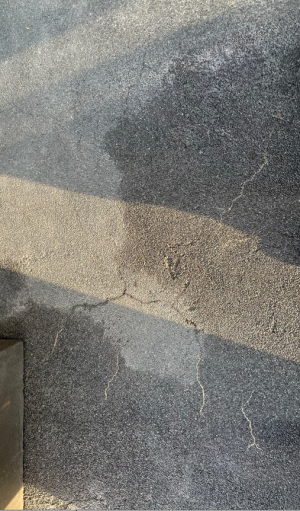
Almost 2 years later and this is what it looks like now. FML.

1692242002164.png
1692242024100.png
1692242045910.png
1692242065063.png
1692242092694.png
 
Ouch.

Something that amazed me on YouTube not too long ago. I watched a YouTuber doing his own concrete, and he planned for the future cracks by adding indents or lines on purpose, with the intention, to let the cracks happen on that line. Not sure if it worked, but thought damn that's ingenious.
 
Ouch.

Something that amazed me on YouTube not too long ago. I watched a YouTuber doing his own concrete, and he planned for the future cracks by adding indents or lines on purpose, with the intention, to let the cracks happen on that line. Not sure if it worked, but thought damn that's ingenious.
Ja not sure what I'm gonna do. I can send the pics to the contractor but nothing will come of it. And I am not lus for a fight. That stoepietjie was a R100k job. Now looks like an old unused tar road. Fsck

And we installed expansion joints but it's cracking all over the show. It's also not as if there's a lot of standing water on there. It gets washed once a week and then whenever it rains.
 
Ouch.

Something that amazed me on YouTube not too long ago. I watched a YouTuber doing his own concrete, and he planned for the future cracks by adding indents or lines on purpose, with the intention, to let the cracks happen on that line. Not sure if it worked, but thought damn that's ingenious.
Pretty much how concrete slabs should be cast. One thing is sure, it WILL crack.
 
Moved into a new place and over the last year a few of the door handles start coming loose. I have previously used a wood filler to screw the handle back which is good for 2-3 months then they start coming loose again. Any better solution to try ?

c4173aaed2aa66d9ad60867ea7fb563b.jpg

bea7e32cf1dc235c2f1a634d26cb67fe.jpg
 

Attachments

  • IMG_1811.png
    IMG_1811.png
    370.7 KB · Views: 64
Status
Not open for further replies.
Top
Sign up to the MyBroadband newsletter
X