The Honda e (EV)

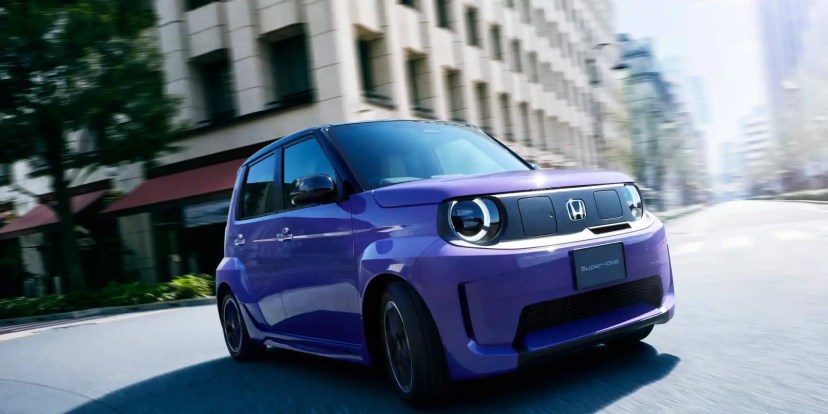
Honda Super-N unveiled as ‘thrilling’ compact EV

Honda has whipped the wraps off the Super-N, a city-focused EV promising a thrilling driving experience through a dedicated ‘Boost’ driving mode…

Inspired by the City Turbo II of the 1980s, the Super-N is based on the lightweight architecture underpinning Honda’s advanced N Series ‘Kei’ car range that’s sold in Japan. With the Super-N, the Japanese automaker is aiming to redefine the possibilities of a small electric vehicle (EV).

The Super-N is equipped with a single, front-mounted electric motor producing 47 kW. However, when activating ‘Boost’ mode, the power figure is lifted to 70 kW. Honda has yet to reveal how much torque the e-motor produces. Power is delivered to the front wheels via an automatic transmission with simulated gear shifts. An Active Sound Control system generates engine sounds.

The new Honda city EV’s e-motor is coupled with a 29.6 kWh battery pack, which offers a claimed combined operating range of 206 km. The battery can receive up to 50 kW at a DC fast-charging station.


 
The pocket-sized electric Honda Super-ONE goes on sale in Japan

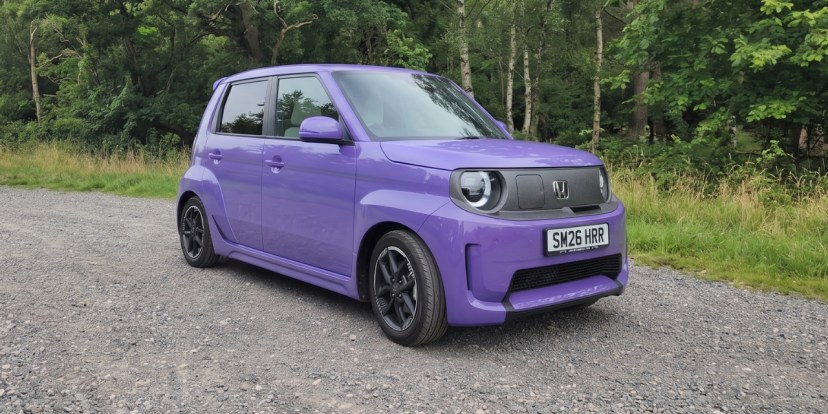
It's no secret that automakers struggle to make small electric cars exciting. High battery costs leave budget-friendly options feeling clinical and stripped of character. But Honda wants to challenge this reality with its newest global vehicle, an affordable and "aggressive" electric hot hatch. The vehicle officially started sales in Japan on Friday, May 22, 2026, under the name Super-ONE, and will soon head to international markets to shake up the entry-level segment.

The new model shifts away from the philosophy of building purely economical transport boxes. Honda engineers used the lightweight Japanese N-Series platform as a base but heavily modified the architecture. The Super-ONE gets a unique, dedicated chassis with a wider track and muscular exterior lines. This structural alteration allows the vehicle to sit lower and hold the road more confidently than standard city runarounds. With an overall length of just 3,395 mm, the vehicle is remarkably compact - it takes up a lot less space than the new Volkswagen ID. Polo GTI.

The performance is somewhat underwhelming, but it adapts to how you choose to drive. In normal conditions, the electric motor draws energy from a 29.6 kWh battery pack to deliver 63 horsepower (47 kW). The vehicle has five selectable driving profiles: ECON, CITY, NORMAL, SPORT, and an exclusive BOOST mode. Activating BOOST mode temporarily unlocks a maximum output of 93 horsepower (70 kW). The CITY setting also enables single-pedal driving, which slows the vehicle to a complete stop when you lift off the accelerator.

To bridge the emotional gap between electric cars and traditional internal combustion sports cars, Honda took inspiration from larger performance EVs on the market - the Super-ONE incorporates a simulated seven-speed transmission. This system works in tandem with an Active Sound Control program. Together, they mimic the shift points, slight mechanical hesitations, and exhaust notes of an old-school gasoline engine. Drivers can interact with these virtual gears via paddles mounted behind the steering wheel.

 
Still not coming to ZA?

Also, do people really think that thing is cute or adorable? I liked the first E better.
 
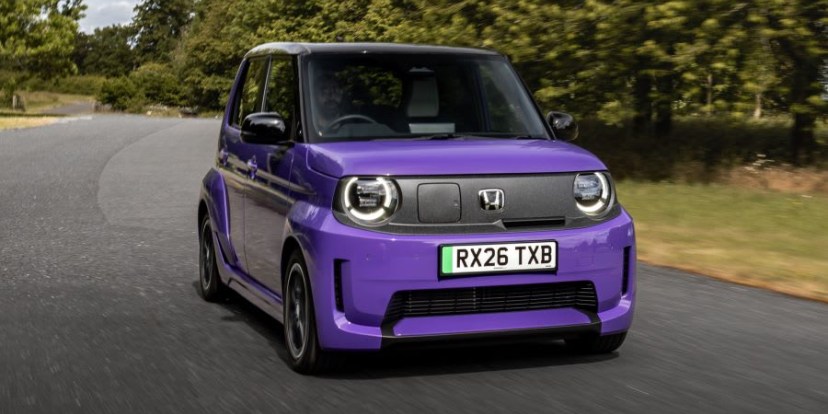
Honda Super-N becomes one of UK’s cheapest EVs

Honda finally announced the official pricing structure for its compact new hatchback, making it one of the most affordable electric cars available in the United Kingdom. The brand set the entry price for the Honda Super-N at exactly €22,274, putting the small hatchback right between the BYD Dolphin Surf and the Fiat 500e.

To keep the entry price low, Honda gave the Super-N a modest 29.6 kWh battery pack. This relatively small battery means that the hatchback delivers a combined driving range of only 206 km on a full charge. When you look at competing electric cars, Honda's range falls behind alternative options - the Dacia Spring costs less money and offers a better range of 225 km.

The mixed-scenario range is limited, but the tiny EV excels at low-speed driving. When drivers use it at city speeds, the driving range rises to an impressive 320 km, aligning perfectly with the vehicle's design objective as an urban commuter car. Most owners will spend their time on narrow city streets rather than tackling long cross-country highway trips, making the short highway range not a big deal for daily use.

One major advantage of the small battery size is the low total curb weight - the Honda Super-N weighs just 1,097 kg, which makes it exceptionally light for modern EVs. The low weight makes the car nimble, sharp, and highly responsive when turning corners or parking in tight urban spaces. In standard driving mode, the electric powertrain produces a conservative 64 metric horsepower (PS). This modest output allows the hatchback to accelerate from zero to 100 km/h in a very leisurely 14.51 seconds, before reaching a maximum top speed of 135 km/h.

That leisurely driving experience changes completely when you press a large purple control on the steering wheel. This "boost" feature increases the electric motor output up to 94 horsepower. Pushing it slashes the zero to 100 km/h acceleration time down to exactly 10 seconds. As an added visual touch, pressing the button bathes the interior cabin in bright purple ambient lighting to make the sudden change in performance even more dramatic.

In addition to the extra power, the performance setting introduces a simulated seven-speed automatic transmission. Drivers can use physical paddles behind the steering wheel to simulate manual gear shifts. To complete the experience, the Super-N has an Active Sound Control system to pipe artificial engine noises directly into the cabin. Many buyers may look at these fake gear shifts as a simple gimmick, but test drivers report that the technology provides an entertaining and authentic sensation.

 
Top
Sign up to the MyBroadband newsletter
X