The SA Vehicle Industry Thread

Ford to switch to Google's Android operating system from 2023

Ford has announced a new “strategic partnership” with Google that will see the Blue Oval brand’s vehicles switch to the Android operating system from 2023.

The Dearborn-based firm furthermore named Google Cloud its preferred cloud provider as part of the six-year partnership.

Ford and Google will also establish a new “collaborative group” called Team Upshift, conceived to leverage the “talent and assets of both companies” and “push the boundaries of Ford’s transformation”.

From 2023, the company says Ford and Lincoln customers “globally” will start to benefit from the Android operating system, complete with built-in apps and services such as Google Assistant, Google Maps and Google Play.

This is great news. Sync 3 can have a proper spazz out moment every now and again including a blue screen, frozen screen, revers camera unavilable etc...

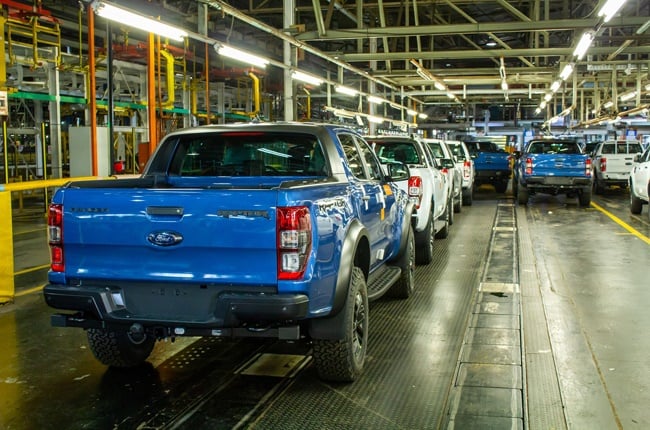
I'm locked in for a new Ranger in 2023 so look forward to switching to Android on the head unit as well.
 
South Africa's top-selling cars of 2020

In 2020, the South African motor retail industry registered its lowest aggregate new-vehicle sales total in almost 2 decades. Suffice to say last year was an annus horribilis, but the statistics nonetheless provide some fascinating insights into local buying patterns.

Where do South Africans spend their money when times are tough? Which segments are in decline? Which models are rising stars? Details sales statistics provided by Lightstone Auto provides the answers.

The overall Top 20

Ranking Make and Model Sales
1. Toyota Hilux 31 263
2. Volkswagen Polo Vivo 19 750
3. Ford Ranger 18 846
4. Volkswagen Polo 16 335
5. Isuzu D-Max 12 704
6. Toyota HiAce 11 263
7. Nissan NP200 10 480
8. Toyota Fortuner 9 635
9. Toyota Corolla Quest 7 365
10. Ford EcoSport 7 255
11. Renault Kwid 6 017
12. Toyota Etios 5 806
13. Volkswagen T-Cross 5 693
14. Hyundai Grand i10 5 622
15. Suzuki Swift 5 507
16. Hyundai i20 5 277
17. Nissan NP300 5 043
18. Ford Figo 4 906
19. Hyundai Venue 4 482
20. Haval H2 4 465

 
Volvo Cars just registered its best January global sales figure ever

Volvo Cars says it has registered its best-ever January global sales figures, kicking off 2021 with a bang.

Sales in Europe, China and the United States all increased during the first month of the year.

Global sales grew some 30,2 percent year-on-year to 59 588 units, a figure the Swedish firm says was “boosted” by a particularly strong performance in China, where the brand enjoyed a 91,3 percent year-on-year improvement to 19 160 units (admittedly off a low base thanks to the COVID-19 pandemic's impact in that market early in 2020).

 
Strong recovery! Volvo Cars reveals best-selling models for 2020

Volvo Cars reported its best-ever second-half profit and sales volumes in the final six months of 2020, recovering from the impact of the coronavirus pandemic.

The strong second-half to the year saw 391 751 units sold, an increase of 7,4 percent compared with the same period in 2019 (the company has since registered its best-ever January sales performance, too). For the full year, global sales reached 661 713 units, representing a year-on-year decline of 6,2 percent.

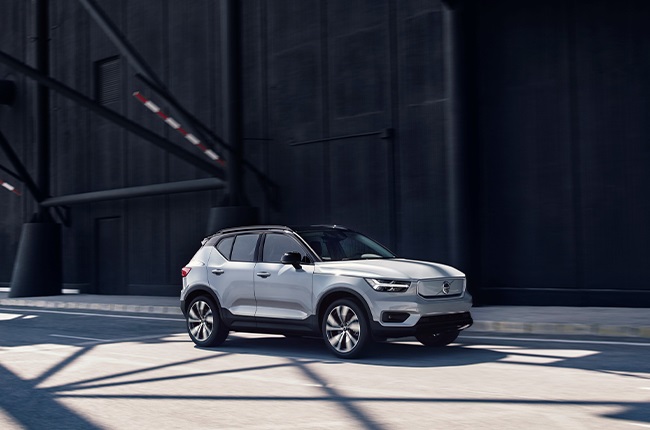
So, which models led the charge for the Swedish firm? Well, the XC60 was the best seller with 191 696 units (down 6,5 percent) registered worldwide in 2020.

The smaller XC40 was close behind with its 185 406 units representing an impressive 32,6 percent year-on-year improvement. The XC90 rounded out the sales podium for Volvo, with 92 458 units (down 8,2 percent) sold.

 
It’s official: Jaguar will offer ONLY electric vehicles from 2025

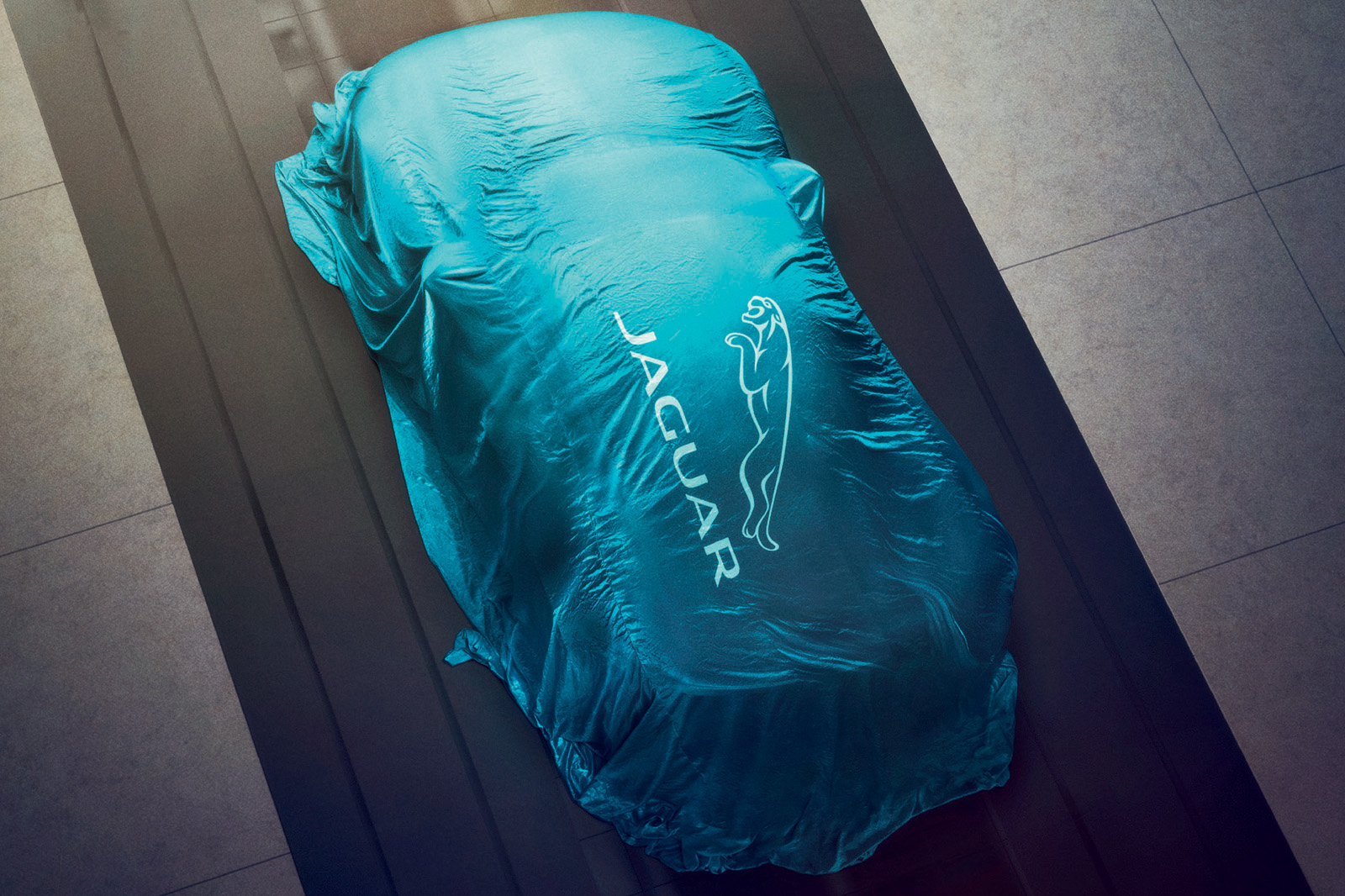
Jaguar has announced it plans to transform into a “pure electric luxury brand” by 2025, with all combustion-engined vehicles (yes, including those using the supercharged 5,0-litre V8) falling away.

In a statement, Jaguar Land Rover said it would “reimagine the future of modern luxury” with its two brands.

While the futures of both the Jaguar and Land Rover marques will feature some form of electrification, their vehicles will be built on “separate architectures with two clear, unique personalities”.

By 2025, the firm says Jaguar will have “undergone a renaissance” to emerge as a “pure electric luxury brand with a dramatically beautiful new portfolio of emotionally engaging designs and pioneering next-generation technologies”. The I-Pace is currently the only fully electric vehicle in Jaguar's range.


Jag.JPG
 
Breaking: Jaguar to become all-electric brand from 2025

Every Jaguar and Land Rover model to receive fully electric variant by 2030, with separate EV platforms for each brand

Jaguar will become an electric-only brand from 2025 onwards, as part of a bold new ‘Reimagine’ strategy designed to revive the fortunes of Jaguar Land Rover.

New CEO Thierry Bollore has set a target for the British firm, owned by the Indian Tata Motors group, to become a net zero carbon business by 2039, including a major shift to electrification. By the end of the decade, every Jaguar and Land Rover model will be offered with an electric-only version.

Bolloore said that there are currently no plans to close any manufacturing facilities.

All Jaguar and Land Rover models will be offered with a pure electric version by the end of the decade, with Jaguar becoming an electric-only luxury brand from 2025 onwards. Meanwhile, Land Rover will launch six pure electric vehicles, with EV variants of five.

Land Rover will launch six pure electric vehicle variants within the next five years, with the first all-electric Land Rover due in 2024.

 
South Africa's best-selling double-cab bakkies in January 2021

We’ve managed to get our hands on double-cab bakkie sales statistics for January 2021, allowing us to see which model is the first to push ahead in South Africa’s sales race for the year.

While Naamsa no longer releases individual model sales figures to the public, a record of sales by body style is indeed kept. Thanks to our studious friends over at Lightstone Auto, we’re able to shed some light on the matter.

According to Lightstone Auto, the Toyota Hilux is leading the double-cab pack after the first month of 2021, with 1 290 units registered. The Ford Ranger is close behind in second place with 1 161 units. The Isuzu D-Max is third after January 2021, with 425 double-cab units sold.

 
Why you should think long and hard before you take that ‘unbeatable’ car deal

So, you’ve survived 2020 and you think you’ll celebrate by treating yourself to some new wheels. I mean, have you seen some of the deals out there right now? You’re a bit light on trade-in value, but that doesn’t matter: you’ll load the difference onto your new vehicle, finance it over 84 months or take a residual, and all is good.

Or is it really? Right now, there are many devices that car manufacturers, dealers and banks are using to help you get out of your old car and into that shiny new dream machine. But it’s important that you understand the ramifications on your finances – and how it affects your ability to get into your next new vehicle.

First, some context. Until 10-15 years ago, it was standard to finance cars over 60 months, or shorter. This generally meant that as consumers, we could get out of our existing vehicles anywhere between 24-36 months, because by then, we would have paid off enough of the car for the trade-in value to cover what we still owed. New car every 2-3 years? Yes, please.

Then, back in 2008, the global recession hit. The impact of this was that it made cars unaffordable for many consumers. So, to try and keep sales going, the industry’s reaction was to discount new vehicles or offer generous incentives.

 
@FiestaST

According to TransUnion’s most recent quarterly Vehicle Pricing Index (VPI), you’re effectively paying 6.7% more for a new car than the same time 12 months ago.

That's nearly R34k on a R500k vehicle in one year.
Why are cars getting that much more expensive, per year?
 
These are the regions to which SA-built vehicles were exported in 2020

While South Africa's export of new vehicles registered a “massive decline” in 2020, it’s still interesting to see which regions the country’s manufacturing operations serviced.

As a reminder, SA’s new vehicle exports fell 29,8 percent from the 387 092 units shipped off in 2019 to 271 819 units in 2020.

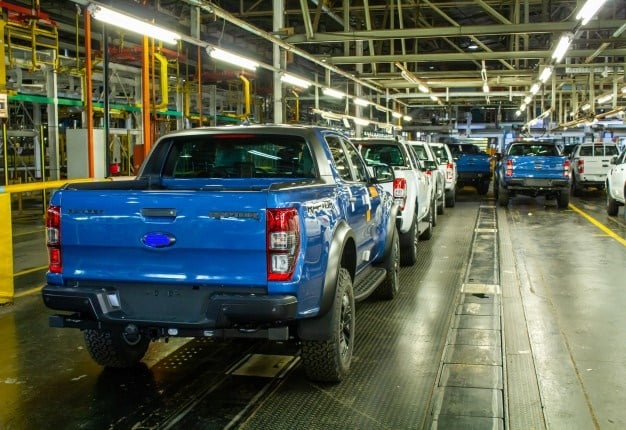
Big nameplates exported from local shores include the Volkswagen Polo, Mercedes-Benz C-Class and BMW X3, as well as Toyota’s Hilux and Fortuner plus Ford’s Ranger and Everest. In addition, Isuzu builds the D-Max for export, while Nissan ships off the soon-to-be-discontinued NP300 (set to be replaced by the locally built Navara).

So, where did the majority of these SA-built vehicles land up in 2020? Well, according to Naamsa's quarterly review of business conditions, Europe accounted for as many as 197 355 units, which translates to a whopping 72,6 percent.

Asia (29 440) was next, with the rest of Africa receiving 16 983 units. Australasia accounted for 13 698 units, while North America (9 463), Central America (3 156) and South America (1 188) made up the numbers.

 
Top
Sign up to the MyBroadband newsletter
X