


-
- News
-
Categories
- 5G
- ADSL
- AI
- Banking
- Black Friday
- Broadband
- Broadcasting
- Business
- Business Telecoms
- Cellular
- Cloud and Hosting
- Columns
- Cryptocurrency
- Energy
- Enterprise
- Fibre
- Gadgets
- Gaming
- Government
- Hardware
- Industry News
- Internet
- Internet of Things
- Investing
- IT Services
- Motoring
- Reviews
- Science
- Security
- Smartphones
- Software
- Technology
- Telecoms
- Trending
- Wireless
- Press Office
- Forum
- Industry News
- What's Next
- Company hub
- Speed Test
- About us
- Advertise with us
- Contact
- Careers
-
Join the MyBroadband community
South Africa’s biggest forum. Discuss, discover, and connect with thousands of members.
-
Question of the Day: How much would you be willing to pay for a next-generation gaming console?
- Forums
- General discussions
- Motoring and Transportation: Cars, Bikes and Plane
- General Motoring News and Reviews
You are using an out of date browser. It may not display this or other websites correctly.
You should upgrade or use an alternative browser.
You should upgrade or use an alternative browser.
The Toyota Hilux Thread
- Thread starter FiestaST
- Start date
FiestaST
Honorary Master
Toyota's legendary Hilux pick-up goes electric
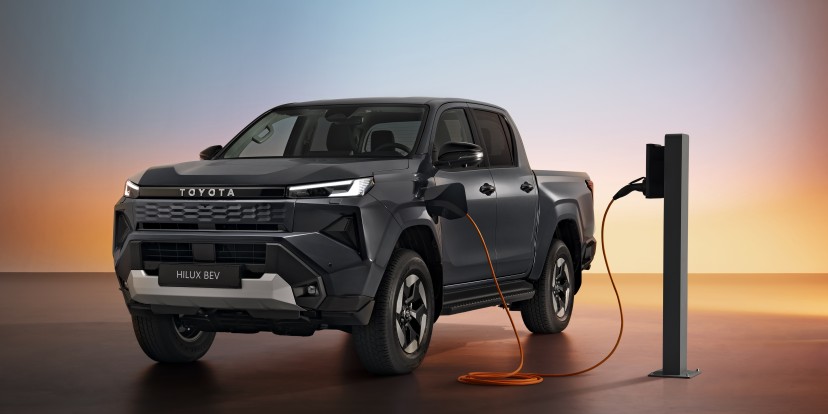
The Toyota Hilux, a global symbol of toughness and reliability, is finally plugging in. The Hilux name has been forever synonymous with diesel engines and go-anywhere durability. Now, Toyota has unveiled its all-new, ninth-generation pick-up, and the biggest news is a model that runs on batteries.
The new electric Hilux BEV is part of Toyota's "multipath" strategy. Unlike some companies betting everything on batteries, Toyota is offering choices. The new Hilux line-up will also include a 48V hybrid (expected to be the big seller in Western Europe) and traditional gasoline and diesel engines (for Eastern European markets). Toyota even confirmed that a hydrogen fuel cell electric Hilux is planned for 2028.
Toyota built the BEV model on the same tough, body-on-frame foundation as its gas-powered siblings. This is good news for durability. Tucked under the floor is a 59.2 kWh lithium-ion battery pack. This battery powers two motors, one on the front axle and one on the rear. These "eAxles" give the Hilux permanent all-wheel drive with the front motor delivering 205 Nm of torque, and the rear motor pushing 268.6 Nm.
The truck has been designed to be tough, with special measures to protect the battery from rocks, bumps, and water. The company claims the electric Hilux has the same wading depth as the standard diesel model, so it should still handle flooded roads or river crossings. It also features a Multi-Terrain Select system, which uses the brakes and motors to find grip on tricky surfaces, mimicking a traditional 4x4 low-range gearbox.
The big question for any pick-up, especially an electric one, is: can it still do truck stuff? Toyota has released some early, approximate figures for the BEV model, confirming it is targeting a payload capacity of around 715 kg, and a towing capacity of 1,600 kg.
These are modest numbers at best. A 1,600 kg towing capacity is not going to worry competitors or impress contractors who haul heavy equipment. This suggests Toyota is aiming the first electric Hilux directly at fleet customers. These are businesses that need a zero-emission truck for city deliveries or light-duty work, not a heavy-duty workhorse.
 www.arenaev.com
The Toyota Hilux, a global symbol of toughness and reliability, is finally plugging in. The Hilux name has been forever synonymous with diesel engines and go-anywhere durability. Now, Toyota has unveiled its all-new, ninth-generation pick-up, and the biggest news is a model that runs on batteries.
The new electric Hilux BEV is part of Toyota's "multipath" strategy. Unlike some companies betting everything on batteries, Toyota is offering choices. The new Hilux line-up will also include a 48V hybrid (expected to be the big seller in Western Europe) and traditional gasoline and diesel engines (for Eastern European markets). Toyota even confirmed that a hydrogen fuel cell electric Hilux is planned for 2028.
Toyota built the BEV model on the same tough, body-on-frame foundation as its gas-powered siblings. This is good news for durability. Tucked under the floor is a 59.2 kWh lithium-ion battery pack. This battery powers two motors, one on the front axle and one on the rear. These "eAxles" give the Hilux permanent all-wheel drive with the front motor delivering 205 Nm of torque, and the rear motor pushing 268.6 Nm.
The truck has been designed to be tough, with special measures to protect the battery from rocks, bumps, and water. The company claims the electric Hilux has the same wading depth as the standard diesel model, so it should still handle flooded roads or river crossings. It also features a Multi-Terrain Select system, which uses the brakes and motors to find grip on tricky surfaces, mimicking a traditional 4x4 low-range gearbox.
The big question for any pick-up, especially an electric one, is: can it still do truck stuff? Toyota has released some early, approximate figures for the BEV model, confirming it is targeting a payload capacity of around 715 kg, and a towing capacity of 1,600 kg.
These are modest numbers at best. A 1,600 kg towing capacity is not going to worry competitors or impress contractors who haul heavy equipment. This suggests Toyota is aiming the first electric Hilux directly at fleet customers. These are businesses that need a zero-emission truck for city deliveries or light-duty work, not a heavy-duty workhorse.
Toyota's legendary Hilux pick-up goes electric
The iconic Toyota Hilux pick-up is entering the world of electric cars with its first-ever battery-electric model, featuring dual-motor AWD, a {{240 km}} range, and a {{1,600 kg}} towing capacity.
www.arenaev.com
FiestaST
Honorary Master
The Right Car? insert of the new Hilux
FiestaST
Honorary Master
Chasing Cars walkaround the new Hilux
FiestaST
Honorary Master
Battery-Electric Bakkie? First-Ever Toyota Hilux BEV Unveiled
With the recent unveiling of the new Hilux, Toyota also whipped the wraps off the battery-electric variant of the ninth generation.
The highly-anticipated new Toyota Hilux recently made its global debut, with the ninth generation revealed with the Japanese automaker’s tried-and-tested 2.8-litre, four-cylinder turbodiesel engine, available in both “standard” and 48 V mild-hybrid formats. However, as part of Toyota’s multi-pathway philosophy, an all-electric powertrain will also be introduced to the lineup. In addition, the company has also confirmed a hydrogen fuel cell model is in development, and is scheduled to be released in 2028.
The Hilux BEV (battery-electric vehicle) is powered by dual electric motors, sited on the front and rear axle, respectively. Fed by a 59.2 kWh lithium-ion battery pack, the BEV setup produces a combined system output of 144 kW, delivered to the road via a permanent all-wheel drivetrain. The fore and aft electric motors produce 204 N.m and 268.6 N.m, respectively. Toyota says the battery-electric model has an all-electric (WLTP) driving range of approximately 240 km.
Underpinned by a body-on-frame chassis, the Hilux BEV measures measures 5 320 mm in length, 1 855 mm in width, and 1 800 mm in height. The wheelbase spans 3 085 mm. The emissions-free model offers a payload capacity of approximately 715 kg and a braked towing capacity of 1 600 kg. The water-fording depth is rated at 700 mm. The BEV also features the firm’s Multi-Terrain Select system.

 www.carmag.co.za
With the recent unveiling of the new Hilux, Toyota also whipped the wraps off the battery-electric variant of the ninth generation.
The highly-anticipated new Toyota Hilux recently made its global debut, with the ninth generation revealed with the Japanese automaker’s tried-and-tested 2.8-litre, four-cylinder turbodiesel engine, available in both “standard” and 48 V mild-hybrid formats. However, as part of Toyota’s multi-pathway philosophy, an all-electric powertrain will also be introduced to the lineup. In addition, the company has also confirmed a hydrogen fuel cell model is in development, and is scheduled to be released in 2028.
The Hilux BEV (battery-electric vehicle) is powered by dual electric motors, sited on the front and rear axle, respectively. Fed by a 59.2 kWh lithium-ion battery pack, the BEV setup produces a combined system output of 144 kW, delivered to the road via a permanent all-wheel drivetrain. The fore and aft electric motors produce 204 N.m and 268.6 N.m, respectively. Toyota says the battery-electric model has an all-electric (WLTP) driving range of approximately 240 km.
Underpinned by a body-on-frame chassis, the Hilux BEV measures measures 5 320 mm in length, 1 855 mm in width, and 1 800 mm in height. The wheelbase spans 3 085 mm. The emissions-free model offers a payload capacity of approximately 715 kg and a braked towing capacity of 1 600 kg. The water-fording depth is rated at 700 mm. The BEV also features the firm’s Multi-Terrain Select system.
Battery-Electric Bakkie? First-Ever Toyota Hilux BEV Unveiled
With the recent unveiling of the new Hilux, Toyota also whipped the wraps off the battery-electric variant of the ninth generation...
www.carmag.co.za
FiestaST
Honorary Master
FiestaST
Honorary Master
Hilux Legend 55 vs Ranger Tremor comparison...Or wait for the new Hilux? - Cars.co.za
FiestaST
Honorary Master
Toyota Hilux vs VW Amarok - Carwow
FiestaST
Honorary Master
The Right Car? first drive of the new Hilux
FiestaST
Honorary Master
Drive.com.au first drive of the new Hilux
FiestaST
Honorary Master
CarExpert first drive of the new Hilux
FiestaST
Honorary Master
CarSauce first drive of the new Hilux
FiestaST
Honorary Master
Chasing Cars first drive of the new Hilux
FiestaST
Honorary Master
CarsGuide first drive of the new Hilux
FiestaST
Honorary Master
carsales.com.au first drive of the new Hilux
FiestaST
Honorary Master
Buying Used: Toyota Hilux (2015-2025)
SA’s best-selling vehicle, the Toyota Hilux is set to be replaced by an all-new model in 2026. Should you consider the outgoing generation as a used buy?
The Toyota Hilux is more than a bakkie in South Africa – it’s become a national icon. The eighth-generation model, launched locally in May 2015 and still going strong ahead of the ninth iteration’s 2026 launch, redefined the double-cab segment with sharper styling, turbodiesel grunt, and a ladder-frame toughness when it arrived. For used buyers, it’s a resale rockstar, combining a work-ready payload capacity (up to 1 000 kg) with 3 500 kg (braked) towing muscle – all backed by Toyota’s three-year/90 000 km warranty and nine services/90 000 km service plan.
In SA, the Hilux dominates local sales charts. Over 30 000 units are shifted annually, but abuse (read: careless driving) and urban short trips can brew diesel dramas. Assembled at Toyota’s Prospecton plant in Durban, the eighth-gen Hilux (AN120/130 series) arrived as a ground-up redesign, ditching the its seventh-generation predecessor’s styling for a bolder grille, independent front suspension, and coil-spring rears on 4x4s for better ride compliance. Measuring 5 315 mm long (double-cab), with a 3 085 mm wheelbase, it is available in single, Xtra, and double-cab body styles.
The 2020 facelift sharpened the nose, added a new 8.0-inch infotainment touchscreen, and boosted the 2.8 GD-6 to 150 kW/500 N.m (in six-speed automatic models; six-speed manual derivatives produces the same amount of power, but 420 N.m of torque). A 2024 update brought 48 V mild-hybrid tech to the 2.8-litre mill, revised mounts for improved NVH suppression, and Toyota Safety Sense (TSS) on higher-specced derivatives. No hybrids or electrics yet, but this will be addressed with the all-new model. Indeed, with the ninth generation, Toyota will introduce the Hilux BEV (battery-electric vehicle).
 www.carmag.co.za
SA’s best-selling vehicle, the Toyota Hilux is set to be replaced by an all-new model in 2026. Should you consider the outgoing generation as a used buy?
The Toyota Hilux is more than a bakkie in South Africa – it’s become a national icon. The eighth-generation model, launched locally in May 2015 and still going strong ahead of the ninth iteration’s 2026 launch, redefined the double-cab segment with sharper styling, turbodiesel grunt, and a ladder-frame toughness when it arrived. For used buyers, it’s a resale rockstar, combining a work-ready payload capacity (up to 1 000 kg) with 3 500 kg (braked) towing muscle – all backed by Toyota’s three-year/90 000 km warranty and nine services/90 000 km service plan.
In SA, the Hilux dominates local sales charts. Over 30 000 units are shifted annually, but abuse (read: careless driving) and urban short trips can brew diesel dramas. Assembled at Toyota’s Prospecton plant in Durban, the eighth-gen Hilux (AN120/130 series) arrived as a ground-up redesign, ditching the its seventh-generation predecessor’s styling for a bolder grille, independent front suspension, and coil-spring rears on 4x4s for better ride compliance. Measuring 5 315 mm long (double-cab), with a 3 085 mm wheelbase, it is available in single, Xtra, and double-cab body styles.
The 2020 facelift sharpened the nose, added a new 8.0-inch infotainment touchscreen, and boosted the 2.8 GD-6 to 150 kW/500 N.m (in six-speed automatic models; six-speed manual derivatives produces the same amount of power, but 420 N.m of torque). A 2024 update brought 48 V mild-hybrid tech to the 2.8-litre mill, revised mounts for improved NVH suppression, and Toyota Safety Sense (TSS) on higher-specced derivatives. No hybrids or electrics yet, but this will be addressed with the all-new model. Indeed, with the ninth generation, Toyota will introduce the Hilux BEV (battery-electric vehicle).
Buying Used: Toyota Hilux (2015-2025)
SA's favourite vehicle, the Toyota Hilux, is set to be replaced by an all-new model. Should you consider the outgoing one as a used buy?
www.carmag.co.za
FiestaST
Honorary Master
FiestaST
Honorary Master
FiestaST
Honorary Master
FiestaST
Honorary Master
Next Toyota Hilux GR-Sport Rendered
With the new Toyota Hilux having made made its official debut, a render has previewed what the new GR-Sport model could look like.
Confirmed to arrive in South Africa in 2026, the new Toyota Hilux was officially revealed on 10 November 2025. Now, while a GR-Sport (GR-S) version is undoubtedly in the works, there’s been no official word yet as to when this model will make its debut. However, recently, automotive virtual tuner Theottle applied their craft to showcase how the GR-S ninth-generation Hilux could look when handed the signature ‘GR-S’ elements. Taking the eighth generation-based GR-S III as a starting point, the digital render sports a model-specific front grille, more pronounced lower front bumper, and flared wheel arches, among several other items.
As a reminder, the outgoing GR-S III is endowed with 165 kW and 550 N.m, increases of 15 kW and 50 N.m over the “standard” 2.8-litre, four-cylinder turbodiesel models. While there’s been no word yet as to how much power and torque the future GR-S will produce, we do know that the box-fresh Hilux will retain the 2.8-litre, four-cylinder turbodiesel employed by its predecessor. The 48 V mild-hybrid version of this motor will also be available. Toyota has also unveiled the Hilux BEV – the first all-electric Hilux.
 www.carmag.co.za
With the new Toyota Hilux having made made its official debut, a render has previewed what the new GR-Sport model could look like.
Confirmed to arrive in South Africa in 2026, the new Toyota Hilux was officially revealed on 10 November 2025. Now, while a GR-Sport (GR-S) version is undoubtedly in the works, there’s been no official word yet as to when this model will make its debut. However, recently, automotive virtual tuner Theottle applied their craft to showcase how the GR-S ninth-generation Hilux could look when handed the signature ‘GR-S’ elements. Taking the eighth generation-based GR-S III as a starting point, the digital render sports a model-specific front grille, more pronounced lower front bumper, and flared wheel arches, among several other items.
As a reminder, the outgoing GR-S III is endowed with 165 kW and 550 N.m, increases of 15 kW and 50 N.m over the “standard” 2.8-litre, four-cylinder turbodiesel models. While there’s been no word yet as to how much power and torque the future GR-S will produce, we do know that the box-fresh Hilux will retain the 2.8-litre, four-cylinder turbodiesel employed by its predecessor. The 48 V mild-hybrid version of this motor will also be available. Toyota has also unveiled the Hilux BEV – the first all-electric Hilux.
Next Toyota Hilux GR-Sport Rendered
With the new Toyota Hilux having made made its official debut, a render has previewed what the new GR-Sport model could look like...
www.carmag.co.za