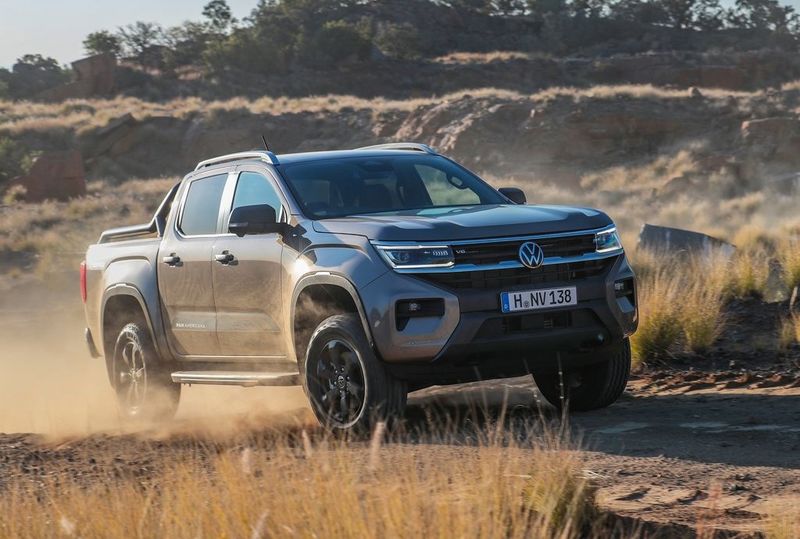
The VW Amarok Thread

VW Amarok R With Diesel Power?

The Amarok/Ranger tie in is getting juicier with rumours of a diesel-powered VW Amarok R to take on the petrol-powered Raptor.

If you weren’t yet aware, the all-new Volkswagen Amarok and all-new Ford Ranger share common elements like platform and powertrains. At the top of the range, sits the halo models, like the Ford Ranger Raptor, complete with a thundering biturbo V6 petrol engine.

If you’re expecting a hot Amarok with the same engine, you’re going to be disappointed as there have been denials that it will happen. However, Volkswagen Australia says a performance model is not off the table, understandable considering VW is not going to be too happy letting your rival having complete market share of the high-performance bakkie segment.

Volkswagen Commercial vehicles Australian director Ryan Davies chatted to CarsGuide about a performance Amarok. The Australian publication was told that the move to a petrol V6 in the Raptor had limitations, as diesel is the segment’s preferred fuel.

“In that, there is an opportunity for us to do something that will meet the market of the Australian buyer,” he said of a diesel V6 Raptor rival, stating that the market share for Amarok is currently 85% for the V6 and 15% for the four-cylinder.

So, if a VW Amarok R were to come to market, what diesel engines would be available? As we know and have experienced, the current-gen 3.0-litre V6 TDI is formidable, with 190 kW and 580 Nm. Ford’s new Ranger will also have a 3.0-litre V6 diesel, developing 184 kW and 600 Nm. Both of these engines comfortably outgun the current-shape Raptor’s 2.0-litre biturbo with 157 kW and 500 Nm.
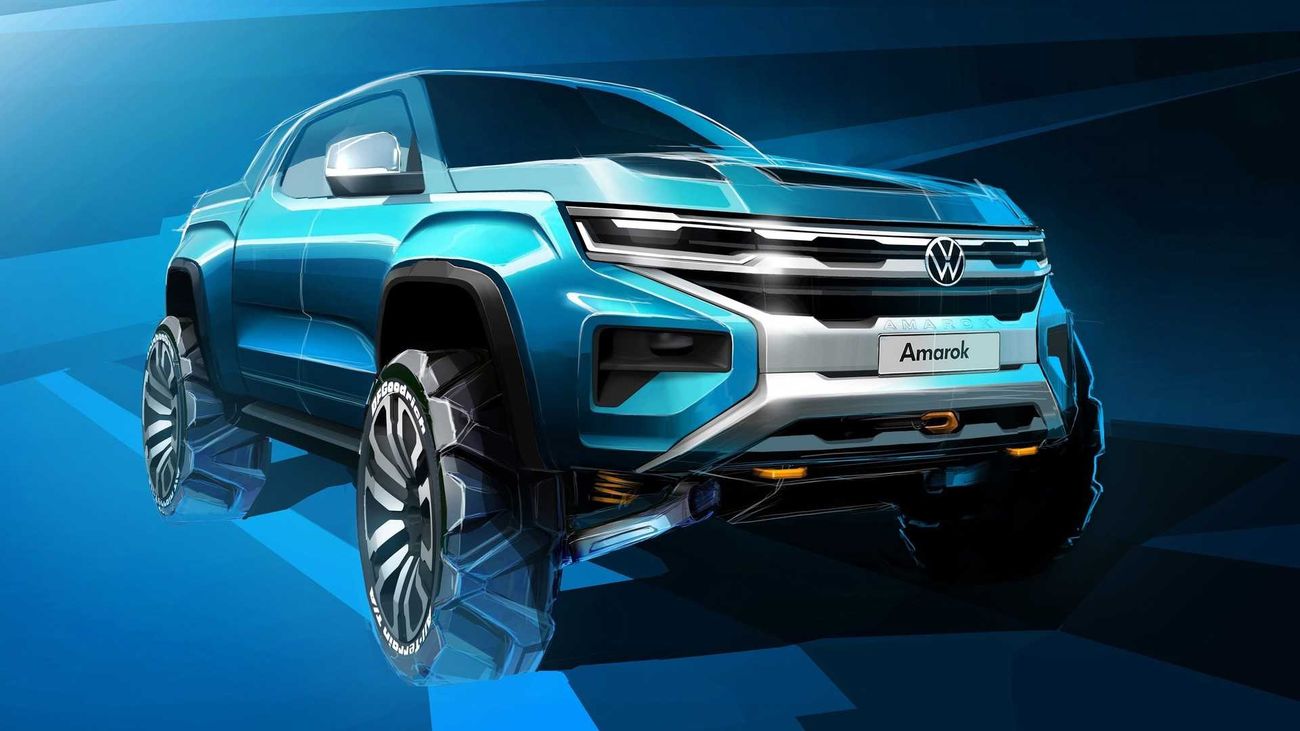
 
New VW Amarok: Engines and Trim Levels Revealed

Volkswagen has released fresh details of its upcoming second-generation Amarok, including confirmation of the new bakkie’s engine options and trim levels…

Volkswagen has confirmed the new Amarok bakkie will be offered with as many as five engine options, depending on the market.

Set to be fully revealed in July 2022 in South Africa (where it will be built alongside the new Ford Ranger at the Blue Oval brand’s Silverton assembly plant), the second-generation Amarok is scheduled to launch locally in the first quarter of 2023. It will be available in double-cab form, though VW interestingly says “some individual markets” will also receive single-cab models.

VW says the new Amarok will be available with one petrol engine (perhaps the 2.3-litre EcoBoost mill offered in the outgoing Ranger in North America) and “up to four different diesels with four to six cylinders” and cubic capacities ranging between 2.0 and 3.0 litres. Of course, this falls in line with our expectation the powertrain range will mirror that of the Ranger.

For the record, the 3.0-litre V6 turbodiesel engine makes 184 kW and 600 Nm in Ranger guise, while the single-turbo version of the 2.0-litre turbodiesel is offered in two states of tune (110 kW and 350 Nm/125 kW and 405 Nm). Ford’s 2.0-litre bi-turbo oil-burner, meanwhile, generates 155 kW and 500 Nm.

 
Exec says VW’s input helped make the new Ford Ranger a better product, and vice versa

Although the new-generation Volkswagen Amarok has yet to be unveiled, the German carmaker has already made it clear that the new contender will have its fair share of Wolfsburg flavour despite being based on the new Ford Ranger.

But now a Volkswagen executive has also expressed the opinion that the two companies helped each other create a better product, to the benefit of the Ranger too.

In an interview with Australian website Drive, Volkswagen Commercial Vehicles marketing director Lars Krause said: “In the sum, the new Amarok is a much better product than if we did it alone.

“The same goes for the Ford. Without our input, the Ranger would not be so good. The partnership allowed us to pool our individual strengths,” Krause said.
Although the new Volkswagen Amarok is set to use the Ranger’s architecture and drivetrains, the VW exec said that the development process was a two-way street.

 
Here is what we know about the 2023 VW Amarok so far

Volkswagen has a new bakkie on the way which will replace their ageing but steadfast model which was first released in 2010 and has sold over 830,000 units globally. Here are some facts on the 2023 VW Amarok which will most notably be based on Ford’s updated T6 platform.

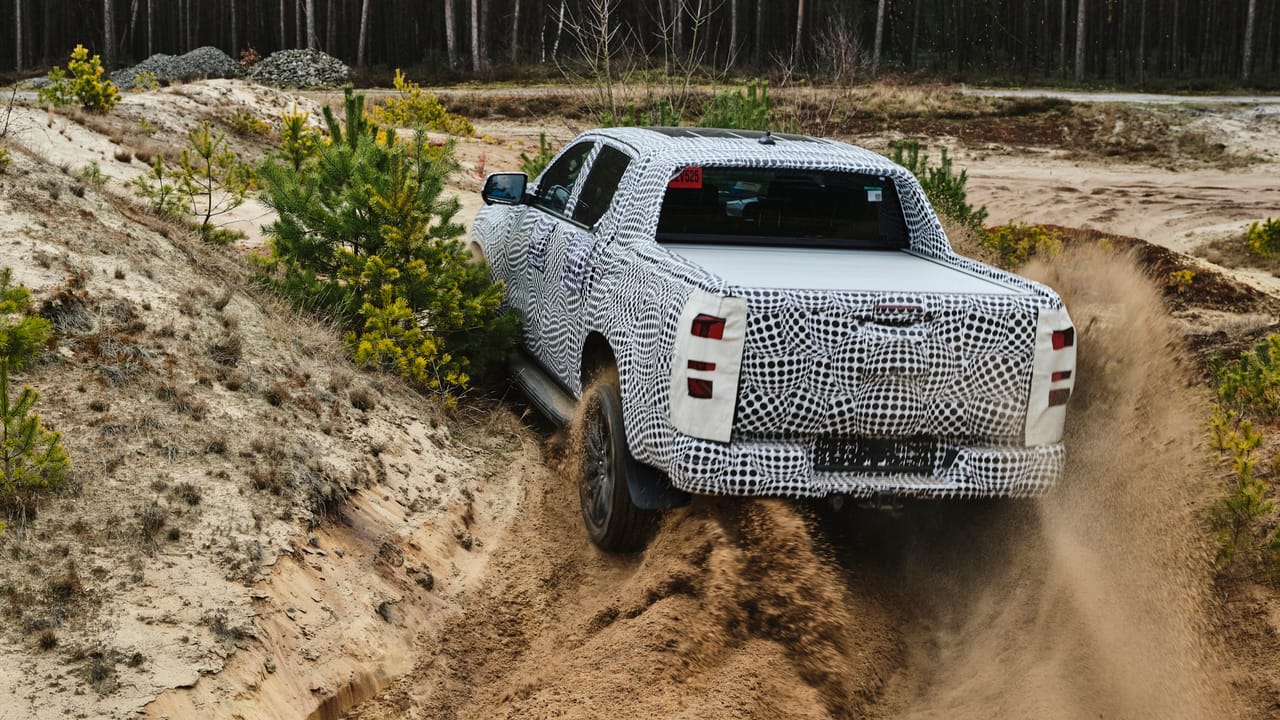
Starting with the exterior, we have only seen a lengthy teaser campaign and the latest shots of a heavily camouflaged bakkie shown here. Albert Kirzinger, Head of Design at Volkswagen Commercial Vehicles has stated: “For the new generation we have significantly modified the Amarok’s archetypal design. It is now unambiguously more expressive and once again appreciably more impressive.”

Aside from the design description, what we do know is that the newcomer will be stretched in all fronts save for its width meaning that the interior will be more commodious than before. The 2023 VW Amarok now boasts a 5,350 mm length with a double cab wheelbase of 3,270 mm. The standard version we are seeing here will be 1,880 mm tall and measure slightly narrower than before with a 1,910 mm width. The second generation German bakkie is said to have shorter front and rear overhangs which should make it more competent at tackling steep approach and departure angles when adventuring on technical terrain.

 
Want to see some pics of the new VW Amarok out testing?

Volkswagen’s pickup will return soon, this time with help from Ford

Volkswagen is bringing back the Amarok with more than a little helping hand from Ford, and now that the Blue Oval has unveiled both the standard Ranger and the twin-turbo V6 Raptor, it’s almost time for VW to pull the wraps off its attempt.

Almost, but not quite yet. For now we’re limited to pictures of these camouflaged examples out testing across Europe. However, VW has confirmed that when it finally launches, the new Amarok will get five different engine and gearbox combinations including one petrol and four different diesels (one of which will be a V6).

The engines will be between 2.0- and 3.0-litres in size, and there’ll be a rear-wheel drive version as well as the more common all-wheel drive setup.

 
Volkswagen Amarok Challenge: saying goodbye to the current version in style

The Volkswagen Amarok is dead, long live the Amarok.

Perhaps a bit dramatic but as everyone knows the current iteration is set to be replaced at the end of the year by a completely new Amarok (read about it here) built in the Ford plant in Silverton, Pretoria.

So what better way to give it a send-off than with the last Amarok Challenge in its current guise?

As happens every year there’s a media challenge and this year we were the first group to participate before 560 teams from South Africa, Botswana and Namibia descended on Bloemfontein from 23 April to 27 June to compete for the Amarok Challenge trophy.

As a result multiple South African rally champion and legendary racer Sarel van der Merwe, who’s the man behind the Challenge, made it clear in no uncertain terms that the bakkies were all new and that he would like them to stay unscathed. Or words to that effect, if you know him.

 
WATCH: New Amarok optional matrix LED headlights teased in video

The new bakkie from VW is just over a month away from international launch and to create some hype, the new Amarok and its optional matrix LED headlights have been teased in a short video.

The newcomer from Volkswagen will not only share a production line with the new Ford Ranger which was released not too long ago, but its structural platform too. That means that most components centred around the greenhouse will be shared, which includes the roof, mirrors, door handles and windscreen however a different bakkie inside and out has been promised by the Germans.

Part of the differentiating components to line the new Amarok include the optional matrix LED headlights better known IQ.Light. The supreme technology, which has already started featuring on other VW Group products including the new Polo is one of few options that are worthy of the additional financial outlay. The automated headlights can dim the path ahead based on oncoming traffic and street lights while the 900 lumen lighting output does a sublime job of illuminating the darkness.


The New Volkswagen Amarok Can Tow These Things, And So Much More

The 2023 Volkswagen Amarok will be based on the new Ford Ranger, so it's getting more towing capacity.

The new Volkswagen Amarok is getting a generous increase to its max towing capacity. The beloved VW Amarok will now tow up to 7,716 pounds, up from 6,614 pounds in the previous generation. Surprise, surprise: that’s the same as the max towing capacity of the 2023 Ford Ranger.

That’s to be expected since the new VW Amarok is based on the upcoming Ford Ranger, which I guess makes Volkswagen’s decision to not sell the Amarok in the U.S. OK. The new Amarok will reportedly even get a fully-electric version soon, which gives us a bit of insight into the mysterious EV truck that Ford says will join its F-150 Lightning as the second electric truck in the lineup.


4647F0C5-198C-4378-996D-EE3819E3A73D.jpeg
 
New VW Amarok Teased, Reveal in July 2022

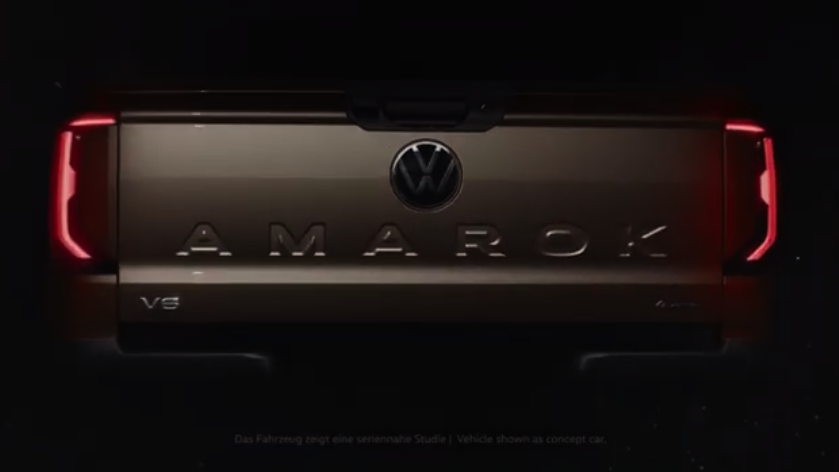
Update: Volkswagen is preparing to reveal its new Amarok bakkie to the world and the latest teaser shows what the tailgate section of the new Amarok will look like. Note the V6 badge, confirming that the newcomer will feature a V6 engine. The tailgate also features large AMAROK lettering with a large VW badge as well as a C-shaped taillight design.

 
Volkswagen Amarok

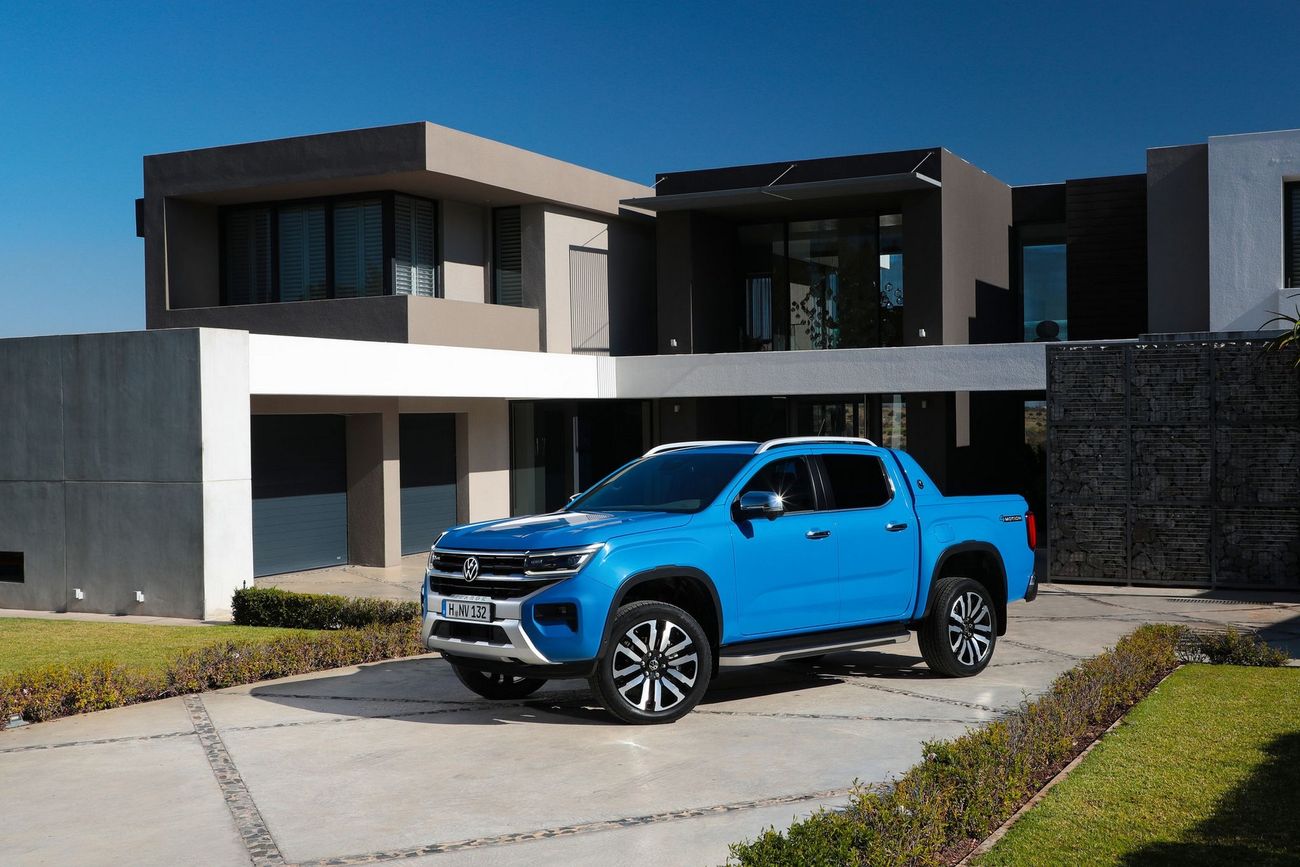
Volkswagen Commercial Vehicles presented the new Amarok. The on- and off-road all-rounder has been designed and conceived in Germany and Australia; it is being produced in South Africa. A premium pick-up for Australia and New Zealand, numerous countries of Africa, the Middle East and Europe.

Charismatically designed, cleverly conceived

Its well thought-out set of features, over 20 new driver assist systems, mobile online services, engines that are both efficient and high-torque, two all-wheel drive technologies, tailor-made accessories and clear Volkswagen design DNA make the new Amarok one of the most versatile and well-balanced pick-ups in the world. Slogan: 'No matter what'. The premium pick-up will come onto the market in the first few countries from the end of the year.

Volkswagen Commercial Vehicles (VWCV) sold over 830,000 units of the first-generation Amarok in Europe, Australia, New Zealand, Africa, North Asia and South and Central America. Now comes the second generation.

Five turbocharged engines, individually tailored to the world's markets

Four turbo diesel (TDI) engines and one turbocharged petrol (TSI) engine have been developed for the new Amarok. Qualities common to all five engines are efficiency and high levels of torque. On the African market, for instance, it is the base specification engine that is being used: a four- cylinder, 2.0-litre TDI delivering 110 kW (150 PS). In terms of power output the next engine for many markets of the world is a 2.0-litre four-cylinder TDI delivering 125 kW (170 PS). As the third level, Volkswagen Commercial Vehicles will be offering a four-cylinder TDI engine with 2.0 litres of cubic capacity and bi-turbocharging; it develops 150 kW (204 PS) or 154 kW (209 PS) dependent on the market. The engine used as the new top TDI is a 3.0- litre V6. It provides power output of 177 kW (241 PS) or 184 kW (250 PS) dependent on the market. A 222 kW (302 PS) 2.3-litre turbocharged petrol engine has also been designed specifically for the traditional petrol engine markets.


A56997C3-EC1E-4895-AE26-C9B197146818.jpegDDE62EED-7B45-47DA-BBE8-96D70FFC4BA7.jpeg92086CD5-5A30-43C8-B43F-C0E9D7864C9B.jpegFD18C44F-C97A-4624-B5CE-C597473A1C55.jpeg17901B57-B871-4158-80CC-F8200E80FA7B.jpegCCEA4737-5112-41CD-BBEE-0450380386B3.jpegA3C525B9-0CE4-4326-8306-F9F8C7E63F61.jpeg1A2C9AB1-FB70-4A8A-A6B8-CB155075BC24.jpeg51DADD44-15C2-4FCA-AD56-320BB9EF4522.jpeg5D32D45B-6FEA-4D3E-A468-D1DD99CC9463.jpeg
 
Why would you buy an Amarok instead of a Ranger?

Volkswagen’s collaboration with Ford on the more off-road capable and tech-laden new-gen Amarok will suit VWSA, which has an extensive dealer footprint in South Africa.

Very few car companies spend as much money on platforms as Volkswagen. The German automotive conglomerate’s MQB platform, which now underpins virtually every VW, Audi, Skoda, Seat and Cupra with a transverse powerplant, set a standard for pure internal combustion vehicles that might never be equalled, costing R135bn by its completion in 2012. The same is expected from MEB, VW’s hugely expensive and adaptive electric vehicle specification architecture.

And then there’s Amarok – the VW model that defied odds and defined the concept of a lifestyle double-cab bakkie. And a hugely important product for South Africans, despite being completely unrelated to either MQB or MEB, two of VW’s core platform architectures.

When VW became embroiled in the diesel-emissions testing scandal in 2015 (aka Dieselgate), the Amarok’s future became problematic. Despite its product excellence, VW could not justify extended funding to create a successor to the bakkie, given the drain of legal compliance costs and all the resources it needed to devote to the development of MEB.

The answer was a joint venture with Ford. And with the 2nd-generation Amarok revealed, the question arises: what’s the point of the collaboration? And which of the two products makes most sense.

Bakkie owners will have strong opinions on the Ranger T6.1 platform Amarok. Some might dismiss it as being badge-engineered and pointless. But if you layer the analysis a bit deeper, it appears that VW might have delivered a very clever product solution to its South African division.

 
New VW Amarok: Base-Spec Single Cab Uncovered

Wondering what the new Volkswagen Amarok will look like in base-spec, single-cab form? Well, wonder no more. These box-fresh patent images give us our first look at the workhorse version…

When Volkswagen whipped the covers off the new Amarok in July 2022, much of the focus was on the high-spec, double-cab derivatives. The Wolfsburg-based automaker, however, did confirm the range – in some markets, at least – would also include a single-cab body style.

Now, fresh images submitted to the European Patent Office (and uncovered by the folks over at Carscoops) have given us our first look at the base-spec, workhorse version of the second-generation Amarok, which predictably features rather a utilitarian look.

The images show the entry-level, 2-door version of VW’s new bakkie wearing a black plastic front bumper on a front end devoid of chrome-effect trim – unsurprisingly, just like the single-cab version of the Ford Ranger on which it is based (pictured below). The side-mirror caps likewise appear to be finished in black plastic, matching the exterior door handles.


1.png2.png
 
Top
Sign up to the MyBroadband newsletter
X