The Xiaomi EV Thread

FiestaST

Honorary Master
Joined
Aug 9, 2009
Messages
213,759
Reaction score
97,136
Location
CPT~ /\\/¯¯¯\\/\\ ~ZA
A dedicated thread is needed as news is picking up rather fast.

Smartphone giant Xiaomi confirms 2024 launch for electric saloon

New Xiaomi MS11 is a Tesla Model 3 rival with a BYD battery option and high-level autonomy

Chinese consumer electronics company Xiaomi plans to begin production of its first electric car during the first half of 2024, according to its co-founder and CEO, Lei Jun.

Speaking at China’s annual parliamentary gathering in Beijing, Lei said: “Xiaomi’s car manufacturing has progressed beyond expectation and [prototypes] have recently successfully completed winter testing.”

Lei, who is a deputy of China’s National People’s Congress, also confirmed Xiaomi had invested more than 3 billion yuan (£360 million) in its electric car division, Xiaomi Automobile, in 2022. He added that staffing of its R&D department had risen to more than 2300 people.

Xiaomi, the world’s third-biggest smartphone manufacturer by sales volume behind Samsung and Apple, first announced plans to begin the development of electric cars in 2021. At the time, Lei said Xiaomi intended to invest up to 10bn yuan (£1.2bn) in its new electric car division over the following 10 years.

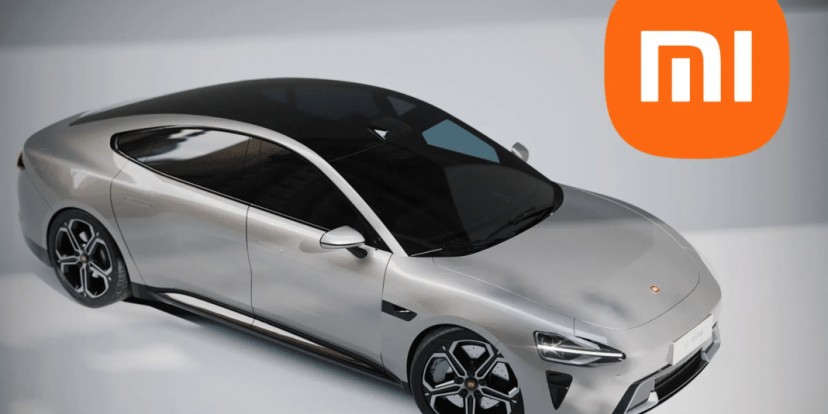
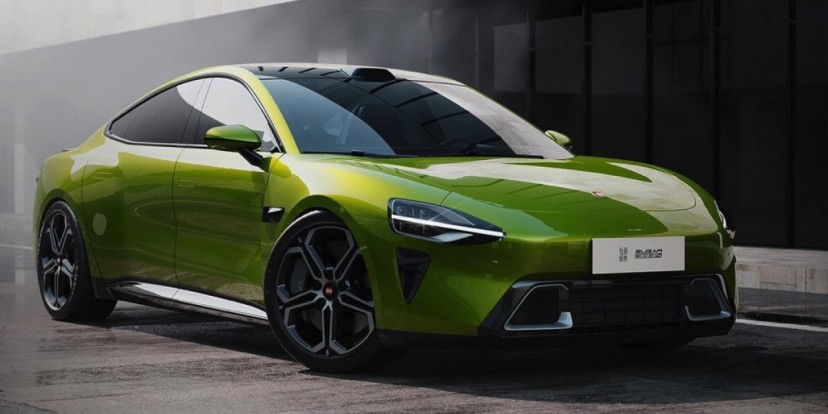
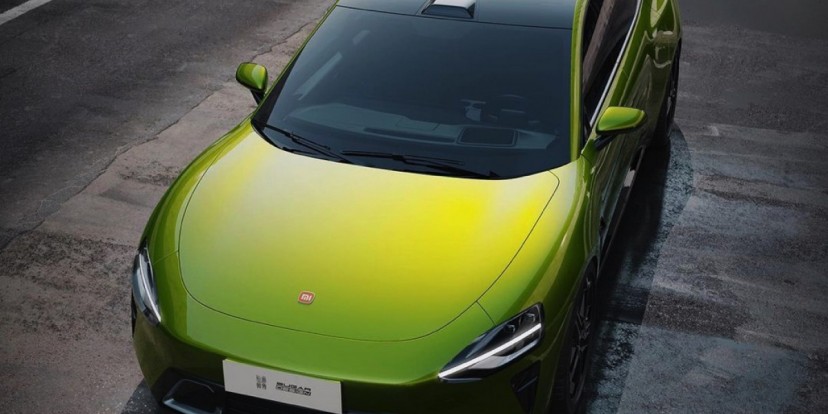
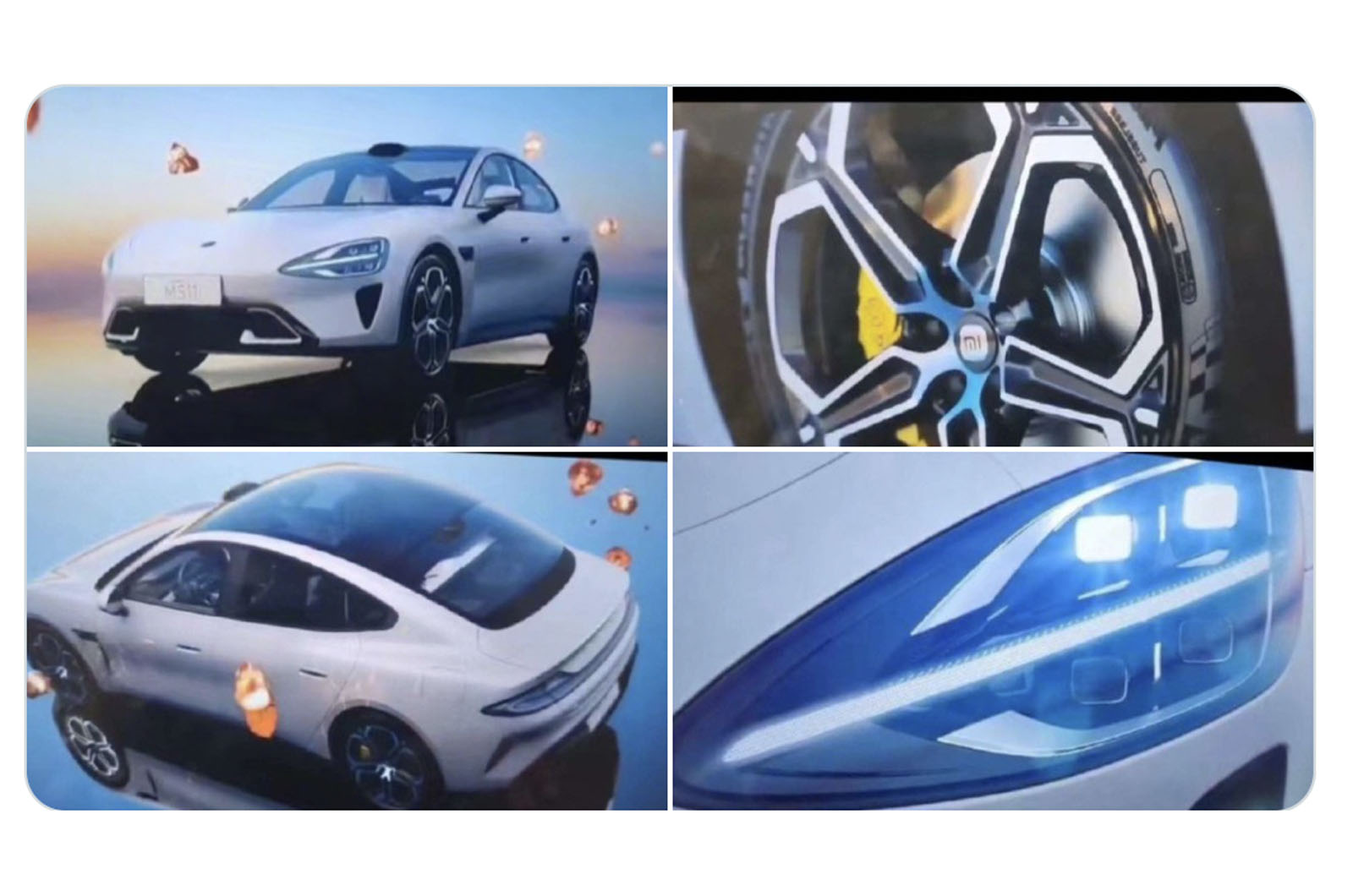
Xiaomi’s first production model, a saloon codenamed MS11, was prematurely revealed in a series of photographs leaked to Chinese social media in January. It is expected to be unveiled in 2023 prior to the start of production, confirmed by Lei, in 2024.

45AFAEC5-E5F8-4EB2-9627-C42BF0198A4F.jpegC8EF0929-1955-4F72-8C8C-D90286A3477D.jpeg
 
Xiaomi will be ready to start mass production of its cars in H1 2024

Despite all the challenges Xiaomi's automotive business is moving at a faster pace than expected. This was confirmed by Lei Jun, the company's founder, chairman and CEO, who said that the winter test finished successfully and the team behind Xiaomi's first car is rapidly growing and is completing tasks faster than anticipated.

He said that everything goes according to plan and mass production will likely start in the first half of 2024. So far, the company has invested more than $433 million in its automotive business and has a constantly growing team of more than 2,300 people.

A new round of investment is expected this year exceeding $2.8 billion, with $14 billion more to come in the next five years.

 
Xiaomi makes a big breakthrough with solid-state battery tech

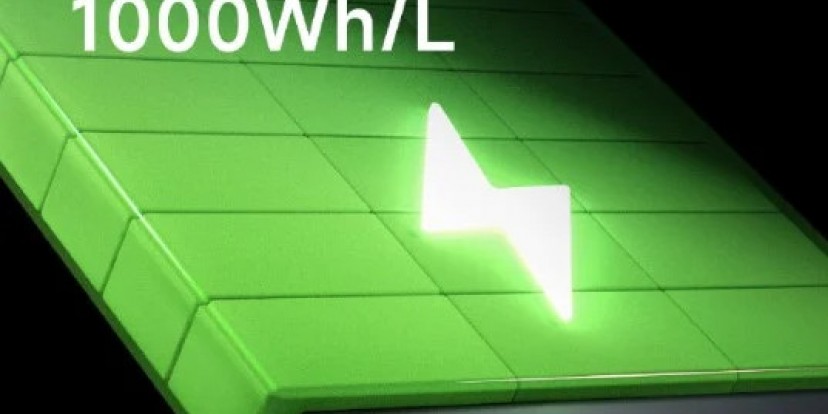
Like most tech companies nowadays, Xiaomi is also working on developing solid-state batteries that can be used for mobile devices and, more cruicially, EVs. The Chinese tech giant said it had made a big breakthrough and achieved a massive 1,000 Wh/l energy density. That's more than twice the energy density most EVs have to offer. As of now, that's about 450 Wh/l.

The new tech promises to solve many issues with modern lithium batteries. Aside from the improved energy density, solid-state batteries also perform better in low temperatures. Xiaomi claims about 20% improved efficiency at -20°C. In addition, solid-state cells are safer as they don't explode when punctured due to the lack of liquid electrolytes.

The engineers further improved durability by coating the positive electrode with solid electrolyte ceramics.

 
Xiaomi's EV to feature 101 kWh battery, leaked image reveals

It's been a while since we heard anything about Xiaomi and its electric car. Still, it appears the project is progressing rather well. The company's upcoming EV, already featured in leaks and rumors, is slated to pack a punch with a beefy 101kWh battery.

MetaAuto shared a brand new image showcasing Xiaomi's EV battery. The battery unimaginatively named A1310C, has 726.7 voltage and has a hefty 139.0Ah capacity (adding up to 101.0kWh capacity). And all this, bundled up in a 642 kg package.

A little birdie tells us that this battery will likely be a ternary lithium version, a familiar sophisticated option in the EV battery domain. For now Xiaomi remains tight-lipped on any official confirmation. So, while we are playing Sherlock with the available clues, keeping the salt handy is always better.

As anticipation builds around Xiaomi's automotive debut, intriguing tidbits about their EV continue to trickle down. Despite no official peeks at the design or the actual car, we do know that the launch is tentatively set for next year.


IMG_7197.jpegIMG_7198.jpeg
 
Xiaomi's first EV to run on CALB and CATL batteries

According to sources inside Xiaomi, the EV division chose CALB and CATL for its main and secondary battery suppliers, respectively. The company was forced to go with CATL as its main supplier since the two battery manufacturers had a patent dispute in court and CALB was unable to offer some of its cells until that is resolved.

After the court's ruling on August 3, CATL was stripped of its patents and CALB was free to sell the batteries in question. CATL's batteries reportedly start at RMB 80,000 (€10,300) and in Xiaomi's case, that is about 50% of the car's BoM.

 
Xiaomi gets regulatory approval for EV manufacturing

Xiaomi, primarily known for your cousin's sleek new phone or that smart TV your neighbor won't stop bragging about, has finally earned the approval to start mass production of its first EV.

Xiaomi just got a big nod from China's National Development and Reform Commission (NDRC). For those who need a quick refresher, NDRC is the government body that gives a thumbs up (or down) to new investments in China's auto sector. Xiaomi has landed itself in the elite group as the fourth company since late 2017 to get its approval.

Unfortunately, it isn’t time to get the champagne out of the fridge yet, this isn’t Xiaomi's full ticket to the EV grandstand. The final hurdle lies ahead: China's Ministry of Industry and Information Technology (MIIT). MIIT ensures these future roadrunners are up to the technical and safety standards. Remember, it's not just about looking good on the highway, but also not exploding into a ball of fiery regret.

 
Xiaomi MS11 electric sedan spotted

Well, well, well! We just reported that Xiaomi was given the green light for the EV production and now we get a glimpse of the upcoming MS11 - the first EV from the tech giant. Coincidentally, Xiaomi made its mark in the domain world, claiming the domain name XiaomiEV.com. Add to it the shiny new auto production license courtesy of China's state planning department and it seems Xiaomi suddenly shifted its EV business into a higher gear.

Xiaomi’s first brainchild, the MS11 electric sedan, was caught prancing around in heavy camouflage. The location? The Urumqi-Changji urban expressway, where the sedan was reportedly performing high-temperature tests.

Xiaomi's electric dreams didn't start yesterday, however. The company threw its hat in the EV ring back in early 2021. While most of us were skeptical about another tech company venturing into uncharted territory (we've seen a few flops, haven't we?), Xiaomi was quick to reassure. Lei Jun, in an investor conference (you know, where big promises are made), mentioned that Xiaomi's electric chariot was racing ahead of schedule. His promise? To have cars roll out by the first half of 2024.

Not only is Xiaomi still on track with the deadline, but it seems to be also ahead of it. Lu Weibing, the man holding the reins of Xiaomi's international business, beamed with pride as he declared the progress as beyond expectations.


IMG_7587.jpegIMG_7588.jpegIMG_7589.jpeg
 
Xiaomi EV trial production underway

Tech giants are racing to claim a slice of the electric vehicle pie and Xiaomi is keen to be among the first ones with their own car. According to local press, the Chinese smartphone mogul has just taken the next step towards the EV realm.

The company has began trial production of its first EV - in fact it has been going for over a month. The company is making about 50 cars per week, providing all the prototypes needed for the road tests and also ironing out all kinks in the manufacturing process.

A recent green light from the National Development and Reform Commission (NDRC) means that Xiaomi's EVs are almost ready to go on sale. China's Ministry of Industry and Information Technology (MIIT) is the final hurdle that needs to be cleared for each individual model. After that it will be up to Xiaomi to scale up manufacturing and decide when to launch its cars.

Xiaomi invested RMB 1.4 billion (that's a cool €178 million) into their EV business in the second quarter of this year alone and the company has earmarked a total of €9 billion for the first 10 years of its new automotive arm.

 
Xiaomi to introduce its first electric car this year with 101kWh battery

The tech world never ceases to surprise, especially when phone makers decide to take a detour into the car lane. That’s precisely what Xiaomi, the prominent Chinese phone manufacturer, has been doing for the last two years. According to the latest reports, the company is almost ready to introduce its very first electric car and we even get battery sie and pricing details.

Codenamed 'Modena' (don't let the Italian vibe throw you off, it's all Chinese), this electric sedan is Xiaomi's golden ticket to the EV world. The ambitious venture comes two years after the tech giant announced its EV aspirations, and the local media reports suggest that the phone manufacturer could be unveiling this car alongside its next flagship smartphone - the highly anticipated Xiaomi 14.

You'd think transitioning from manufacturing phones to producing cars would take a significant amount of time. However, reports from Beijing indicate that the brand is already in the trial production phase at a factory in the Daxing industrial park and it's already making 50 prototypes per week. Plus, they've started ramping up their recruitment efforts, with some candidates even hailing from esteemed auto giants like Mercedes and Tesla.

Recent media leaks offer a sneak peek into Xiaomi's EV ambitions. It seems the Modena, or MS11, isn’t just about aesthetics (though, with large LED headlights, flush door handles, and a panoramic glass roof, it's bound to be a looker). The car is anticipated to have a 101 kWh ternary (NMC) battery, providing a long-range version that can travel a whopping 800 km on a single charge. This battery weighs about 642 kg. For those more technically inclined, its energy density stands at 157 Wh/kg, and it supports 800V DC charging.

 
Xiaomi hiring EREV engineers for car team

Xiaomi recently posted some job openings on its official website in China looking for a wide range of engineers. Of particular interest is the listing for engineers working on EREVs as well as people familiar with internal combustion systems, air intake and exhaust systems.

Looking for such personnel suggests Xiaomi is preparing an EREV vehicle to come alongside its EV or that the company is going to introduce an EREV version of its future Xiaomi MS11 car. That one is already undergoing trial production, though, so it's far more likely that new employees will be working on other vehicles in the future.

 
I'm not sure I'll trust a car with Xiaomi software on it. I mean, any update and boom, disabled.
 
Xiaomi's upcoming EV will offer an EREV option

Xiaomi's upcoming EV is expected to debut really soon and understandably, leaks are becoming more detailed by the day. Last week, Xiaomi posted some job listings regarding EREV technologies suggesting some of its future cars will have an EREV version. Today's report claims the very first one might actually get such a version.

According to Pan Daily, the company plans to release its EV dubbed Modena in three variants. The entry-level BEV will offer a 400-volt architecture with a battery sourced from BYD while the top tier will be equipped with CATL's high-end Qlin 101 kWh battery and 800-volt architecture. In addition to those two variants, a 1.5-liter EREV configuration is also planned.

 
Xiaomi patents a wireless charging concept for EVs

Xiaomi filed a new patent related to EV wireless charging. The patent itself isn't complete and it's a bit complex given currently available technology, so don't expect it to become a reality anytime soon. But it's an interesting one, that's for sure, and it may serve as a stepping stone for a better solution.

The patent describes a small cargo car with a battery, driving close to a vehicle in need of a charge and by using autonomous tech, it automatically positions itself and hooks up to the vehicle before initiating the charging process. Judging by the schematics, a large coil attaches to the vehicle, keeping the two connected for the charging duration.

It's clear that the patent is a rough sketch of what Xiaomi has in mind because we have more questions than answers in the paper. For instance, if this is meant for charging parked cars it seems awfully complicated compared to a standard cable charging. It's hard to imagine a parking lot full of EVs and small cargo cars with batteries cruising around to charge the said EVs will be commercially viable.

 
Xiaomi patents automatic EV accident detection and response

Xiaomi has won a patent with the Chinese National Intellectual Property Administration detailing crash detection and automatic responses.

The patent outlines how Xiaomi's upcoming EV will be able to categorize a crash as level 1 or 2 and then automatically contact someone.

The car will use three modules - Get, Determine, and Communication - to assess the situation. A level 1 accident includes a cracked windshield, damaged bumper, door or trunk, a fallen mirror, and so on. A level 2 accident includes cabin deformation, the vehicle being flipped, a fallen wheel, or deployment of airbags.

In case of a level 1 situation, the EV will send a text message to a preset emergency contact. If it's a level 2, the car will send a notification to the emergency contact and call the emergency service center. While in contact with emergency services, the car will reject any other calls. Once the call is over it will only accept calls from emergency contacts. If no intervention happens within a specific period, the car will attempt another call to emergency authorities.

 
Xiaomi electric sedan revealed in spy photos

As Xiaomi diversifies its technological dominion, its first foray into the electric vehicle landscape is beginning to take shape. Newly surfaced spy shots give automobile enthusiasts and tech aficionados their first glimpse into Xiaomi’s initial EV model. These images, originating from the Chinese social media platform Xiaohongshu, show an electric sedan rich with modern design cues, despite its strategic camouflage and missing components.

The captured images of Xiaomi’s EV, shrouded in veils of secrecy until now, show frameless doors - a sleek touch for an elegant entry and exit - and hidden door handles that suggest a marriage of sophistication with aerodynamic efficiency. A notable feature is the charging port's placement at the vehicle’s rear, a decision likely driven by practical design considerations and user convenience. The Xiaomi logo, distinct on the door’s speaker, does not shy away from claiming its space in the automotive world.

The automotive ambitions of Xiaomi were officially unveiled to the public on March 30, 2021, when the smartphone titan declared a whopping investment of RMB 10 billion (approximately €1.28 billion) into the first phase of its automotive venture. Over the next decade, an investment totaling €9 billion is projected, signaling Xiaomi’s serious commitment to its automotive aspirations.


IMG_8180.jpegIMG_8181.jpegIMG_8182.jpegIMG_8183.jpegIMG_8184.jpeg
 
Xiaomi's SU7 leaks in detail, deliveries tipped to start in early 2024

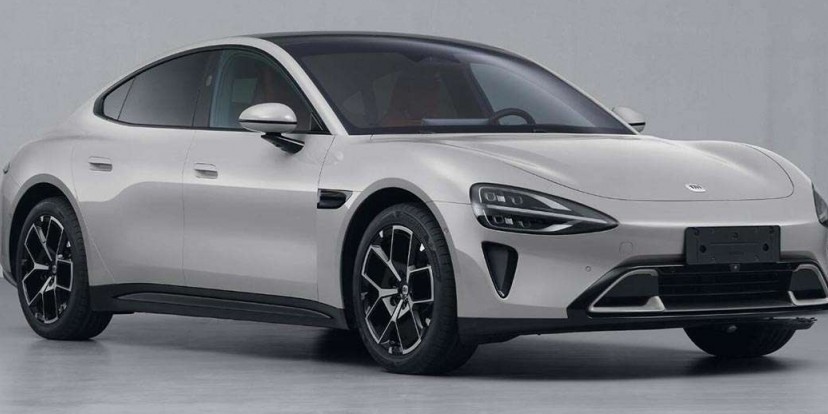
We finally have some solid details on Xiaomi's highly-anticipated first EV, the SU7. We have the key specs of the vehicle along with official images thanks to a regulatory filing with China's Ministry of Industry and Information Technology (MIIT).

Xiaomi's EV comes with two model numbers - BJ7000MBEVR2, which is the single-motor variant, and BJ7000MBEVA1, which is the dual-motor one. The SU7 is 4,997 mm long, 1,963 mm wide, and 1,455 mm tall with a wheelbase of 3,000 mm. That makes Xiaomi's EV both longer and wider than its main rivals the Tesla Model 3 and Nio ET5.

It will have a top speed of 210 km/h. Notably, the filing reveals that BAIC Off-road Vehicle, not Xiaomi, actually does the manufacturing.

Xiaomi will sell three tiers of the car - the single-motor SU7 with a weight of 1,980 kg, and the SU7 Pro and SU7 Max with a weight of 2,205 kg.

The single-motor SU7 has a 220 kW (295 hp) motor made by United Automotive Electric Systems, a joint venture between Bosch and Zhonglian Automotive Electronics. The SU7 Pro and SU7 Max have two motors with individual outputs of 220 kW (295 hp) and 275 kW (368 hp) that can combined to deliver 660 hp.

 
Top
Sign up to the MyBroadband newsletter
X