Why Solar and Wind cannot power Germany

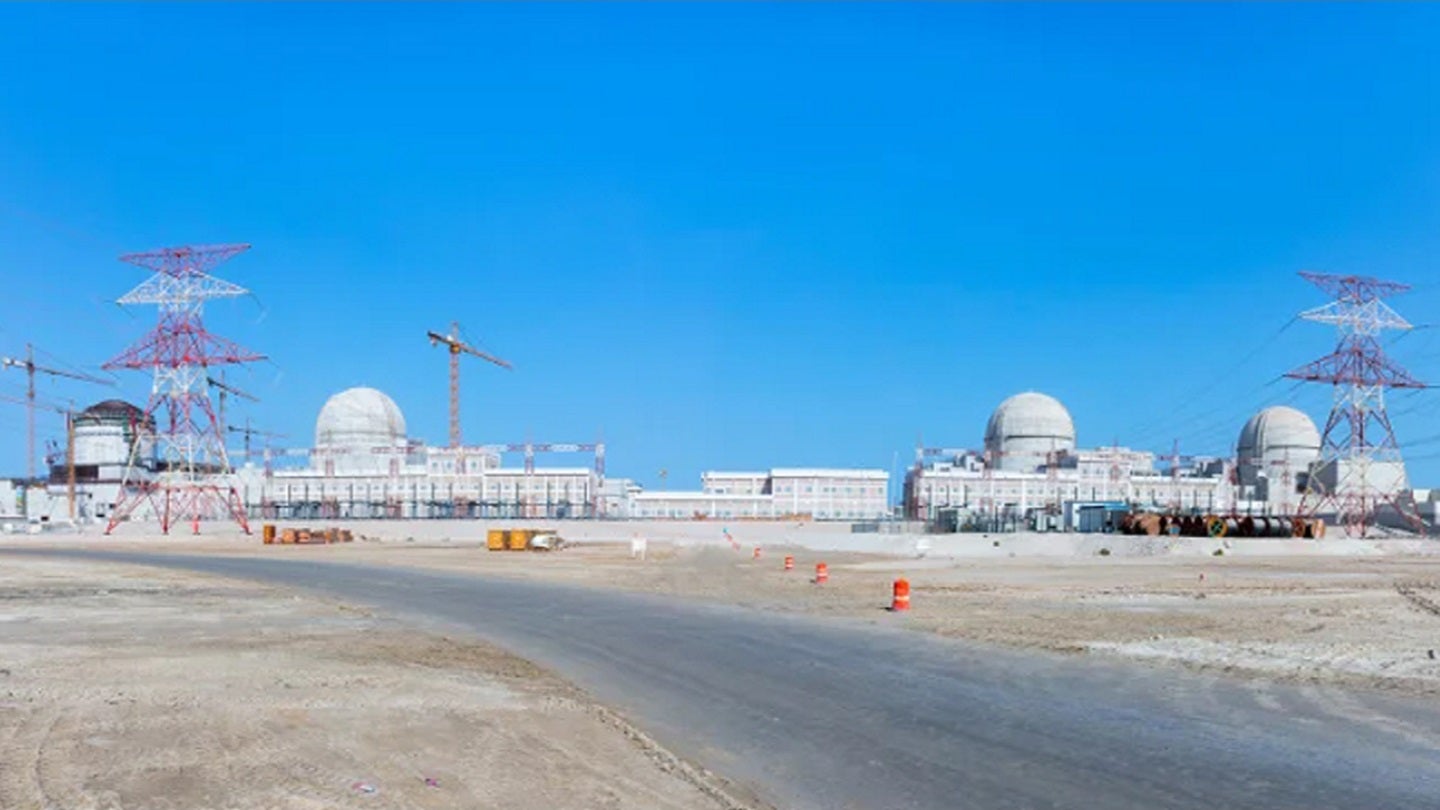
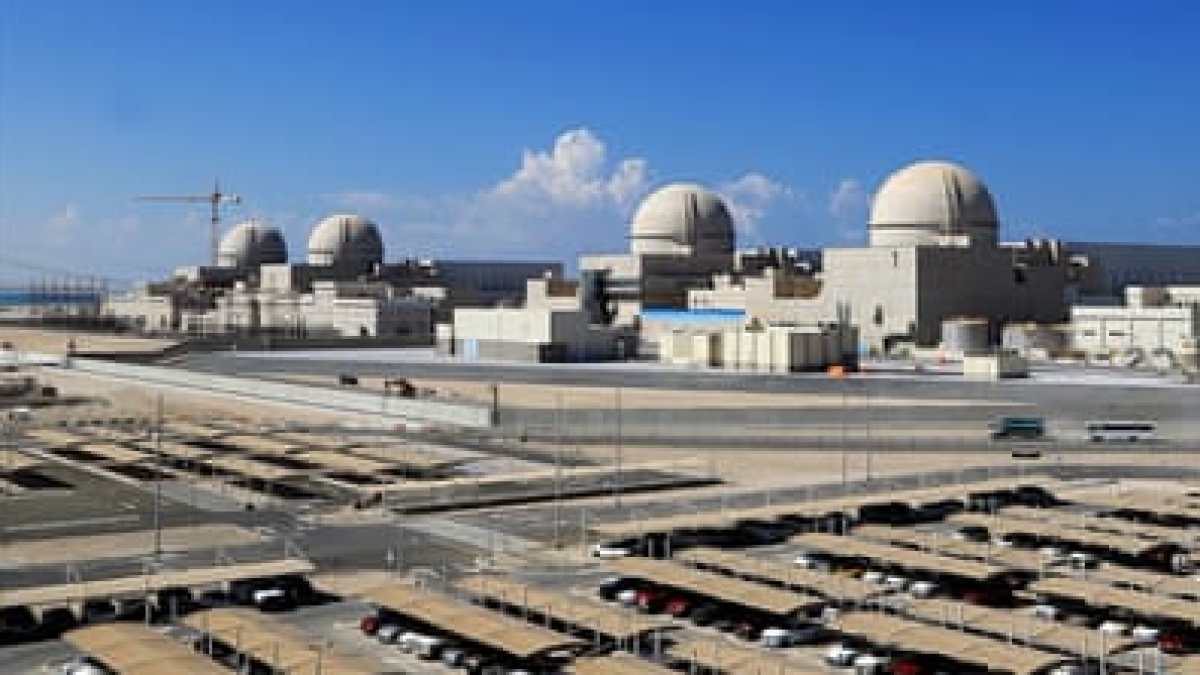
Here is what I find rather tragic though, the Barakah Nuclear Power Plant in Dubei was build in a record time, a record budget and ahead of schedule, it will supply 25% of Dubei's energy, giving them decent base load capacity. An equivalent plant will produce 10% of South Africa's electricity and its environmental footprint would be negligible.


Do you know who ran most of the construction site? Mostly South African expats were managing the site, working for the Korean company. We are known for good project management skills and there is no reason why we cannot repeat that experience in SA.

Fortunately our government is also looking into Nuclear, but like most of you I am concerned about their long fingers.


Renewables is currently on its hype phase, I am willing to take a bet that in 5 years from now many of its proponents are going to be more skeptical (as I said, all the bright arguments that you guys are throwing out at the moment was made when Germany went into its Energie Wende and the public is growing increasingly skeptical against these claims).

Go and Watch Planet of the humans (they get a few facts wrong, but their central argument holds water)
That's a 5.6GW Nuclear power plant that was completed quicker than the 4.8GW coal plants we've got here, remember we those two plants were supposed to take a good portion of our load, so two of these 5.6GW nuclear plants would take a real good portion of our load. But if two coal plants have taken 13 years to still fumble along, I'm not sure how long it would take for these plants.
 
That's a 5.6GW Nuclear power plant that was completed quicker than the 4.8GW coal plants we've got here, remember we those two plants were supposed to take a good portion of our load, so two of these 5.6GW nuclear plants would take a real good portion of our load. But if two coal plants have taken 13 years to still fumble along, I'm not sure how long it would take for these plants.

if build we Eskom we know the answer.

A 5.6MW plant was build by South Africans in the middle east, but we cannot get our own projects of the ground.
 
if build we Eskom we know the answer.

A 5.6MW plant was build by South Africans in the middle east, but we cannot get our own projects of the ground.
Nope because of ANC meddling.
 
Here is what I find rather tragic though, the Barakah Nuclear Power Plant in Dubei was build in a record time, a record budget and ahead of schedule, it will supply 25% of Dubei's energy, giving them decent base load capacity. An equivalent plant will produce 10% of South Africa's electricity and its environmental footprint would be negligible.


Do you know who ran most of the construction site? Mostly South African expats were managing the site, working for the Korean company. We are known for good project management skills and there is no reason why we cannot repeat that experience in SA.

Fortunately our government is also looking into Nuclear, but like most of you I am concerned about their long fingers.


Renewables is currently on its hype phase, I am willing to take a bet that in 5 years from now many of its proponents are going to be more skeptical (as I said, all the bright arguments that you guys are throwing out at the moment was made when Germany went into its Energie Wende and the public is growing increasingly skeptical against these claims).

Go and Watch Planet of the humans (they get a few facts wrong, but their central argument holds water)

10 year construction is not "record" time (March 2011 groundbreaking -> March 2020 for loading fuel into unit 1 out of 4. Perhaps in Nuclear time, where 5 years projected = 10-15 years actual.
Note that they're not done yet).

"Barakah is three years behind schedule and has been plagued by problems stemming from what experts describe as a cut-rate design and poor construction that would not fly in safety-conscious Europe'

All the reactor buildings are cracked...

Suggest read this article which goes into detail about the issues.


My real concern for the Dubai build is cooling. Their gulf is already too hot for cooling, not sure how well its going to work once all 4 reactors are loaded and running.

So, substandard work, a project thats running late, and you quote it as record time, under budget?

Evidence suggests that isn't quite true.


Of course the reason why they wanted Nuclear -
“Since new nuclear makes little apparent sense in the Gulf, which has some of the best solar energy resources in the world, the nature of the interest in nuclear may lie hidden in plain sight,” Dorfman noted in a report he authored on Barakah.

Sokolski also has questions about Middle East nuclear energy ambitions. “If they want electricity, this is a very poor way to do it,” he said, noting the abundance of alternative energy sources the UAE and other countries in the region with nuclear power plants under development could harness including natural gas, sun and wind. “Building a nuclear power plant would be like number 58 on your top five things to do, and that they’ve chosen to focus on this [nuclear] is suspect.”
 
Some more detail on the cooling requirements, from the pro-nuclear site.


And some more brief conversation on some of the issues


My concern is repeated in their list of issues -
The UAE’s governmental environmental assessment of global heating’s impact on Barakah is conspicuous by its absence.
 
I am not sure how you count, by from 2011 to 2020 is 9 years and not 10 years,

Other sources tell me it took 8 years to build, which is very good record for a modern plant (no one is naïve enough to trust the initial 5 year predictions for modern more complex plants). But let's take 10 years, that is still quite remarkable for the amount of power that it supplies at an affordable and reliable rate.

To talk about "concrete being cracked", that is such a naïve statement, concrete always cracks the question is whether or not it is within the limits. Those issues always arrive during a construction, but they can be fixed.

Nuclear power programme in the UAE
In April 2008 the UAE independently published a comprehensive policy on nuclear energy. The policy projected escalating electricity capacity requirements from 15.5 GWe in 2008 to over 40 GWe in 2020. Imported coal was dismissed as an option due to environmental and energy security implications. Renewables would be able to supply only 6-7% of the needed power by 2020.

Nuclear power "emerged as a proven, environmentally promising and commercially competitive option which could make a significant base-load contribution to the UAE’s economy and future energy security." This led to creation of a regulatory framework and selection of a site between Abu Dhabi city and Ruwais, at Barakah, 250 km west of Abu Dhabi city. Another possible site mentioned then was Al Fujayrah on the Indian Ocean coast.
One power station of the cost gives you 25% of the country's electricity, quite a good deal if you ask me.

Here is a breakdown of the UAE's electricity consumption in 2015 (and please don't fall for the marketing trick of electricity supply, look at the consumption, because that is what generates wealth).
1606385332468.png
It doesn't look to me that it has a very good record to stand on (but perhaps it will increase now that they are investing).

I am trying to find data for 2020, would be surprised to know what their consumption currently stands on


In 2015, renewable energies accounted for around 0.1 percent of actual total consumption in the United Arab Emirates.

The construction licence for units 1&2 was issued by FANR in mid-July 2012. The 18-month review involved more than 60 FANR staff and three international consulting firms, as well as the IAEA, and took in changes resulting from the Fukushima accident. Construction of unit 1 started almost immediately with first concrete, and that for unit 2 started in May 2013.

For units 3&4 ENEC submitted a 10,000-page construction licence application to FANR in March 2013, based on that for units 1&2, and the licences were issued in mid-September 2014. Construction of unit 3 started a week later. Substantial work to prepare for first structural concrete had been authorised for units 3&4 in February 2014. Unit 4 construction started early in September 2015.

Commercial operation of the four units was initially expected in 2017, 2018, 2019 and 2020 respectively.

Unit 1 of the country's first nuclear power plant was connected to the grid in August 2020.


Publics opinion is also in favor of it, the UAE's population is an intelligent lot,
A total of 83% of people surveyed by market research company Kantar TNS early in 2017 (N=750) were strongly in favour of nuclear power, compared with 70% in 2013 on the same question. A total of 90% of respondents believed that ENEC was building the plant at Barakah to the highest standards of safety and quality. Other key findings included: 92% believed that the Barakah plant is important for the nation; support for the construction of nuclear plants in the UAE had risen to 79%, up 11% from 2013; the percentage of residents believing it is important for the UAE to have a peaceful nuclear energy programme in order to be able to meet the nation's electricity needs had risen to 69%, up 6%; and the vast majority of UAE residents, 81%, were aware of ENEC, up from 56%.
 
Last edited:
I really don't think that you guys have come to terms with yet how tiny the amount of energy is that is generated from Solar and Wind, you talk about Megawatts, in Nuclear we talk on the order of Gigawatts. A 10 year construction project, financed by a low interest loan can easily pay itself back, but it requires long term thinking.

Just look at this graph and see what a tiny fraction they actually make up of the world's energy.
1606385973489.png

And to have a bunch of panels, batteries and wind farms everything to match the energy density of Fossil Fuels is quite a bit of wishful thinking,

As I said, I am willing to take a bet that in 5 years from now the hype will set in and we will see who is correct (if we are still on this forum)
 
Here is the UAE's energy breakdown in 2019, before the reactor went online this year,
1606386211910.png

That one PowerStation alone with all 4 reactors can replace half its energy demand from Coal.

As for gas etc, I find it difficult to see how people are going to heat their homes with a more efficient technology (some people put their hopes on hydrogen, but I have my doubts due to the inherent physical limits of the technology)
 
I am not sure how you count, by from 2011 to 2020 is 9 years and not 10 years,

Other sources tell me it took 8 years to build, which is very good record for a modern plant (no one is naïve enough to trust the initial 5 year predictions for modern more complex plants). But let's take 10 years, that is still quite remarkable for the amount of power that it supplies at an affordable and reliable rate.

To talk about "concrete being cracked", that is such a naïve statement, concrete always cracks the question is whether or not it is within the limits. Those issues always arrive during a construction, but they can be fixed.

Nuclear power programme in the UAE

One power station of the cost gives you 25% of the country's electricity, quite a good deal if you ask me.

Here is a breakdown of the UAE's electricity consumption in 2015 (and please don't fall for the marketing trick of electricity supply, look at the consumption, because that is what generates wealth).
View attachment 960452
It doesn't look to me that it has a very good record to stand on (but perhaps it will increase now that they are investing).

I am trying to find data for 2020, would be surprised to know what their consumption currently stands on


Publics opinion is also in favor of it, the UAE's population is an intelligent lot,
I think you miss the fact that it's 9 1/2 years to date. Over schedule, and still not completed. 10 years is accurate for the moment. Only 1 reactor is "ready". The other 3 are still not ready, 10 years is likely a lowball number. Probably more like another 3-4 years, so 12-13 years total in reality. Time will tell though.

PS -
Your nonsense about GW vs MW is one just that. You can build out Solar, Wind... in fact pretty much any generation to GW sizing. You don't necessarily want to. Concentrating production in one area is usually not optimal for transmission.
 
I think you miss the fact that it's 9 1/2 years to date. Over schedule, and still not completed. 10 years is accurate for the moment. Only 1 reactor is "ready". The other 3 are still not ready, 10 years is likely a lowball number. Probably more like another 3-4 years, so 12-13 years total in reality. Time will tell though.

PS -
Your nonsense about GW vs MW is one just that. You can build out Solar, Wind... in fact pretty much any generation to GW sizing. You don't necessarily want to. Concentrating production in one area is usually not optimal for transmission.

That depends on where your factories is, but to scale up your Solar potential to complete with a Nuclear Power Plant is completely wishful thinking,

South Africa's Solar Potential is in the Karoo, but our Factories are in the Lowveld and Gauteng, to put it in a picture for you, its as if you install a Solar Panel in Rome and you want to transfer the Energy to London. Potentially possible, but highly ineffective.

It can potentially work in the desert sun (Morocco and Dubai is a no brainer), but I am waiting for the Wind to Blow and for the poor guys that want to clean them to start striking.
 
That depends on where your factories is, but to scale up your Solar potential to complete with a Nuclear Power Plant is completely wishful thinking,

South Africa's Solar Potential is in the Karoo, but our Factories are in the Lowveld and Gauteng, to put it in a picture for you, its as if you install a Solar Panel in Rome and you want to transfer the Energy to London. Potentially possible, but highly ineffective.

It can potentially work in the desert sun (Morocco and Dubai is a no brainer), but I am waiting for the Wind to Blow and for the poor guys that want to clean them to start striking.
Suggest take a look at our HVDC infrastructure lines and comment afterwards.

Eskom distribution is actually fairly good in terms of infrastructure and planning

TDP%20Report%202019-2029_Final.pdf

1606387752162.png
 
Suggest take a look at our HVDC infrastructure lines and comment afterwards.

Eskom distribution is actually fairly good in terms of infrastructure and planning

TDP%20Report%202019-2029_Final.pdf

View attachment 960468

I would agree with you on one think and that is that the Engineers at Eskom, despite the problems with the corruption has actually done a proper job.

But still what is your loss going to be at that long distance?
 
Article is in French (but google translate)

China is looking at the first attempt to decarbonize using Nuclear, it will be the next phase of the industrial revolution as Renewables are used as a means to greenwash the transition from Fossil Fuels to Nuclear (I suspect that SA and the UK is using the same strategy)


"Alors que la province du Shandong connait des hivers plus rigoureux que la France (au moins 2°C de moins qu’à Paris en moyenne) et qu’elle dépend encore, comme pour l’ensemble du pays[3], majoritairement du charbon pour son électricité et son chauffage, les autorités chinoises ont décidé de décarboner ces deux secteurs. En ce mois de novembre 2020 marqué encore par le Covid-19 et un ralentissement économique mondial sans précédent, la Chine, elle, s’attaque à la racine du réchauffement climatique, en adaptant la centrale de Haiyang pour fournir du chauffage urbain dans la province."

While the province of Shandong experiences harsher winters than France (at least 2 ° C less than in Paris on average) and that it still depends, as for the whole country [3], mainly on coal for its electricity and heating, the Chinese authorities have decided to decarbonise these two sectors. In this month of November 2020 still marked by the Covid-19 and an unprecedented global economic slowdown, China is tackling the root of global warming, by adapting the Haiyang plant to provide district heating in the province. .
 
The historical energy transitions have always been from less dense to more dense fuels, but we are now told to believe in the impossible,

This is still my favorite table,
1606388476359.png

Fission and Fusion seems to be a good bet, hydrogen has some potential applications but its volume density makes it inherently difficult.

Airbus is working on getting their planes to run on Hydrogen, but I have my doubts if I look at the volume density.

1606388624794.png
 
The historical energy transitions have always been from less dense to more dense fuels, but we are now told to believe in the impossible,

This is still my favorite table,
View attachment 960482

Fission and Fusion seems to be a good bet, hydrogen has some potential applications but its volume density makes it inherently difficult.

Airbus is working on getting their planes to run on Hydrogen, but I have my doubts if I look at the volume density.

View attachment 960484

I wouldn't imagine wind turbines make for good fuel, you typically don't burn them :)

Seriously though - not sure what they're trying to state there. some of those are not like the other.
Density per KG is a rather meaningless stat for some generation eg solar, wind, hydro, nuclear, battery, unless it's a vehicle, in which case, Lithium, Petrol/Diesel, or LPG are the main mediums for power source.
Some of those are not fuels.

Lithium is arguably winning that one, as the externalities and other costs are far higher for the burning for heat fuels. Not mentioned, which is suspicious.

None of those numbers are relevant to anything really. Generation costs aren't purely based on fuel density.
eg Hydrogen is light, so figures well on there, but the ancilliary equipment to store / make or use it, lowers that dramatically, similarly to Nuclear.


Hydrogen is a non starter except for very niche markets - possibly shipping. Highly doubtful for airplanes.
 
I would agree with you on one think and that is that the Engineers at Eskom, despite the problems with the corruption has actually done a proper job.

But still what is your loss going to be at that long distance?
3% average per 1000km, so 3%. Most of the loss is usually comes from the distribution side. You should already know this.
The historical energy transitions have always been from less dense to more dense fuels, but we are now told to believe in the impossible,

This is still my favorite table,
View attachment 960482

Fission and Fusion seems to be a good bet, hydrogen has some potential applications but its volume density makes it inherently difficult.
What does the energy density of a wind turbine got to do with anything? That makes no sense to add as a fuel type. Where is the energy density of solar in that? It means nothing. Either way the argument of density doesn't matter, it's been said 100 times already, wind turbines do not stop the land for being used for something else, e.g. it's quite often place in the middle of farming area.
Airbus is working on getting their planes to run on Hydrogen, but I have my doubts if I look at the volume density.

View attachment 960484
It's amazing how you focus on one aspect that's quite outdated:

Hydrogen as an Alternative Fuel​


Hydrogen is considered an alternative fuel under the Energy Policy Act of 1992. The interest in hydrogen as an alternative transportation fuel stems from its ability to power fuel cells in zero-emission FCEVs, its potential for domestic production, its fast filling time, and the fuel cell's high efficiency. In fact, a fuel cell coupled with an electric motor is two to three times more efficient than an internal combustion engine running on gasoline. Hydrogen can also serve as fuel for internal combustion engines. However, unlike FCEVs, these produce tailpipe emissions and are less efficient. Learn more about fuel cells.


The energy in 2.2 pounds (1 kilogram) of hydrogen gas is about the same as the energy in 1 gallon (6.2 pounds, 2.8 kilograms) of gasoline. Because hydrogen has a low volumetric energy density, it is stored onboard a vehicle as a compressed gas to achieve the driving range of conventional vehicles. Most current applications use high-pressure tanks capable of storing hydrogen at either 5,000 or 10,000 pounds per square inch (psi). For example, the FCEVs in production by automotive manufacturers and available at dealerships have 10,000 psi tanks. Retail dispensers, which are mostly co-located at gasoline stations, can fill these tanks in about 5 minutes. Other storage technologies are under development, including bonding hydrogen chemically with a material such as metal hydride or low-temperature sorbent materials. Learn more about hydrogen storage.
Also not looking at refuelling time etc.


Hydrogen looks promising, but you'll have to see since battery tech is advancing quite quickly, if it can't beat battery tech in weight/charge time etc. it won't really manage to get added.
 
What does the energy density of a wind turbine got to do with anything? That makes no sense to add as a fuel type. Where is the energy density of solar in that? It means nothing.

Energy density is how Civilizations move and advance, that is why we use coal as opposed to wale oil. Coal as opposed to Wood etc etc, Every industrial revolution that we went through moved from a less dense source to a more dense source. The Fossil Fuels to Renewables will be unique if we even achieve that.

As for Hydrogen, there are many applications, but I am skeptical about it replacing cars at the moment, Yes it is faster to refill, but so what? Does anyone complain about waiting a few seconds for a petrol attendant?


The issue with "green hydrogen" is the highly inefficient electrolysis process,
''It would require wind turbines covering 5,000km² which corresponds to the size of an entire French department. If it were photovoltaic panels it would require an area of 1,000km². And if we decide to use nuclear energy instead, we would have to use 16 nuclear reactors to supply Paris-Charles de Gaulle airport", he explains.

and that is just one airport, lots of land for lots of fuel as opposed to Kerosene?
 
Energy density is how Civilizations move and advance, that is why we use coal as opposed to wale oil. Coal as opposed to Wood etc etc, Every industrial revolution that we went through moved from a less dense source to a more dense source. The Fossil Fuels to Renewables will be unique if we even achieve that.
Just no. It's how cheap you can get energy from it, coal being denser with cheap mining means it was a lot easier to get a lot more power for cheaper, it coincides with energy density.

You should stop with these arguments/remarks, and I highly doubt you work in the energy sector based on the remarks you make and that you can't seem to understand how to argue pro/con of anything. It's more likely you're a builder/brick layer on some of these projects and now think that means you're an engineer.
 
Just no. It's how cheap you can get energy from it, coal being denser with cheap mining means it was a lot easier to get a lot more power for cheaper, it coincides with energy density.
The cheaper an energy source the more dense it tends to be, that is why we use Fossil Fuels, because it is highly efficient.

The cheap costs of Solar and wind is due to a high scale production cost and you tend to get that down by applying energy more dense. How do you think we manufacture at a higher scale? By applying more efficient methods (ie more energy density).

The reason why prices cannot fall forever for a given technology is because we reach Physical limits, ie. there is a theoretical efficiency at which Solar Panels and Wind can supply electricity and beyond that you cannot get more out of it.

Your comment just shows me a complete ignorance of developmental economics.

You should stop with these arguments/remarks, and I highly doubt you work in the energy sector based on the remarks you make and that you can't seem to understand how to argue pro/con of anything. It's more likely you're a builder/brick layer on some of these projects and now think that means you're an engineer.

Look mate, you might try and use those lame attacks to try and get me to keep quiet, but I get that feeling that your irritation is because I am exposing your underlying doubts.
 
Last edited:
Here is a good source to understand how power density effects development.


In this book, Vaclav Smil argues that power density is a key determinant of the nature and dynamics of energy systems. Any understanding of complex energy systems must rely on quantitative measures of many fundamental variables. Power density—the rate of energy flux per unit of area—is an important but largely overlooked measure. Smil provides the first systematic, quantitative appraisal of power density, offering detailed reviews of the power densities of renewable energy flows, fossil fuels, thermal electricity generation, and all common energy uses.

Smil shows that careful quantification, critical appraisals, and revealing comparisons of power densities make possible a deeper understanding of the ways we harness, convert, and use energies. Conscientious assessment of power densities, he argues, proves particularly revealing when contrasting the fossil fuel–based energy system with renewable energy conversions.

Smil explains that modern civilization has evolved as a direct expression of the high power densities of fossil fuel extraction. He argues that our inevitable (and desirable) move to new energy arrangements involving conversions of lower-density renewable energy sources will require our society—currently dominated by megacities and concentrated industrial production—to undergo a profound spatial restructuring of its energy system.

The point is that it isn't just as simple as use more land, use renewables etc, what you're inherently asking for is a fundamental restructuring/revolution of how the modern economy works on fuels that are less dense. That simply hasn't occurred yet in the past and we are attempting something that goes against how countries historically have developed. Potentially possible?

If you understand how power density effects development then then you will see why so many people are skeptical.

People such as MIT Prof Robbin Pollin shows that a renewable transition can be done, but the cost of it (which he is prepared to pay) is equivalent to a war time mobilization.
 
Last edited:
Top
Sign up to the MyBroadband newsletter
X