Windows 11 will support older Intel processors

Hanno Labuschagne

Journalist
Staff member
Joined
Sep 2, 2019
Messages
6,453
Reaction score
4,733
Windows 11 will support older Intel processors

Microsoft has added several older CPUs to its list of supported processors for Windows 11.

The new operating system is expected to officially launch in October and is currently available in preview builds for Windows Insiders in the Dev and Beta channels.

Following feedback from Windows Insiders over the last few months, Microsoft began testing whether there were devices running on Intel's 7th generation and AMD Zen 1 processors that met its new established principles for system requirements.
 
Pathetic. I'm on the Dev build with my first Gen Ryzen CPU, and it runs absolutely perfectly.
 
So a core i7-7700K - hell no!
But a Celeron from last year - bring it on!
 
Not really new news, they added one more succeeded Intel generation. This was taken under consideration some time ago, and test builds already allows older generation CPUs though some require workarounds, so the question is whether these workarounds will still be exploitable in the time to come?

Anyway, I am not concerned. Not too many people showed interest in a Windows 11, but when it was announced and made available as a testing bed, whoosh, every Windows XP person wanted it installed.

At this time Windows 11 handicaps older PC games, so, no. Fragmentation is my only concern.
 
Both Skylake and Kaby Lake are declared EOL, Kaby Lake has exceptions,


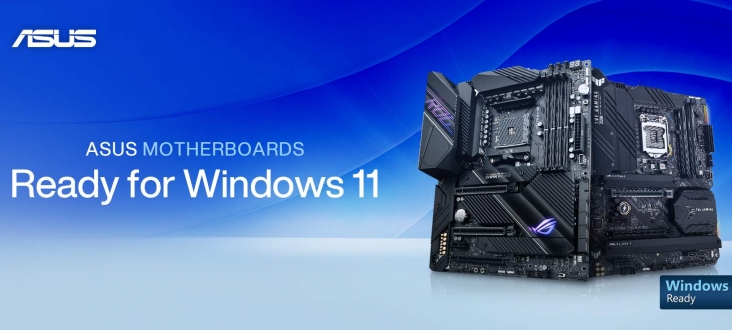
Asus is releasing BIOS updates to allow Kaby Lake and Skylake-based systems to run Windows 11​

When Microsoft announced the system requirements for Windows 11, the lack of Skylake and Kaby Lake CPUs in the compatibility list came as a surprise. These chips are still relatively modern, so it would be expected that Windows 11 would support them. Fortunately for Asus motherboards owners, the company seems to have found a way to run Windows 11 on Kaby Lake and Skylake-based systems.

Windows 11 official system requirements state that an Intel 8th Gen Core desktop processor or above is needed to run the new OS. However, thanks to a new BIOS update for selected Asus motherboards, Kaby Lake and Skylake CPU owners will be able to run Windows 11 on their systems.
 
MS said that they won't block PCs with older CPUs from installing Windows 11 but support from their end will be minimal
 
So a core i7-7700K - hell no!
But a Celeron from last year - bring it on!
You see, I can completely understand in a different scenario, for like say, a media PC. It would make far more sense to opt for a much newer, but often far slower processor which has modern VPU capabilities to play everything without chugging electricity and avoiding framedrops in some cases.

The problem is that most of the 'security' measures Microsoft have introduced over the last ten years (UEFI, Secure Boot, TPM) are positively moot or vastly underutilized, often to annoy the end user and restrict freedom, often confirming to standards which favour themselves, and introducing some DRM nonsense in the mix for good measure. It's to be sadly expected as a dominant market player, and I still feel strongly against these obtuse cutoff restrictions, but if the statistics and general consensus is true, this won't be an issue come 2026 and the majority who refuse to use alternatives will continue to generate wastage as we do so horribly with mobile devices.
 
MS said that they won't block PCs with older CPUs from installing Windows 11 but support from their end will be minimal
That can be quite good, just hopefully drivers, applications and firmware don't succumb to random failure and hiccups as a result.
 
You see, I can completely understand in a different scenario, for like say, a media PC. It would make far more sense to opt for a much newer, but often far slower processor which has modern VPU capabilities to play everything without chugging electricity and avoiding framedrops in some cases.

The problem is that most of the 'security' measures Microsoft have introduced over the last ten years (UEFI, Secure Boot, TPM) are positively moot or vastly underutilized, often to annoy the end user and restrict freedom, often confirming to standards which favour themselves, and introducing some DRM nonsense in the mix for good measure. It's to be sadly expected as a dominant market player, and I still feel strongly against these obtuse cutoff restrictions, but if the statistics and general consensus is true, this won't be an issue come 2026 and the majority who refuse to use alternatives will continue to generate wastage as we do so horribly with mobile devices.
They should have just made Windows 11 a brand new OS and when Windows 10 LTS ends, make it open source and let the community continue development on it for those who want to stay behind/have older hardware to run :p
 
Top
Sign up to the MyBroadband newsletter
X