


B-1
Honorary Master
- Joined
- Apr 17, 2020
- Messages
- 11,321
- Reaction score
- 14,541
Thank you that makes sense
Not sure which inverter you have but where you connect affects where the CT coil needs to go so make sure thats correct as well.
South Africa’s biggest forum. Discuss, discover, and connect with thousands of members.
Thank you that makes sense

Earth leakage switch is not what you think it means. For some reason we call it earth leakage here in SA, but the rest of the world call it some other name.That is correct in how I understand it, I am just asking what if the inverter has a fault and has a leakage to earth?

That is why i am asking, if the inverter has a fault that lets say makes the case of the inverter live and little old me goes and touch it or some body goes it pokes around in there do they just get the 220v shock with no protection? Just askingEarth leakage switch is not what you think it means. For some reason we call it earth leakage here in SA, but the rest of the world call it some other name.
The switch is there to protect humans from getting fried. Not to protect devices like an inverter. That image is correct, if its connected the way you want, each time loadshedding ends, the EL switch will trip. Trust me, the way powerforums have it, is ideal.
Your inverter generate power, so erm it can shock you regardless of whether there is a Earth leakage switch inline on the grid side or not...That is why i am asking, if the inverter has a fault that lets say makes the case of the inverter live and little old me goes and touch it or some body goes it pokes around in there do they just get the 220v shock with no protection? Just asking
Sorry posting from the phone cause loadshedding
They call it RCD or Residual current deviceEarth leakage switch is not what you think it means. For some reason we call it earth leakage here in SA, but the rest of the world call it some other name.
The switch is there to protect humans from getting fried. Not to protect devices like an inverter. That image is correct, if its connected the way you want, each time loadshedding ends, the EL switch will trip. Trust me, the way powerforums have it, is ideal.

Lights, for example, and any other devices wired into your DB are also not protected by earth leakage / RCD. The point is to turn off the power to them before fiddling.That is why i am asking, if the inverter has a fault that lets say makes the case of the inverter live and little old me goes and touch it or some body goes it pokes around in there do they just get the 220v shock with no protection? Just asking
Sorry posting from the phone cause loadshedding

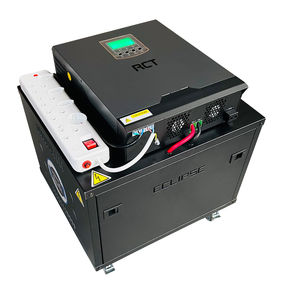
 leroymerlin.co.za

I am not sure whether I understand your question correctly. I am not thus not sure that I answer the question correctly. Anyone more knowledgeable than me, please chirp in.Guys and girls, I am confused.
Looking at this, how do they get to 3KWh on 2 x 120ah hubbles in series?
2.5kVa 2.56kWh Lithium Compact Power Station UPS – 2500W
deal for indoor Home and Office use. Powerful solar-ready 2500W Off-Grid Pure Sine Wave Inverter with large 3000W MPPT Solar Controller – RCT VM2 2.5k Inverter 2 X Hubble S-100 A 1.28kWh LiFePO4 battery with built-in Battery Management System (total 2.56kWh) Long battery lifespan (up to 4000...
Guys and girls, I am confused.
Looking at this, how do they get to 3KWh on 2 x 120ah hubbles in series?
2.5kVa 2.56kWh Lithium Compact Power Station UPS – 2500W
deal for indoor Home and Office use. Powerful solar-ready 2500W Off-Grid Pure Sine Wave Inverter with large 3000W MPPT Solar Controller – RCT VM2 2.5k Inverter 2 X Hubble S-100 A 1.28kWh LiFePO4 battery with built-in Battery Management System (total 2.56kWh) Long battery lifespan (up to 4000...
Probably rounding up 2.88kwh to 3kwhI am not sure whether I understand your question correctly. I am not thus not sure that I answer the question correctly. Anyone more knowledgeable than me, please chirp in.
The Hubble S120b is a 1c battery, so one could theoretical use that inverter with up to (24VX120Ah = 2880W) load.
The inverter is 3kw, not the batteries.Guys and girls, I am confused.
Looking at this, how do they get to 3KWh on 2 x 120ah hubbles in series?
2.5kVa 2.56kWh Lithium Compact Power Station UPS – 2500W
deal for indoor Home and Office use. Powerful solar-ready 2500W Off-Grid Pure Sine Wave Inverter with large 3000W MPPT Solar Controller – RCT VM2 2.5k Inverter 2 X Hubble S-100 A 1.28kWh LiFePO4 battery with built-in Battery Management System (total 2.56kWh) Long battery lifespan (up to 4000...

States 3KWh batteriesThe inverter is 3kw, not the batteries.
Geez, but these things are getting #*@£ expensive
12V x 120Ah = 1440WhGuys and girls, I am confused.
Looking at this, how do they get to 3KWh on 2 x 120ah hubbles in series?
2.5kVa 2.56kWh Lithium Compact Power Station UPS – 2500W
deal for indoor Home and Office use. Powerful solar-ready 2500W Off-Grid Pure Sine Wave Inverter with large 3000W MPPT Solar Controller – RCT VM2 2.5k Inverter 2 X Hubble S-100 A 1.28kWh LiFePO4 battery with built-in Battery Management System (total 2.56kWh) Long battery lifespan (up to 4000...
C rating has nothing to do with this. And you can't just willy nilly switch between W and Wh (or A and Ah)I am not sure whether I understand your question correctly. I am not thus not sure that I answer the question correctly. Anyone more knowledgeable than me, please chirp in.
The Hubble S120b is a 1c battery, so one could theoretical use that inverter with up to (24VX120Ah = 2880W) load.
The batteries are 3kWhThe inverter is 3kw, not the batteries.
Geez, but these things are getting #*@£ expensive
Correct.
I've got 5 batteries with 3 different models.
3 x US3000B
1 x US3000C
1 x UP5000
Parallel, definitely parallel.
Pylons all talk to each other, so you simply hook up your extra battery (ensuring the newest model is master) and you're good to go.
Parallel,Pylontech's manual has a compatibility list for which battery becomes master in a config,their entire range is retroactively stackable (only manufacturer I know that does that with so many models)

Parallel,Pylontech's manual has a compatibility list for which battery becomes master in a config,their entire range is retroactively stackable (only manufacturer I know that does that with so many models)
Interesting. I have 2 Dyness 4.8kWh batteries (A48100). I haven't decided yet whether to spend more money and get a third battery. The problem is that the Dyness A48100(4.8kWh) seems to be gradually being phased out and replaced with a 5.12kWh model (BX51100). Is it possible to parallel the 5.12kWh model with the 2 x4.8kWh models?Correct.
I've got 5 batteries with 3 different models.
3 x US3000B
1 x US3000C
1 x UP5000

You would have to ask the manufacturerInteresting. I have 2 Dyness 4.8kWh batteries (A48100). I haven't decided yet whether to spend more money and get a third battery. The problem is that the Dyness A48100(4.8kWh) seems to be gradually being phased out and replaced with a 5.12kWh model (BX51100). Is it possible to parallel the 5.12kWh model with the 2 x4.8kWh models?
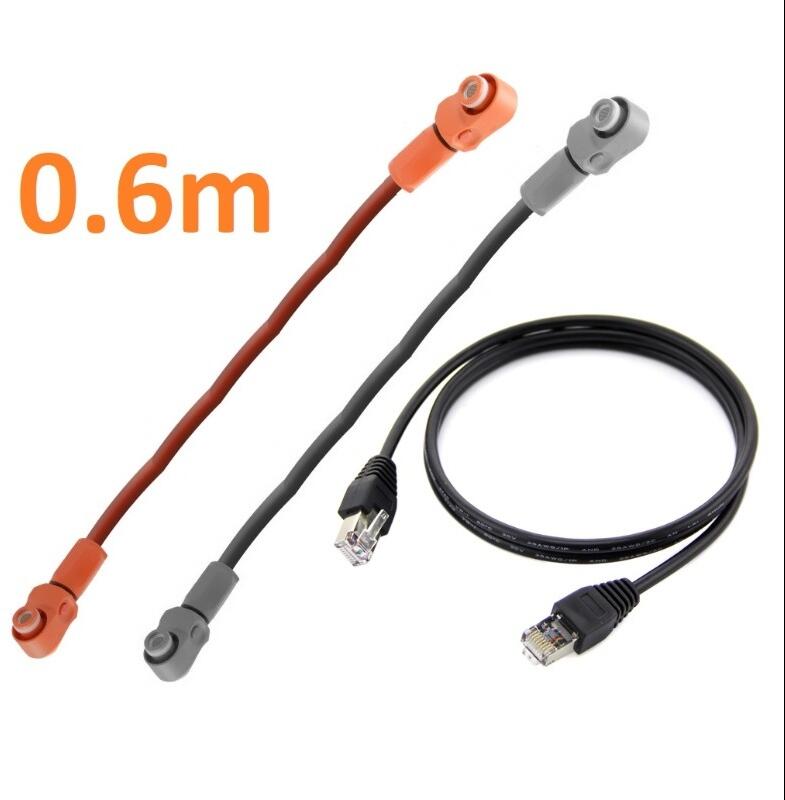
 www.solartradesales.co.uk

 solarsonic.co.za

It is not possible. The 48100 is a 15cell system while the 51100 is a 16 cell system.Interesting. I have 2 Dyness 4.8kWh batteries (A48100). I haven't decided yet whether to spend more money and get a third battery. The problem is that the Dyness A48100(4.8kWh) seems to be gradually being phased out and replaced with a 5.12kWh model (BX51100). Is it possible to parallel the 5.12kWh model with the 2 x4.8kWh models?

