FiestaST
Honorary Master
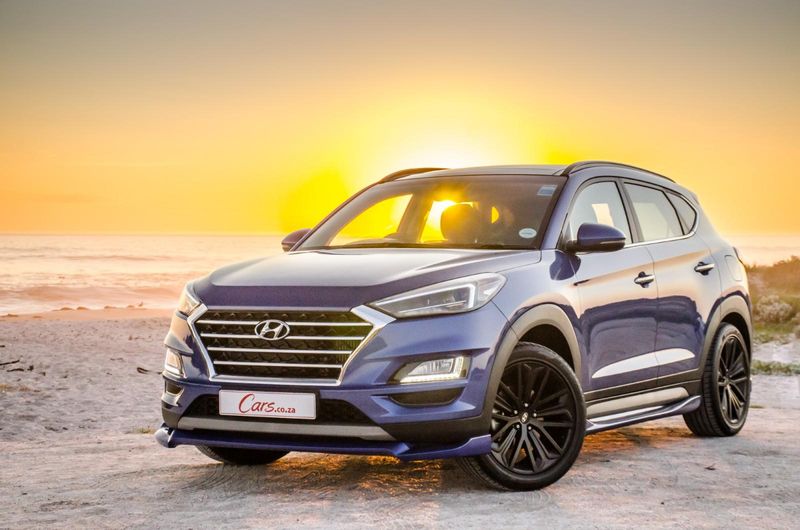
DRIVEN: Hyundai Tucson Sport 1,6T DCT and Tucson Sport 2,0D AT
Over the past few years, a large number of South African motorists have ditched their sedans and hatchbacks in favour of vehicles offering increased ride height and more commanding driving positions. There has been a similar exodus from the sportscar segment, with some consumers seeking extra practicality (without being prepared to lose out on performance) and thus opting for performance SUVs.
In 2017, Hyundai Automotive South Africa revealed its own midsize "warm SUV" in the shape of the Tucson Sport, which gained a bespoke body kit and model-specific alloy wheels, and boasted an uprated version of the firm’s familiar 1,6-litre TGDi petrol engine.
Summary
Hyundai SA sold all 512 units of the pre-facelift Tucson Sport, rendering it a more exclusive offering than the standard models. It'll be a similar case with the facelifted version, as the local arm of the Korean brand says it will be supplied with just 50 kits per month (with each Tucson Sport coming at a premium of R65 000 over a standard Elite model). However, the addition of a diesel derivative has certainly broadened the Sport range's appeal.
Which one to get? Objectively, the diesel. It's comfortable, fairly frugal and offers dollops of low-down torque. However, it lacks the shouty characteristics of the 1,6-litre turbopetrol ... and that's why you buy a sporty SUV after all, isn't it?
FAST FACTS
Models: Hyundai Tucson Sport 1,6T/Hyundai Tucson Sport 2,0D
Price: R654 900/R664 900
Engine: 1,6-litre, 4-cyl, turbopetrol/2,0-litre 4,cyl, turbodiesel
Power: 150 kW/150 kW
Torque: 300 N.m/460 N.m
0-100 km/h: 8,9 sec/9,3 sec
Top Speed: 201 km/h/201 km/h
Fuel Consumption: 8,9 L/100 km/7,9 L/100 km
CO2: 165 g/km/164 g/km
Transmission: 7-speed dual-clutch/8-speed automatic
Service Plan: 5-year/90 000 km
https://www.carmag.co.za/car-review...tucson-sport-16t-dct-and-tucson-sport-20d-at/


Over the past few years, a large number of South African motorists have ditched their sedans and hatchbacks in favour of vehicles offering increased ride height and more commanding driving positions. There has been a similar exodus from the sportscar segment, with some consumers seeking extra practicality (without being prepared to lose out on performance) and thus opting for performance SUVs.
In 2017, Hyundai Automotive South Africa revealed its own midsize "warm SUV" in the shape of the Tucson Sport, which gained a bespoke body kit and model-specific alloy wheels, and boasted an uprated version of the firm’s familiar 1,6-litre TGDi petrol engine.
Summary
Hyundai SA sold all 512 units of the pre-facelift Tucson Sport, rendering it a more exclusive offering than the standard models. It'll be a similar case with the facelifted version, as the local arm of the Korean brand says it will be supplied with just 50 kits per month (with each Tucson Sport coming at a premium of R65 000 over a standard Elite model). However, the addition of a diesel derivative has certainly broadened the Sport range's appeal.
Which one to get? Objectively, the diesel. It's comfortable, fairly frugal and offers dollops of low-down torque. However, it lacks the shouty characteristics of the 1,6-litre turbopetrol ... and that's why you buy a sporty SUV after all, isn't it?
FAST FACTS
Models: Hyundai Tucson Sport 1,6T/Hyundai Tucson Sport 2,0D
Price: R654 900/R664 900
Engine: 1,6-litre, 4-cyl, turbopetrol/2,0-litre 4,cyl, turbodiesel
Power: 150 kW/150 kW
Torque: 300 N.m/460 N.m
0-100 km/h: 8,9 sec/9,3 sec
Top Speed: 201 km/h/201 km/h
Fuel Consumption: 8,9 L/100 km/7,9 L/100 km
CO2: 165 g/km/164 g/km
Transmission: 7-speed dual-clutch/8-speed automatic
Service Plan: 5-year/90 000 km
https://www.carmag.co.za/car-review...tucson-sport-16t-dct-and-tucson-sport-20d-at/