2021 Mazda MX-30 (Mazda's first EV)

Mazda Admits You Need Two Cars To Justify MX-30 Ownership, Provided The Second Isn't Another MX-30

Mazda's desperate rationale isn't making its first-ever EV sound any more compelling

Mazda’s first fully-electric vehicle, the MX-30 crossover, has a range of 100 miles. For now Mazda’s only importing 560 for sale in California, a state that happens to be quite large. However, California also mandates that manufacturers sell cars without internal-combustion engines as part of their fleets, leading to the suspicion that the MX-30 is merely a compliance car and the company never expected to sell many examples. I subscribe to this notion, but I also think Mazda’s making its lack of confidence in the MX-30 exceedingly obvious with its latest excuse.

Speaking to Automotive News Canada, Mazda national manager Mark Peyman described the kind of customer the company is envisioning would make for the ideal MX-30. That is, someone who already owns another car.

“We come to market with a vehicle like the MX-30 that has a smaller battery, a smaller footprint environmentally and still meets the range needs of 80 per cent-plus of the consumers that will probably use this,” Peyman said. “We’ve found through research that many of these individuals have additional cars in their households that are for longer range.”

The MX-30 becomes much more appealing, the logic goes, if you have a second car for long trips. That’s not necessarily wrong, but the trouble is that the typical consumer — at least on this side of the Atlantic — never really needs to consider overall range when car shopping. So almost any car could be someone’s only car, barring something obscenely expensive that a single-car owner isn’t going to entertain anyway.

 
WTF were the Mazda designers & engineers smoking when they developed this MX-30 POS?

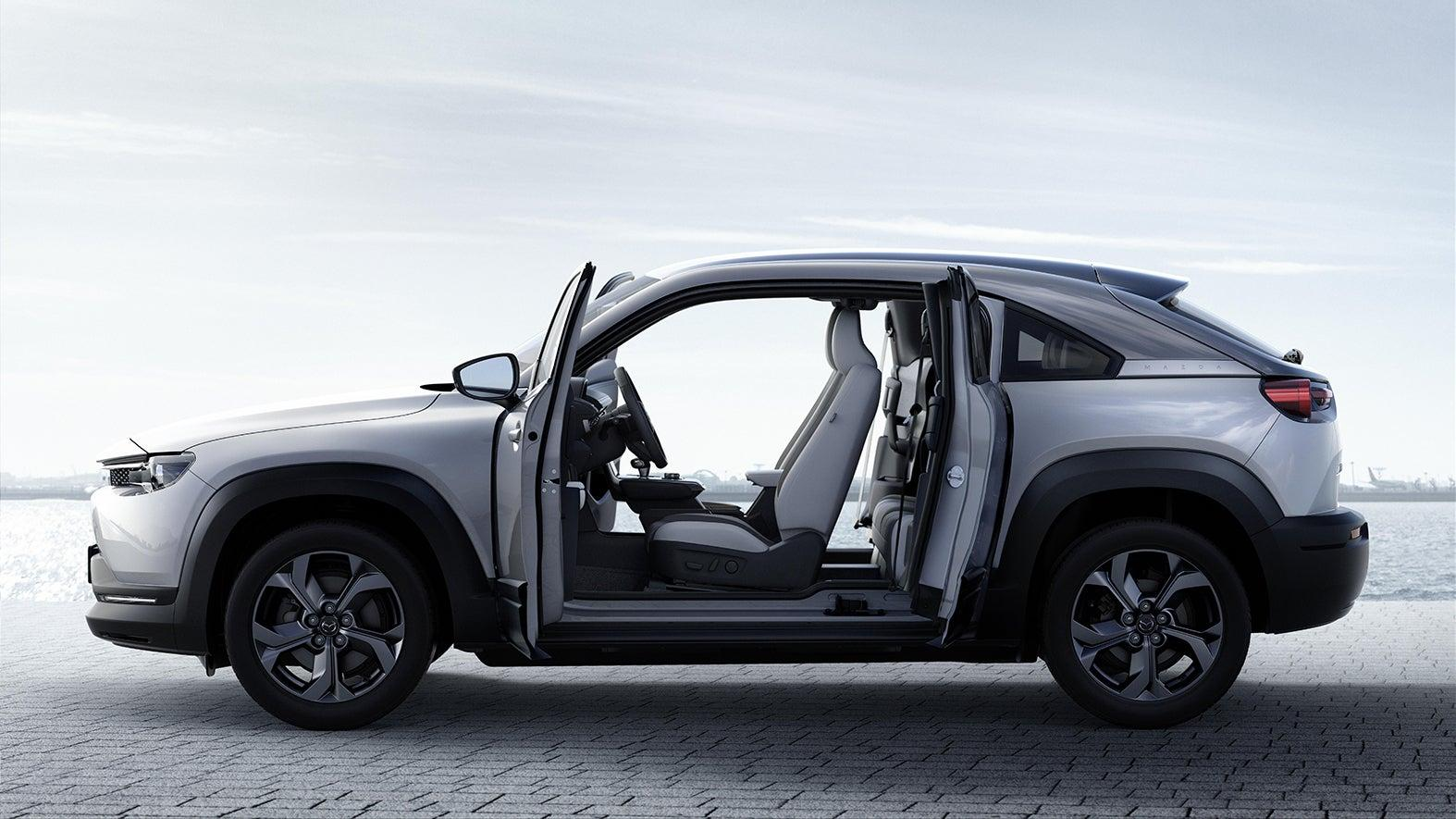
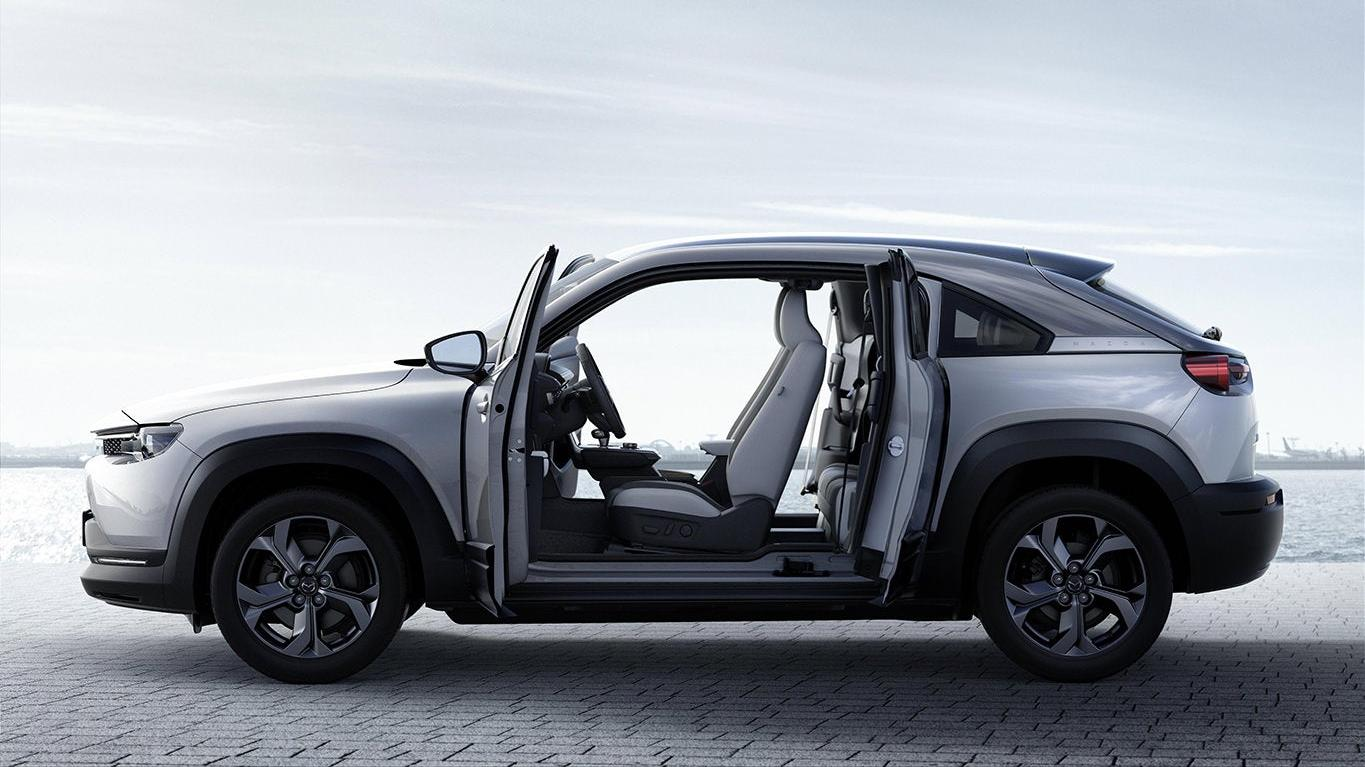
1. Weird & impractical suicide rear doors - with NO wind-down windows for rear passengers

2. NO rear charging ports OR air-con vents

3. Cramped rear seat legroom - reminiscent of an E30 BMW 3-Series - suitable for small children only

4. NO touchscreen infotainment screen, but instead uses a console 'iDrive-style' controller wheel to navigate the interface

5.Repurposing conventional fuel / temp gauges for battery level / battery pack temperature, instead of using digital displays

6. No power tailgate

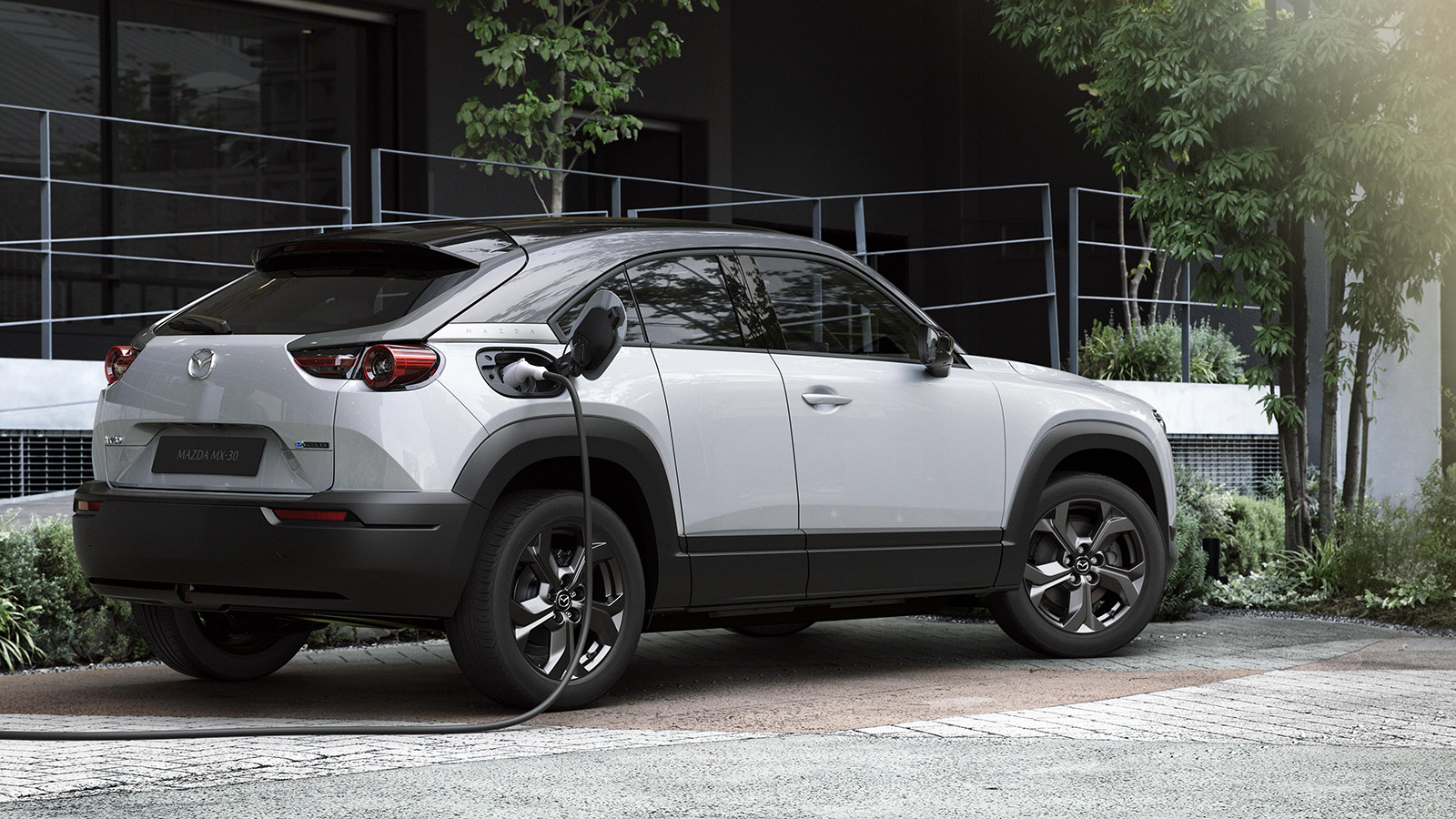
7. NO underfloor boot storage for the charging cables bag - simply an elasticated strap attached on the left side of the boot, which means that the bag intrudes into the available load-space / storage area of the boot

8. NO 'frunk' (front trunk) storage - despite there being room available (to possibly store the charging cable bag) IF the designers & engineers had bothered to make better use of the electric drivetrain components layout & routing of the various hoses, pipes & cables under the hood

9. The most 'shocking' revelation that this POS only has a range of 100 miles (161 kms) on a full charge

10. And last, but by no means the least - THE RIDICULOUS PRICE that Mazda is asking for this POS!

That's a No From Me 01.jpg
 
4. NO touchscreen infotainment screen, but instead uses a console 'iDrive-style' controller wheel to navigate the interface
I think this one is subjective. I’d argue this is the better approach compared to a touch only user interface. Based on my experiences, touch only interfaces require too much attention from the driver.
 
I think this one is subjective. I’d argue this is the better approach compared to a touch only user interface. Based on my experiences, touch only interfaces require too much attention from the driver.
Touchscreens are fine for 'set & forget' options - like configuring vehicle dynamics or sub-systems that only need a once-off adjustment - like the delay time before your 'follow-me-home' headlights turn off, or the initial tuning of your radio presets - or infrequent changes, such as settings for lane-keeping assist, adaptive cruise following distance or other AEB options - or providing you with route navigation & directions - but physical buttons should ALWAYS be provided for climate control settings, heated / ventilated seats, and adjustment functions like exterior mirrors or steering wheel rake / reach adjust - those 'muscle memory' functions should NEVER be buried beneath layers of convoluted sub-menus...

VAG has learnt that the hard way with their infotainment systems in the VW Golf 8 and their range of I.D electric vehicles... ;)
 
Touchscreens are fine for 'set & forget' options - like configuring vehicle dynamics or sub-systems that only need a once-off adjustment - like the delay time before your 'follow-me-home' headlights turn off, or the initial tuning of your radio presets - or infrequent changes, such as settings for lane-keeping assist, adaptive cruise following distance or other AEB options - or providing you with route navigation & directions - but physical buttons should ALWAYS be provided for climate control settings, heated / ventilated seats, and adjustment functions like exterior mirrors or steering wheel rake / reach adjust - those 'muscle memory' functions should NEVER be buried beneath layers of convoluted sub-menus...

VAG has learnt that the hard way with their infotainment systems in the VW Golf 8 and their range of I.D electric vehicles... ;)
Renault started that schit in 2016 already. I struggle to adjust temperature options while on the move...
 
What's The Worst Electric Car On Sale Today?

There are quite a few EVs out there nowadays. Which makes the worst case for itself?

You hear it said often: We’re living through an exciting, significant time in the history of the automobile. Whether or not you agree with the statement — or perhaps are more concerned rather than excited — things are indeed changing. Electric vehicles still comprise only a few percent of new registrations, but almost every brand offers at least one. That makes now a good time to ask: which is the worst?

On the whole, EVs are getting better all the time because technology is getting better all the time. Today’s most middling Nissan Leaf is vastly preferable to practically any battery-electric compliance car from a decade ago. And yet there are still bad propositions out there. In fact, my nomination for the worst happens to be rather new: the Mazda MX-30.

The MX-30 is elegant in the way that all modern Mazdas are, but it’s almost impossible to justify. The brand’s first EV starts at about $35,000 before a federal tax credit and has a range of only 100 miles; it also lacks a frunk and isn’t even particularly quick (not that EVs have to be — it would just be nice considering what you’re paying). The rear-hinged doors are neat and the interior looks lovely, but I don’t have to tell you those don’t make up for the dealbreakers here. At least the only people who could be disappointed by it are Californians, because the MX-30 is only sold in the Golden State at the moment.

 
Mazda Is Reviving The Rotary Engine For Its Mazda MX-30 Plug-In Hybrid

Mazda's iconic rotary engine will now generate electricity

Mazda has done it. The company has found a way to preserve its iconic rotary engine in an era of increasing electrification, Automotive News reports. Now, it’s going to be popping the rotary engine into the plug-in hybrid version of its MX-30 crossover.

Mazda quit making rotary engines back in 2012 as increasingly stringent environmental regulations saw the design fall behind the eco-friendly times. But fans loved it, and Mazda wanted to find a way to preserve that element of its engineering history. Now, instead of moving the car, the rotary engine will actually create the electricity that will power the other systems in the car.

We first wrote about Mazda’s intentions back in January of this year, when the company filed a patent for a rear wheel drive rotary hybrid. Now we have more details.

 
We May Have Seen the Last of the Mazda MX-30 EV

The company has reportedly sold out of its limited-range battery-electric vehicle, and it doesn't look to be prepping to build more.

At this rate, the Mazda MX-30 could very well go down as the next unlikely breadwinner on Bring a Trailer. The Japanese automaker has reportedly sold 505 examples of its first battery-electric vehicle — and that’s all it was scheduled to build. Without murmurs of 2023 models rolling into showrooms, it’s quite possible we’ve seen the last of the 100-mile crossover, at least until the long-rumored plug-in hybrid model enters the frame.

Mazda confirmed to Electrek that it sold through its entire stock of MX-30s, which were only ever sold in California. As underwhelming as that sounds, it’s even bleaker when you consider the manufacturer originally intended to build 550 cars — not 505 — but fell short of even that due to supply chain constraints. All of eight people took home new MX-30s in July. From the article:

Since [Electrek] first heard the model was officially sold out, we’ve been trying to get comment from Mazda about it. Mazda confirmed with us that a total of 505 MX-30s were sold and that the model is now completely sold out. It declined to comment on whether 2023 cars are coming to dealerships or if the MX-30 is sold out in other territories too.

We were able to find some MX-30s for sale in Europe, but we don’t know if more stock is coming or if the European market has also reached the end of the line.

Given that MX-30 sales started last year in October, that means we’ve got one to two months before the 2023 cars would come to dealerships if they were in the plan, which suggests to us that they are not.

 
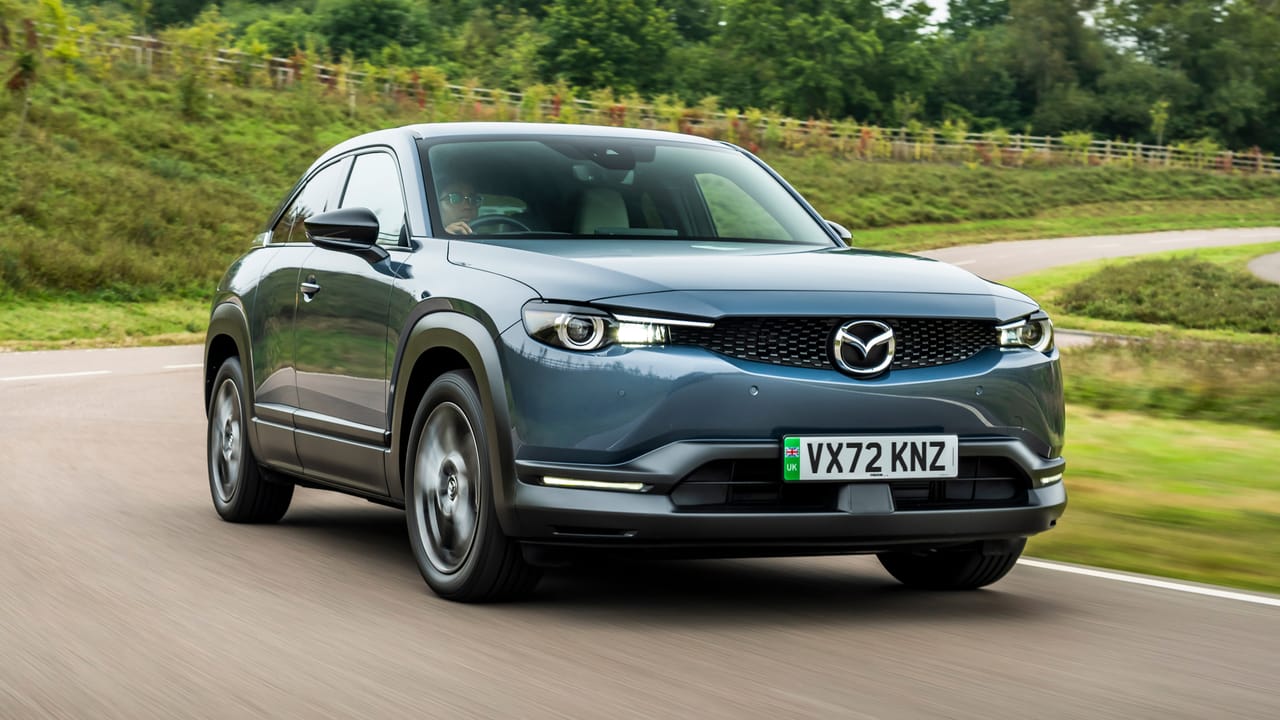
Mazda MX-30 review

WHAT'S THE VERDICT?

“There's a smart interior behind those wacky doors, and it drives neatly”


The dinky electric crossover is becoming a competitive corner of the car market. The MX-30 doesn’t quite offer the sportiness its name suggests: the nature of its powertrain stymies any chance of Mazda’s usual USPs – a deft touch and a delightful gearbox – giving it a head start over its key rivals.

But there’s a smart interior behind those wacky doors to make up for it, and it still drives as neatly as you could ever hope for from a 1.6-tonne SUV with modest power. Mazda’s been clever in how much regularity it’s built into the process of operating it, too. Analogue readouts and physical gear selection mean it’s a lot less daunting clambering in here than some competitors, going someway to counteract its poorer range figure. But with 200-mile alternatives available for similar money, might you be better off plucking up some courage to consider those instead?

 
Top
Sign up to the MyBroadband newsletter
X