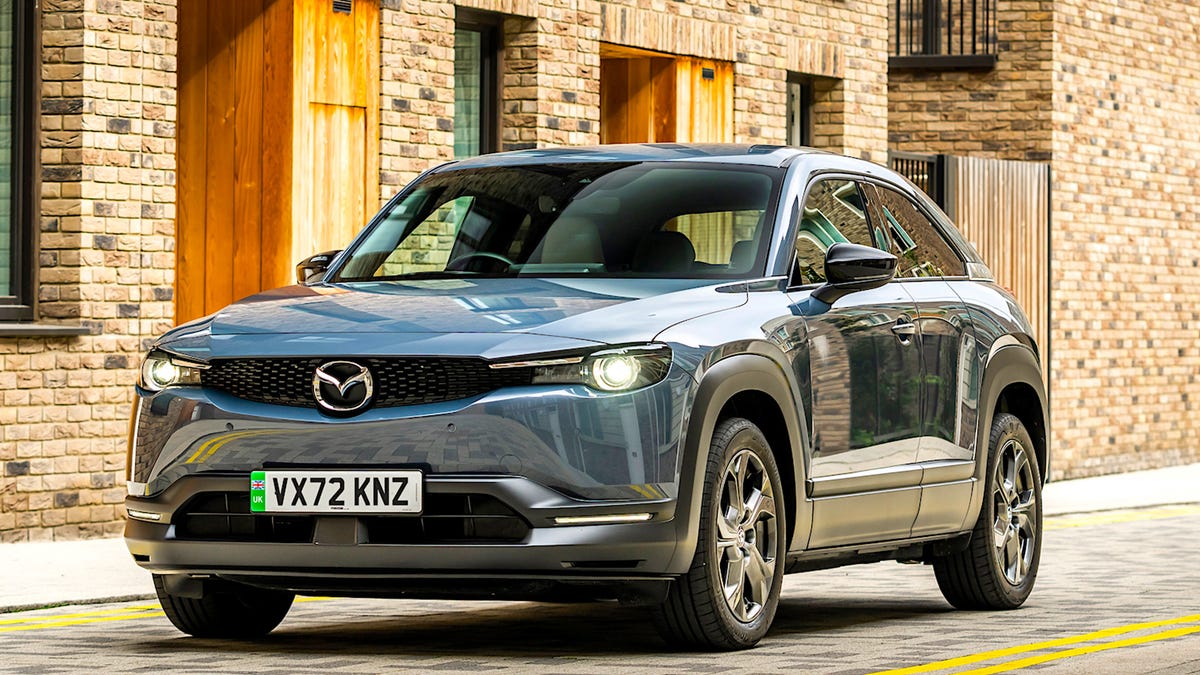
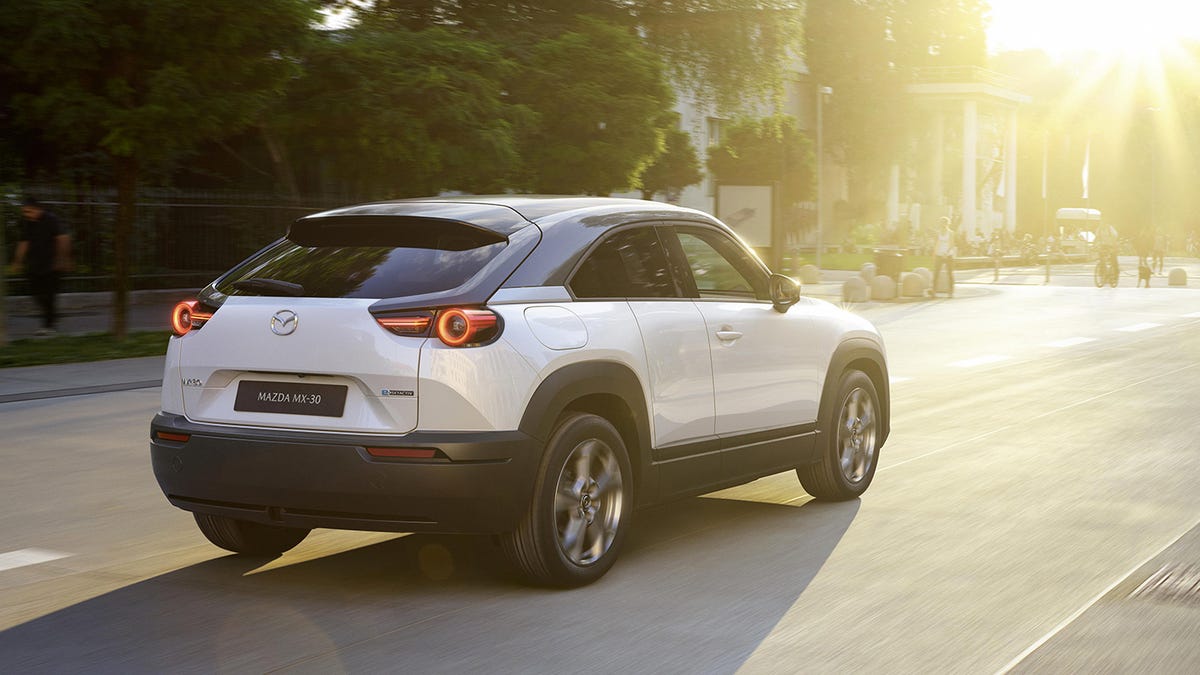
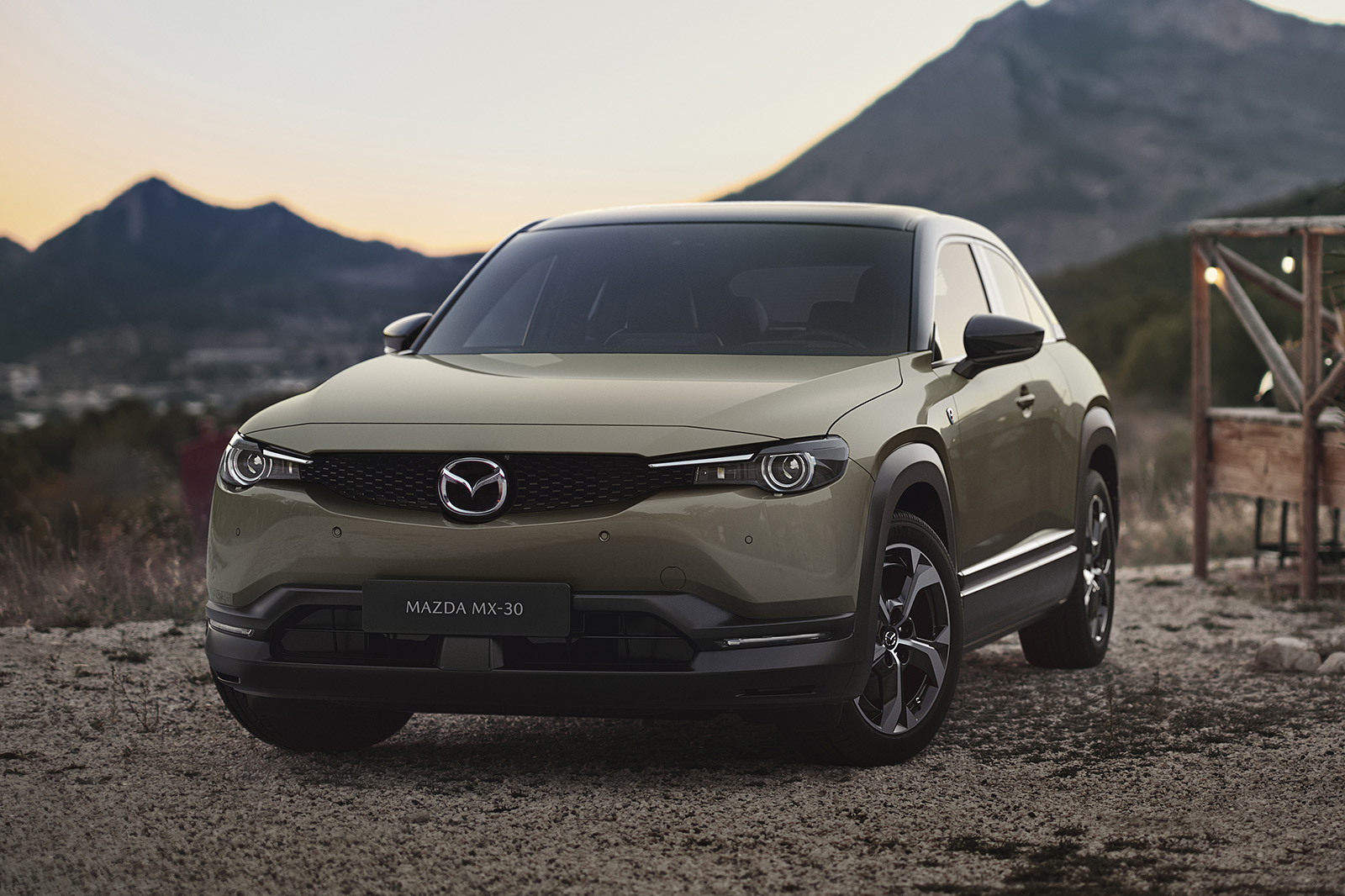
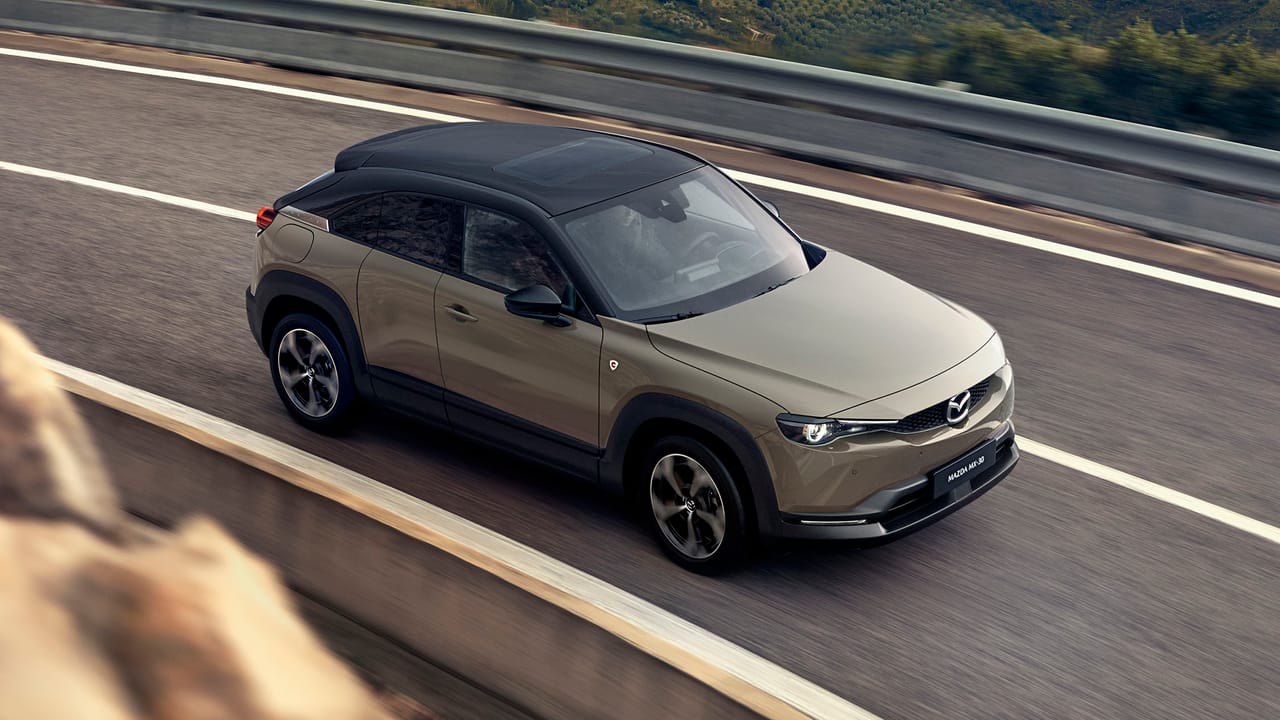
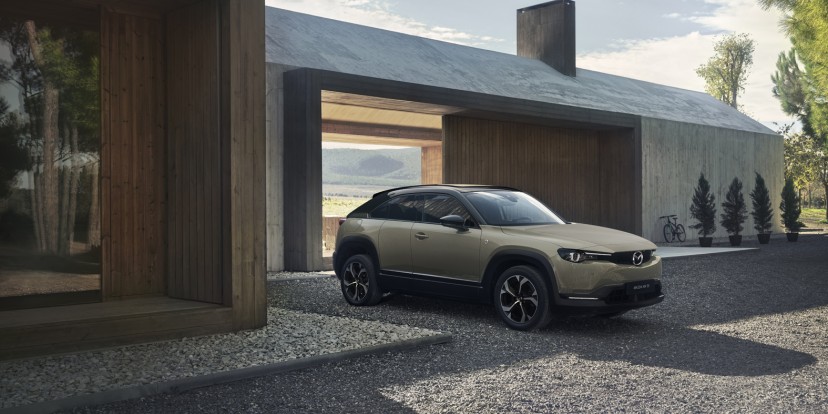
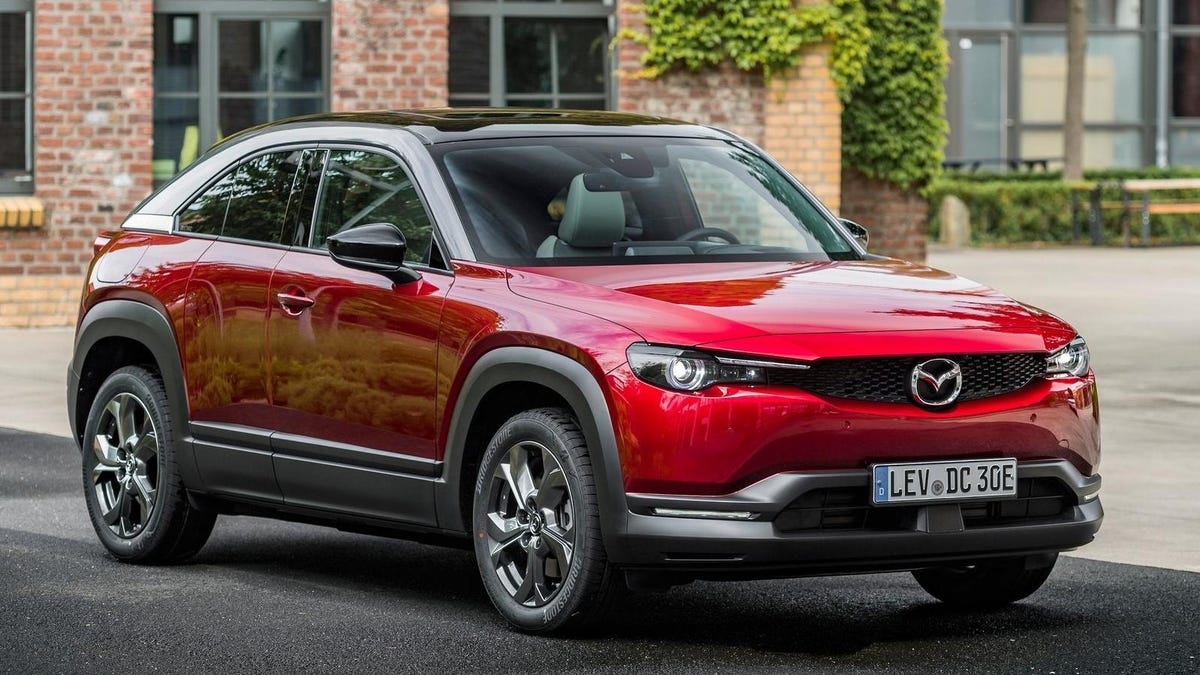
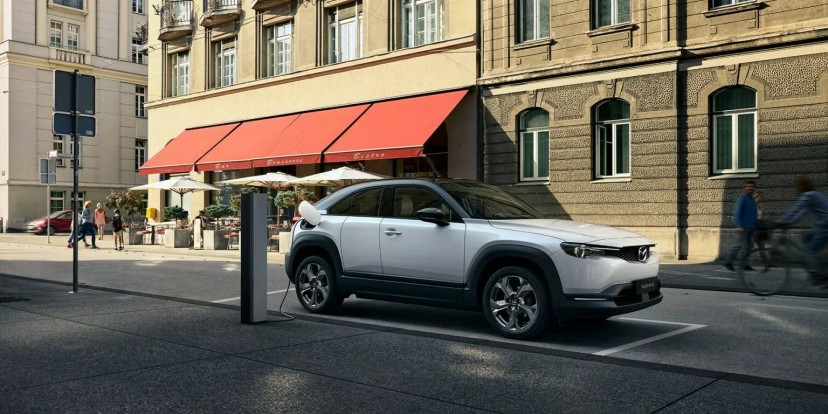
2021 Mazda MX-30 (Mazda's first EV)

Mazda MX-30 R-EV with rotary engine is coming next year

Back in 2020, Mazda revealed plans to resurrect its famous rotary engine in the form of a range extender for its MX-30 EV crossover. Now the company is ready to introduce it and we'll see its debut during the Brussels Motor Show on January 13 next year.

The currently existing Mazda MX-30 has a small 35.5 kWh battery that lasts merely 200km on its own (according to WLTP) so a range extender makes perfect sense for Mazda's EV. Mazda didn't provide any further information about the engine's displacement or the maximum range it can achieve using the battery and the fuel tank.
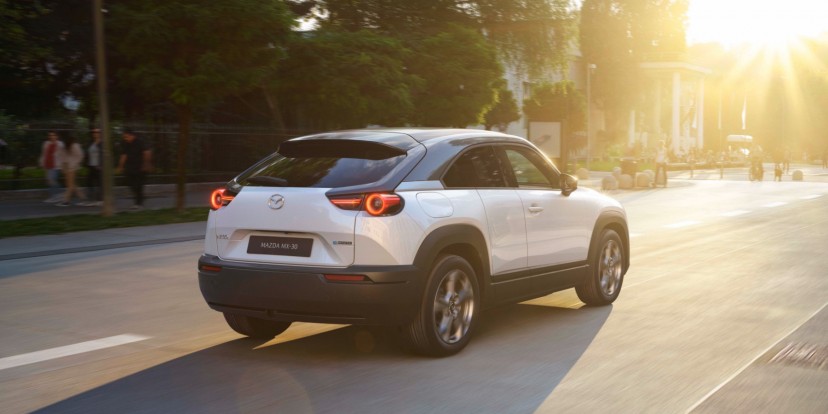
 
Mazda Confirms Rotary Rebirth (With a Twist)

It’s official! Mazda has announced the rebirth of the rotary engine, though it won’t be the high-revving screamer you may remember from years gone by

Mazda was the automaker that took the rotary engine mainstream, though this complex flavour of powertrain was effectively killed off when the RX-8 went out of production in 2012. Now, more than a decade later, the Japanese firm has announced the rotary engine will be “reborn for the electric age”.

But rather than directly powering the wheels, this fresh version of the Felix Wankel’s engine design will power an electric generator in a new MX-30 derivative set to go on sale in Europe.

“Faithful to its multi-solution approach to the global challenges of reducing greenhouse gas emissions, Mazda will introduce a new powertrain option for its MX-30 at the Brussels Motor Show 2023,” Mazda said in a statement, which was accompanied by an image of a new rotary badge.

Described as a “unique plug-in hybrid powertrain”, this version of the MX-30 will feature an electric generator powered by a “newly developed” rotary engine. Mazda has released no other official details as yet, though we expect more information to be provided on 13 January, once the covers have come off in Brussels. In short, it seems the rotary will function as a range extender.


Snip.png
 
It’s back: Mazda will build a new rotary engine for the MX-30

Mazda’s upcoming plug-in hybrid will be powered by a ‘newly developed’ rotary unit

Mazda has announced that its MX-30 will get a new powertrain, and that powertrain will include a rotary engine. Woohoo!

Although, one must cool one’s jets, because the MX-30 won’t be solely powered by a rotary engine, instead forming part of the company’s latest plug-in hybrid powertrain. We’ll see an MX-30 outfitted with just such an item at the upcoming Brussels Motor Show.

There’s scant detail, so all we know is this. The “compact crossover will feature an electric generator powered by a newly-developed rotary engine”, suggesting Mazda’s new PHEV simply swaps the traditional combustion engine part of the setup for a rotary one. Why the heck not.

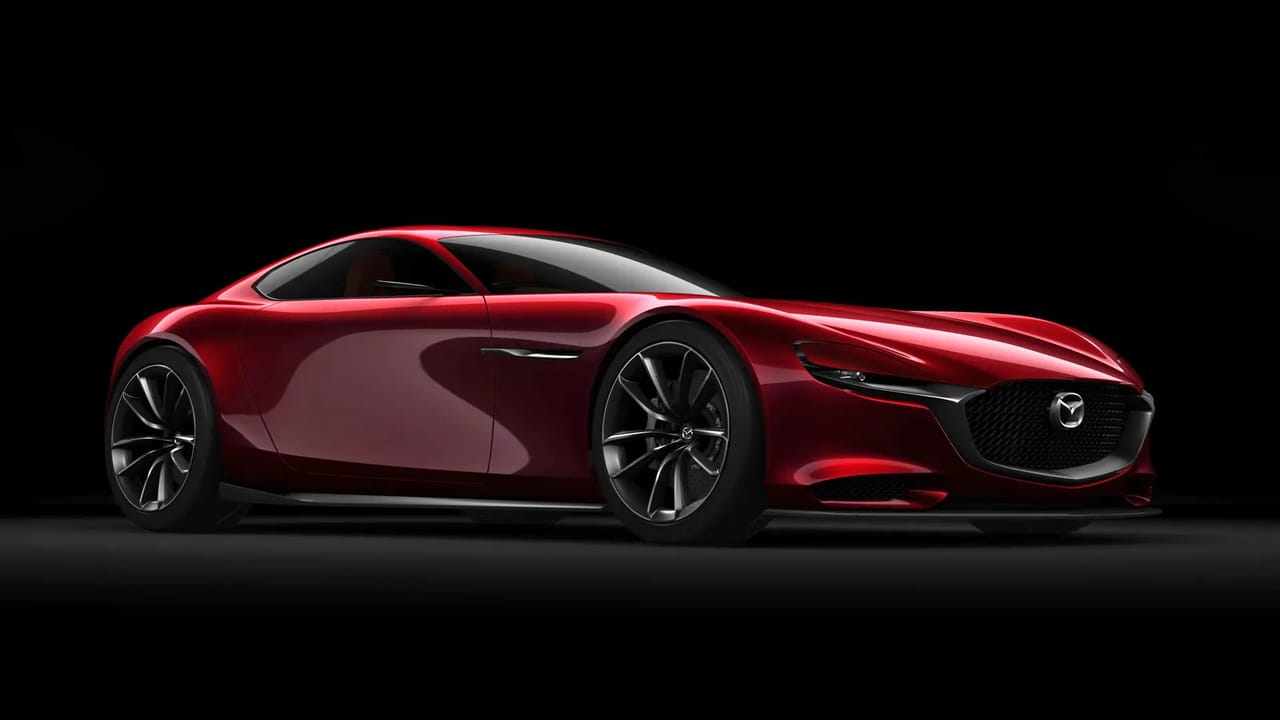
And while that rotary will likely only ever see service charging that generator and powering the electrics, we are eternal optimists, and so here’s hoping Mazda allows itself one flight of fancy to return the rotary – an efficient one of course – to a sportscar. The campaign starts here…

 
Mazda MX-30 to gain rotary range-extender powertrain this week

New variant of crossover will be unveiled at Brussels motor show, with the rotary engine “reborn for the electric age”

Mazda will reveal a new version of the MX-30 electric crossover, using a new rotary petrol engine as a range-extender, at the Brussels motor show.

In a move that the Japanese firm has described the rotary engine as “reborn for the electric age”, the Mazda MX-30 REx will be revealed at 9:00am this Friday.

With the ICE used to charge the battery, it’s similar in nature to the BMW i3 Range Extender, which had a 125kW motor and a two-cylinder petrol engine, vastly improving range up to as high as 270 miles.

Mazda said the powertrain will be “faithful to its multi-solution approach to the global challenges of reducing greenhouse-gas emissions”.

It has confirmed that the model will go on sale this spring. Range will likely be raised to around 250 miles, putting the MX-30 REx in contention with the likes of the Kia Niro EV and MG 4 EV.

The existing MX-30 first went on sale in the UK in September 2020. Powered by a 35.5kWh battery, the Peugeot e-2008 rival has a range of 130 miles - far less than many rivals, including the Hyundai Kona Electric and Volkswagen ID 3. Meanwhile its motor produces a modest 141bhp and 195lb ft of torque.

 
Mazda Revives its Rotary This Week, As an MX-30 Range Extender

The MX-30 R-EV, as it's been rumored to be named, may double the EV's typical range and will hit Europe first before a likely U.S. launch.

The endless will they/won’t they saga of Mazda bringing the flawed, beloved rotary back will finally come to an end this week, as the Japanese automaker unveils a new plug-in hybrid version of its confounding MX-30 electric crossover.

As has been rumored for many months now, the rotary will serve as a range extender in this format. That’s important, because the normal MX-30's EPA-estimated 100 miles of range is so poor, Mazda’s taken to advertising it as the ideal “second car.”

Rumored to be dubbed the MX-30 R-EV, the vehicle will be shown off at the Brussels Motor Show on January 13, this coming Friday. While it’s officially being advertised for the European market with availability beginning in the spring, it should be headed for North America as well if prior comments by Mazda personnel here are any indication. Mazda North America President and CEO Jeff Guyton first teased the rotary-assisted MX-30's arrival all the way back in December 2020. Indeed, this one’s been a good while coming.

 
The MX-30 Is Back in the U.S. for 2023, But Maybe Don't Get Your Hopes Up

It's still only going to be sold in California for the time being, and the automaker isn't saying if Americans will get the upcoming rotary PHEV version.

On Monday we learned that Mazda is finally ready to show the world the rotary-assisted version of its MX-30 electric crossover. That’ll happen on Friday at the Brussels Motor Show. But the company never explained the fate of the MX-30 on our shores, as the 2022 model unceremoniously sold out after 505 units were moved in California, and the 2023 version hadn’t yet been officially announced for sale here. Yesterday, Mazda quietly put the big question to rest in the form of a press release. The MX-30 is back and once again, only in the Golden State.

For 2023 the MX-30 gets $740 more expensive, starting at $35,385 including destination compared to $34,645 for last year’s model. It does this despite no obvious enhancements over last year’s model. The 100-mile range and performance are the same, and once again, there’s a Premium Plus package on offer that adds a 12-speaker Bose sound system, 360-degree camera and extra i-Activsense safety tech like Blind Sport Assist and Front Cross Traffic Alert.

Of course, what we’re all really wondering is whether the plug-in hybrid rotary version will also arrive in the U.S. in 2023, in which case, I’d actually feel some FOMO over the MX-30 being California exclusive. But Mazda North America isn’t ready to talk about that yet, telling Electrek the following:

We have no update to share on the US availability of MX-30 PHEV. Globally, Mazda introduces models and powertrains to markets based on a multi-solution strategy that considers regional differences in energy production, environmental regulations, and customer needs. In the U.S., we’re currently focused on electrifying our upcoming CX-90 and CX-70 that will debut this year.

 
Mazda MX-30 e-Skyactiv R-EV

Making its European debut at the 2023 Brussels Motor Show, the unique Mazda MX-30 e-Skyactiv R-EV series plug-in hybrid joins the pure electric Mazda MX-30 e-Skyactiv in Mazda's electrified line-up.

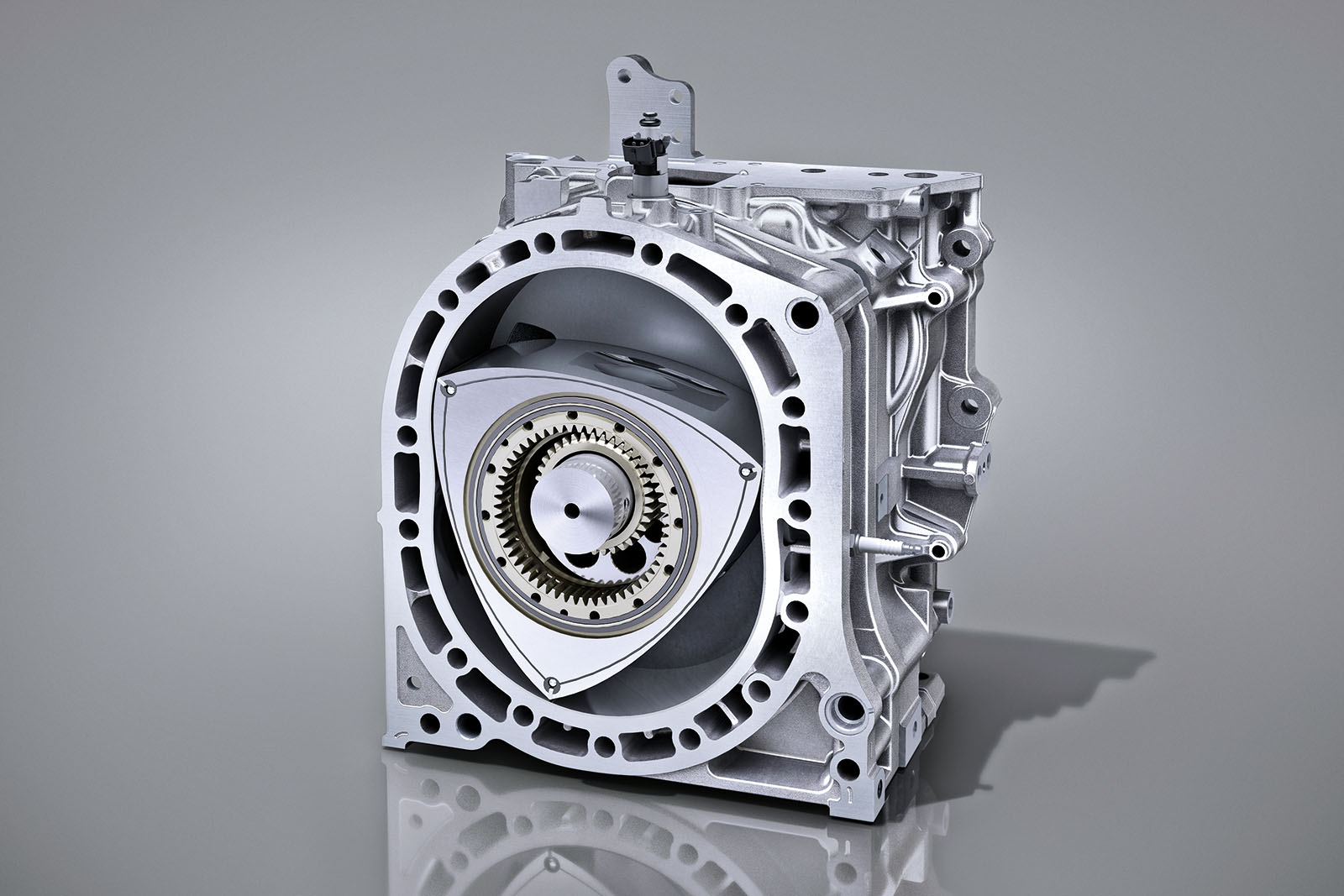
The Mazda MX-30 e-Skyactiv R-EV is a series plug-in hybrid that offers the same customer values as the pure electric Mazda MX-30, while simultaneously offering new ways of using a car as a battery electric vehicle. With a 17.8KWh battery, the R-EV has a 53-mile pure electric range, and using Mazda's unique rotary engine technology, the all-new 830cc single-rotor petrol engine acts as a generator to enable longer distance drives without range or charging anxiety. With no mechanical connection between the engine and the wheels, the rotary unit simply acts as a generator, ensuring the MX-30 R-EV always drives via the electric motor to deliver a seamless EV driving experience.

With more than half a century of expertise in the development of rotary engines, Mazda selected the rotary powerplant for this application due to its unique ability to produce the required output from a small, light and easily packaged unit. The rotary engine is placed neatly alongside the generator and high-output motor in the engine bay. The combination of the 17.8kw battery and 50-litre fuel tank create a unique series plug-in hybrid with a flexible total range of over 373 miles, while a WLTP CO2 output of just 21g/km ensures class-leading environmental performance.

Compatibility with both AC charging and rapid DC charging is another benefit, meaning 3-phase AC charging takes around 50mins, while for maximum customer flexibility, DC rapid charging can be completed in around 25 minutes. The Mazda MX-30 R-EV has three drive-modes to suit different driving situations: Normal, EV and Charge, and thanks to a 125kw/170ps output, it delivers slightly better acceleration performance than the 145ps fully electric MX-30.


MX-30 1.jpegMX-30 2.jpegMX-30 3.jpegMX-30 4.jpegMX-30 5.jpegMX-30 6.jpegMX-30 7.jpegMX-30 8.jpegMX-30 9.jpegMX-30 10.jpeg
 
Mazda MX-30 R-EV revives rotary power with range-boosted PHEV

New MX-30 R-EV partners a 17.8KWh battery with a 830cc petrol rotary engine and an electric motor

The Mazda MX-30 crossover has a new powertrain that marks the company's first use of a rotary engine since the demise of the RX-8 sports coupé in 2012, bolstering the new model’s range and desirability.

Revealed at the Brussels motor show and labelled by the Japanese car maker as a “unique series plug-in hybrid”, the MX-30 R-EV partners a 17.8KWh battery with a 830cc petrol rotary engine and an electric motor, producing a total power output of 167bhp and 191lb ft.

The innovative 830cc rotary engine acts as a generator for the battery, while the electric motor sends power to the wheels.

Combined, the model’s 50-litre fuel tank and battery offer a driving range of over 400 miles, with emissions of 21g/km - a big range increase over the 130 miles provided by the current, EV-only model, which has a 35.5kWh battery.

The MX-30 R-EV can travel up to 53 miles on pure electric per charge, Mazda says, which ranks ahead of much larger plug-in hybrids, such as the Suzuki Across, the Toyota RAV4 and the Mercedes-Benz A-Class 250e.

It can charge in around 90 minutes using a 7.2kWh charger, 50 minutes on an 11kW unit or 25 minutes with a 36kWh charger.

 
Here it is: the return of the rotary engine, now in the Mazda MX-30

Although don’t get too excited just yet – this is an 830cc range-extending rotary. Shame

Mazda is officially bringing the rotary engine back with this new MX-30 e-Skyactiv R-EV. Not exactly the catchiest name, we think you’ll agree. Oh, and you can stop dreaming of RX-7s and the glorious 787B right away, because this is essentially a plug-in hybrid version of the MX-30 EV and the 830cc single-rotor engine that’s tucked away under the bonnet is only there to charge the battery. It has no mechanical connection to the wheels. Boo.

Still, this is Mazda recognising that range anxiety is still a major issue for many who are thinking about going electric. Although it certainly would be if you were thinking about buying the MX-30 EV, because its real-world range of around 100 miles is pretty poor.

This hybridised version will solve all of those worries, though. As mentioned above, it uses a series hybrid setup, so the 73bhp rotary engine is there to feed the 17.8kWh battery when it’s running low on juice or when you’re accelerating with some extra vigour. On its own that battery can provide a handy 53 miles of all-electric range when fully charged, or with the help of the petrol-powered generator and a 50-litre fuel tank you’ll manage over 373 miles before you need to stop and top-up either one of your reserves.

The electric motor that always drives the front wheels makes 168bhp and 192lb ft of torque, making this R-EV ever-so-slightly quicker than the full EV too. The 0-62mph time of 9.1 seconds in the range extender plays 9.7 seconds in the EV. Top speed in both is just 87mph, though.

 
Mazda brings back the rotary engine with the MX-30 e-Skyactiv R-EV

Mazda is bringing back the iconic Wankel engine in a rather unexpected manner. The rotary engine does not drive the wheels on the newly unveiled MX-30 e-Skyactiv R-EV, though. Instead it serves as a generator, helping the crossover get better range than the standard electric version.

The 830cc gasoline rotary motor with direct injection charges the 17.8 kWh battery, which is half the size of what the pure EV MX-30 has. The result is that the overall range improves to 600 km (373 miles) compared to just 200km on the MX-30.

The obvious caveat is that covering this distance requires you to burn through 50l of fuel, giving you an economy of 8.3l/100. The pure electricity range is extremely limited at 85km.

The Mazda MX-30 e-Skyactiv R-EV's wheels are powered by a single electric motor with 167hp (125kW) output and 260Nm (191 lb-ft) of torque. It accelerates from 0 to 100 km/h (62 mph) in 9.1 seconds, and its top speed is only 140 km/h (87 mph). Those are hardly performance car numbers, making the e-Skyactiv name rather puzzling.


Mazda’s rotary engine officially returns but not as you know it

Mazda’s rotary engine, with its unique three-sided rotor was considered quite revolutionary when it first hit the scene in 1967.

Although not particularly renowned for its reliability or its oil consumption for that matter, the engine based on Felix Wankel’s original design was smaller and lighter than an equivalently-powered piston engine. The rotary also made it into some iconic performance cars like the Mazda RX-7.

The last time we saw a rotary was in the RX-8, which was axed in 2012. But now, just over a decade later, Mazda is reviving this engine format in the MX-30 e-Skyactive R-EV, although it doesn’t actually power the car.

Unlike the regular MX-30, which is fully electric, the R-EV is something of a plug-in hybrid but instead of switching between power sources, it is propelled solely by a 125kW electric motor. However, it also has a 830cc rotary engine, which drinks petrol from a 50-litre tank and acts as a generator that can extend the range to around 644km.

Its 17.8kWh battery is akin to what you might find in a plug-in hybrid, and allows a claimed range of 85km between charges.

 
Mazda: 'the dream is a sports car with the rotary engine'

Mazda R&D boss tells TG that an RX-8 successor could yet happen in the future

The boss of Mazda’s European Research and Development Centre has hinted that the newly returned rotary engine could still be used for a future sports car, and the news has got us very excited indeed.

“The rotary engine is our symbol, as you know,” Kota Matsue told TG at the unveil of the new MX-30 e-Skyactiv R-EV, which uses an all-new 830cc single-rotor engine as a generator to create a plug-in hybrid powertrain where only the electric motor drives the wheels.

But it does sound as though Mazda is looking into the possibility of said rotary engine sending its power straight to the wheels of a future sports car. “The dream of the engineers is that someday we will have a sports car with the rotary engine,” said Matsue. “But I would say that now is not the right time to think about that.” Shame.

 
Under the skin: Why Mazda rotary engine is a perfect fit for hybrids

With various attempts to crack range-extending hybrids, Mazda proves mechanical isolation is key

The new Mazda MX-30 e-Skyactiv R-EV series plug-in hybrid will be the first of its kind to enter production using a rotary engine to drive the generator.

Manufacturers started tinkering with range-extended EVs way back in the dark ages (it’s a relative term). Some early creations were pretty clunky and a product of the technology available at the time.

Unsurprisingly, given its predilection for quirky cars, Citroën was all over the idea. In the late 1990s, it rolled out the experimental Saxo Dynavolt with NiCad batteries topped up by a 200cc two-stroke twin. That was followed a year or so later by the Berlingo Dynavolt with a NiCad battery pack giving a range of 60 miles backed up by a 500cc twincylinder Lombardini four-stroke engine.

Unlike classic range extenders, the power it made was fed straight to the electric drive motor, the idea being that the vehicle would return to base at night with the battery flat and ready for an overnight plug-in charge. Many similar ideas have popped up since, including Jaguar’s Limo Green, an executive take on the same concept using a Lotus-developed range-extender unit (twin cylinders with an integrated generator).

 
Dead: Mazda MX-30

Instead, Mazda plans to focus on hybrid and PHEV vehicle people might actually buy.

Oh, the Mazda MX-30. It has an attractive design, a nice interior, and handles well, but as an electric vehicle, it isn’t great. At least not for America. Its motor only makes 143 hp and 200 lb-ft of torque, which means it takes nearly 10 seconds to hit 60 mph. It also only has an EPA-rated range of 100 miles. With a base price north of $30,000, that’s a tough sell when the Nissan Leaf offers more range and costs less. So, predictably, it’s going away here in the U.S.

Mazda announced today that it plans to kill off the MX-30 after the 2023 model year. So if you’re one of the few people who were planning to buy one, you still have time. And if you live outside the U.S., don’t worry. The MX-30 will still be there for you to also not buy. In the announcement, Mazda said, “Our current U.S. electrification efforts are focused on large platform PHEVs, such as the first-ever 2024 CX-90 PHEV and upcoming CX-70 PHEV, as well as introducing CX-50 Hybrid into our lineup to address the specific needs of the U.S. market.”

To be fair to Mazda, though, it was clear right out of the gate that it knew there was a limited market for the MX-30 in the U.S. There’s a reason Mazda decided to only import 560 MX-30s and only sold them in California. There was just no reason to think that there would be much appeal anywhere else in the country. Maybe Boston or New York City? But even then, that’s really pushing it. Sure, the promise of a rotary-engine range extender made the MX-30 a little more interesting, but the writing was on the wall from the beginning.

 
Farewell to Mazda's only EV as the MX-30 rides off into the sunset

Sayonara, MX-30. Mazda's solitary electric vehicle for the American market, the MX-30, has driven off the cliff, so to speak. Not literally, mind you - no need for alarm. The MX-30 is merely checking out from the US EV market, likely to find solace in the company's cork-laden history books.

A vehicle that sold in astoundingly limited quantities (66 units this year and 324 units last year), it's fair to say the MX-30 wasn't quite the star of the American automotive scene. Then again, it was about as exclusive as a vehicle could get, considering it was only offered in California. So while Mazda may be left without an electric representative in the States, it's hard to say that the MX-30 will be missed by the masses.

Let's dissect the reason behind the MX-30's less-than-stellar performance. With a starting price of €31,790, it did not exactly break the bank. However, the EV offered a mere 161 km of range, courtesy of its 35.5 kWh lithium-ion battery pack. Now, compare that with the Chevrolet Bolt that starts at €24,700, goes 417 km on a single charge, and is eligible for a €7,000 tax credit. It doesn't take a genius to see which vehicle offered more bang for the buck.

Although not exactly a Goliath in terms of power, with an electric motor developing a modest 145 horsepower and 271 Nm of torque, the MX-30 did showcase some unique features. Its distinctive design and cork accents served as a nostalgic hat tip to Mazda's roots as a cork manufacturer. Moreover, it came pretty well-loaded with heated front seats, an 8.8-inch infotainment system, a glass roof, and Mazda Radar Cruise Control with Stop and Go.

 
Top
Sign up to the MyBroadband newsletter
X