-
- News
-
Categories
- 5G
- ADSL
- AI
- Banking
- Black Friday
- Broadband
- Broadcasting
- Business
- Business Telecoms
- Cellular
- Cloud and Hosting
- Columns
- Cryptocurrency
- Energy
- Enterprise
- Fibre
- Gadgets
- Gaming
- Government
- Hardware
- Industry News
- Internet
- Internet of Things
- Investing
- IT Services
- Motoring
- Reviews
- Science
- Security
- Smartphones
- Software
- Technology
- Telecoms
- Trending
- Wireless
- Press Office
- Forum
- Industry News
- What's Next
- Company hub
- Speed Test
- About us
- Advertise with us
- Contact
- Careers


-
Join the MyBroadband community
South Africa’s biggest forum. Discuss, discover, and connect with thousands of members.
-
Question of the Day: How much would you be willing to pay for a next-generation gaming console?

You are using an out of date browser. It may not display this or other websites correctly.
You should upgrade or use an alternative browser.
You should upgrade or use an alternative browser.
Carnivore diet
- Thread starter BBSA
- Start date
jbrunevader
Well-Known Member
- Joined
- Oct 12, 2021
- Messages
- 220
- Reaction score
- 149
Simple... find a study that backs up your hypothesis; basically you need to prove how it's possible for them to extract VFAs and other essential nutrients in a similar way to that of ruminants.But regarding gorillas specifically...how would we know if bugs are their required source of vitamin b12 and they don't get b12 from bacteria that ferment cellulose in their lower intestine? How would we know this
Ps. A gorilla's digestive system more closely mirror humans, than they do ruminants... and there's a reason why in some vegan / vegetarian circles the idea of eating bugs has been considered... because the honest ones know there's a problem.
jbrunevader
Well-Known Member
- Joined
- Oct 12, 2021
- Messages
- 220
- Reaction score
- 149
It's not the Banting diet... that original diet although some what in the ball park, had many misconceptions about what William Banting ate and by advise of his doctor should eat. Simply said the original Banting diet is not the same as the keto diet; although keto is considered a modern day version of the Banting diet; more specifically a scientifically grounded version of the Banting diet (i.e. without the glaring misconceptions of the age e.g. avoidance of pork)Sounds like a banting diet to me.
And has anyone addressed the increased risk to colorectal cancers from consuming that much animal protein ?
So you guys following this diet in a day how much animal protein and fat do you consume ?
I'm not vegan or anything and I have a far from perfect diet.
Btw you guys can't talk about b12 without talking about intrinsic factor
Any 50 plus people on this diet here ?
I'm 51, so ask away?
Ps. I started experimenting with Banting / Atkins / Keto style diets in my early 30s, and since my 40s I've been on carnivore. I eat as much animal protein and fat as it takes to satiate me... it's not a diet that focuses on weighing stuff or time of day diet specificity, etc. I simply eat when I'm hungry.
As for intrinsic factor; you surely know that vegans are at the greatest risk of intrinsic factor deficiencies, so there's that. For example:
- https://www.ncbi.nlm.nih.gov/pmc/articles/PMC3941681/
- https://www.ncbi.nlm.nih.gov/pmc/articles/PMC2933506/?tool=pubmed
- https://www.mja.com.au/system/files/issues/196_10_040612_supplement/zeu11509_fm.pdf
A more in depth discussion on this + related topics.
Last edited:

rietrot
Honorary Master
- Joined
- Aug 26, 2016
- Messages
- 44,878
- Reaction score
- 22,844
The plant paradox (book and diet plan) seem to make a lot if similar claims based in similar ideas like the carnivore and might be less restrictive and easier to follow.
And plenty of controversy around it. Probably a good indication that there's something there.
And plenty of controversy around it. Probably a good indication that there's something there.
jbrunevader
Well-Known Member
- Joined
- Oct 12, 2021
- Messages
- 220
- Reaction score
- 149
Lectins are no longer simple claims... there is a lot of scientific research and trials on lectins; that they serve as a plants primary defence mechanism; also that plants can vary lectins loads based on both seasonality and blooming -- this similarly is a well researched area in veterinary science; because as example: ruminants (a true vegan) are so dependant on a diet of plants; and have proven to be adversely affected by both seasonal and blooming lectin loads (as I've mentioned before).The plant paradox (book and diet plan) seem to make a lot if similar claims based in similar ideas like the carnivore and might be less restrictive and easier to follow.
And plenty of controversy around it. Probably a good indication that there's something there.
Meaning there is most certainly merit to "the claims" in his plant paradox book. Although I'm not a fan of Gundry's books; I see that most of his critics have focus on his business selling supplements as a way to counteract the damage caused by lectins (e.g. leaky gut, arthritic inflammation, etc.) -- and used that to probably imply that he's just another snake oil salesman.
If we look at one of his supplements, e.g. Total Restore.
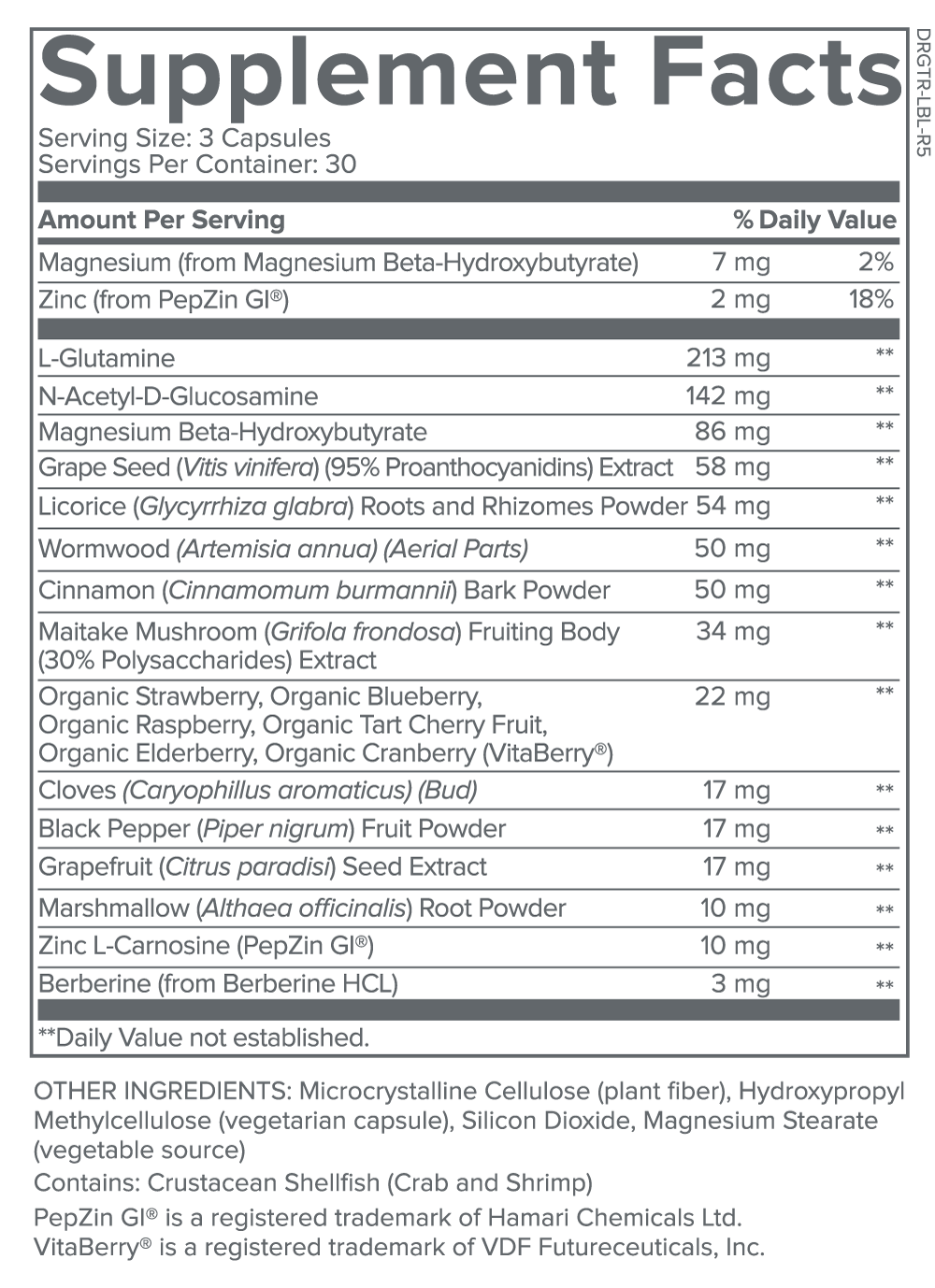
We can see that one big ingredient in the supplement is Glucosamine; which as Dr. Paul Watson has discussed has a provable scientific basis; in that it binds to many of the joint inflammation lectins in the gut; rendering them harmless because they are then not absorbed and hence the overall joint inflammation is reduced.
The problem with this approach; is that it implies that you somehow can continue with an inflammatory diet, if you only buy and take his supplements -- and for me that's equally as ridiculous and disingenuous as the claims around diet sodas and the low fat products of yesteryear.
The more prudent approach would be rather to avoid all the foods with the lectins that cause the inflammation; and thereby avoid the inflammation and the need for supplementation completely. No supplementation including medicine can undo the damage; and at best they are like putting plasters on a severed artery.
On carnivore; you directly avoid all plant lectins and hence also the inflammatory response conditions / illnesses associated with those.
The plant paradox (book and diet plan) seem to make a lot if similar claims based in similar ideas like the carnivore and might be less restrictive and easier to follow.
And plenty of controversy around it. Probably a good indication that there's something there.
Plant paradox was an interesting book... I've had issues with lectins in the past but since increasing my sun exposure for covid I've been able to eat anything I want without issue.
jbrunevader
Well-Known Member
- Joined
- Oct 12, 2021
- Messages
- 220
- Reaction score
- 149
Sun exposure will have no effect on e.g. gout, rheumatoid arthritis, diabetes, crohns disease, etc.Plant paradox was an interesting book... I've had issues with lectins in the past but since increasing my sun exposure for covid I've been able to eat anything I want without issue.
Could similarly be that many of the issues you previously prescribed to lectins were exercise related e.g. more sun exposure typically implies an increase in activity.
If it's not too personal; may I ask what issues were you experiencing?
Last edited:

Tim_vb
Expert Member
Tim Noakes is going to be throwing chairs out of windows when he reads the findings contained this report released last month looking in to the effects of saturated fat intake and dietary sources on coronary heart disease
Background
There is controversy about associations between total dietary fatty acids, their classes (saturated fatty acids [SFAs], monounsaturated fatty acids, and polyunsaturated fatty acids), and risk of coronary heart disease (CHD). Specifically, the relevance of food sources of SFAs to CHD associations is uncertain.
Methods and Results
We conducted a case‐cohort study involving 10 529 incident CHD cases and a random subcohort of 16 730 adults selected from a cohort of 385 747 participants in 9 countries of the EPIC (European Prospective Investigation into Cancer and Nutrition) study. We estimated multivariable adjusted country‐specific hazard ratios (HRs) and 95% CIs per 5% of energy intake from dietary fatty acids, with and without isocaloric macronutrient substitutions, using Prentice‐weighted Cox regression models and pooled results using random‐effects meta‐analysis. We found no evidence for associations of the consumption of total or fatty acid classes with CHD, regardless of macronutrient substitutions. In analyses considering food sources, CHD incidence was lower per 1% higher energy intake of SFAs from yogurt (HR, 0.93 [95% CI, 0.88–0.99]), cheese (HR, 0.98 [95% CI, 0.96–1.00]), and fish (HR, 0.87 [95% CI, 0.75–1.00]), but higher for SFAs from red meat (HR, 1.07 [95% CI, 1.02–1.12]) and butter (HR, 1.02 [95% CI, 1.00–1.04]).
Conclusions
This observational study found no strong associations of total fatty acids, SFAs, monounsaturated fatty acids, and polyunsaturated fatty acids, with incident CHD. By contrast, we found associations of SFAs with CHD in opposite directions dependent on the food source. These findings should be further confirmed, but support public health recommendations to consider food sources alongside the macronutrients they contain, and suggest the importance of the overall food matrix.
Clinical Perspective
What Is New?
In a large prospective cohort study including men and women with diverse diets across 9 European countries, there were no strong associations between dietary saturated fatty acids (SFAs) and coronary heart disease (CHD) incidence, or between the substitution of polyunsaturated or monounsaturated fatty acids for saturated fatty acids and CHD incidence.
In contrast, there were differences in CHD risk when food sources of SFAs were considered, with a lower CHD incidence with consumption of SFAs from fermented dairy products (yogurt and cheese) and fish, but a higher CHD incidence with consumption of SFAs from red meat and butter.
Dietary Fatty Acids, Macronutrient Substitutions, Food Sources and Incidence of Coronary Heart Disease: Findings From the EPIC‐CVD Case‐Cohort Study Across Nine European Countries
Background
There is controversy about associations between total dietary fatty acids, their classes (saturated fatty acids [SFAs], monounsaturated fatty acids, and polyunsaturated fatty acids), and risk of coronary heart disease (CHD). Specifically, the relevance of food sources of SFAs to CHD associations is uncertain.
Methods and Results
We conducted a case‐cohort study involving 10 529 incident CHD cases and a random subcohort of 16 730 adults selected from a cohort of 385 747 participants in 9 countries of the EPIC (European Prospective Investigation into Cancer and Nutrition) study. We estimated multivariable adjusted country‐specific hazard ratios (HRs) and 95% CIs per 5% of energy intake from dietary fatty acids, with and without isocaloric macronutrient substitutions, using Prentice‐weighted Cox regression models and pooled results using random‐effects meta‐analysis. We found no evidence for associations of the consumption of total or fatty acid classes with CHD, regardless of macronutrient substitutions. In analyses considering food sources, CHD incidence was lower per 1% higher energy intake of SFAs from yogurt (HR, 0.93 [95% CI, 0.88–0.99]), cheese (HR, 0.98 [95% CI, 0.96–1.00]), and fish (HR, 0.87 [95% CI, 0.75–1.00]), but higher for SFAs from red meat (HR, 1.07 [95% CI, 1.02–1.12]) and butter (HR, 1.02 [95% CI, 1.00–1.04]).
Conclusions
This observational study found no strong associations of total fatty acids, SFAs, monounsaturated fatty acids, and polyunsaturated fatty acids, with incident CHD. By contrast, we found associations of SFAs with CHD in opposite directions dependent on the food source. These findings should be further confirmed, but support public health recommendations to consider food sources alongside the macronutrients they contain, and suggest the importance of the overall food matrix.
Clinical Perspective
What Is New?
In a large prospective cohort study including men and women with diverse diets across 9 European countries, there were no strong associations between dietary saturated fatty acids (SFAs) and coronary heart disease (CHD) incidence, or between the substitution of polyunsaturated or monounsaturated fatty acids for saturated fatty acids and CHD incidence.
In contrast, there were differences in CHD risk when food sources of SFAs were considered, with a lower CHD incidence with consumption of SFAs from fermented dairy products (yogurt and cheese) and fish, but a higher CHD incidence with consumption of SFAs from red meat and butter.
Dietary Fatty Acids, Macronutrient Substitutions, Food Sources and Incidence of Coronary Heart Disease: Findings From the EPIC‐CVD Case‐Cohort Study Across Nine European Countries
rietrot
Honorary Master
- Joined
- Aug 26, 2016
- Messages
- 44,878
- Reaction score
- 22,844
We estimated multivariable adjusted country‐specific hazard ratios (HRs) and 95% CIs per 5% of energy intake from dietary fatty acids, with and without isocaloric macronutrient substitutions, using Prentice‐weighted Cox regression models and pooled results using random‐effects meta‐analysis
Highly suspicious. Did they use any real data at all or did they just average out and model the results they wanted?

RiaX
Executive Member
- Joined
- Jul 2, 2012
- Messages
- 8,248
- Reaction score
- 4,560
I'm 51, so ask away?
Have you done a full lipid profile ?
And whats your diet like for an average week. What oil you use to cook your food for example
Nonsense. Sun exposure is a big deal, not only for vitamin D but circadian rhythm. These play a big role in how your immune system functions.Sun exposure will have no effect on e.g. gout, rheumatoid arthritis, diabetes, crohns disease, etc.
Could similarly be that many of the issues you previously prescribed to lectins were exercise related e.g. more sun exposure typically implies an increase in activity.
If it's not too personal; may I ask what issues were you experiencing?
Another thread full of YootChoob experts but the thread title was a hint.

BBSA
Honorary Master
- Joined
- Jul 11, 2005
- Messages
- 30,230
- Reaction score
- 28,806
- Location
- People's Republic of South Africa
Tim_vb
Expert Member
that's why I take a multivitamin and flax (for fax lol) seed oils
Last edited:
jbrunevader
Well-Known Member
- Joined
- Oct 12, 2021
- Messages
- 220
- Reaction score
- 149
Yes... all perfect.Have you done a full lipid profile ?
As I've long maintained my original targets i.e. health / weight; I'm now on what I like term a carnivore style maintenance diet; to maintain my health / weight, and at the same time have some flexibility once per week.And whats your diet like for an average week. What oil you use to cook your food for example
An average day is:
- Any animal + fish protein including lots of fats -- no vegetables at all (incl. grains, etc.).
- Specifically avoid fat free or reduced fat
- No supplementation (e.g. vitamin C, etc.)
- No chronic medication of any sort (e.g. blood pressure, cholestrol, etc...)
- No sugars (including the artificial ones)
- My only daily diversion is alcohol; either wine, cider or beer.
- Snack food is biltong, dry wors and boiled eggs.
1 day per week; which I've called my cheat day, I can eat anything, and as much as I want; but only on that day. For example; this works well for a braai with all the toppings at friends or going out to a restaurant for sushi, etc.
Animal fats; the most widely used and available one is ghee (clarified butter); but I also render and keep; beef fat, duck fat and pig fat.What oil you use to cook your food for example
Last edited:
jbrunevader
Well-Known Member
- Joined
- Oct 12, 2021
- Messages
- 220
- Reaction score
- 149
Nonsense. Sun exposure is a big deal, not only for vitamin D but circadian rhythm. These play a big role in how your immune system functions.
Another thread full of YootChoob experts but the thread title was a hint.
Please point to the studies that prove that sun exposure alone improves and / or reverses the conditions I mentioned, namely:
Ps. in case you were wondering... yes the studies proving this for carnivore exist.gout, rheumatoid arthritis, diabetes, crohns disease, etc.
jbrunevader
Well-Known Member
- Joined
- Oct 12, 2021
- Messages
- 220
- Reaction score
- 149
No... we're long lived; most of us make 80+, and some over 100.Last question. Do you have history of CA colon or any cancers of the digestive tract in your immediate family ?
Immediate for me implies: mom, dad, uncles, aunts and 1st cousins.
Overweight, persistent pot belly and obesity is however something that has plagued us since the 80s (not significantly different to the experience of others). We also tend to all suffer with some form of rheumatoid arthritis of varying degrees, similarly gout and some food allergies.
Those that have switched their diets to either keto or carnivore have reversed these issues; however prior damage from rheumatoid arthritis and gout is irreversible; would require surgical intervention for the bad cases; fortunately mine never got that bad, before I switched to carnivore.
Also:
Before I embarked on keto and ultimately carnivore; I did once have a colon issue (early 30s), namely: diverticulitis; basically blister type formations on the colon, that can get infected... it something that according to the doctor occurs more typically with older people; due to more years of wear / tear. At the time I was dating an Indian woman who cooked very tasty curries, and loved chillies... which is more likely what led to my issues. My infection at the time was cleared up with antibiotics, and no medical procedure was required. Since moving to keto and then carnivore I have had no such issues.
Last edited:
jbrunevader
Well-Known Member
- Joined
- Oct 12, 2021
- Messages
- 220
- Reaction score
- 149
My pleasure...Thank you for answering my questions. Much appreciated