


porchrat
Honorary Master
Of course not. All the evidence we have is what makes that true.This is what we we taught in school. Doesn't make it true though.
South Africa’s biggest forum. Discuss, discover, and connect with thousands of members.
Of course not. All the evidence we have is what makes that true.This is what we we taught in school. Doesn't make it true though.

Yes, but we can build that today no problem.
Why the pyramid shape? Why the same shape all over the world? Why wont they investigate the other hidden chambers?Of course not. All the evidence we have is what makes that true.


Einstein’s so-called “spooky action at a distance,” makes it sound like we could just zip across the universe instantly. Here’s the reality. Spooky action just means that two entangled particles are linked in a way that measuring one instantly affects the other, even if they’re light-years apart. Sounds like magic, but you can’t control the outcome, you just get a random result. To actually know what happened on the other side, you still have to send information the normal way, at the speed of light. Quantum teleportation exists too, but it only sends the state of a particle, not the particle itself, and definitely not humans. Even quantum tunneling, where particles sometimes pop through barriers like magic, only works for tiny particles — a person or spaceship isn’t going to phase through a wall anytime soon. So yeah, quantum physics is bizarre and mind-bending, but it doesn’t let us travel instantly or break light-speed limits.The problem (and correct in current parlance) is the word "travel"
We assume, as is though today that to travel means physically move an entity from one place to the other
Quantum physics has already demonstrated that an object can exist in more than one place at the same time
Stretch your mind a bit and this will reveal that moving from (say) the Earth to somewhere a few light years away in a rapid fashion is not impossible
How that would be achieved is far beyond my comprehension. But what we have learned from Quantum physics in the past few years has confounded some "laws" of physics
Sir Isaac Newton, brilliant as he was could not have imagined what we have discovered today

Cause a pyramid is easy to build up. Humans were not stupidWhy the pyramid shape? Why the same shape all over the world? Why wont they investigate the other hidden chambers?
View attachment 1860599
How would we transport this today?
View attachment 1860582

I wouldn't say the SAME shape. There are some similar shapes.Why the pyramid shape? Why the same shape all over the world? Why wont they investigate the other hidden chambers?
View attachment 1860599

Impossible. It was dem ayleeuns.This is how these were transported in the 19th century:
This is how these were transported in the 19th century:
If half those things weren't in the British museum they'd be destroyed.Ah good ole British museum carrying off the world...
Why doesn’t the British Museum ever get lost?
Because it’s already got the world in its pockets.
How do you know the British Museum throws a good party?
All the artifacts are taken… from somewhere else.
Why did the mummy break up with the archaeologist?
Because it heard the British Museum was already dating half the world.
What’s the British Museum’s favorite board game?
Risk—because it’s already conquered most of the pieces
Why doesn’t the British Museum ever get lost?
Because it’s already got the world in its pockets.
Okay last mystery. Apparently this place was built by one man (in secret when no one was watching) without any cranes:
View attachment 1860603
Nobody knows how he did it.
If half those things weren't in the British museum they'd be destroyed.

No it wouldn't apply back then. They built these things for different reasons to why we build building today.
They did it to appease the gods and all sorts of other reasons that are no longer relevant to us building things today. Duh.
In Egypt they did it to house their god. Their pharaoh. When he died. We don't do that sort of thing today. It's inefficient and dumb.
The Parthenon blew up shortly after that soooo a little chipped stone to save the tiles worth it.But to be fair they also destroyed a lot in the process of getting the loot. Excavation practices were crude they did a lot more damage back then compared to modern archaeological methods. They are hardly worth praising.
Elgin Marbles (Greece)
Taken from the Parthenon in the early 1800s.
Removal involved chiseling and breaking parts of the sculptures. Some original pieces were damaged or lost entirely during the extraction and transport.
Benin Bronzes (Nigeria)
Looted during the 1897 British punitive expedition.
The invasion involved burning the city of Benin and destroying much of its architecture. Thousands of bronze sculptures and plaques were taken, but countless other cultural items were destroyed.
Rosetta Stone (Egypt)
Removed during Napoleon’s campaign and later handed to the British.
While the stone itself survived, other nearby artifacts, inscriptions, and temples were often damaged during excavations.
Mesopotamian artifacts (Iraq / Iraq sites like Ur and Nineveh)
Early 19th–20th century digs often prioritized large, visually impressive objects.
Many cuneiform tablets were broken or discarded if they weren’t “marketable,” and parts of ancient cities were dug destructively.
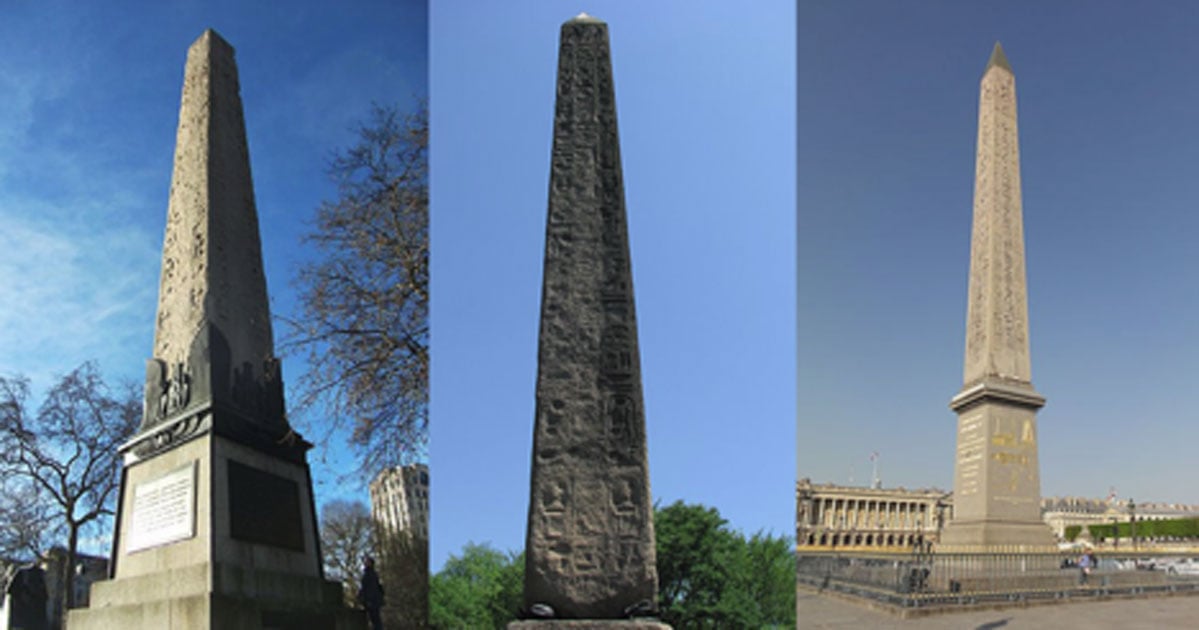
Obelisks and temple stones (Egypt)
Several small temples and statues were dismantled to send back to London.
This sometimes meant entire structures were partially destroyed to extract a single object.
Palmyra and Syrian antiquities (Syria, early 20th century excavations)
Some artifacts were “saved” but the surrounding structures were stripped, and the archaeological context lost forever.
By himself. One man alone.He did it by himself then? Otherwise, his builders had to know how.
Shall we shall call them what they really were grave robbers and anti-heroesThe Parthenon blew up shortly after that soooo a little chipped stone to save the tiles worth it.
But yeah they were crude but if they were still left in their home countries would be destroyed as well.

Purveyors of the futureShall we shall call them what they really were grave robbers and anti-heroes

Pirates of the modern varietyPurveyors of the future