


wasn't there a ref that got relagated to division 1 after a bad bad call on a EPL?No doubt. I just think that if they are punished (and they should be), so should that ref. I mean, I have always hated it when people blame the ref and even though I am not going to start now, I still think he should feel some pain. The sadist in me speaks. Please note children, I mean pain as in NEVER being allowed to ref another ECL match again. EVER.
-
- News
-
Categories
- 5G
- ADSL
- AI
- Banking
- Black Friday
- Broadband
- Broadcasting
- Business
- Business Telecoms
- Cellular
- Cloud and Hosting
- Columns
- Cryptocurrency
- Energy
- Enterprise
- Fibre
- Gadgets
- Gaming
- Government
- Hardware
- Industry News
- Internet
- Internet of Things
- Investing
- IT Services
- Motoring
- Reviews
- Science
- Security
- Smartphones
- Software
- Technology
- Telecoms
- Trending
- Wireless
- Press Office
- Forum
- Industry News
- Features
- Company hub
- Speed Test
- About us
- Advertise with us
- Contact
- Careers
-
Join the MyBroadband community
South Africa’s biggest forum. Discuss, discover, and connect with thousands of members.
-
Question of the Day: What's the most interesting small town you've visited in South Africa?
You are using an out of date browser. It may not display this or other websites correctly.
You should upgrade or use an alternative browser.
You should upgrade or use an alternative browser.
Drogba......
- Thread starter poolmania
- Start date
You know what is funny. Well funny to me i think.
I read some article that said that if Chelsea won, they would never even mention the ref in a bad light. Instead Barca would probably complain about the ref sending Abidal off and the way the Chelsea players were allowed to tackle, push, stop play.
Also they would complain about Puyol getting a soft second yellow to rule him out of the second leg.
But Barca won and Chelsea have blamed the ref. I guess it is understandable due to human nature. Is it at all possible to consider Chelsea were not good enough over the two legs? That their tactics proved to be wrong?
I read some article that said that if Chelsea won, they would never even mention the ref in a bad light. Instead Barca would probably complain about the ref sending Abidal off and the way the Chelsea players were allowed to tackle, push, stop play.
Also they would complain about Puyol getting a soft second yellow to rule him out of the second leg.
But Barca won and Chelsea have blamed the ref. I guess it is understandable due to human nature. Is it at all possible to consider Chelsea were not good enough over the two legs? That their tactics proved to be wrong?
Read an entertaining article in Beeld about the diving debacle and how there used to be guys who tackled the **** out of players such as Maradonna, which basically spawned the diving generation. It's all about survival. The goals have nothing to with it
smokey
Honorary Master
You know what is funny. Well funny to me i think.
I read some article that said that if Chelsea won, they would never even mention the ref in a bad light. Instead Barca would probably complain about the ref sending Abidal off and the way the Chelsea players were allowed to tackle, push, stop play.
Also they would complain about Puyol getting a soft second yellow to rule him out of the second leg.
But Barca won and Chelsea have blamed the ref. I guess it is understandable due to human nature. Is it at all possible to consider Chelsea were not good enough over the two legs? That their tactics proved to be wrong?
Nah - I don't agree. There would be less boo-ha-ha about it because there wouldn't have been those scenes at the end - however - let us say that... Barca didn't score and it ended positively for Chelsea. I reckon this board would still have been up in arms over that idiot's mistakes because of two incidents.
1 - Piques handball
2 - Abidals sending off
The fourth penalty call would probably not have happened. He was piss poor the entire game and probably would have been ditched very quickly, very quietly. With this fiasco however, I reckon EUFA will blindly stand by that blithering idiot.
Where the hell are Abramovich's Russian Mafia connections when you need them. Dammit


smokey
Honorary Master
For me there was only one penalty. Pique's handball was the only Chelsea error.
The others were not penalties in my opinion.
Eto'o is not Pinocchio, so covering your face that way is not an excuse.
Malouda was pulled down inside the box, clear as day. Those are 50-50 chances either way.
Drogba's one was... well... it was Drogba. I mean who can blame the ref?
EDIT: In case you need me to explain it to you... you're wrong. what you could say is that the Pique one was the only 100% penalty.
Last edited:
Dude, i am being dead honest when i say that i believe there was only one penalty.
Malouda pushed himself against Alves and fell down like he was punched in the face.
Eto turned his back and ball struck his shoulder/very upper arm. No way in any game that would be given. He had his back towards the ball.
That last penalty shout from Ballack was really clutching on hopes and dreams.
Malouda pushed himself against Alves and fell down like he was punched in the face.
Eto turned his back and ball struck his shoulder/very upper arm. No way in any game that would be given. He had his back towards the ball.
That last penalty shout from Ballack was really clutching on hopes and dreams.
guru_pitka
Senior Member
smokey
Honorary Master
If he's in Bangkok and he can't find one measly internet cafe to come and get flamed for a bit, then he better have a decent sized pair of tits in hands. I would think that in Bangkok it would be just as easy to find either.
guru_pitka
Senior Member
If he's in Bangkok and he can't find one measly internet cafe to come and get flamed for a bit, then he better have a decent sized pair of tits in hands. I would think that in Bangkok it would be just as easy to find either.
/in supa's head ...hmmn play with boobies or talk crap on the internet ...decisions,decisions
i guess we know who won that argument

smokey
Honorary Master
/in supa's head ...hmmn play with boobies or talk crap on the internet ...decisions,decisions
i guess we know who won that argument
I wouldn't touch the cheap boobs with your hands and I highly doubt that many could afford the expensive ones. Then again, maybe he is Prince harry in disguise. Only way he could root for Barca without people finding out!
guru_pitka
Senior Member
I wouldn't touch the cheap boobs with your hands and I highly doubt that many could afford the expensive ones. Then again, maybe he is Prince harry in disguise. Only way he could root for Barca without people finding out!
LMAO
erm you guys do realise that half the chicks in Thailand are MEN right?!?!?!
Paul Scholes potent spike with his face looking at the corner flag World Club champs should have been allowed to stand? wow
http://www.everyjoe.com/thefootie/f...-soccer-ball-uefa-super-cup-2008-nc-thumb.jpg
NO WONDER Maradona's Punch goal was allowed! cos he wasn't lookin at the ball!
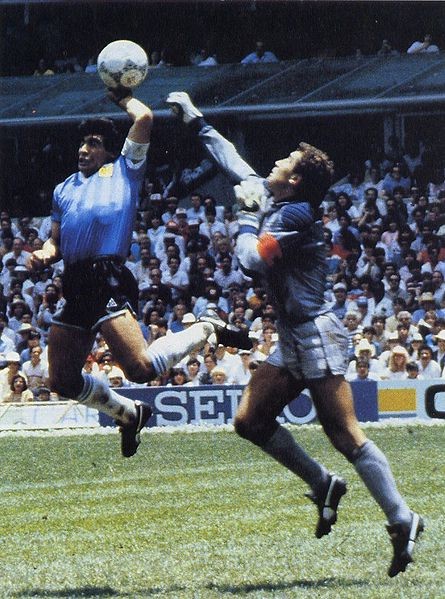
wow very upper arm? so what if every defender blocks by raising his arm above his head with his back to the ball = no penalty? ROFLMAO tell me another joke...Eto turned his back and ball struck his shoulder/very upper arm. No way in any game that would be given. He had his back towards the ball.
Paul Scholes potent spike with his face looking at the corner flag World Club champs should have been allowed to stand? wow
http://www.everyjoe.com/thefootie/f...-soccer-ball-uefa-super-cup-2008-nc-thumb.jpg
NO WONDER Maradona's Punch goal was allowed! cos he wasn't lookin at the ball!
Last edited:
erm you guys do realise that half the chicks in Thailand are MEN right?!?!?!
wow very upper arm? so what if every defender blocks by raising his arm above his head with his back to the ball = no penalty? ROFLMAO tell me another joke...
Paul Scholes potent spike with his face looking at the corner flag World Club champs should have been allowed to stand? wow
http://www.everyjoe.com/thefootie/f...-soccer-ball-uefa-super-cup-2008-nc-thumb.jpg
NO WONDER Maradona's Punch goal was allowed! cos he wasn't lookin at the ball!
Dont be daft man. So you would give that as a penalty?
A player with his back towards goal, ball hitting the shoulder. Im sure Eto was trying to block the ball.
Props to Drogba for his actions. He may have apologized for what he said afterward, but believe me he didn't mean it - he knows more than anyone that Chelsea deserved the win.
A "****ing disgrace" that ref was indeed.
A "****ing disgrace" that ref was indeed.
smokey
Honorary Master
Dont blame the ref. He was poor towards both teams. Seems as if everybody is blaming the ref but they forget that Chelsea could not WIN the game.
Even against 10 men they were not good enough.
List of instructions for Genius:
1. Take foot firmly in hands
2. Yank out of mouth
3. Post
--
Everybody? Who is everybody? I counted two emotional reactions, maybe three. Everybody is saying that Chelsea should have won that match 3-0, and they should have... they didn't, boo-hoo finish and klaar. Should have won is not even close to HAVE WON. Also, it's very different from blaming the ref. Though... the ref was f*cking disgrace. I think we all established that - both sets of fans.
For me there was only one penalty. Pique's handball was the only Chelsea error.
The others were not penalties in my opinion.
Of coarse they weren't.
Dont be daft man. So you would give that as a penalty?
A player with his back towards goal, ball hitting the shoulder. Im sure Eto was trying to block the ball.
http://www.youtube.com/watch?v=kKcoZoKsCMI
watch this clip... at 1.34 minute into the clip what does eto do? STICK out his arm like a diving keeper... where does the ball hit? arm or shoulder? please take OFF those goggles that you so love to say everyone else wears
This rule of thumb is, however, much more easily said than put into practice. In addition, it also conflicts with the far more conventional rule, which is loudly proclaimed by players, coaches, and spectators around the world: If it hits the hand of an opposing player, it is a handball. But given the fact that most players are blessed with at least two arms—which must be placed somewhere during the course of a match, if only to be available for throw-ins—it would be unfair to penalize players for accidental touches which are neither intended nor avoidable. A few moments of thought should be enough for us to understand the basic concepts:
Above all else, handling fouls require deliberate contact between the ball and a player’s hand or arm. This means that the player either chose not to avoid touching the ball or placed his arms in an unnatural playing position to make it likely that he would touch the ball. And there are many aspects of hand-to-ball contact for the referee to consider when deciding whether a handball is deliberate. An uneven playing surfaces can cause the ball to deflect at odd angles, making it hard for players to know how it will bounce. Players who are unchallenged in the open field have no incentive to handle the ball, since it will be easily detected—which often suggests an unintentional handling, especially on the fields where the playing surface itself not quite putting-green smooth. On the other hand, because players intending to commit a foul often try to hide their actions from the officials, many intentional handballs will occur just out of sight of the referee, a factor which makes cooperation between the officials all-the-more essential.
Last edited: