Gary Anderson: Ferrari has innovations the FIA might query:
https://the-race.com/formula-1/ferr...-ferrari-has-innovations-the-fia-might-query/
"
... Together with these vanes (magenta ellipse on image above) turning airflow outboard, Ferrari has been focusing on maximising outwash. This is something these regulations have strived to minimise so I would expect the FIA to be taking a close look at these vanes.
There is a question over the legality of the vanes that I’ve highlighted in the magenta ellipse in how they join the third and fourth wing flaps.
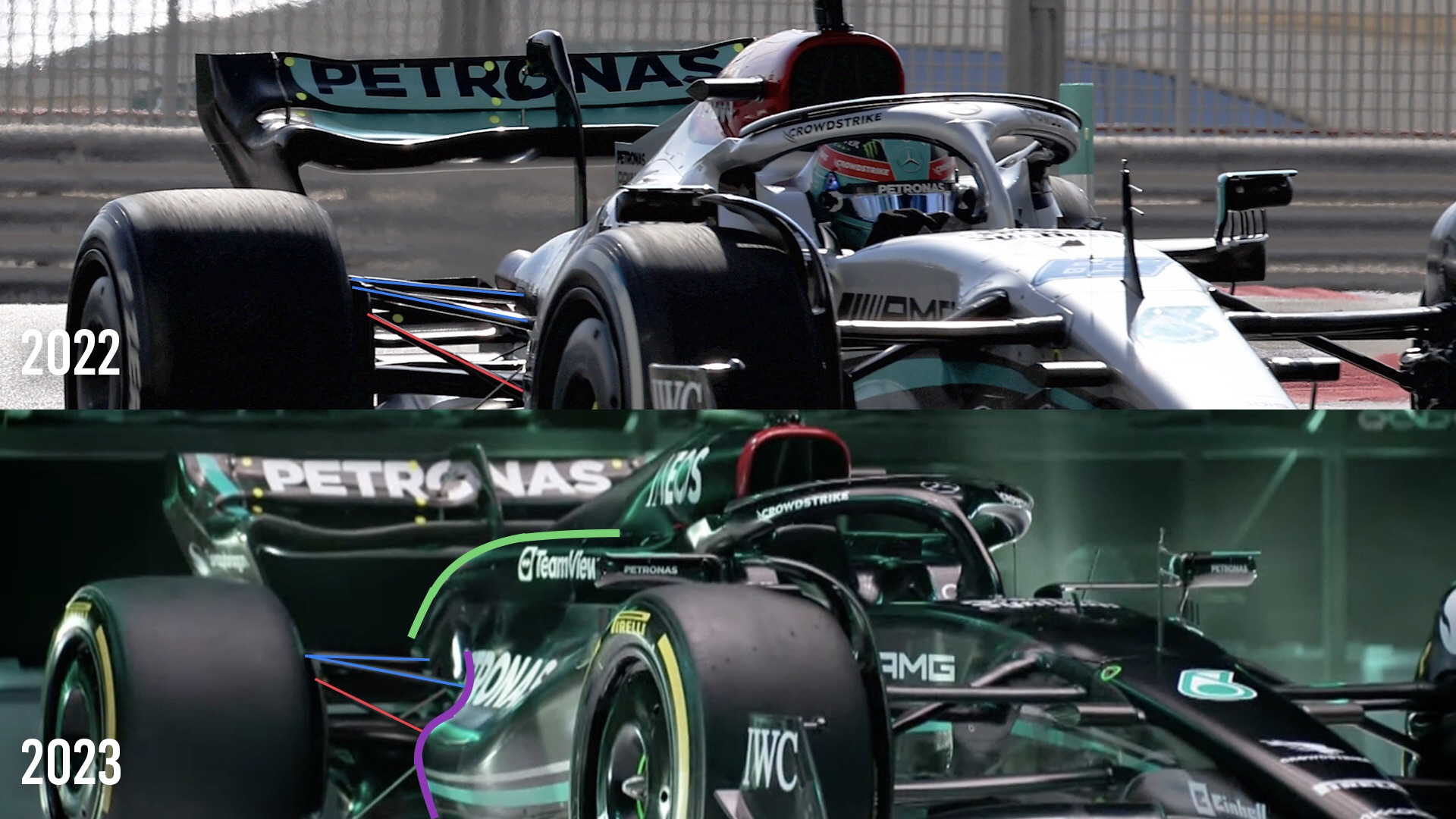
Mercedes arrived at the United States Grand Prix last year with the solution below but had to remove the brackets at the behest of the FIA. The geometry of the vanes must have been within what was allowed by the regulations otherwise Mercedes would not have tried it, so the officials’ judgement would have been based on the vanes’ intent and purpose. The regulation for the use of anything like this was rewritten for this year to limit the quantity, the overall size and the curvature of these components.
I can only assume that what Ferrari has put on the car complies with the letter of these new regulations. You can see that the three outer ones are a little different relative to the inner two, so it looks like Ferrari is trying get over this regulation by saying they are being used for different purposes. Good luck with that.
As well as complying with the regulations, there’s always the question of what’s called ‘primary purpose’. So if there’s something on the car that is legal and ostensibly for one reason – in this case maintaining the slot gap – but the FIA believes it’s for another – for example aerodynamic gain – then you can hit trouble.
Getting as much of the tyre squirt as possible to go outboard is critical to the amount of turbulence the front tyre generates. If it comes inboard it will generate a negative effect on the airflow at the leading edge of the sidepods and underfloor.
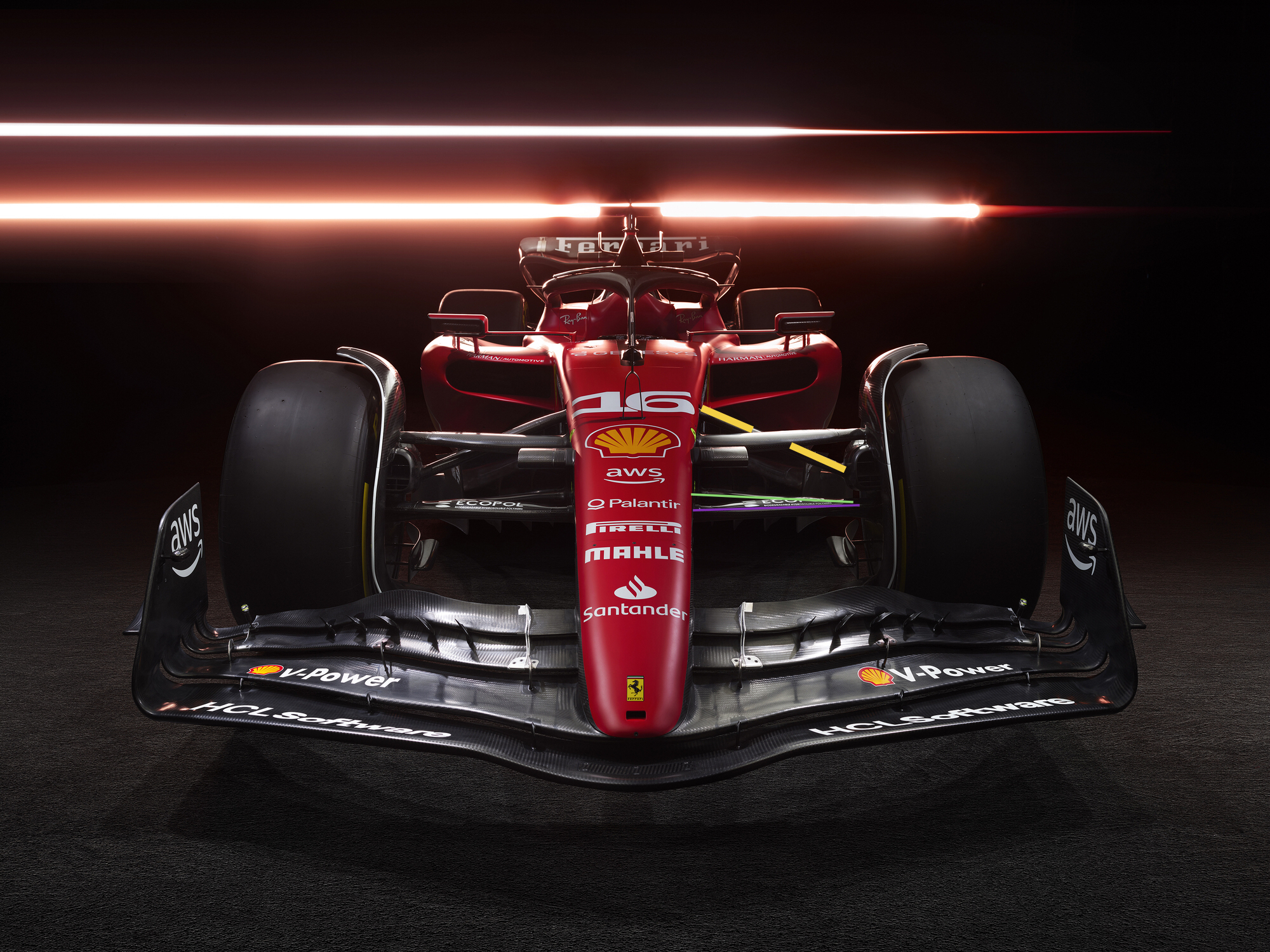
The front suspension is a pushrod-driven inner damper (yellow highlight) with a spring or torsion bar supporting the car. The wishbone pick-ups where they join the chassis (green highlight) have a small amount of anti-squat/anti-lift on them to help support the front of the car and reduce the ride height change when the loads are changing under braking.
The steering track rod (magenta highlight) is low down in front of, but slightly higher than, the forward leg of the lower front wishbone.
It’s interesting to see how much curvature there is on the upper surface of the forward leg of the top wishbone. There is a regulation of a 3.5:1 ratio to control this and normally this component would be a simple symmetrical aerodynamic profile. But it looks like Ferrari has generated more of a one-sided aerodynamic profile, a bit like an upside down wing. This is optimised to control the airflow coming off the trailing edge of the front wing and realign it as well as possible to improve the performance of the leading edge of the sidepod.
The rear suspension is pushrod operated, very similar in layout to last year. But the forward leg of the top wishbone inboard mounting looks like it is mounted a little lower, giving more anti-lift to reduce the rear ride-height change under braking.
The actual body profile in the coke bottle area – where the body narrows towards the rear tyres – is a little more bulbous, taking up some of the coke bottle opening. This is one area that varies dramatically on the Ferrari from the other cars we have already seen, and I’m not sure I am a fan of this solution."