-
- News
-
Categories
- 5G
- ADSL
- AI
- Banking
- Black Friday
- Broadband
- Broadcasting
- Business
- Business Telecoms
- Cellular
- Cloud and Hosting
- Columns
- Cryptocurrency
- Energy
- Enterprise
- Fibre
- Gadgets
- Gaming
- Government
- Hardware
- Industry News
- Internet
- Internet of Things
- Investing
- IT Services
- Motoring
- Reviews
- Science
- Security
- Smartphones
- Software
- Technology
- Telecoms
- Trending
- Wireless
- Press Office
- Forum
- Industry News
- What's Next
- Company hub
- Speed Test
- About us
- Advertise with us
- Contact
- Careers


-
Join the MyBroadband community
South Africa’s biggest forum. Discuss, discover, and connect with thousands of members.
-
Question of the Day: Museums you've been to, would recommend, or want to go to?

You are using an out of date browser. It may not display this or other websites correctly.
You should upgrade or use an alternative browser.
You should upgrade or use an alternative browser.
James Webb Telescope Launch (finally)
- Thread starter Prawnapple
- Start date


Jet-Fighter7700
Honorary Master
maybe, but then again, the money for this Nifty Science experiment HAS to come from somewhere,@eg2505 , maybe you're in the wrong thread.
Personally, this knowledge is far more important to me than some elites making tons more money from raping beyond Earth.
/done
if for instance it came from asteroid mining, what is a very lucrative endevour, we could build 10 James webbs.
point being, yes its cool, but still that 10 billion could be used elsewhere,

just remember the money was spent on earth.
the money was not put in some little box and fired up into orbit.
and to add to this, the money spent on this project lead directly to improvements in humanity though the research done other than maybe the money spent on the raw materials like gold, that pretty much all went to some corporation for pure profit while the people responsible for the raw material being mined are paid slave wages.
this project did more for mankind then any of the billionaires who went to space simply to flex on each other last year did.
take the research into the cooling system, and how that all works. that has lead to better cooling in air conditioners already its not as advanced, but the principles have been applied.
the idea that the money was "wasted" is basically just some greedy a-hole pushing an agenda to allow them to get richer
the money was not put in some little box and fired up into orbit.
and to add to this, the money spent on this project lead directly to improvements in humanity though the research done other than maybe the money spent on the raw materials like gold, that pretty much all went to some corporation for pure profit while the people responsible for the raw material being mined are paid slave wages.
this project did more for mankind then any of the billionaires who went to space simply to flex on each other last year did.
take the research into the cooling system, and how that all works. that has lead to better cooling in air conditioners already its not as advanced, but the principles have been applied.
the idea that the money was "wasted" is basically just some greedy a-hole pushing an agenda to allow them to get richer
c3n0byt3
Expert Member
The JWST price tag includes a lot of ancillary work. So call it the programme cost.why do I continue to be critical, because the price-Tag seems a bit extreme to me, far better uses for something with that sort of money,
for instance, better Fiber optic manufacturing in Microgravity environments. Moon outposts, human colonization in orbit.
and the RTG is just a question, an interesting one if electricity supply is such a issue in Orbit,
If it does seem extreme to you, what are you comparing with?
The latest Gerald R. Ford class carrier is a bit more expensive. And that's just the carrier.
Medupi is ending up costing more.
Your questions should be answered with a few more questions (by yourself) first I think.
Also who said electricity supply is an issue at L2?
Fuel/propellant is the issue. Fuel to maintain position.
If it had say ion drives then maybe at a stretch you could say electricity. But ion drives wouldn't be able to do the job required.
Here's (another) good read for you. It'll be quick, promise.
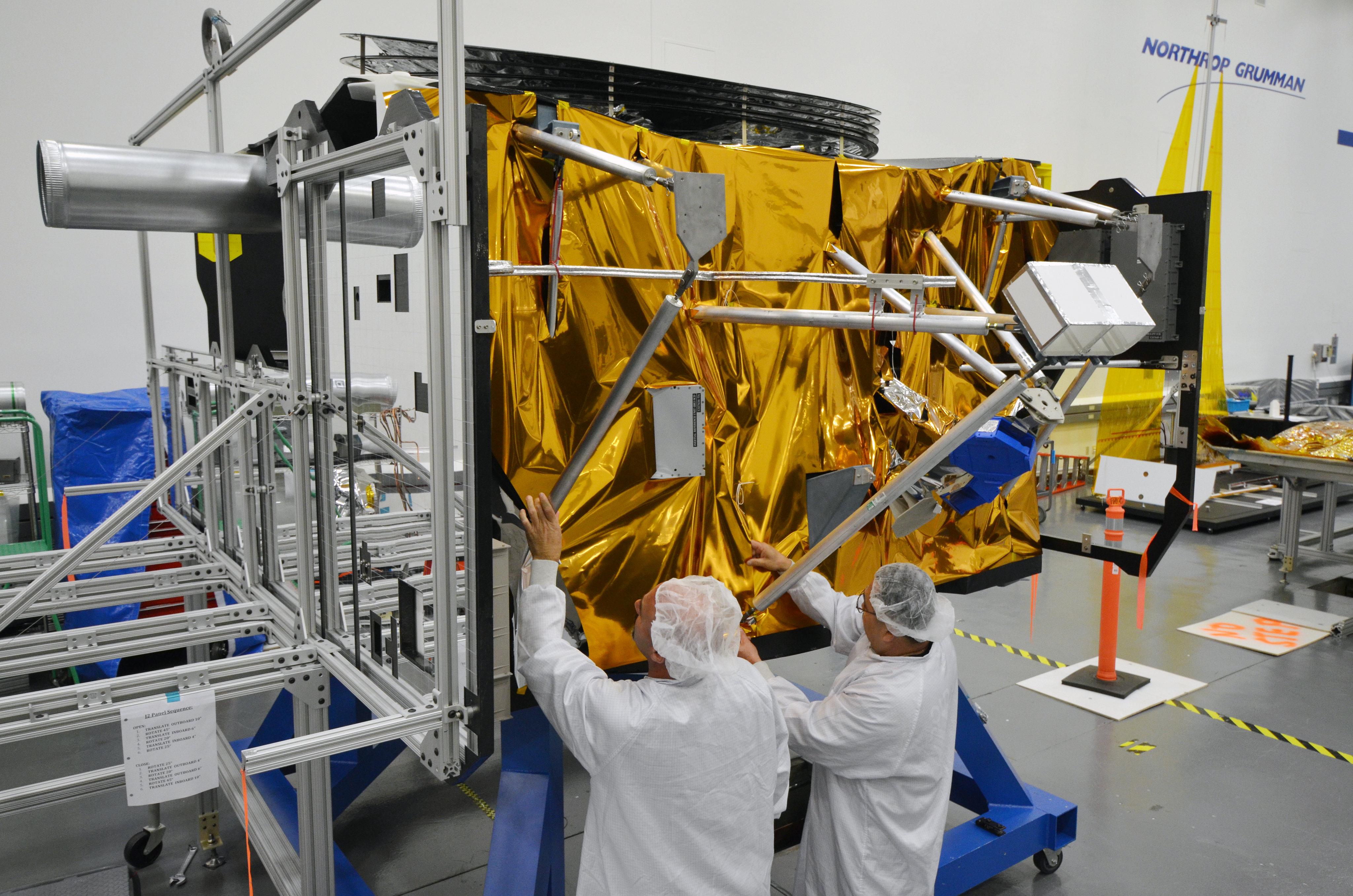
Spacecraft Bus - NASA Science
The Spacecraft Bus is part of Webb's "Spacecraft Element" (SCE) which is comprised of the Spacecraft Bus and the Sunshield. The Spacecraft Element is one of
 webb.nasa.gov
Jet-Fighter7700
Honorary Master
so it was all worth it? all the money spent making this Science experiment work, was it all worthwhile?
meanwhile EV batteries get more expensive, as the prices for the raw materials to mine them and the efficiency needed to be truly cost effective
is wasted on some science experiment so we can say, Ohh, we came from space dust.
dont get me wrong, I think JWST is awesome, but why is this prioritized?
I mean So many Manned and immediately usable avenues exist for this sort of money, far more beneficial to Humanity,
Asteroid mining (by robots) Moon Outposts, Helium 3 mining on the Moon, long term Space travel, colonization of other planets ect ect...
to me it just seems they built this telescope at vast expense and what it will tell us we dont already know.
will we be able to see remains or Current Alien Civilizations? will we see them planning to Invade our little Blue Planet?
meanwhile EV batteries get more expensive, as the prices for the raw materials to mine them and the efficiency needed to be truly cost effective
is wasted on some science experiment so we can say, Ohh, we came from space dust.
dont get me wrong, I think JWST is awesome, but why is this prioritized?
I mean So many Manned and immediately usable avenues exist for this sort of money, far more beneficial to Humanity,
Asteroid mining (by robots) Moon Outposts, Helium 3 mining on the Moon, long term Space travel, colonization of other planets ect ect...
to me it just seems they built this telescope at vast expense and what it will tell us we dont already know.
will we be able to see remains or Current Alien Civilizations? will we see them planning to Invade our little Blue Planet?
c3n0byt3
Expert Member
so it was all worth it? all the money spent making this Science experiment work, was it all worthwhile?
meanwhile EV batteries get more expensive, as the prices for the raw materials to mine them and the efficiency needed to be truly cost effective
is wasted on some science experiment so we can say, Ohh, we came from space dust.
dont get me wrong, I think JWST is awesome, but why is this prioritized?
I mean So many Manned and immediately usable avenues exist for this sort of money, far more beneficial to Humanity,
Asteroid mining (by robots) Moon Outposts, Helium 3 mining on the Moon, long term Space travel, colonization of other planets ect ect...
to me it just seems they built this telescope at vast expense and what it will tell us we dont already know.
will we be able to see remains or Current Alien Civilizations? will we see them planning to Invade our little Blue Planet?
These things would cost multiple trillions (except MAYBE the asteroid mining).Asteroid mining (by robots) Moon Outposts, Helium 3 mining on the Moon, long term Space travel, colonization of other planets ect ect...
IF we achieved these things, at those costs, what would you say? Would you not then say the money should've been spent on improvements in cancer treatment or something?
I say, once again, before posting a question, read more about the thing you're asking about.

so it was all worth it? all the money spent making this Science experiment work, was it all worthwhile?
Ask again in 6 months when we have the first usable images...
meanwhile EV batteries get more expensive, as the prices for the raw materials to mine them and the efficiency needed to be truly cost effective
is wasted on some science experiment so we can say, Ohh, we came from space dust.
dont get me wrong, I think JWST is awesome, but why is this prioritized?
I mean So many Manned and immediately usable avenues exist for this sort of money, far more beneficial to Humanity,
Asteroid mining (by robots) Moon Outposts, Helium 3 mining on the Moon, long term Space travel, colonization of other planets ect ect...
All of those things would cost a whole lot more, the telescope cost $10 billion. Apollo cost $257 billion adjusted, all of the things you just listed would most likely cost trillions. If you want to make an argument that the US should spend less on defense and more on space then I would agree, but this is a very good use of the money that is currently available.
Bonus blog 
With major deployments complete, Webb continues its journey to its final halo orbit around L2. In the meantime, there are several smaller deployments in the next couple of weeks, which constitute the beginning of a several-month phase of aligning the telescope’s optics. This week, we have started the process of moving the mirror segments (all primary plus secondary) out of their stowed launch positions. For more details, here is Marshall Perrin from the Space Telescope Science Institute, home of the Webb Mission Operations Center:
“To support the movable mirrors during the ride to space, each of them has on its back three rigid metal pegs which can nestle into matching holder sockets in the telescope structure. Before launch, the mirrors were all positioned with the pegs held snug in the sockets, providing extra support. (Imagine Webb holding its mirrors tucked up close to its telescope structure, keeping them extra safe during the vibrations and accelerations of launch.) Each mirror now needs to be deployed out by 12.5 millimeters (about half an inch) to get the pegs clear from the sockets. This will give the mirrors ‘room to roam’ and let them be readied in their starting positions for alignment.
“Getting there is going to take some patience: The computer-controlled mirror actuators are designed for extremely small motions measured in nanometers. Each of the mirrors can be moved with incredibly fine precision, with adjustments as small as 10 nanometers (or about 1/10,000th of the width of a human hair). Now we’re using those same actuators instead to move over a centimeter. So these initial deployments are by far the largest moves Webb’s mirror actuators will ever make in space.
“And we don’t do them all at once. The mirror control system is designed to operate only one actuator at a time. That way is both simpler (in terms of the complexity of the control electronics) and safer (since computers and sensors can closely monitor each individual actuator as it works). Furthermore, to limit the amount of heat put into Webb’s very cold mirrors from the actuator motors, each actuator can only be operated for a short period at a time. Thus, those big 12.5-millimeter moves for each segment are split up into many, many short moves that happen one actuator at a time. Scripts sent from the Mission Operations Center will direct this process under human supervision, slowly and steadily moving one actuator at a time, taking turns between segments. At full speed, it takes about a day to move all the segments by just 1 millimeter. It’s about the same speed at which grass grows!
“This may not be the most exciting period of Webb’s commissioning, but that’s OK. We can take the time. During the days that we’re slowly deploying the mirrors, those mirrors are also continuing to slowly cool off as they radiate heat away into the cold of space. The instruments are cooling, too, in a gradual and carefully controlled manner, and Webb is also continuing to gently coast outwards toward L2. Slow and steady does it, for all these gradual processes that get us every day a little bit closer to our ultimate goal of mirror alignment.”
—Marshall Perrin, deputy telescope scientist, Space Telescope Science Institute
Mirror, Mirror…On Its Way!
With major deployments complete, Webb continues its journey to its final halo orbit around L2. In the meantime, there are several smaller deployments in the next couple of weeks, which constitute the beginning of a several-month phase of aligning the telescope’s optics. This week, we have started the process of moving the mirror segments (all primary plus secondary) out of their stowed launch positions. For more details, here is Marshall Perrin from the Space Telescope Science Institute, home of the Webb Mission Operations Center:
“To support the movable mirrors during the ride to space, each of them has on its back three rigid metal pegs which can nestle into matching holder sockets in the telescope structure. Before launch, the mirrors were all positioned with the pegs held snug in the sockets, providing extra support. (Imagine Webb holding its mirrors tucked up close to its telescope structure, keeping them extra safe during the vibrations and accelerations of launch.) Each mirror now needs to be deployed out by 12.5 millimeters (about half an inch) to get the pegs clear from the sockets. This will give the mirrors ‘room to roam’ and let them be readied in their starting positions for alignment.
“Getting there is going to take some patience: The computer-controlled mirror actuators are designed for extremely small motions measured in nanometers. Each of the mirrors can be moved with incredibly fine precision, with adjustments as small as 10 nanometers (or about 1/10,000th of the width of a human hair). Now we’re using those same actuators instead to move over a centimeter. So these initial deployments are by far the largest moves Webb’s mirror actuators will ever make in space.
“And we don’t do them all at once. The mirror control system is designed to operate only one actuator at a time. That way is both simpler (in terms of the complexity of the control electronics) and safer (since computers and sensors can closely monitor each individual actuator as it works). Furthermore, to limit the amount of heat put into Webb’s very cold mirrors from the actuator motors, each actuator can only be operated for a short period at a time. Thus, those big 12.5-millimeter moves for each segment are split up into many, many short moves that happen one actuator at a time. Scripts sent from the Mission Operations Center will direct this process under human supervision, slowly and steadily moving one actuator at a time, taking turns between segments. At full speed, it takes about a day to move all the segments by just 1 millimeter. It’s about the same speed at which grass grows!
“This may not be the most exciting period of Webb’s commissioning, but that’s OK. We can take the time. During the days that we’re slowly deploying the mirrors, those mirrors are also continuing to slowly cool off as they radiate heat away into the cold of space. The instruments are cooling, too, in a gradual and carefully controlled manner, and Webb is also continuing to gently coast outwards toward L2. Slow and steady does it, for all these gradual processes that get us every day a little bit closer to our ultimate goal of mirror alignment.”
—Marshall Perrin, deputy telescope scientist, Space Telescope Science Institute
That's just deployed into their working position from their storage and launch position. The fine adjustments (thousandths of a millimeter) will take those extra months.mirror segments 2mm away from being fully deployed, so another two days
perhaps we will start seeing pictures well before the six month projection

Mista_Mobsta
Expert Member
I honestly don't think people appreciate the complexity involved in developing, building and finally launching the telescope into its Lagrange point. I also don't think most people, including myself, truly understand how a Lagrange point is calculated or how the points fundamentally work. I truly can't wait for the 1st data to come through in a couple of months if all goes well! Who knows, maybe we find out that "dark matter" is brighter than we thought
Webb Mirror Segment Deployments Complete
Last week, the Webb team began moving the observatory’s individual mirror segments out of their launch positions. Today, we hear from Erin Wolf, Webb program manager at Ball Aerospace, about the completion of that process:
“Today, the James Webb Space Telescope team completed the mirror segment deployments. As part of this effort, the motors made over a million revolutions this week, controlled through 20 cryogenic electronics boxes on the telescope. The mirror deployment team incrementally moved all 132 actuators located on the back of the primary mirror segments and secondary mirror. The primary mirror segments were driven 12.5 millimeters away from the telescope structure. Using six motors that deploy each segment approximately half the length of a paper clip, these actuators clear the mirrors from their launch restraints and give each segment enough space to later be adjusted in other directions to the optical starting position for the upcoming wavefront alignment process. The 18 radius of curvature (ROC) actuators were moved from their launch position as well. Even against beryllium’s strength, which is six times greater than that of steel, these ROC actuators individually shape the curvature of each mirror segment to set the initial parabolic shape of the primary mirror.
“Next up in the wavefront process, we will be moving mirrors in the micron and nanometer ranges to reach the final optical positions for an aligned telescope. The process of telescope alignment will take approximately three months.”
—Erin Wolf, James Webb Space Telescope Program Manager, Ball Aerospace
Add 7 hours for all the local times.
Scientists and engineers operating NASA’s James Webb Space Telescope will answer questions about the mission’s latest milestones in a NASA Science Live broadcast at 3 p.m. EST Monday, Jan. 24, followed by a media teleconference at 4 p.m.
The broadcast will air live online on the NASA Science Live website, as well as YouTube, Facebook, and Twitter. Audio of the teleconference will stream live on the agency’s website.
Ground teams plan to fire Webb’s thrusters at 2 p.m. Monday, Jan. 24 to insert the space telescope into orbit around the Sun at the second Lagrange point, or L2, its intended destination, nearly 1 million miles from Earth. This mid-course correction burn has long been planned for approximately 29 days after launch. This week, the mission operations team selected the target date and time for the burn. Engineers also finished remotely moving Webb’s mirror segments out of their launch positions to begin the months-long process of aligning the telescope’s optics.
Viewers of this episode, “What’s Next for the James Webb Space Telescope?” can submit questions on social media using the hashtag #UnfoldtheUniverse or by leaving a comment in the chat section of the Facebook or YouTube stream. Questions from the public will be answered by:
NASA to Discuss Webb’s Arrival at Final Destination, Next Steps
Scientists and engineers operating NASA’s James Webb Space Telescope will answer questions about the mission’s latest milestones in a NASA Science Live broadcast at 3 p.m. EST Monday, Jan. 24, followed by a media teleconference at 4 p.m.
The broadcast will air live online on the NASA Science Live website, as well as YouTube, Facebook, and Twitter. Audio of the teleconference will stream live on the agency’s website.
Ground teams plan to fire Webb’s thrusters at 2 p.m. Monday, Jan. 24 to insert the space telescope into orbit around the Sun at the second Lagrange point, or L2, its intended destination, nearly 1 million miles from Earth. This mid-course correction burn has long been planned for approximately 29 days after launch. This week, the mission operations team selected the target date and time for the burn. Engineers also finished remotely moving Webb’s mirror segments out of their launch positions to begin the months-long process of aligning the telescope’s optics.
Viewers of this episode, “What’s Next for the James Webb Space Telescope?” can submit questions on social media using the hashtag #UnfoldtheUniverse or by leaving a comment in the chat section of the Facebook or YouTube stream. Questions from the public will be answered by:
- Amber Straughn, deputy project scientist for Webb communications, NASA’s Goddard Space Flight Center in Greenbelt, Maryland
- Scarlin Hernandez, flight systems engineer, Space Telescope Science Institute in Baltimore
- Lee Feinberg, Webb optical telescope element manager, Goddard
- Amy Lo, Webb vehicle engineering lead, Northrop Grumman
- Keith Parrish, Webb observatory commissioning manager, Goddard
- Jane Rigby, Webb operations project scientist, Goddard

Gordon_R
Honorary Master
Final burn into L2 parking orbit:
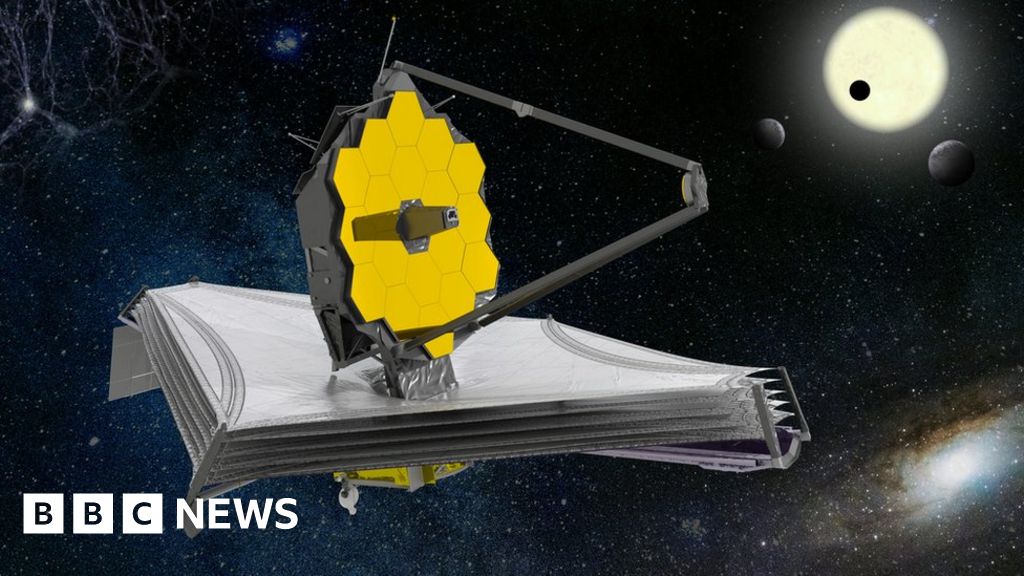
 www.bbc.com
James Webb telescope parked in observing position
The $10bn successor to Hubble is parked a million miles from Earth after a 30-day journey from Earth.
www.bbc.com

/file/dailymaverick/wp-content/uploads/2022/01/693951main_pia15817-43_1600-1200.jpg)
NASA's new space telescope reaches destination in solar orbit
Jan 24 (Reuters) - NASA's James Webb Space Telescope, designed to give the world an unprecedented glimpse of infant galaxies in the early stages of the universe, arrived at its gravitational parking s…
 www.dailymaverick.co.za

so it was all worth it? all the money spent making this Science experiment work, was it all worthwhile?
Yes.
meanwhile EV batteries get more expensive, as the prices for the raw materials to mine them and the efficiency needed to be truly cost effective
is wasted on some science experiment so we can say, Ohh, we came from space dust.
a lot of things you take for granted exist due to money wated on science experiments
Jet-Fighter7700
Honorary Master
if we see the invading Alien fleet now, I'll consider the price worth it.Yes.
a lot of things you take for granted exist due to money wated on science experiments
One of the interesting facts given yesterday:
Just one single photon a second will be collected for some of the dimmest objects... amazing!
(Seeing a bright star means you're getting about a million photons a second from it.)
Just one single photon a second will be collected for some of the dimmest objects... amazing!
(Seeing a bright star means you're getting about a million photons a second from it.)