FiestaST
Honorary Master
Mini & Deus Ex Machina Unveil Duo of One-Off JCW Models
Celebrating the British marque’s storied racing history, Mini has teamed up with lifestyle brand Deux Ex Machina to unveil a duo of one-off JCW models.
Mini, in collaboration with Deus Ex Machina, has unveiled two bespoke JCW models. The duo of one-off JCW models are based on the internal combustion (ICE) and all-electric derivatives, respectively. As a reminder, the former model, which we’ve put through its paces on our test strip (see our road test figures here) employs a 170 kW/380 N.m 2.0-litre, four-cylinder turbopetrol, while the latter, emissions-free variant’s single electric-motor arrangement produces 190 kW and 350 N.m of torque.
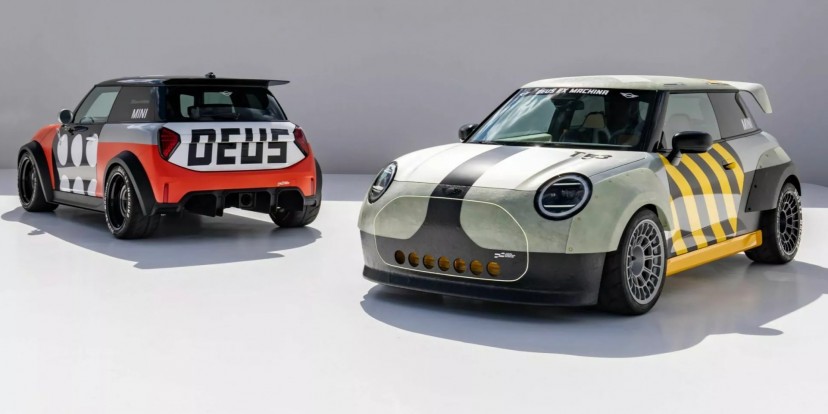
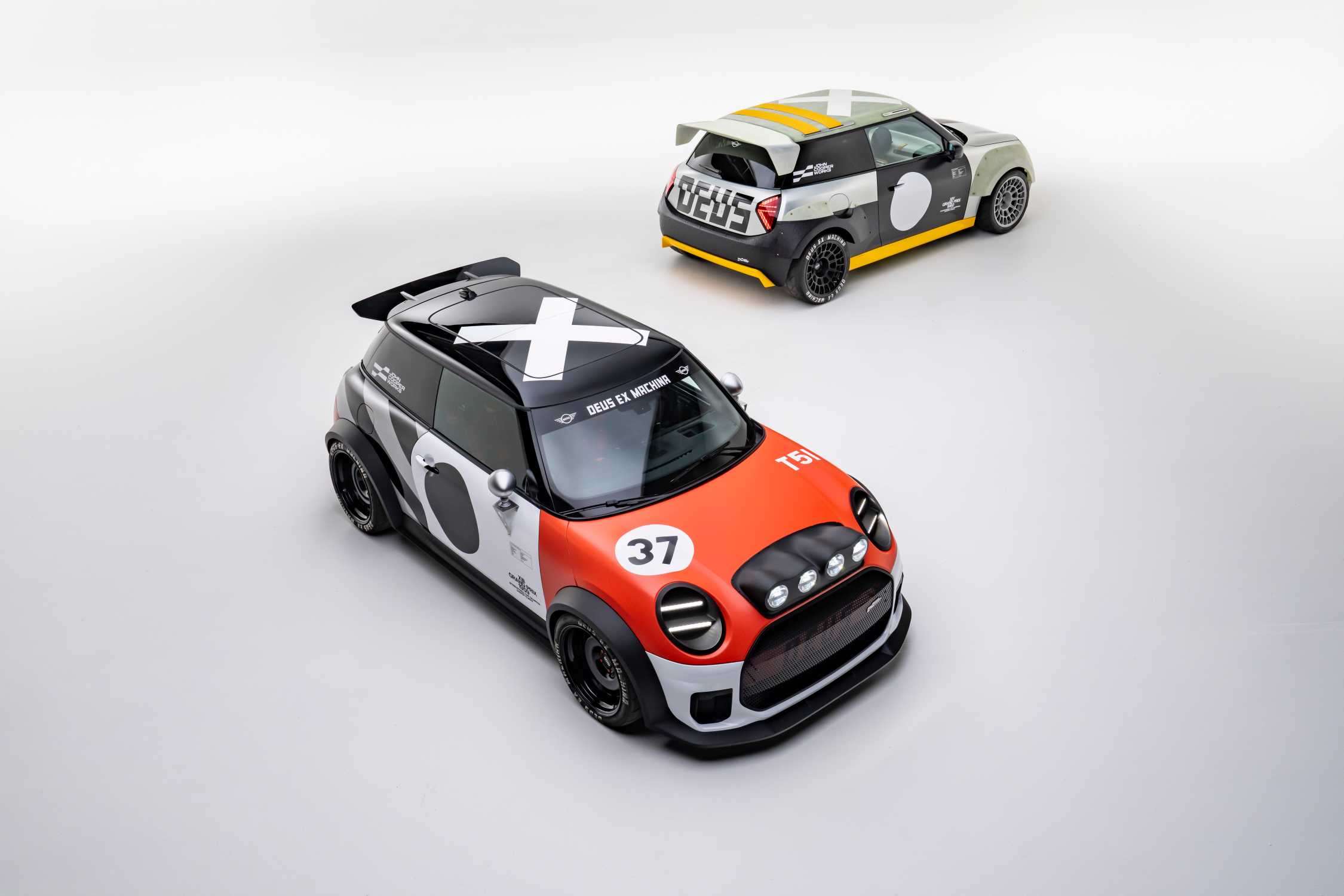
The ICE version is appropriately named ‘The Machina’. This model features red, white and black paintwork for the exterior, a unique front grille, a quartet of additional bonnet-mounted spotlights, extended wheel arches, a revised rear diffuser and a Can-Am-style spoiler.
Named ‘The Skeg’, the all-electric model’s bodywork is dressed in a vivid yellow hue with silver finishes. It also features an illuminated front grille, wider wheel arches and, round back, a roof-mounted spoiler. The semi-transparent fibreglass panels fitted to The Skeg shaves 15% off the original car’s weight.

 www.carmag.co.za
Celebrating the British marque’s storied racing history, Mini has teamed up with lifestyle brand Deux Ex Machina to unveil a duo of one-off JCW models.
Mini, in collaboration with Deus Ex Machina, has unveiled two bespoke JCW models. The duo of one-off JCW models are based on the internal combustion (ICE) and all-electric derivatives, respectively. As a reminder, the former model, which we’ve put through its paces on our test strip (see our road test figures here) employs a 170 kW/380 N.m 2.0-litre, four-cylinder turbopetrol, while the latter, emissions-free variant’s single electric-motor arrangement produces 190 kW and 350 N.m of torque.
The ICE version is appropriately named ‘The Machina’. This model features red, white and black paintwork for the exterior, a unique front grille, a quartet of additional bonnet-mounted spotlights, extended wheel arches, a revised rear diffuser and a Can-Am-style spoiler.
Named ‘The Skeg’, the all-electric model’s bodywork is dressed in a vivid yellow hue with silver finishes. It also features an illuminated front grille, wider wheel arches and, round back, a roof-mounted spoiler. The semi-transparent fibreglass panels fitted to The Skeg shaves 15% off the original car’s weight.
Mini & Deus Ex Machina Unveil Duo of One-Off JCW Models
Celebrating its storied racing history, Mini has teamed up with lifestyle brand Deux Ex Machina to unveil a duo of one-off JCW models...
www.carmag.co.za