The BYD (EV) Thread

BYD Seal's European versions detailed

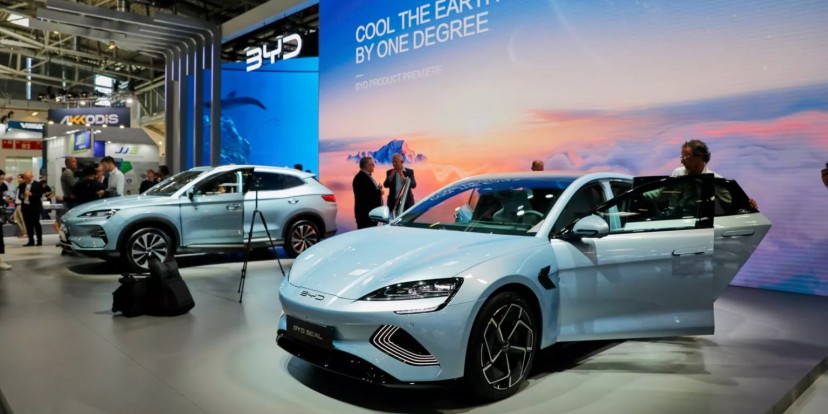
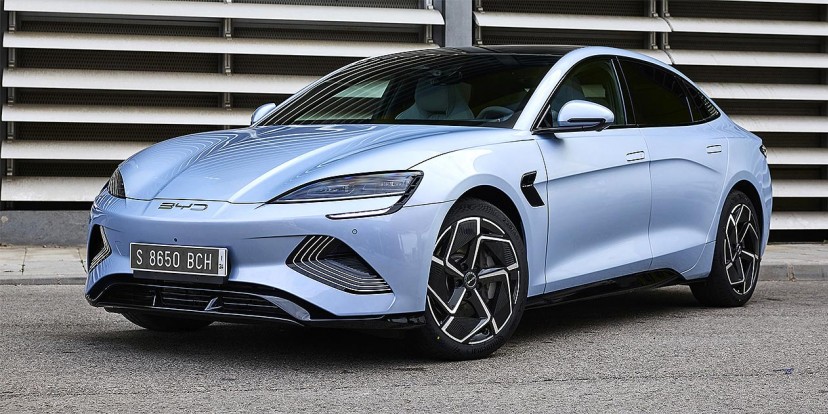
The all-electric BYD Seal took its first European bow at the Munich Motor Show and is poised to hit European shores by year's end. It rolls on the same e-Platform 3.0 as the BYD Atto 3 and Dolphin, but the Seal is the inaugural BYD model to deploy the brand’s innovative Cell-to-Body technology. This unique design incorporates the battery into the car's structure, enhancing safety.

This is BYD's advanced Blade battery that employs lithium-iron phosphate as its cathode material. Here's the real zinger – it's entirely cobalt-free. For those who've just started their journey into the electric vehicle realm, cobalt has been a contentious issue due to ethical and environmental concerns associated with its mining. European models will initially pack an 82.5 kWh battery, but whispers suggest a smaller 61 kWh pack might also join the lineup.
 
BYD's Yangwang U8 is official with €140,000 price tag

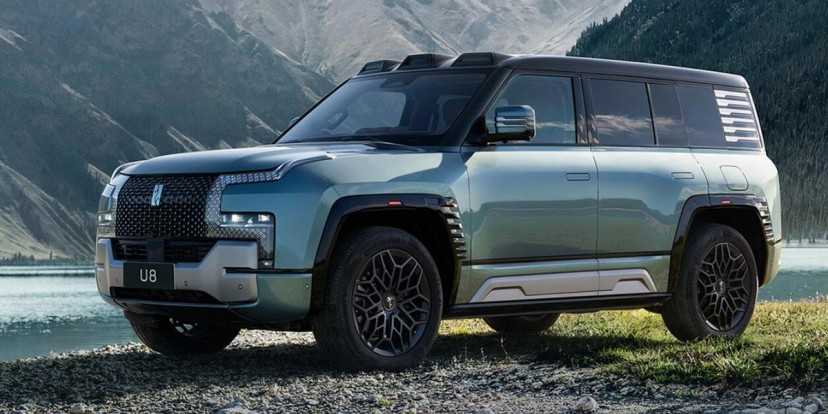
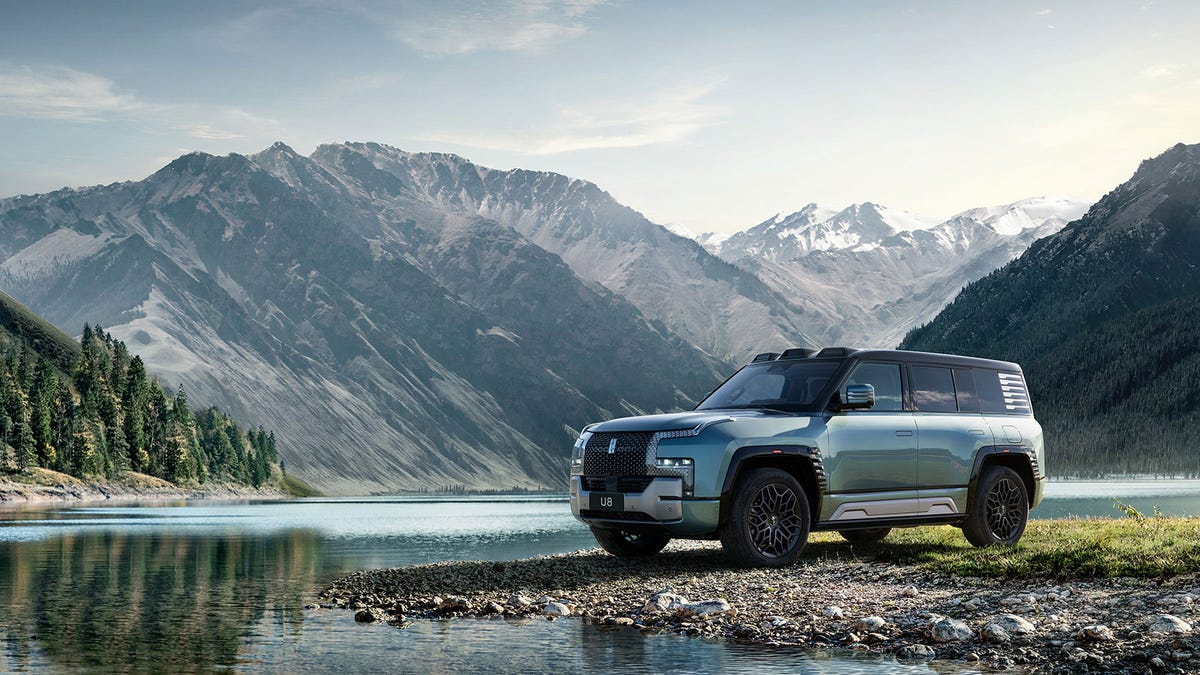
In a significant automotive milestone on Wednesday, China beheld the unveiling of Yangwang's inaugural production car: the U8. This premium marvel isn’t just any car it's the new showpiece of BYD.

With a price tag of a cool €140,300 (RMB 1,098,000 for those trading in local currency), the U8 carves out its luxury niche quite unapologetically. However, what's worth noting is that this number isn't a mark-up. It has stayed consistent with its pre-sale rate, which might say something about Yangwang's confidence in its product.

Now, if you're the type to fancy dimensions and specs, the Yangwang U8 has quite the stat sheet. Stretching at 5,319 mm in length, a respectable 2,050 mm in width, and standing tall at 1,930 mm, the car isn’t something you can easily overlook. And oh, let's not miss the wheelbase - a spacious 3,050 mm to ensure you're cruising in comfort.

Here’s the part where it gets interesting. Under its hood, the U8 doesn’t skimp on power. Its quad-motor setup pumps out a staggering 880 kW, or if you're more familiar with horsepower, think 1,200 of those galloping stallions. And it's no slouch in the speed department either; imagine going from a standstill to 100 km/h in just 3.6 seconds. We’re not saying it’s racecar material, but... actually, maybe we are.


IMG_7917.jpegIMG_7918.jpegIMG_7919.jpegIMG_7920.jpeg
 
BYD Dolphin officially launches in Japan with €22,800 starting price

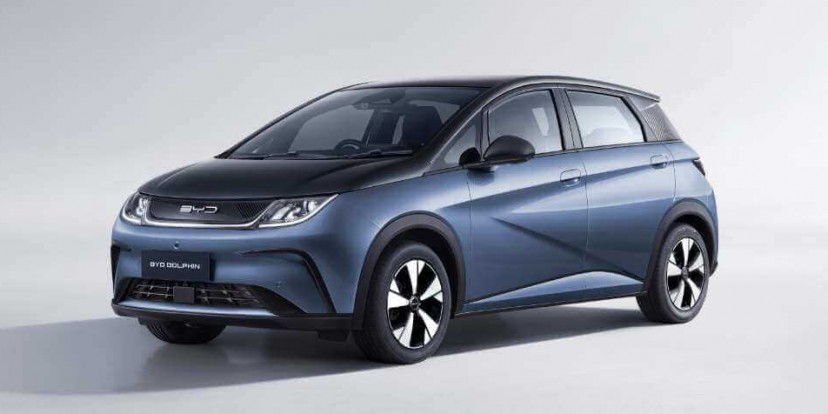
China's BYD expands its aquatic-themed empire with the launch of the Dolphin in Japan. After their recent product launch conference held in Tokyo on September 20, it's clear BYD is fishing for a substantial market share in Japan's evolving EV ecosystem.

BYD's foray into the Japanese market isn't new. Earlier this year, the automotive giant introduced its first pure electric model, the ATTO 3. With a debut price of 4.4 million yen, this was later readjusted to 3.55 million yen (€22,400), post-Japanese government subsidies.

According to the official BYD Japan website, the standard Dolphin model, swimming in with a price tag of 3.63 million yen (just north of €22,800), packs a 44.9 kWh battery and promises a respectable WLTC cruising range of 400 km. However, for those who are a tad more adventurous and have a penchant for the open roads, there's the long-range variant. Fetching a price of 4.07 million yen (roughly €25,600 for those of us currency-challenged), this model boasts a heftier 58.56 kWh battery pack and an extended WLTC range of 476 km. Talk about going the extra mile, or kilometer in this case. For those with eagle eyes on their wallets, Japanese EV subsidies might bring the Dolphin's starting price down to a more palatable 2.98 million yen (or about €18,700).

 
BYD celebrates half a million Dolphin EVs made with Commemorative Edition

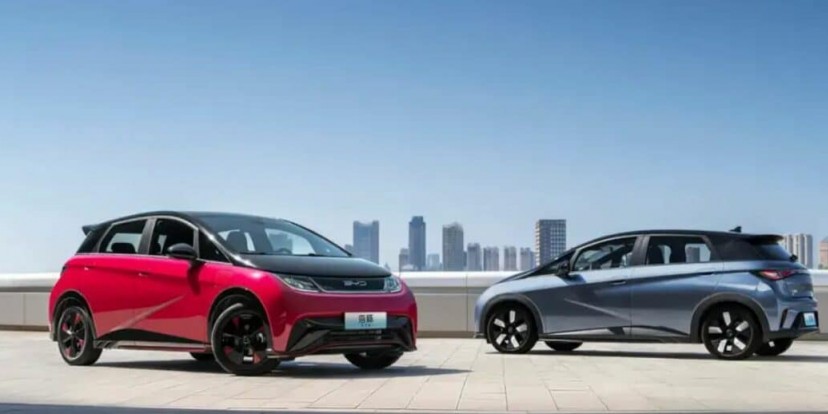
BYD is launching the Dolphin Commemorative Edition, marking the production of the 500,000th Dolphin EV since its inception in August 2021. Now, if you're thinking this is just a celebratory pat on the back, you might want to reconsider, as this edition arrives with an array of upgrades and a updated aesthetic appeal.

Right off the bat, the Dolphin Commemorative Edition catches the eye with its vibrant new color combination of black and red, giving it a fresh and bold look. The front features a closed grille design, adorned with the BYD logo at the center against a striking black background, surrounded by an LED light strip. At the rear, the standard design with a narrow top and a wider bottom is paired with a roof spoiler, and there’s the addition of the trendy through-type taillight.

The BYD Dolphin doesn’t just stop at looking good. It's packed with five exterior cameras and five ultrasonic radars, aiming to bring advanced driving assistance functionalities like adaptive cruise control to the table. With dimensions measuring 4,150 mm/1,770 mm/1,570 mm and a wheelbase of 2 700 mm, it’s spacious with a standard trunk volume of 345 l, expandable to a whopping 1,310 l with the rear seats folded down.


1.jpeg2.jpeg3.jpeg4.jpeg5.jpeg6.jpeg7.jpeg
 
BYD holds 15 times more patents than Tesla

In the fast-evolving world of electric vehicles, two names stand out: BYD and Tesla. While Tesla has been a front-runner in the EV market, recent data reveals that BYD has been quietly securing its position as the patent king of EVs, with a staggering 13,000 applications in comparison to Tesla’s 863 over the past two decades.

BYD, a Chinese automotive giant, has been diligently working behind the scenes, focusing on protecting its battery technology. A whopping 50% of BYD’s patents are dedicated to batteries, allowing the company to develop in-house battery packs, a feat not many car manufacturers can boast. This strategic move has positioned BYD as a leader in the development and manufacture of lithium-ion batteries with iron phosphate cathodes, which are notably more affordable than the ternary lithium batteries utilizing nickel and cobalt from their Korean counterparts.

On the other side of the spectrum, Tesla, the American EV behemoth, has taken a different approach. With a mere 863 patents filed, one might raise an eyebrow at the disparity. However, Tesla’s strategy leans heavily on software development, utilizing a plethora of publicly available information. A significant portion of Tesla’s patents revolve around charging infrastructure and communication between EVs and drivers, showcasing their focus on enhancing user experience and connectivity.

Patent lawyer Hideto Kono notes that a company of Tesla’s stature would typically file for at least ten times as many patents. The lower number of patents from Tesla raises questions about their reliance on software and the risk of imitation by competitors. Unlike BYD, Tesla mitigates this risk by implementing new production technology exclusively within its factories.

While patents offer a layer of protection, they also come with a caveat. The details of the patents are made public, leaving room for potential imitation. This is particularly crucial for BYD, as their proprietary battery technologies can be dissected by simply disassembling the battery packs. The company’s heavy reliance on patents underscores the importance of safeguarding its innovations in a competitive market.

 
BYD and Shell unveil 258-port EV charging station in Shenzhen

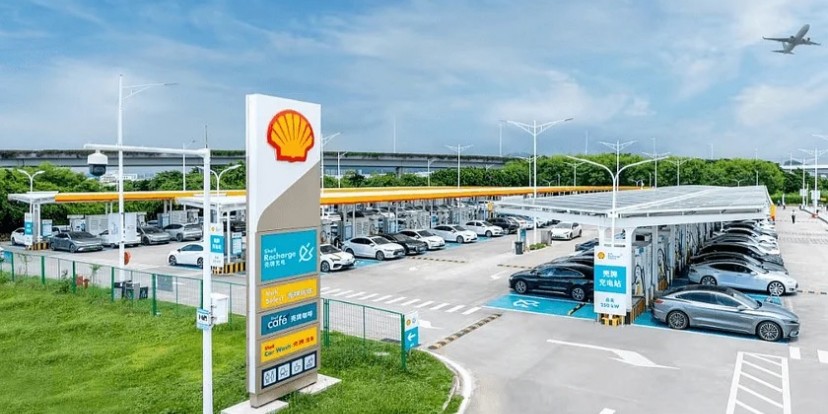
Chinese car manufacturer Build Your Dreams (BYD) and multinational oil and gas titan Shell have inaugurated the world’s largest electric vehicle charging station in Shenzhen, China. Boasting a staggering 258 public fast-charging points, the Shell Recharge Shenzhen Airport EV Station is setting a new benchmark in the EV infrastructure landscape.

This colossal venture is a clear indicator of oil companies, traditionally seen as the antithesis of green energy, steering their ships towards the growing EV market. It’s a stark contrast to the early days of EV charging networks, which were primarily driven by automotive pioneers like Tesla.

For a bit of perspective, Tesla has established a substantial charging network across the United States. However, the Texas-based automotive giant hasn’t yet unveiled a single location with a charger count to rival this new behemoth in Shenzhen. Shell estimates that during its trial operations, the station can cater to over 3,300 EVs daily.

 
BYD Actually Built An SUV That’s Waterproof Enough To Serve Briefly As A Boat

The new YangWang U8 Off-road Master Edition from Chinese automaker BYD can float on water for up to 30 minutes

Remember last year, when Tesla boss Elon Musk proudly proclaimed that his electric pickup, the Cybertruck, would be able to “serve briefly as a boat?” Well now, while we were all waiting for that car to materialize, Chinese automaker BYD has only gone and made an electric SUV that can manage just that.

The latest model from Chinese automaker BYD is the YangWang U8, a luxurious off-roader that’s targeting the likes of the Range Rover and the G-Wagen from Mercedes, but with electric power at its heart. In its super-rugged Off-road Master Edition, the YangWang comes with a neat trick: Yachting Mode.

According to CarScoops, the mode takes a few essential steps like sealing the doors, switching the A/C to recirculation and opening up the sunroof to offer passengers an easy escape route should things go south. Once all of those settings are confirmed, CarScoops reports that the 7,000 lb SUV can then float on water for up to 30 minutes.


BYD overtakes Ford, securing 4th spot in global car sales

In a marketplace as dynamic as the automotive industry, shake-ups and surprises are part of the landscape. Yet, the recent ascent of Chinese automaker BYD is a narrative that warrants attention. Surpassing American giant Ford, BYD clinched the fourth spot in global car sales in August, as per TrendForce statistics.

In August, the global car sales in 37 principal markets hit 5.55 million units. Amidst this, BYD exhibited resilience with a 5% month-on-month increment in car sales, despite a softened demand in China's auto sector. The company was nipping at the heels of third-place Honda, trailing by a mere 0.1 percentage point in market share.

Conversely, Ford witnessed a 6.7% month-on-month dip in sales, slipping to sixth place. The automotive world observed keenly as BYD, predominantly known for its new energy vehicles, managed to sustain robust performance even as other brands faced challenges.

 
BYD overtakes Ford, securing 4th spot in global car sales

In a marketplace as dynamic as the automotive industry, shake-ups and surprises are part of the landscape. Yet, the recent ascent of Chinese automaker BYD is a narrative that warrants attention. Surpassing American giant Ford, BYD clinched the fourth spot in global car sales in August, as per TrendForce statistics.

In August, the global car sales in 37 principal markets hit 5.55 million units. Amidst this, BYD exhibited resilience with a 5% month-on-month increment in car sales, despite a softened demand in China's auto sector. The company was nipping at the heels of third-place Honda, trailing by a mere 0.1 percentage point in market share.

Conversely, Ford witnessed a 6.7% month-on-month dip in sales, slipping to sixth place. The automotive world observed keenly as BYD, predominantly known for its new energy vehicles, managed to sustain robust performance even as other brands faced challenges.

I wonder if those sales figures include "sales" that involve dumping the product in a field.

 
Top
Sign up to the MyBroadband newsletter
X