


-
- News
-
Categories
- 5G
- ADSL
- AI
- Banking
- Black Friday
- Broadband
- Broadcasting
- Business
- Business Telecoms
- Cellular
- Cloud and Hosting
- Columns
- Cryptocurrency
- Energy
- Enterprise
- Fibre
- Gadgets
- Gaming
- Government
- Hardware
- Industry News
- Internet
- Internet of Things
- Investing
- IT Services
- Motoring
- Reviews
- Science
- Security
- Smartphones
- Software
- Technology
- Telecoms
- Trending
- Wireless
- Press Office
- Forum
- Industry News
- What's Next
- Company hub
- Speed Test
- About us
- Advertise with us
- Contact
- Careers
-
Join the MyBroadband community
South Africa’s biggest forum. Discuss, discover, and connect with thousands of members.
-
Question of the Day: Do you get motion sick?
You are using an out of date browser. It may not display this or other websites correctly.
You should upgrade or use an alternative browser.
You should upgrade or use an alternative browser.
The BYD (EV) Thread
- Thread starter FiestaST
- Start date
FiestaST
Honorary Master
Driving the CHEAPEST Car in Australia: 2026 BYD Atto 1 Review - Beyond EV
FiestaST
Honorary Master
BYD’s Fang Cheng Bao Formula S and S GT go on sale in China
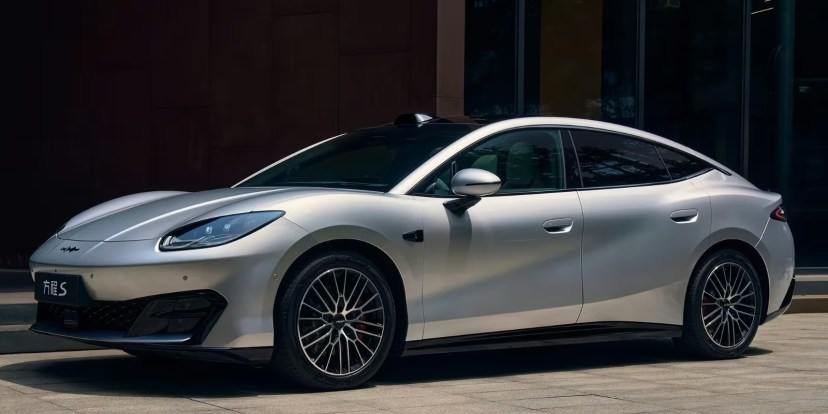
For the past couple of years, Fang Cheng Bao was the brand you associated with squared-off, boulder-crawling plug-in beasts - a sub-brand built specifically to pull wealthy outdoor hobbyists away from their Land Cruisers and Defenders. Yet here we are, watching that off-road-centric outfit park a pair of sleek EVs right in the Xiaomi SU7 and Tesla Model 3's front yard.
The new models - the Formula S coupe-styled sedan and its wagon sibling, the Formula S GT shooting brake - borrow their design cues from the Fang Cheng Bao Super 9 concept. But what really is shocking is the ruthless pricing. When pre-orders opened on August 20, BYD pegged the series between RMB 230,000 and RMB 280,000 - which already was attractive. But at the official launch, BYD announced that the Formula S will start at RMB 189,900 (around €23,800), and top out at RMB 229,900 (around €28,900). That's a 17.4% haircut - RMB 40,100 (nearly $ 6,000) shaved clean off the bottom end before the first customer even signs a finance agreement.
Even the stunning Formula S GT shooting brake starts from RMB 219,900 (about €27,600). Tesla's refreshed Model 3 asks around RMB 235,500 to RMB 259,900 in China, and Xiaomi's smash-hit SU7 starts from RMB 215,900 in its baseline trim. Fang Cheng Bao is undercutting the entire class while possibly offering more.
Size-wise, the Formula S twins dwarf the American benchmark. The Formula S stretches to 5,060 mm in length, it is 1,967 mm wide, and stands 1,483 mm tall on a 2,960 mm wheelbase. The shooting brake Formula S GT is surprisingly shorter at 5,025 mm; it is 1,967 mm wide and 1,458 mm tall, but it shares the identical 2,960 mm wheelbase.
 www.arenaev.com


For the past couple of years, Fang Cheng Bao was the brand you associated with squared-off, boulder-crawling plug-in beasts - a sub-brand built specifically to pull wealthy outdoor hobbyists away from their Land Cruisers and Defenders. Yet here we are, watching that off-road-centric outfit park a pair of sleek EVs right in the Xiaomi SU7 and Tesla Model 3's front yard.
The new models - the Formula S coupe-styled sedan and its wagon sibling, the Formula S GT shooting brake - borrow their design cues from the Fang Cheng Bao Super 9 concept. But what really is shocking is the ruthless pricing. When pre-orders opened on August 20, BYD pegged the series between RMB 230,000 and RMB 280,000 - which already was attractive. But at the official launch, BYD announced that the Formula S will start at RMB 189,900 (around €23,800), and top out at RMB 229,900 (around €28,900). That's a 17.4% haircut - RMB 40,100 (nearly $ 6,000) shaved clean off the bottom end before the first customer even signs a finance agreement.
Even the stunning Formula S GT shooting brake starts from RMB 219,900 (about €27,600). Tesla's refreshed Model 3 asks around RMB 235,500 to RMB 259,900 in China, and Xiaomi's smash-hit SU7 starts from RMB 215,900 in its baseline trim. Fang Cheng Bao is undercutting the entire class while possibly offering more.
Size-wise, the Formula S twins dwarf the American benchmark. The Formula S stretches to 5,060 mm in length, it is 1,967 mm wide, and stands 1,483 mm tall on a 2,960 mm wheelbase. The shooting brake Formula S GT is surprisingly shorter at 5,025 mm; it is 1,967 mm wide and 1,458 mm tall, but it shares the identical 2,960 mm wheelbase.
BYD’s Fang Cheng Bao Formula S and S GT go on sale in China
BYD’s Fang Cheng Bao brand targets Tesla Model 3 and Xiaomi SU7 by launching the Formula S sedan and Formula S GT shooting brake with up to 657 horsepower, and a low starting price.
www.arenaev.com
FiestaST
Honorary Master
FiestaST
Honorary Master
The security risks of Chinese EVs and connected cars | Four Corners Documentary
Gtx Gaming
Gtx Gaming
I see BYD cape bate is opening next to jetour cape gate, so I don't have ti travel to far to test drive the Ti7
FiestaST
Honorary Master
FiestaST
Honorary Master
FiestaST
Honorary Master
BYD's smallest urban runabout is about to grow bigger
The original hot hatchback philosophy never had anything to do with raw horsepower - but everything to do with chucking a light, squared-off box through tight city roundabouts. When the BYD Seagull first arrived in early 2023, it captured that exact pocket-sized cheeky essence. It showed up on the scene as a compact, sub-four-meter city car built with a focus on affordable, everyday electric commuting. Drivers embraced its pinpoint turning radius, and BYD went on to sell more than 1.5 million units across thirty-odd months.
Unfortunately, in the hyper-competitive Chinese auto market, cars have the shelf life of fresh sushi. After selling 529,537 units in 2025 alone, the Seagull hit a wall. After 12 months of year-on-year sales slumps chipped away at its dominance, with volume down by 37.50% across the first eight months of this year. An August uptick to 36,106 deliveries suggested a revival, but it was too little too late - BYD decided that a mid-cycle nip and tuck was not going to cut it.
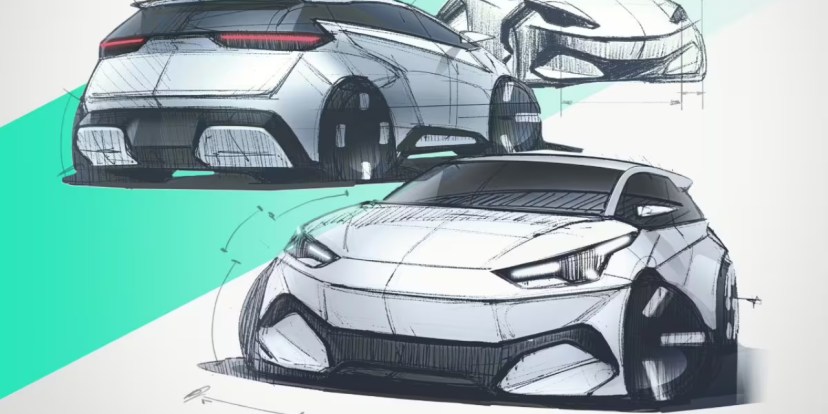
Official design sketches released by Zhang Zhuo, general manager of BYD's Ocean series, reveal a complete overhaul that abandons the pint-sized proportions of the original. The teasers show a way more aggressive machine with chiseled surfaces, angular trident-style headlamps, and a sharply rising beltline that meets a floating roofline. In internal development circles, whispers had long pegged this project under the affectionate working title of the "Big Seagull." Now confirmed for a launch this year, the sketches leave zero doubt: BYD's feisty entry-level hatch is shedding its baby fat in favor of a grown-up, broad-shouldered look.
According to regulatory filings with China's Ministry of Industry and Information Technology, the second-generation Seagull is 4,205 mm long, 1,810 mm wide, and 1,570 mm tall, with a 2,650 mm wheelbase. The newcomer is 425 mm longer overall and rides on a platform with 150 mm of extra wheelbase compared to the outgoing model. Adding nearly half a meter of metal between bumpers is a full-blown promotion into a different vehicle class.
Every single millimeter of that newfound footprint pays back inside the cabin. The original Seagull was a strict four-seater, which limited its appeal for growing households, but the second-generation model gains a fifth seatbelt. That revision transforms the car from a student commuter or second runabout into a do-it-all primary family car. You also gain rear legroom and enough trunk capacity to swallow luggage without playing Tetris.
The previous generation's rather modest 55 kW motor was perfectly adequate for darting between traffic lights, but it ran out of puff on open motorways. The new car fixes that deficit by having a permanent magnet synchronous motor delivering 95 kW, equivalent to 127 hp. That output is not going to set the drag strip on fire, but it should be enough to give this enlarged hatchback a decent punch needed for confident highway overtakes.
 www.arenaev.com


The original hot hatchback philosophy never had anything to do with raw horsepower - but everything to do with chucking a light, squared-off box through tight city roundabouts. When the BYD Seagull first arrived in early 2023, it captured that exact pocket-sized cheeky essence. It showed up on the scene as a compact, sub-four-meter city car built with a focus on affordable, everyday electric commuting. Drivers embraced its pinpoint turning radius, and BYD went on to sell more than 1.5 million units across thirty-odd months.
Unfortunately, in the hyper-competitive Chinese auto market, cars have the shelf life of fresh sushi. After selling 529,537 units in 2025 alone, the Seagull hit a wall. After 12 months of year-on-year sales slumps chipped away at its dominance, with volume down by 37.50% across the first eight months of this year. An August uptick to 36,106 deliveries suggested a revival, but it was too little too late - BYD decided that a mid-cycle nip and tuck was not going to cut it.
Official design sketches released by Zhang Zhuo, general manager of BYD's Ocean series, reveal a complete overhaul that abandons the pint-sized proportions of the original. The teasers show a way more aggressive machine with chiseled surfaces, angular trident-style headlamps, and a sharply rising beltline that meets a floating roofline. In internal development circles, whispers had long pegged this project under the affectionate working title of the "Big Seagull." Now confirmed for a launch this year, the sketches leave zero doubt: BYD's feisty entry-level hatch is shedding its baby fat in favor of a grown-up, broad-shouldered look.
According to regulatory filings with China's Ministry of Industry and Information Technology, the second-generation Seagull is 4,205 mm long, 1,810 mm wide, and 1,570 mm tall, with a 2,650 mm wheelbase. The newcomer is 425 mm longer overall and rides on a platform with 150 mm of extra wheelbase compared to the outgoing model. Adding nearly half a meter of metal between bumpers is a full-blown promotion into a different vehicle class.
Every single millimeter of that newfound footprint pays back inside the cabin. The original Seagull was a strict four-seater, which limited its appeal for growing households, but the second-generation model gains a fifth seatbelt. That revision transforms the car from a student commuter or second runabout into a do-it-all primary family car. You also gain rear legroom and enough trunk capacity to swallow luggage without playing Tetris.
The previous generation's rather modest 55 kW motor was perfectly adequate for darting between traffic lights, but it ran out of puff on open motorways. The new car fixes that deficit by having a permanent magnet synchronous motor delivering 95 kW, equivalent to 127 hp. That output is not going to set the drag strip on fire, but it should be enough to give this enlarged hatchback a decent punch needed for confident highway overtakes.
BYD's smallest urban runabout is about to grow bigger
BYD is transforming its budget-friendly city car into a larger, more powerful five-seater hatchback packed with LiDAR technology to reignite falling sales.
www.arenaev.com

Wait.. seagul is our dolphin surf. So plans are already underway to replace it barely a year after launching locally? ShooooweeeeeeBYD's smallest urban runabout is about to grow bigger
The original hot hatchback philosophy never had anything to do with raw horsepower - but everything to do with chucking a light, squared-off box through tight city roundabouts. When the BYD Seagull first arrived in early 2023, it captured that exact pocket-sized cheeky essence. It showed up on the scene as a compact, sub-four-meter city car built with a focus on affordable, everyday electric commuting. Drivers embraced its pinpoint turning radius, and BYD went on to sell more than 1.5 million units across thirty-odd months.
Unfortunately, in the hyper-competitive Chinese auto market, cars have the shelf life of fresh sushi. After selling 529,537 units in 2025 alone, the Seagull hit a wall. After 12 months of year-on-year sales slumps chipped away at its dominance, with volume down by 37.50% across the first eight months of this year. An August uptick to 36,106 deliveries suggested a revival, but it was too little too late - BYD decided that a mid-cycle nip and tuck was not going to cut it.
Official design sketches released by Zhang Zhuo, general manager of BYD's Ocean series, reveal a complete overhaul that abandons the pint-sized proportions of the original. The teasers show a way more aggressive machine with chiseled surfaces, angular trident-style headlamps, and a sharply rising beltline that meets a floating roofline. In internal development circles, whispers had long pegged this project under the affectionate working title of the "Big Seagull." Now confirmed for a launch this year, the sketches leave zero doubt: BYD's feisty entry-level hatch is shedding its baby fat in favor of a grown-up, broad-shouldered look.
According to regulatory filings with China's Ministry of Industry and Information Technology, the second-generation Seagull is 4,205 mm long, 1,810 mm wide, and 1,570 mm tall, with a 2,650 mm wheelbase. The newcomer is 425 mm longer overall and rides on a platform with 150 mm of extra wheelbase compared to the outgoing model. Adding nearly half a meter of metal between bumpers is a full-blown promotion into a different vehicle class.
Every single millimeter of that newfound footprint pays back inside the cabin. The original Seagull was a strict four-seater, which limited its appeal for growing households, but the second-generation model gains a fifth seatbelt. That revision transforms the car from a student commuter or second runabout into a do-it-all primary family car. You also gain rear legroom and enough trunk capacity to swallow luggage without playing Tetris.
The previous generation's rather modest 55 kW motor was perfectly adequate for darting between traffic lights, but it ran out of puff on open motorways. The new car fixes that deficit by having a permanent magnet synchronous motor delivering 95 kW, equivalent to 127 hp. That output is not going to set the drag strip on fire, but it should be enough to give this enlarged hatchback a decent punch needed for confident highway overtakes.
BYD's smallest urban runabout is about to grow bigger
BYD is transforming its budget-friendly city car into a larger, more powerful five-seater hatchback packed with LiDAR technology to reignite falling sales.
View attachment 1939554
View attachment 1939555
View attachment 1939556

Foxhound5366
Honorary Master
Yeah, cars aren't these wonderful things with five year lifecycles. These days they're more like cellphones, with new variants released every year. Don't worry about the depreciation, I don't think anyone will care if you're driving the BYD Dolphin 1.2x, 1.6b or 1.7h.Wait.. seagul is our dolphin surf. So plans are already underway to replace it barely a year after launching locally? Shooooweeeeee
FiestaST
Honorary Master
Yes & China Speed bro. We spoke about it in another thread.Wait.. seagul is our dolphin surf. So plans are already underway to replace it barely a year after launching locally? Shooooweeeeee
TBF it will take a bit long for RHD markets.
FiestaST
Honorary Master
BYD's Yangwang brand is working on a luxury executive sedan, here it is in spy shots
BYD's Yangwang brand seems to be very busy working on a new luxury executive sedan, which is allegedly internally codenamed Hu. Yangwang is BYD's premium luxury brand in China, so this makes perfect sense.
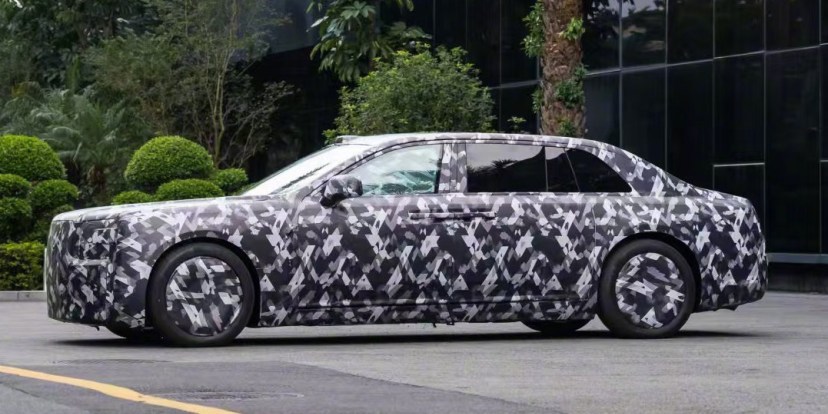
The upcoming car has been spotted on the streets of China wearing heavy camouflage. As you can see in the images below, it seems quite massive, as you'd expect given its positioning.
The front is rumored to be quite similar to that of the Yangwang U8, and the Hu is apparently going to be around 5,500 mm long. It has rear-hinged coach doors like a Rolls-Royce, and a LiDAR on the roof. Since it's shown in one image next to a BYD MW Flash Charging Station, it could support BYD's latest fast-charging tech.
 www.arenaev.com


BYD's Yangwang brand seems to be very busy working on a new luxury executive sedan, which is allegedly internally codenamed Hu. Yangwang is BYD's premium luxury brand in China, so this makes perfect sense.
The upcoming car has been spotted on the streets of China wearing heavy camouflage. As you can see in the images below, it seems quite massive, as you'd expect given its positioning.
The front is rumored to be quite similar to that of the Yangwang U8, and the Hu is apparently going to be around 5,500 mm long. It has rear-hinged coach doors like a Rolls-Royce, and a LiDAR on the roof. Since it's shown in one image next to a BYD MW Flash Charging Station, it could support BYD's latest fast-charging tech.
BYD's Yangwang brand is working on a luxury executive sedan, here it is in spy shots
It's looking like a massive Rolls-Royce-inspired car.
www.arenaev.com
FiestaST
Honorary Master
FiestaST
Honorary Master
FiestaST
Honorary Master
BYD Atto 2 EV (2026) Price & Specs
BYD Auto South Africa has quietly added the new Atto 2 EV to its local line-up, slotting the fully electric contender above the Atto 2 DM-i PHEV derivatives…
- Local Atto 2 range gains EV derivative
- 7th most affordable EV in South Africa
- R40 000 above Atto 2 Dynamic DM-i
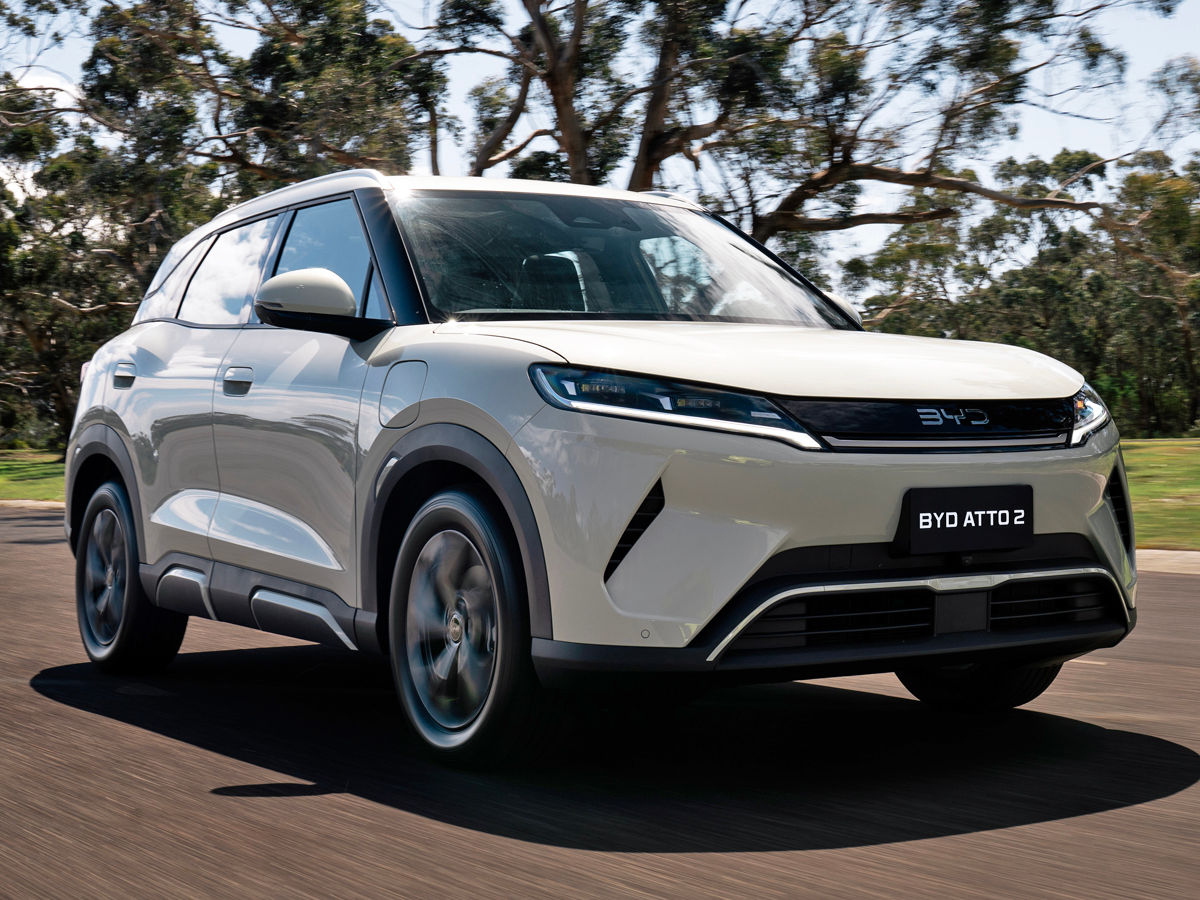
BYD Auto South Africa has quietly added the new Atto 2 EV crossover to its local range, positioning the fully electric derivative above the Atto 2 DM-i plug-in hybrid electric vehicle (PHEV) variants.
Thanks to a friendly heads-up from the ever-alert folks over at duoporta.com, we know the new Atto 2 EV Dynamic is priced from R529 900. As things stand, that sees the newcomer place 7th on the list of SA’s most affordable EVs.
The Atto 2 EV Dynamic is positioned R80 000 above the Atto 2 DM-i Comfort (R449 900) and R40 000 above the Atto 2 DM-i Dynamic (R489 900). The latter 2 derivatives launched locally in June 2026, with the Comfort variant debuting as SA’s most affordable PHEV.
But back to the Atto 2 EV. Featuring a front-mounted electric motor, this derivative offers peak outputs of 130 kW and 290 Nm. The Chinese brand claims a 0-100 kph time of 7.9 seconds and a top speed of 159 kph.
Equipped with a 51.13 kWh battery pack, the Atto 2 EV has a listed WLTP range of 345 km. The maximum AC and DC charging capacities are 11 kW and 65 kW, respectively. According to BYD, using a 65 kW fast charger will move the battery’s state of charge from 30% to 80% in 28 minutes.
Interestingly, measuring 4 310 mm from bumper to bumper, the Atto 2 EV is 20 mm shorter than its PHEV sibling. It furthermore features a 15 mm higher ground clearance at 165 mm, while the listed luggage capacity comes in at 400 litres (25 down on the PHEV model).
What does the new BYD Atto 2 EV cost in SA?
DERIVATIVE PRICE
Atto 2 DM-i Comfort R449 900
Atto 2 DM-i Dynamic R489 900
Atto 2 EV Dynamic R529 900
The prices above include a 5-year/100 000 km vehicle warranty, an 8-year/200 000 km battery warranty and a 4-year/60 000 km service plan (with intervals of 20 000 km).
 www.cars.co.za
BYD Auto South Africa has quietly added the new Atto 2 EV to its local line-up, slotting the fully electric contender above the Atto 2 DM-i PHEV derivatives…
- Local Atto 2 range gains EV derivative
- 7th most affordable EV in South Africa
- R40 000 above Atto 2 Dynamic DM-i
BYD Auto South Africa has quietly added the new Atto 2 EV crossover to its local range, positioning the fully electric derivative above the Atto 2 DM-i plug-in hybrid electric vehicle (PHEV) variants.
Thanks to a friendly heads-up from the ever-alert folks over at duoporta.com, we know the new Atto 2 EV Dynamic is priced from R529 900. As things stand, that sees the newcomer place 7th on the list of SA’s most affordable EVs.
The Atto 2 EV Dynamic is positioned R80 000 above the Atto 2 DM-i Comfort (R449 900) and R40 000 above the Atto 2 DM-i Dynamic (R489 900). The latter 2 derivatives launched locally in June 2026, with the Comfort variant debuting as SA’s most affordable PHEV.
But back to the Atto 2 EV. Featuring a front-mounted electric motor, this derivative offers peak outputs of 130 kW and 290 Nm. The Chinese brand claims a 0-100 kph time of 7.9 seconds and a top speed of 159 kph.
Equipped with a 51.13 kWh battery pack, the Atto 2 EV has a listed WLTP range of 345 km. The maximum AC and DC charging capacities are 11 kW and 65 kW, respectively. According to BYD, using a 65 kW fast charger will move the battery’s state of charge from 30% to 80% in 28 minutes.
Interestingly, measuring 4 310 mm from bumper to bumper, the Atto 2 EV is 20 mm shorter than its PHEV sibling. It furthermore features a 15 mm higher ground clearance at 165 mm, while the listed luggage capacity comes in at 400 litres (25 down on the PHEV model).
What does the new BYD Atto 2 EV cost in SA?
DERIVATIVE PRICE
Atto 2 DM-i Comfort R449 900
Atto 2 DM-i Dynamic R489 900
Atto 2 EV Dynamic R529 900
The prices above include a 5-year/100 000 km vehicle warranty, an 8-year/200 000 km battery warranty and a 4-year/60 000 km service plan (with intervals of 20 000 km).
BYD Atto 2 EV (2026) Price & Specs
BYD Auto SA has quietly added the new Atto 2 EV to its local line-up, slotting the fully electric contender above the Atto 2 DM-i PHEV…
www.cars.co.za
FiestaST
Honorary Master
FiestaST
Honorary Master
FiestaST
Honorary Master
2026 BYD Atto 2 EV price & specs in South Africa
The BYD Atto 2 EV has quietly arrived in South Africa and we have pricing and specs for the newcomer. See pricing below…
BYD has expanded its local Atto 2 lineup with the introduction of an all-electric derivative. Exclusively available in Dynamic spec, the Atto 2 EV employs a single electric motor producing 130 kW and 290 N.m of torque. Power is delivered to the road via the front wheels. The EV is equipped with a 51.1 kWh battery pack, which serves up a claimed operating range of up to 345 km (WLTP) on a single, full charge. The battery can receive up to 65 kW at a DC fast charger. Plugged into such a facility, a 30-80% charge takes 28 minutes, the Chinese automaker says.
In terms of size, the EV measures 4 310 mm, making it 20 mm shorter than its plug-in hybrid (PHEV) sibling, which we sampled in June 2026. The height, width, and wheelbase remain unchanged, at 1 675, 1 830, and 2 620 mm, respectively. The EV sports a 165 mm ground clearance (up 15 mm over the PHEV).
BYD Atto 2 price in South Africa
Locally, the battery-electric model is priced from R529 900. Included in the price as standard are five-year/100 000 km vehicle and eight-year/200 000 km battery warranties, and a four-year/60 000 km service plan.
BYD Atto 2 DM-i Comfort — R449 900
BYD Atto 2 DM-i Dynamic — R489 900
BYD Atto 2 EV Dynamic — R529 900

 www.carmag.co.za
The BYD Atto 2 EV has quietly arrived in South Africa and we have pricing and specs for the newcomer. See pricing below…
BYD has expanded its local Atto 2 lineup with the introduction of an all-electric derivative. Exclusively available in Dynamic spec, the Atto 2 EV employs a single electric motor producing 130 kW and 290 N.m of torque. Power is delivered to the road via the front wheels. The EV is equipped with a 51.1 kWh battery pack, which serves up a claimed operating range of up to 345 km (WLTP) on a single, full charge. The battery can receive up to 65 kW at a DC fast charger. Plugged into such a facility, a 30-80% charge takes 28 minutes, the Chinese automaker says.
In terms of size, the EV measures 4 310 mm, making it 20 mm shorter than its plug-in hybrid (PHEV) sibling, which we sampled in June 2026. The height, width, and wheelbase remain unchanged, at 1 675, 1 830, and 2 620 mm, respectively. The EV sports a 165 mm ground clearance (up 15 mm over the PHEV).
BYD Atto 2 price in South Africa
Locally, the battery-electric model is priced from R529 900. Included in the price as standard are five-year/100 000 km vehicle and eight-year/200 000 km battery warranties, and a four-year/60 000 km service plan.
BYD Atto 2 DM-i Comfort — R449 900
BYD Atto 2 DM-i Dynamic — R489 900
BYD Atto 2 EV Dynamic — R529 900
2026 BYD Atto 2 EV price & specs in South Africa
The BYD Atto 2 EV has quietly arrived in South Africa and we have pricing and specs for the newcomer. See pricing below...
www.carmag.co.za