The Home Improvements Thread (2)

Status
Not open for further replies.
I've only seen them with cylinder locks. Magnador may be able to direct you, they've always been very helpful for me.

you want a latch lock, which yeah will most likely mean it will also become a cylinder lock, so you would need to drill/cut out for the cylinder.

also make sure the latch then is guarded, as if it can latch closed it can be slipped to open.

The magnador supplied latch locks allow you to do an extra 2 key turns, which slides another piece of metal in over the latch which can't be slipped.

Problem is remembering to actually lock the gate and not just slam it closed.
So had some time to look into this today, I don't think a latch lock is the right thing - isn't that the type of lock that locks with a sliding gate? Our security gate closes like a normal door.
 
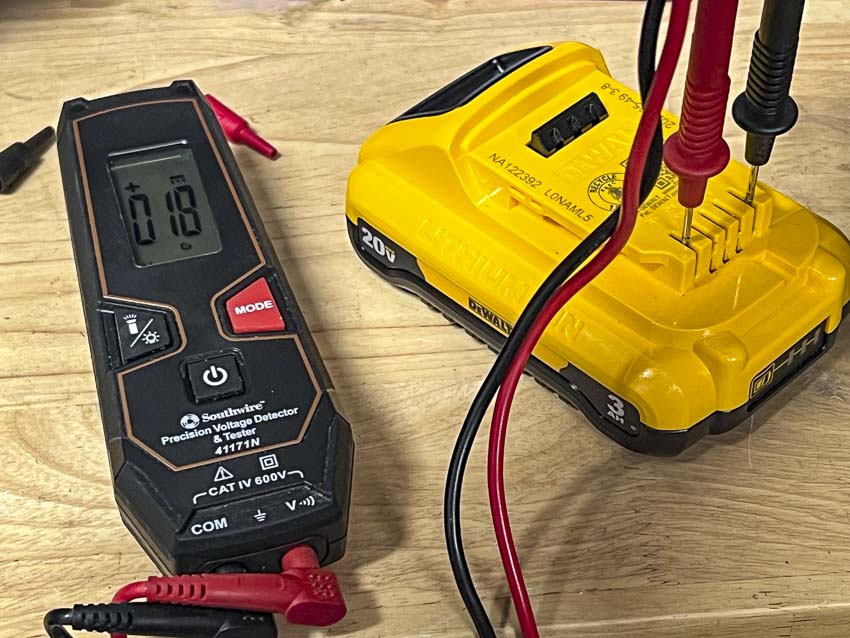
in the US, the tools are branded 20V and in Europe and as a consequence here the tools are branded 18V. In America they use the bigger number cos it sounds more but actually it’s exactly the same.

So.... What does that mean in terms of the DeWalt DCD999b? It might be 20v over there but surely the model referenced should be coming to SA, as an 18v.

I think the better question is, if I order this, is there a compatible battery pack in SA?
 
Last edited:
Last edited:
So had some time to look into this today, I don't think a latch lock is the right thing - isn't that the type of lock that locks with a sliding gate? Our security gate closes like a normal door.
Might be some overlap on naming conventions, but this is what you're looking for:

What you need to check though is if you do "extra" turns that the bolt extends out further to properly lock the gate. See mine before and after giving the key two extra turns. Without this you can just pop the lock with a credit card around the back.
1622702069560.png
1622702078800.png

Don't know what brand this is:
1622702092002.png
 
Might be some overlap on naming conventions, but this is what you're looking for:

What you need to check though is if you do "extra" turns that the bolt extends out further to properly lock the gate. See mine before and after giving the key two extra turns. Without this you can just pop the lock with a credit card around the back.
View attachment 1082307
View attachment 1082309

Don't know what brand this is:
View attachment 1082311
Does not necessarily need to extend the bolt, should at least just disable movement of the latch when locked, to avoid being slipped with a card..
 
So.... What does that mean in terms of the DeWalt DCD999b? It might be 20v over there but surely the model referenced should be coming to SA, as an 18v.

I think the better question is, if I order this, is there a compatible battery pack in SA?

As far as I understand it from my digging, the local battery packs will work just fine, so long as they are of the same "line" effectively.. XR/XRP or something along those lines.

In the states they're allowed to kind of lie and use the maximum voltage the battery pack puts out (even if its for a split second) whereas we get the EU stuff, where they have to advertise it at the nominal voltage.
 
Was the circuit breakers recently changed? Your pool DB should also be on its own Earth Leakage. Put a wire on the pump and connect it to a lead and run off a plug on another circuit to see if the pump runs.
I found the issue, and I'm not surprised just how badly my previous builder's guy screwed up. Including the second electrician he got after I kicked the first one off.

So yesterday I left the pools breaker in the main db off, and when I got into bed last night I realise the plugs in our room is dead. I then realise that the breaker is mislabeled, which isn't in itself an real issue of course but means I'm troubleshooting the wrong thing.

I opened up the board and could determine what the correct breaker is by using my multimeter at the pool pump. Then I identified which wire is the neutral, and lo and fkn behold, the neutral isn't going via the earth leakage - it was connected straight to another neutral bar which comes from the mains, not earth leakage. Moved it over to the correct neutral bar and it all works.

Can anyone explain the reason the power tripped when on the incorrect neutral bar and what the use is of a non earth leakage neutral connection?
 
I found the issue, and I'm not surprised just how badly my previous builder's guy screwed up. Including the second electrician he got after I kicked the first one off.

So yesterday I left the pools breaker in the main db off, and when I got into bed last night I realise the plugs in our room is dead. I then realise that the breaker is mislabeled, which isn't in itself an real issue of course but means I'm troubleshooting the wrong thing.

I opened up the board and could determine what the correct breaker is by using my multimeter at the pool pump. Then I identified which wire is the neutral, and lo and fkn behold, the neutral isn't going via the earth leakage - it was connected straight to another neutral bar which comes from the mains, not earth leakage. Moved it over to the correct neutral bar and it all works.

Can anyone explain the reason the power tripped when on the incorrect neutral bar and what the use is of a non earth leakage neutral connection?

The RCD(Earth Leakage) measures the draw between Live+Neutral. And if one pulls more current then the other one it trips.
 
The RCD(Earth Leakage) measures the draw between Live+Neutral. And if one pulls more current then the other one it trips.
Why then do things like light circuits not go via the earth leakage?
 
The RCD(Earth Leakage) measures the draw between Live+Neutral. And if one pulls more current then the other one it trips.
I also understand why it wasn't working then, thank you. The L was coming from the RCD and the N was coming straight from mains breaker.
 
Why then do things like light circuits not go via the earth leakage?

Everything has to go through an earth leakage. Best practice to separate your plugs and lights on their own earth leakage. If you have lots and lots of electrical equipment you will start splitting the plugs into groups each with their own earth leakage.
 
Everything has to go through an earth leakage. Best practice to separate your plugs and lights on their own earth leakage. If you have lots and lots of electrical equipment you will start splitting the plugs into groups each with their own earth leakage.
I see, my lights don't look to be going through EL.

Stupid question, since you seem to be pretty clued up, but we call it earth leakage, but it seems to have very little to actually do with earth? Since even my lights which aren't going via the EL still have an earth wire.
 
Why then do things like light circuits not go via the earth leakage?
Going out on a limb here.

BUt the RCD measures Leakage to Earth, as per the above Current measurement comparison, if its not the same, it is leaking back through the earth.

As lights generally did not have an earth leakage, im presuming the theory is that it cannot leak back to earth, and therefor didnt go through the earth leakage.

Im, pretty sure some of this has changed in the regulations, specifically with newer lights and LED's having an earth.

I recall having a "light" issue when I bought my current property, replaced a bunch of bulbs with LED's some of them would turn on very dim when the light switch was off. Measured with a voltmeter, and there was enough power leaking to create a 30V circuit that turned them on when live power was disconnected.

My lights were not running through the earth leakage( Since rectified), but turned out to be a faulty day night switch creating the leak.
 
I see, my lights don't look to be going through EL.

Stupid question, since you seem to be pretty clued up, but we call it earth leakage, but it seems to have very little to actually do with earth? Since even my lights which aren't going via the EL still have an earth wire.

Somewhere in your incoming electricity box you will see the neutral wire and ground wire gets connected together. The earth is just a backup which runs independent from your phase and neutral. But you are correct overseas they just call it an RCD now just like they use phase for live wire to make more sense.
 
Going out on a limb here.

BUt the RCD measures Leakage to Earth, as per the above Current measurement comparison, if its not the same, it is leaking back through the earth.

As lights generally did not have an earth leakage, im presuming the theory is that it cannot leak back to earth, and therefor didnt go through the earth leakage.

Im, pretty sure some of this has changed in the regulations, specifically with newer lights and LED's having an earth.

I recall having a "light" issue when I bought my current property, replaced a bunch of bulbs with LED's some of them would turn on very dim when the light switch was off. Measured with a voltmeter, and there was enough power leaking to create a 30V circuit that turned them on when live power was disconnected.

My lights were not running through the earth leakage( Since rectified), but turned out to be a faulty day night switch creating the leak.

It is called ghost voltage, you need to add a resistor to one of the LED's and it goes away.
 
I see, my lights don't look to be going through EL.

Stupid question, since you seem to be pretty clued up, but we call it earth leakage, but it seems to have very little to actually do with earth? Since even my lights which aren't going via the EL still have an earth wire.
See my Post above, it determines leakage to earth without being connected to earth, if less current flow back through the neutral than the live, it has to be "leaking"
 
Update on my pond.

Water is crystal clear. Got me a few koi and some water plants. Some reeds from the river for the stream.

I thought I lost one of the koi but it ended up swimming down the stream and was in the bottom pool where the pump is. Packed a few more rocks at the main line to prevent them from being able to get out of the pond.

A bit difficult getting focused pics of the fish. 20210604_131847.jpg20210604_131924.jpg20210604_132255.jpg20210604_132747.jpg
 
Status
Not open for further replies.
Top
Sign up to the MyBroadband newsletter
X