The Isuzu Thread

Isuzu D-Max and Mazda BT-50 in line for power hike and off-road pack?

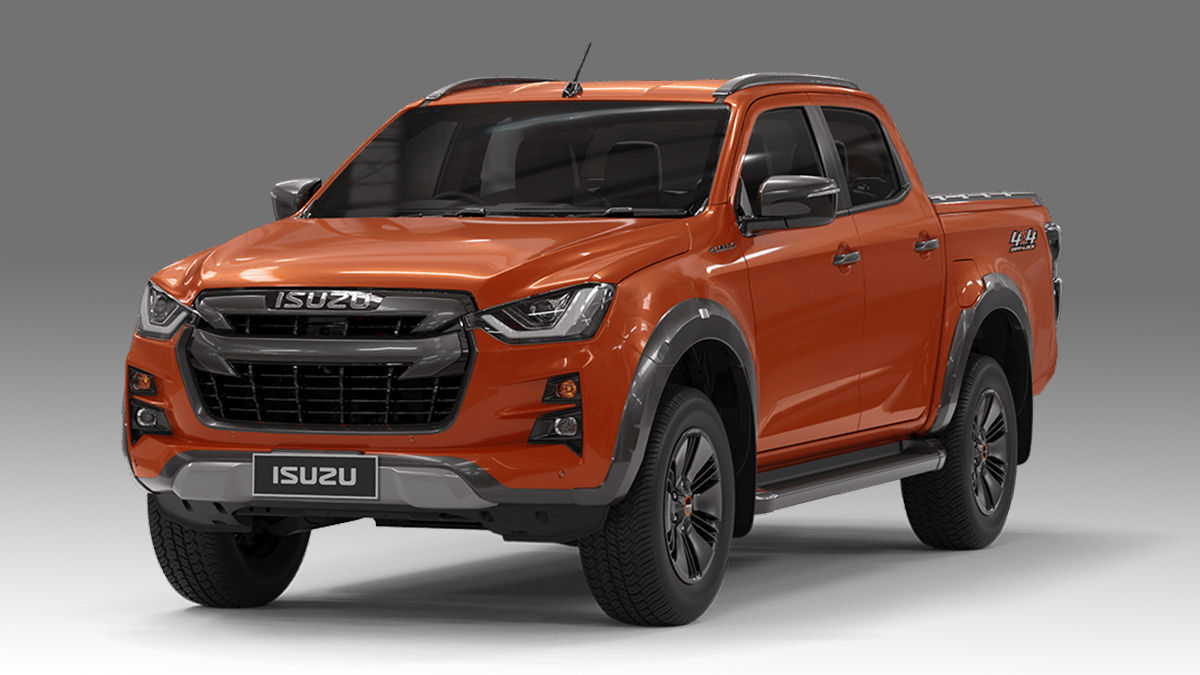
A fresh report out of Australia claims the new Isuzu D-Max and Mazda BT-50 are in line for a “factory-backed” power increase as well as an off-road pack.

According to CarExpert.com.au, the two bakkies (as a reminder, Isuzu builds the D-Max-based BT-50 for Mazda) are set to gain a 10 percent hike in power and torque.


In both models, a 3,0-litre, four-cylinder turbodiesel engine makes 140 kW and 450 N.m as standard. The publication claims the figures will rise to around 155 kWand about 500 N.m when the new package is introduced either in “six to 12” months from now or further down the line, as part of a mid-cycle update.

Those increased peak figures would see the D-Max and BT-50 pretty much match the outputs of the Toyota Hilux’s uprated 2,8-litre engine (150 kW/500 N.m) and the Ford Ranger’s bi-turbo 2,0-litre unit (157 kW/500 N.m).

The off-road pack, meanwhile is expected to include lifted suspension and “more off-road hardware” such as all-terrain rubber and additional underbody protection.

 
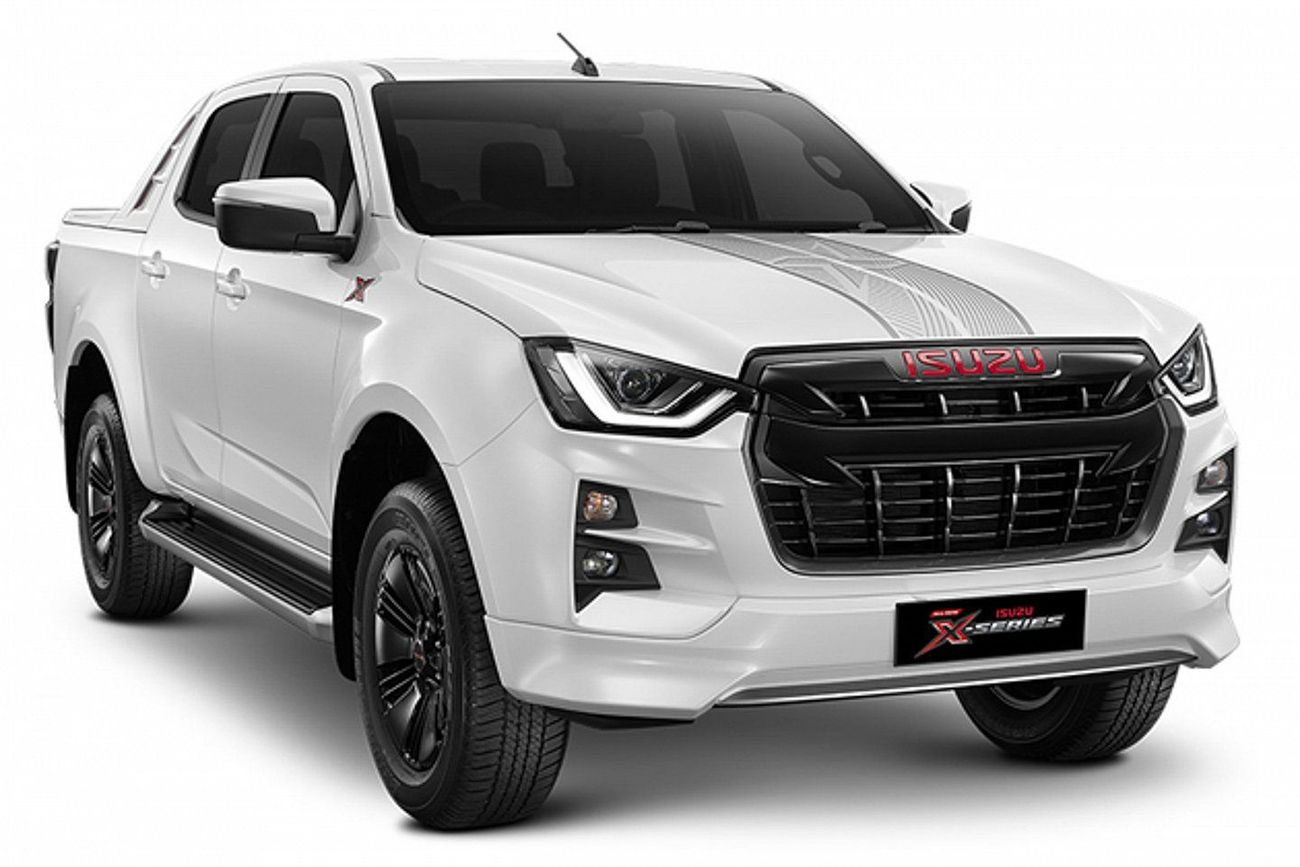
New D-Max becomes an X-Series

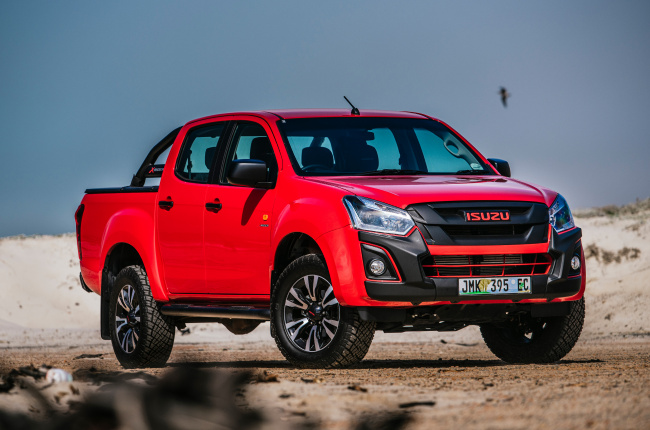
Bolder graphics and better trim for Isuzu's doube-cab D-Max.

Isuzu might have disappointed South African customers with news of a long delay for third-generation D-Max, but globally the new bakkie’s portfolio is already growing.

The Japanese bakkie brand has not been shy of doing special edition double-cabs over the last few years, most of them leveraging the ‘X’ marketing association. In South Africa, we are familiar with the X-Rider bakkies, and it appears that this legacy will continue with new D-Max.

Although its third-generation D-Max is very new, Isuzu has now revealed the first special edition version in Thailand, which is the production hub for most of Isuzu’s double-cab bakkies. It is called the D-Max X-Series and features some slight styling enhancements, to differentiate it from other double-cabs.

Isuzu is launching the D-Max X-Series with two colour options, either black or pearl white. Contrasting with those exterior paint finishes is a gloss finish for the grille, with a bold red Isuzu brand icon.


Isuzu 1.jpgIsuzu 2.jpgIsuzu 3.jpgIsuzu 4.jpg
 
Mazda ‘could get into trouble’ speculating on Isuzu’s D-Max plans

A Mazda executive says he “could get into trouble” if he were to speculate on Isuzu’s apparent plan to create a hardcore D-Max variant conceived to battle Ford’s Ranger Raptor.

The new BT-50 uses the underpinnings of the latest Isuzu D-Max, with the latter firm having developed (and now building) Mazda’s fresh-faced bakkie. So does that mean we’ll see a hardcore BT-50 flagship, too?

"We’re not going to go into speculation on that," Alastair Doak, Mazda Australia marketing director, told CarsGuide.com.au.

"We are very happy with the outcome, the line-up and the specification we're going to market with.

 
Isuzu adds Onyx Edition MU-X

An ageing SUV tries to remain relevant.

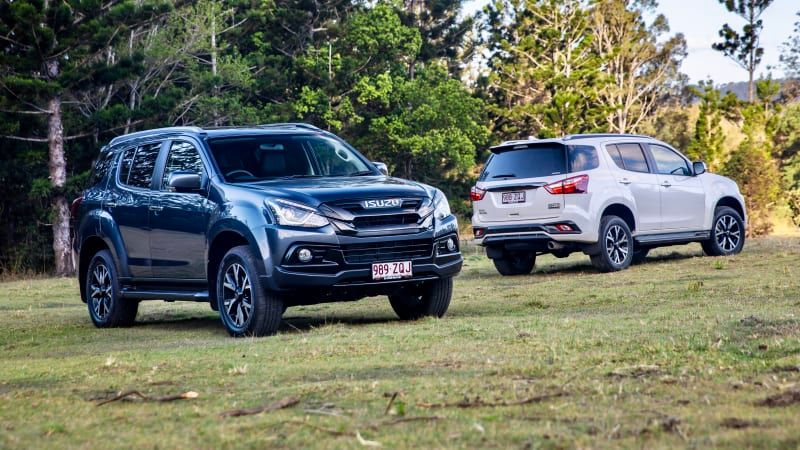
Isuzu’s current MU-X is not new. The dependable D-Max platform off-road station wagon has been available globally since 2013 and that means it competes against a Toyota Fortuner, which is a generation younger in terms of technology and vehicle architecture.

It is called the Onyx Edition and has the typical assortment of equipment and slight styling upgrades, to be expected from a vehicle nearing the end of its lifecycle.

Visually the MU-X ONYX Edition features standard LED headlights, smoke chrome and black gloss exterior design details. The front bumper is also framed by a subtle chin spoiler, which is probably not of crucial function to any aerodynamic advantage but does make the MU-X slightly more vulnerable to damage, in extreme off-road terrain.

Inside this latest upgrade of the MU-X, there is a smaller infotainment screen, with superior functionality. Although the Onyx Edition downsizes from 8- to 6.8-inches of infotainment display, it does gain wireless Apple CarPlay.


MU-X.jpg
 
The back looks weird. Is this Isuzu's rendition of Toyota's Hilux-based Fortuner?
 
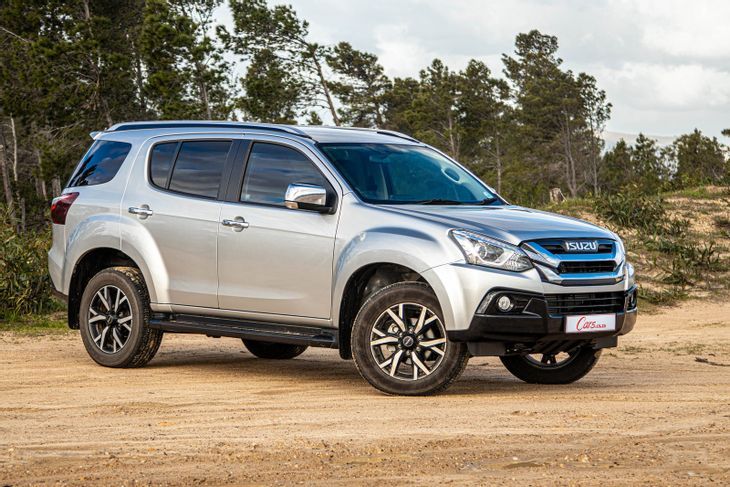
Isuzu MU-X (2020) Review

Fast Facts

Price: R712 200 (October 2020)
Model tested: MU-X 3.0 4x4 6AT
Engine: 3.0-litre turbodiesel
Transmission: 6-speed automatic
Fuel economy: 7.9 L/100 km (claimed)
Power/Torque: 130 kW/380 Nm
Luggage capacity: 235/870/1 830 litres

Verdict

The facelifted MU-X is a small step in the right direction for Isuzu in its strategy to gain a bigger foothold in the bakkie-based SUV segment, which remains dominated by Toyota. The exterior enhancements, such as the bigger wheels and LED lights, give it a more noticeable appearance. The interior updates are subtle and to most potential buyers not a big enough step to really change their minds when comparing the Isuzu to its rivals. What's more, on-road comfort and refinement (especially noise suppression) are standout features; they make the MU-X so comfortable to drive.

There is, however, no getting past the ageing power unit that is underpowered compared to its competitors; the new engine that is being installed in the 2021 D-Max cannot come soon enough for the MU-X if it wants to consider itself as a true rival to the Fortuner and Everest. Even though the MU-X is around R30k cheaper than the rivals mentioned above, most buyers will see that saving as negligible over the course of a repayment plan.


MU-X 1.jpgMU-X 2.jpgMU-X 3.jpgMU-X 4.jpgMU-X 5.jpgMU-X 6.jpgMU-X 7.jpgMU-X 8.jpgMU-X 9.jpgMU-X 10.jpg
 
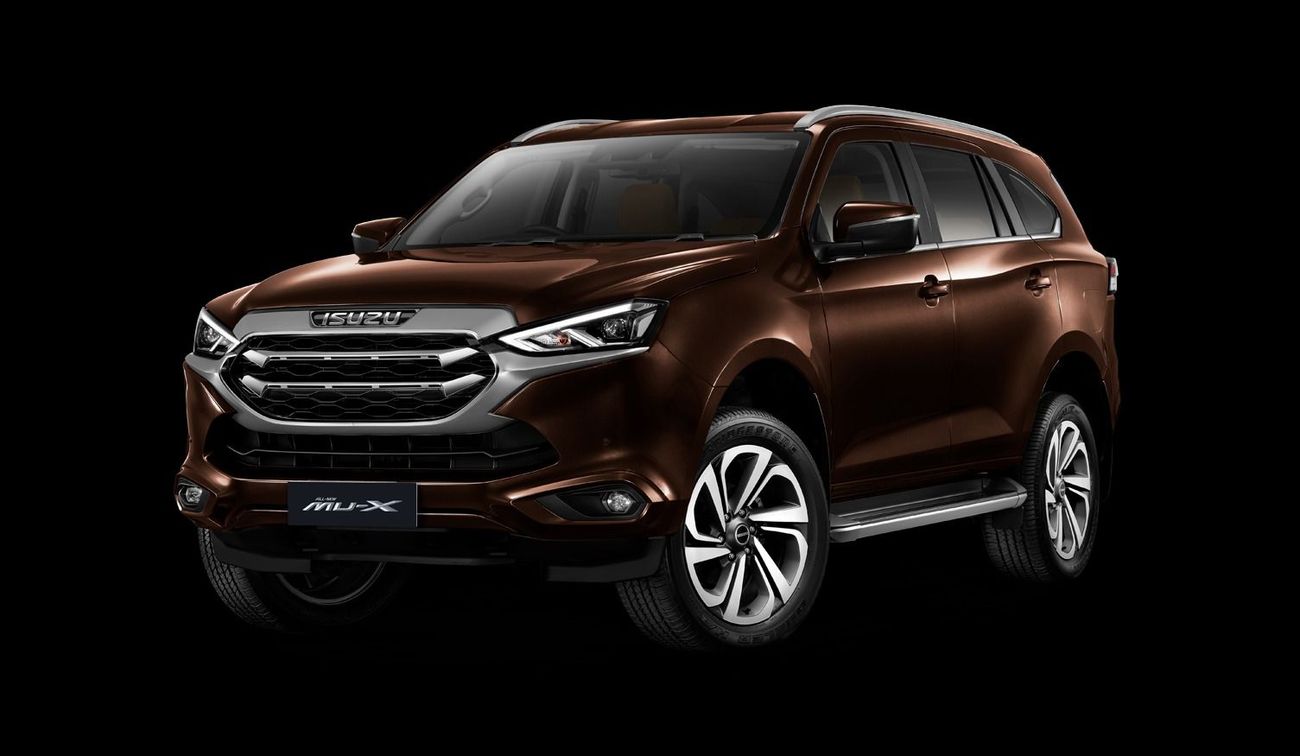
New Isuzu MU-X revealed! Meet the fresh (D-Max-based) seven-seater SUV

The new Isuzu MU-X has been revealed in Thailand, again based on the D-Max bakkie and primed to take on the likes of the Toyota Fortuner and Ford Everest.

As expected, the new version of the Japanese firm’s seven-seater SUV borrows the latest D-Max’s ladder-frame underpinnings and also inherits the bakkie’s uprated 3,0-litre turbodiesel engine. Just like in the D-Max, this powerplant generates 140 kW and 450 N.m. In some markets, a 1,9-litre turbodiesel option will also be offered.

As before, the second-gen MU-X again ditches its bakkie sibling’s leaf-spring rear suspension in favour of a five-link setup with coil springs. In addition, in Thailand at least, it will ship standard with a six-speed automatic transmission (with seemingly no option of a manual gearbox). Rear- and all-wheel drive will be on offer, with models fitted with the latter featuring a terrain command rotary controller (with 2H, 4H and 4L settings) on the centre console.


MU-X 1.jpgMU-X 2.jpgMU-X 3.jpgMU-X 4.jpgMU-X 5.jpgMU-X 6.jpgMU-X 7.jpgMU-X 8.jpg
 
All-New Isuzu MU-X Revealed

Isuzu has revealed its all-new mu-X. See what's new for the 2021 model.

Isuzu says this is an all-new model, no facelifts or updates here, with substantial changes visually and under the skin. Mechanically, the new-generation mu-X is assembled on the same platform as the all-new 3rd-generation D-Max bakkie.

Isuzu has given the all-new mu-X a bold look that differentiates it from the bakkie sibling. While the front looks fresh, the real radical changes can be found at the rear with new taillights and bumpers. The cabin has been substantially overhauled and resembles the all-new D-Max. It looks premium and the current shape's ventilation dials have been replaced by switched. There are small detail upgrades like a new multi-information display on the instrument cluster with nicer graphics, as well as trim updates to the gear selector and steering wheel. Importantly, it appears safety has been given a big update in the form of lane departure warning, adaptive cruise control, automatic emergency braking, rear-cross traffic alert, blind-spot monitoring, and multi-collision braking. There are also six airbags, stability control, hill-start assist, traction control, and hill descent control.


View attachment 937140

Solid head unit
 
Isuzu stops new D-Max production

Big delay in Isuzu build project.

Isuzu’s new D-Max has been keenly anticipated but customers are in for more frustration.

The Japanese bakkie brand has announced that its production of new D-Max is being halted for 3 months. Although 2020 has been a year of unprecedented disruption in the global automotive industry, this announcement by Isuzu is unwelcome to followers of the brand.

Thailand is the production hub for both new D-Max and Mazda’s BT-50. These bakkies are mechanical twins, with only a few minor surface styling and cabin design differences. Despite their similarity, Mazda has not announced any disruption to its production pipeline, for new BT-50.

Why is the new D-Max production being ceased for the next three months? The official reason given by Isuzu is that one of its most important component suppliers for the new bakkie has been forced into a lockdown, by Covid regulations.

Although Isuzu is not at liberty to say exactly which supplier this is, or what bit of the new D-Max they can’t source from anywhere else, the location has been confirmed as Europe.

 
Top
Sign up to the MyBroadband newsletter
X