The SA Vehicle Industry Thread

Worth noting that Suzuki seems to have experienced a sudden fall from grace, the Swift, Baleno and their SUVs sales have fallen flat contrary to the promise they showed earlier.
 
SA’s 25 worst-selling vehicles (under R600k) in June 2021

When it comes to new vehicle sales, the focus always falls upon the best selling vehicles. Yet since we’ve already taken a look at the 10 best-selling bakkies for June 2021, as well as the 20 best-selling passenger cars, we thought it would be interesting to use the latest Naamsa figures to revive our worst-selling cars list, which was initiated by our previous online editor Ryan Bubear.

As before we’ve decided to keep the list as relevant as possible by excluding all model line-ups that start north of R600 000 – otherwise the list would be dominated by premium market niche models that usually sell in small numbers anyway. By capping the price we now have a list of ‘real world’ vehicles, some of which – you might argue – deserve to do a whole lot better.

We’ve also excluded vehicles that are in their run-out phase after being officially discontinued, thus if a car no longer appears on the manufacturer’s website then we won’t run the sales figures.

SA’s 25 worst-selling vehicles (under R600k): June 2021
  1. JMC Vigus – 2
  2. Mahindra XUV300 – 2
  3. Suzuki Vitara – 2
  4. Mitsubishi Outlander – 4
  5. Hyundai i30 N – 4
  6. Suzuki Celerio – 5
  7. Citroen C3 Aircross – 6
  8. Honda CR-V – 7
  9. Fiat Tipo – 7
  10. Honda Civic – 10
  11. Honda Ballade – 11
  12. Honda HR-V – 15
  13. Subaru XV – 18
  14. Jeep Renegade – 18
  15. Haval H6 C – 19
  16. Volkswagen Caddy – 23
  17. Mahindra XUV500 – 23
  18. Suzuki Ciaz – 24
  19. Mitsubishi Eclipse Cross – 24
  20. Peugeot 3008 – 25
  21. Toyota Corolla Hatch – 26
  22. Opel Grandland X – 26
  23. Mini Clubman – 26
  24. Nissan Micra – 27
  25. Mitsubishi ASX – 30
 
SA car sales | Dealer sales holding up as SA's vehicle market continues its rebound - NADA

• New vehicle sales topped at 38 030 units in June 2021.

• Despite Covid-19 and its challenges, the sales results are encouraging.

• NADA says its dealer network will do all they can to keep the momentum in July.

Following the analysis of the latest sales data distributed by Naamsa, the fact that 86.3% of the 38 030 new vehicles sold in South Africa in June went through the retail dealer channels is a strong indicator of growing confidence in buying capital assets by both the business and consumer sectors of the market.

Retail sales continued to show a gradual recovery in June 2021, which was in line with industry forecasts, despite the growing impact of the Covid-19 pandemic on our daily lives as the country moved from lockdown level 2 to level 3. At the end of June, the country experienced a dreadful week with rapidly rising infection levels and the imposition of lockdown level 4.

 
Semiconductor chip shortage becoming ‘critical’, BMW says

Following a tumultuous 2020 in which the pandemic and its associated global lockdowns saw economic activity plunge, the automotive industry would have been looking forward to an encouraging recovery in 2021, were it not for the global semiconductor chip shortage, which has scuppered production schedules around the world.

Worst of all, there doesn’t appear to be an end in sight, with a BMW exec recently describing the situation as “really critical”. According to Reuters, BMW production head Milan Nedeljkovic said that the outlook for the second half of 2021 remained critical. “The … initial assumption, that it will be brought under control fairly soon and be covered more or less in the first half of the year, is difficult,” Nedeljkovic.

Reuters reports that BMW has lost output of around 30 000 units so far this year, with more to follow as production was still being halted at various factories around the world, on a daily or individual shift basis.

The chip shortage has affected car companies around the globe. According to the Detroit Free Press, “tens of thousands” of new vehicles are sitting in parking lots, waiting to have semiconductor chips installed before they can make their way to dealerships. An industry body believes that the chip shortage will scupper production to the effect of nearly 1,3 million vehicles in 2021, in the US alone. On the other hand, General Motors boss Mary Barra said she believed that the second half of 2021 would see semiconductor chip supplies returning to normal, the Detroit Free Press added.

 
Nissan South Africa starts Covid-19 vaccine roll-out at Rosslyn factory

Nissan South Africa (NSA), in its bid to help reduce the spread of the third wave of the Covid-19 pandemic in Mzansi, has begun vaccinating its employees and service providers at its Rosslyn-based plant. The free vaccination roll-out plan is line with the South African Department of Health’s national programme, which aims to achieve population immunity by the end of 2021. Nissan South Africa’s country director Kabelo Rabotho says the Japanese automotive giant has always placed people first and that it remains committed to keeping employees and families safe from the impact of the Coronavirus.

“I am pleased that our Nissan South Africa medical station has been registered as a Covid-19 vaccination site, allowing us to vaccinate employees and service providers on-site. Vaccination on-site will follow the same phases as the national government in terms of the age groups permitted to register and be vaccinated over a specific time period,” Rabotho expounds.

“To ensure proper storage, handling and administration of approximately 5000 vaccines, NSA has partnered with Dis-Chem through OHS Care to secure and store the vaccines for the company and deliver the required quantities to our plant,” explains Shafick Solomons, NSA plant director and Covid-19 task team chairperson.


Vac 1.jpegVac 2.jpeg
 
SA car sales | These are the top-sellers for the 20 best-performing automakers in June

• The best-selling vehicle in SA was the Toyota Hilux bakkie, selling 3 320 units in June.

• Models like the Haval Jolion, Nissan Magnite and Toyota Starlet also amassed impressive figures.

• VW exported a total of 7 188 Polos during the same period.

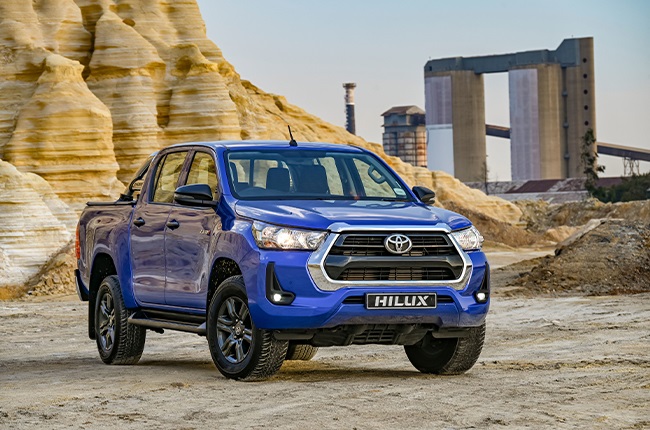
June has come and gone, and the sales figures for the month have been tallied and confirmed. The Toyota Hilux was once again the best-selling vehicle in South Africa, selling a total of 3 320 units in June.

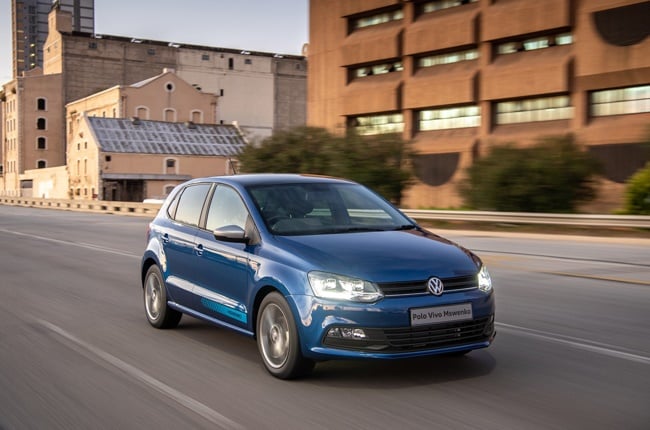
Volkswagen's Polo Vivo gets the wooden spoon with 1 636 models finding new homes, but if you combine it with the bigger Polo's 1 418, it equates to a total figure of 3 054 - 266 behind the Hilux.

The list also includes a number of newcomers like Toyota's Starlet (1 165 units sold), Nissan's Magnite (532) and Haval's Jolion (708) that held their own against other established competition.

 
Opel to go EV-only by 2028 as Stellantis ramps up electrification

Group outlines plan to expand its EV offering; Opel and Vauxhall EV-only by 2028, with new Manta confirmed

Stellantis will invest more than $30 billion (£21.8bn) in new electrification and software technology by the end of 2025, with a commitment to offering EVs models from all of its 14 brands and investing in five battery factories. Opel will become an all-electric brand in Europe by 2028.

The company – whose brands are Abarth, Alfa Romeo, Chrysler, Citroën, Dodge, DS, Fiat, Jeep, Lancia, Maserati, Opel, Peugeot, Ram and Vauxhall – has targeted low-emissions vehicles (LEV) accounting for more than 70% of its European sales and 40% of its US sales by 2030.

The plans were outlined during the Stellantis EV Day event, where the firm made a series of new commitments to electrification and reaffirmed previous pledges.

Opel will become an electric-only brand in Europe by the end of 2028, while also expanding into the Chinese market with a range of EVs. The German brand has also confirmed that it will revive the Manta name for a new EV.

Peugeot has also committed to accelerating its EV sales.

https://www.autocar.co.uk/car-news/...ev-only-2028-stellantis-ramps-electrification
 
BMW vs Mercedes: Here’s who sold the most cars in first half of 2021

Despite the semiconductor chip shortage, the world’s top-selling luxury car brands BMW and Mercedes showed some encouraging global sales growth in the first half of 2021, following the pandemic-related horrors of 2020.

BMW, in fact, achieved an all-time first-half sales record of 1 339 080 vehicles across its brands, including Mini and Rolls Royce. In fact this figure was also a good 7,1 percent higher than in pre-crisis year 2019.

The Bavarian carmaker also managed to narrowly beat its arch rival from Stuttgart, with the BMW brand alone accounting for 1 178 292 sales, while Mercedes-Benz recorded 1 162 471 unit sales for its passenger car range.

BMW enjoyed a greater lead in the South African sales race, according to figures released by Naamsa, with 6664 units sold in the first half of 2021, while Mercedes-Benz SA managed 5206. That works out to a monthly average of 1110 for BMW and 867 for Mercedes, for the record.

When looking at South African exports, however, Mercedes edged ahead with 30 500 C-Class exports versus BMW’s 29 526 exports of its X3, however the East London based plant would no doubt have achieved even greater export numbers were it not for the changeover between the old and new C-Class models.

 
Stellantis plans to make EVs affordable by 2026

Stellantis wants to put the world on battery-powered wheels and to that effect the newly formed global automotive giant is investing 30 billion euros (around R500 billion) in electrification and software development between now and 2025.

This will take place across its 14 vehicle brands, which include Fiat, Alfa Romeo, Lancia, Maserati, Chrysler, Dodge, Jeep, Ram, Opel, Peugeot and Citroen. The end result, it hopes, will be low-emission vehicles accounting for over 70% of its European sales by 2030.

To achieve this, Stellantis has announced four electric-focused modular platforms to underpin its future vehicles, these being STLA Small with a range of up to 500 km, STLA Medium that enables up to 700 km of range as well as STLA Large and STLA Frame (AKA bakkie platform), which both target 800 km between charges. These platforms are designed with a high level of flexibility in terms of vehicle size and will save the company money through extensive component sharing.

At the other end of the scale, however, Stellantis will also concentrate on bringing more affordable battery-powered passenger cars to market. To that end, the company is hoping to reduce the cost of electric vehicle battery packs by 40 percent by 2024 (vs 2020), and by an additional 20 percent by 2030.

To that end, the auto giant released the following statements, defining the electrification approach for each brand:
  • Abarth – “Heating Up People, But Not the Planet”
  • Alfa Romeo – “From 2024, Alfa Becomes Alfa e-Romeo”
  • Chrysler – “Clean Technology for a New Generation of Families”
  • Citroën – “Citroën Electric: Well-Being for All!”
  • Dodge – “Tear Up the Streets… Not the Planet”
  • DS Automobiles – “The Art of Travel, Magnified”
  • Fiat – “It’s Only Green When It’s Green for All”
  • Jeep – “Zero Emission Freedom”
  • Lancia – “The Most Elegant Way to Protect the Planet”
  • Maserati – “The Best in Performance Luxury, Electrified”
  • Opel/Vauxhall – “Green is the New Cool”
  • Peugeot – “Turning Sustainable Mobility into Quality Time”
  • Ram – “Built to Serve a Sustainable Planet”
  • Commercial Vehicles – “The Global Leader in e-Commercial Vehicles”

Snip.jpeg
 
Fastest New Cars Under R500k in SA (2021)

We love our stats and trump-card figures in South Africa and the 0-100 kph benchmark is always a firm favourite. We take a closer look at the 10 fastest-accelerating cars in South Africa for under R500 000. Start your engines…

Unless you’re on an unlimited budget, chances are that you’re looking for value-for-money in your choice of wheels. Car enthusiasts have an inclination towards performance and if you have R500 000 to spend and are looking for the fastest cars to dash to 100 kph, you have come to the right place.

Here are the fastest accelerating cars for under R500k in SA. Prices are accurate as of July 2021.

Top 10 fastest new cars under R500k

1. Volkswagen Polo GTI – 6.7 seconds

2. Abarth 500 595 Turismo 1.4T – 7.3 seconds

3. Alfa Romeo Giulietta 1.4T – 7.7 seconds

4. Suzuki Swift Sport 1.4T – 8 seconds

5. Toyota Corolla 2.0 XR – 8 seconds

6. Mini Cooper Hatch 3-door – 8.1 seconds

7. Volkswagen T-Roc 1.4 TSI 100kW Design – 8.4 seconds

8. Volkswagen T-Cross 1.5 TSI 110kW R-Line – 8.5 seconds

9. Opel Corsa 1.2T Elegance – 8.7 seconds

10. Peugeot 208 1.2T Allure auto / GT – 8.8 seconds


https://www.cars.co.za/motoring-news/fastest-new-cars-under-r500k-in-sa-2021/40981/
 
SA hatch and sedan market slowly shrinking, while SUVs gain ground

It’s a well known fact that vehicle buyers are increasingly moving towards SUVs and bakkies, at the expense of traditional passenger car body styles like sedans. But just how quickly is the market shifting?

We got a little insight into this during a recent Hyundai launch presentation, where year-to-date sales numbers for the various passenger vehicle segments were shown to local media. It showed that, year-to-date in 2021, five-door hatchbacks had a 2,3% smaller share of the passenger car market versus the same period in 2020, while sedans lost 2,8%. Cabriolets lost 0,1% of their market share, while three-door hatchbacks, coupes and estate cars remained the same, percentage wise at least. Just as you’d expect, the SUV and crossover market showed some robust growth, gaining 3,8 percent of the sales pie to account for 45% of passenger car sales, versus 41,2% a year ago. Five door hatchbacks accounted for 38,2% of the car market, while sedans managed a 6,5% share.

It’s not surprising that SUVs are gaining market share, as this year has seen a flood of new entrants with relatively affordable price tags. These include the Suzuki Vitara Brezza and its Toyota Urban Cruiser twin, as well as the Nissan Magnite and Kia Sonet – all imported from India. And there is more to follow in this genre, with Renault set to launch its new Kiger (a relative of the Magnite) later this year.

https://www.carmag.co.za/news/sa-hatch-sedan-market-slowly-shrinking-suvs-gain-ground/
 
Volkswagen SA reports improved year-on-year sales for H1 2021

As the first half of 2021 comes to a close, Volkswagen SA reports an improvement of year-on-year sales with 32 603 units finding new homes. With its commercial arm included, the most popular product in its stable remained the Polo Vivo.

For the first six months, Volkswagen SA confirms a total of 29 772 passenger car and 2 881 commercial car sales. This is 6 825 units more than the previous year which was severely affected by the hard lockdown due to the COVID-19 pandemic. With these results, the brand leads the local passenger car market with a market share of 24,4 per cent.

“The automotive industry has been severely affected by the worldwide shortage of semi-conductor chips and vehicle transportation related challenges this year, so to have increased our sales from last year is a remarkable achievement. I would like to commend the Volkswagen Dealer Network which accounted for over 70 per cent of our sales in the first six months of 2021,” said Steffen Knapp, Head of the Volkswagen passenger cars.

The locally built Volkswagen Polo Vivo remained the country’s best-selling passenger car with a total of 11 560 units sold in the first six months of this year. The Polo flew the flag high as well with a result of 9 045 units.

https://www.carmag.co.za/news/industry-news/volkswagen-sa-sales-h1-2021/
 
OPINION | Why you should buy a brand-new car a year or so after it goes on sale

• New vehicles generally have little to no issues, but there have been exceptions.

• The Moose Test is a test commonly used to test a vehicle's dynamics.

• Facelifted models generally have improvements over the models they replace.

Have you ever purchased something brand-spanking-new only to find out that, surprisingly, there's a fault of some sort as soon as you've used it? Although that is something of a rare occurrence in today's age with the vast upgrade in technology, vehicles sometimes go through the same thing.

In 2004, when Volkswagen launched the fifth-generation Golf GTI, the first slew of DSG-equipped models off the production line saw many customers experience issues with their gearboxes. In the years that followed, the transmission issues began to dwindle down because as more models came out of the factory, their fault was located and solved.

Manufacturers typically use their debut models as still a work in progress because most of the time, there is always a facelifted or improved version that follows a few years after.

 
Most Fuel Efficient Diesel Cars in SA (2021)

We’ve compiled a series of articles dedicated to fuel efficiency because it’s one of the most important criteria to factor into your decision when looking to buy a new car. Here are the most fuel efficient diesel cars currently available in South Africa!

With fuel prices consistently on the rise in South Africa, new car buyers will be wise to place increasing emphasis on fuel efficiency when shopping for a new car.

A fuel-efficient car will help you save money at the pumps over time and diesel cars are generally considered to be more frugal than their petrol-powered counterparts. The amount of fuel you save while driving will depend on a number of critical factors including your driving style, road conditions and mechanical condition of the car, to name a few. It is also worth noting that the list below is compiled based on manufacturer claimed fuel consumption figures.

Prices are accurate as of July 2021.

Most Fuel Efficient Diesel Cars in South Africa

1. Ford Fiesta 1.5 TDCi – 3.3 L/100 km

2. BMW 2 Series 220d Automatic / 4 Series 420d Coupe / Gran Coupe Automatic – 4.0 L/100km

3. Nissan Qashqai 1.5 dCi – 4.2 L/100km

4. Mahindra KUV100 Nxt 1.2 D75 K6+/ K8+ – 4.3 L/100km

5. Opel Crossland X 1.6TD Enjoy – 4.4 L/100km

6. Mercedes-Benz CLA 220d – 4.4 L/100km

7. Volvo S90 D4 – 4.4 L/100km

8. Mercedes-Benz A200d / B200d – 4.5 L/100km

9. BMW 320d – 4.6 L/100km

10. Ford EcoSport1.5 TDCI – 4.6 L/100km


The data is in: Here's which vehicles South Africans searched for most in 2021 to date


• AutoTrader released its mid-year report on local used-car searches.

• The data relays information on which vehicles prospective are interested in most.

• More than 319 million searches were conducted between January and June 2021.

AutoTrader has released its mid-year reporton data accumulated over 2021's first six months. The data relays South Africans' search patterns and interest in vehicles on the used-car market. According to AutoTrader, more than 319 million online vehicle searches were conducted in 2021's first half - an all-time record high.

The searches made by South Africans cover a variety of vehicles and body types, all ranging in a wide price band. And though the majority of searches are of vehicles powered by internal combustion engines, locals' interest in electric vehicles (EVs) have increased as well. It is a good sign of our countrymen's uptake of electric mobility as the world moves in this direction. The local market is also recovering well from the damning effects of Covid-19 and the subsequent lockdown, and consumers' trust has taken a strong uptake in 2021.

AutoTrader CEO George Mienie explains: "Following the recovery of a disrupted South African auto market, the industry focus now needs to shift to forging a path towards the new normal, one that ensures sustainability for the long term. Car shopping behavioural patterns and journeys were analysed, leading to insights into which makes, models and for the first time in South Africa, which variants (including trim level data) have become important to car-buying consumers."

 
SA’s best-selling double cab bakkies: 1st half of 2021

The sales numbers are in for the first six months of 2021 and if we narrow the bakkie focus down to double cabs, it was a very close race between Toyota and Ford.

According to Lightstone Auto, the Toyota Hilux emerged as South Africa’s best-selling double cab, with a total of 9 251 units sold between January and June this year. The Ford Ranger double cab range followed closely, with 9 170 sales. Isuzu was third with 4 024 D-Max DC sales. That represents a monthly average of 1 541 units for Toyota, 1 528 for Ford and 671 for Isuzu.

Toyota enjoyed a far more dominant lead in the ‘cab-and-a-half’ sales race, with the Hilux Xtra Cab line-up attracting 3 416 sales, versus 1 110 for the Ford Ranger Super Cab and 515 for Isuzu’s D-Max Extended Cab.

Toyota also enjoys a considerable lead when it comes to single cabs, with its Hilux workhorse range accounting for 7 144 units in the first half of 2021, with Isuzu taking second place with 3 576 sales and Mahindra’s Pik-Up following in third with 1 585 sales. Ford’s single cab Rangers emerged in fourth place, with 1 234 sales.

With all the body configurations combined, Toyota sold 19 818 Hilux bakkies in the first half of 2021, versus Ford Ranger (11 514), Isuzu D-Max (8 116) and Mahindra Pik-Up (2 146).

 
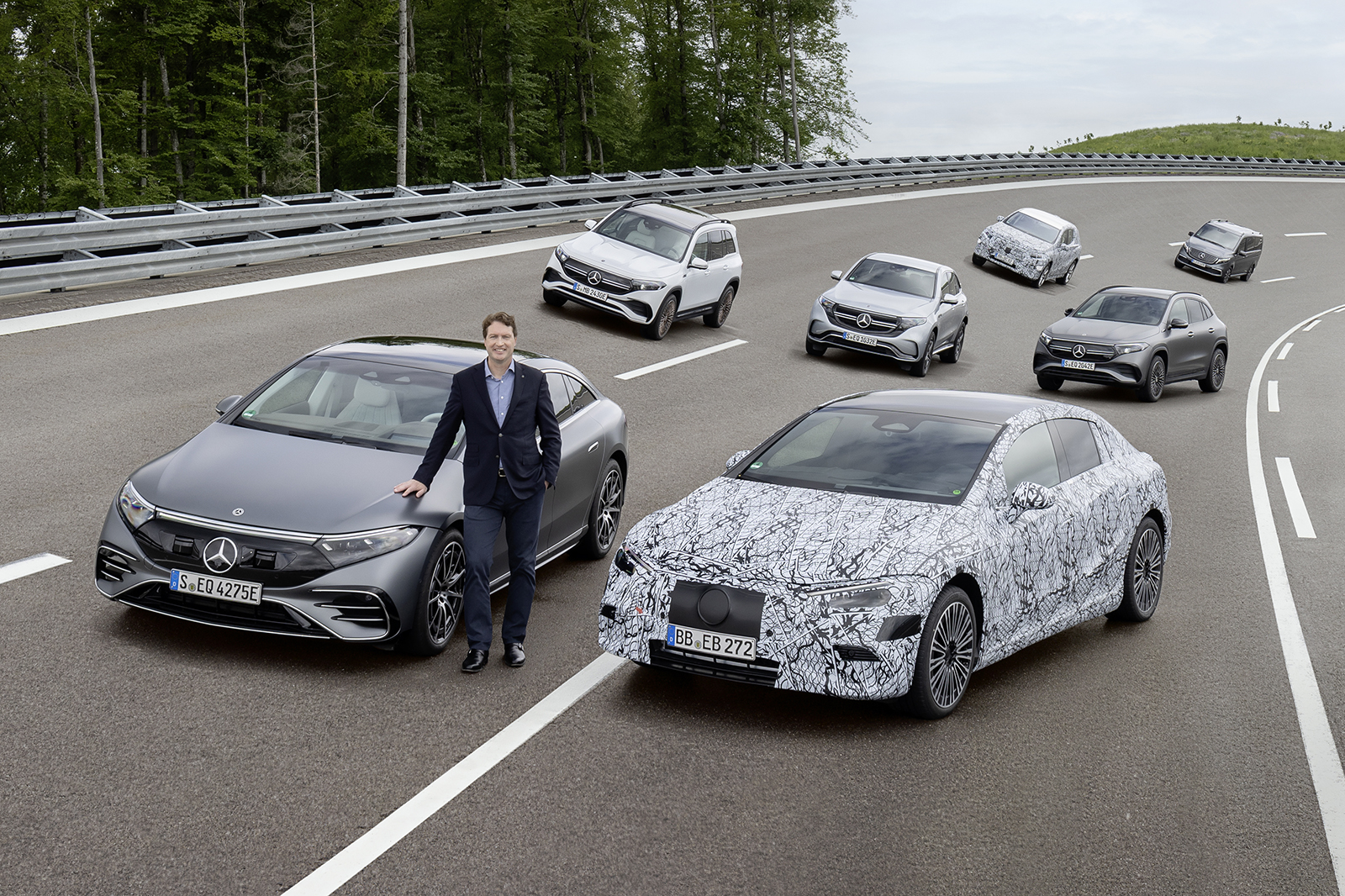
Every Mercedes-Benz model to have full-EV option from 2025

Mercedes details radical plan to go all-electric by 2030, detailing trio of new EV platforms

Mercedes-Benz has revealed an ambitious plan to go all-electric by 2030 "where market conditions" allow.

EV options in all segments

Accelerating a number of targets revealed in its earlier 'Ambition 2039' strategy, the firm will now offer a battery-electric vehicle in all segments from 2022, and in 2025 will offer an EV option for all its models.

Following the launch of the new MMA EV architecture for small vehicles in 2024, all Mercedes platforms developed will be EV-only, and in 2025 it will launch three all-new architectures catering to its entire portfolio.

The new MB.EA platform will underpin medium and large passenger vehicles, such as SUVs, AMG.EA will – as the name suggests – be developed by Mercedes' in-house performance division for future electric sports cars, while the Van.EA platform will be used for light commercial vehicles (LCVs).

Following the 2021 launch of the EQA, EQB, EQS and EQV, Mercedes will launch the new EQE saloon, EQE SUV and EQS SUV in 2022, giving it a total of eight full-EVs in the passenger car segment.

Two new versions of the EQS saloon are also due imminently: an AMG-badged performance option and a Maybach luxury range-topper.

Long-range plug-in hybrid models like the new C300e – which has a claimed EV range of 62 miles – will continue to play an important role in the brand's product strategy, it said, but "more and more customers are switching" to pure EVs, so it has accelerated its transition to support the shift.

 
Mercedes-Benz will be ready to go all electric by 2030

In response to the upcoming Euro 7 regulations and drastic changes in the current global automotive market, Mercedes-Benz has clarified that it will be ready to go all electric by the end of the decade where market conditions allow. Shifting from electric-first to electric-only, the German manufacturer reveals that it is accelerating toward an emissions-free and software-driven product focus.

Mercedes-Benz says that by 2022, it will have battery electric vehicles in all segments that the company caters to and that by 2025, all newly launched vehicle architectures will be electric-only and customers will be able to choose an all-electric alternative for every model the company makes. By this time, three electric architectures will be part of its stable. Mercedes-Benz intends to manage this accelerated transformation while sticking to its profitability targets.

“The EV shift is picking up speed, especially in the luxury segment, where Mercedes-Benz belongs. The tipping point is getting closer and we will be ready as markets switch to electric-only by the end of this decade,” said Ola Källenius, CEO of Daimler AG and Mercedes-Benz AG. “This step marks a profound reallocation of capital. By managing this faster transformation while safeguarding our profitability targets, we will ensure the enduring success of Mercedes-Benz. Thanks to our highly qualified and motivated workforce, I am convinced that we will be successful in this exciting new era.”


MB.jpeg
 
Volkswagen wants to unseat Tesla as global EV leader by 2025

Volkswagen CEO Herbert Diess used this year’s Annual General Meeting, held on Thursday 22 July, to present the new 2030 strategy that will set the company up for the biggest transformation in its history.

But the German auto giant plans to become a dominant player in the zero-emissions game long before that. In a statement released on Thursday, Volkswagen said it was striving to become the global leader in battery electric vehicles by 2025. The company has already launched its initial family of ID-badged electric vehicles built on the MEB modular EV platform, these being the ID.3, ID.4, ID.5 and ID.6, with the ID. Buzz ‘Kombi’ due next year. However, the company has plans to expand on this with the most comprehensive product portfolio in the industry, which of course also includes other Group brands.

“With the Trinity future project, Volkswagen is introducing Artemis technology into the volume segment, as it has already done with the Modular Electric Drive Toolkit (MEB).”

“Innovativeness, technological expertise, speed and size will gain importance in the future,” Diess added. “Backed by its ability to scale platforms globally, the Volkswagen Group intends to further expand its share of the e-mobility market.”

 
Top
Sign up to the MyBroadband newsletter
X