The SA Vehicle Industry Thread

Toyota South Africa sales decline during July 2021 due to civil unrest

Sales for Toyota South Africa saw a decline over the month of July this year. The Japanese manufacturer describes this period as one if hardest months since the country emerged from the COVID-19-induced hard lockdown last year.

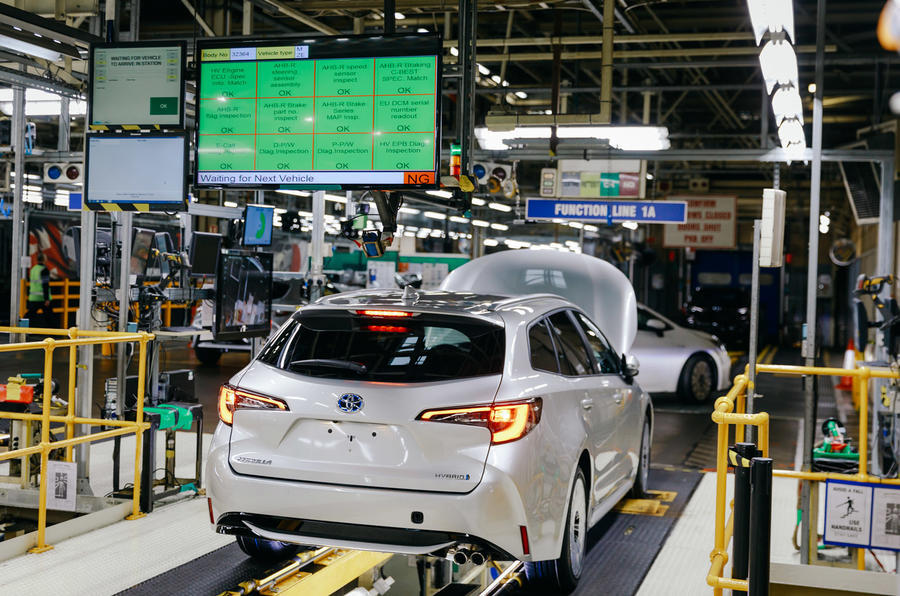
With a total of 8 320 units sold, Toyota South Africa explains that the civil unrest that affected KwaZulu-Natal and parts of Gauteng last month hampered business operations at its Prospecton Plant for about a week while operations at many dealerships had to be suspended. In June 2021, the brand confirmed a total sales figure of 9 630 units.

The situation also impacted the delivery of new vehicles as well as the parts supply in the affected areas. Despite these challenges, Toyota was able to register a market share of 25 per cent in July. Holding up the figures once again was the Hilux and Quantum which sold 2 836 and 1 205 units respectively. The passenger car offerings filled in the rest with the Starlet selling 747 units, the Fortuner 685 units, Urban Cruiser 646 units and the Corolla Quest, hatch and sedan amassing to a combined 600 units.

Lower down the line, the Land Cruiser pick-up brought in 247 sales while the Prado and FJ Cruiser sold 69 and 14 units respectively. Tidying the total number up was the GR Supra of which three units were sold.


 

Toyota’s net profit surged by 460 percent in the first quarter

Toyota announced on Wednesday that its net profit had jumped more than 460 percent in the first quarter of 2021, boosted by strong sales fuelled by the recovery from the coronavirus crisis.

The world's top-selling car manufacturer logged a 897.8 billion yen (R117 billion) net profit for the three months to June, a record for the first quarter and up from 158.8 billion yen in the same period last year.

But it left its full-year net profit forecast unchanged at 2.3 trillion yen, citing "uncertainties in and after the second quarter".
Toyota has bounced back quicker from the impact of the Covid-19 pandemic than its competitors, reclaiming the title of top-selling carmaker last year.

Last week, it said group global sales hit a record high for the six months to June, thanks to healthy demand for its Highlander and Camry models in the United States and Corolla and Lexus models in China.

 
SA car sales | The 'perfect storm' caught a recovering automotive sector off guard - NADA

• July 2021 was a difficult sales month for South Africa's automotive sector.

• While sales were 1.7% up on July 2020, civil unrests did the industry no favours.

• Year-to-date, more than 260 000 new vehicles have been sold in South Africa.

After studying the latest vehicle retail sales figures distributed by Naamsa, July saw the South African economy being hit by the 'perfect storm', and the impact on the motor industry was huge.

The effect is not limited to July and will, in all likelihood, have an ongoing adverse impact for several months to come. Dealers face stock shortages, while local manufacturers battle to keep production going due to disruptions in the component supply chain caused by global semi-conductor shortages and the cyber-attack on the port operating systems. The disruptions in KwaZulu-Natal and parts of Gauteng and the reimposition of Level 4 Lockdown further compounded any sales momentum 2021 had built up.

However, the sales figures are certainly not as bad as we had feared, with the total aggregate sales in July of 32 949 units being slightly better - 1.7% up - than the situation a year ago. Dealers also did well again, being responsible for an estimated 86% of sales, with rental companies taking an encouraging 9.2%, while 2.7% of sales went to corporate industry fleets and 2.1% to the government. On a year-to-date basis, our total sales after seven months of 2021 stand at 260 466 units, which is 33.7% higher than at the same time last year, which is heartening.

Another blow for the industry at the end of the month was the passing of Dr Johan van Zyl, Executive Chairman of Toyota SA Motors. Fortunately, he had the satisfaction of knowing the high esteem in which his colleagues and the broader industry held him during his life. His inspiring leadership has created a company with an enviable reputation both in South Africa and abroad. As we reflect on the high standards he advocated, we are reminded of the many benefits dealers, and the broader automotive ecosystem, enjoyed. He was a true inspiration to many who had the privilege to know and work with him.

 
Pandemic. Lockdown. Civil unrest. Last “roll of the dice” for SA auto industry?

While the latest indicators for the second quarter of 2021 suggest an uptick in the local car market, the combined effects of the latest third wave lockdown and civil unrest could hit the South African automotive industry hard in coming months, with potential knock-on effects for the economy, warns TransUnion.

According to the latest TransUnion SA Vehicle Pricing Index (VPI), total financial agreement volumes in the passenger market increased substantially year-on-year, with a 64 percent rise in Q2 2021 over the lockdown-affected Q2 2020, which saw the local industry register no sales in April 2020. However, these ‘green shoots’ could be wiped out by the latest level 4 regulations and July’s civil unrest, which severely disrupted motor manufacturing operations and supply chains, says Kriben Reddy, vice president of auto information solutions for TransUnion Africa.

“Where 2020’s level 5 lockdown created a demand issue in the market, the combination of the 2021 level 4 lockdown and civil unrest have created both demand and supply issues, with motor manufacturers suspending operations and supply chains coming to a halt. The knock-on effects could be significant: if manufacturers aren’t building, selling and exporting cars, they need fewer people, which leads to greater unemployment and a major setback for an industry which contributes 6.7 percent to GDP,” Reddy expounds.

 
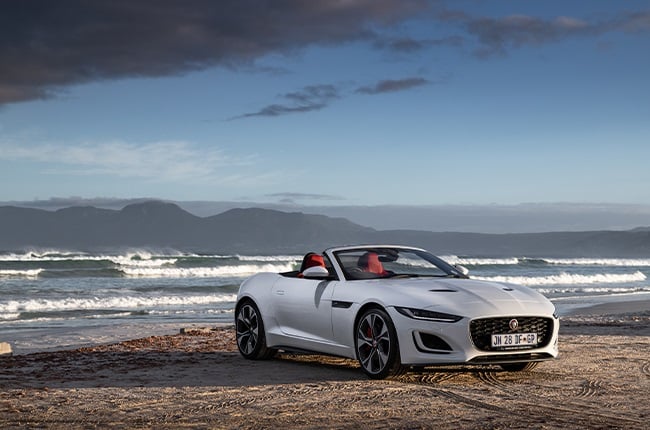
SA car sales | Here's how many vehicles Jaguar Land Rover sold in July

• Jaguar Land Rover sold 230 new vehicles in July 2021.

• The Land Rover Defender was the Group's best-selling vehicle on 47 units sold.

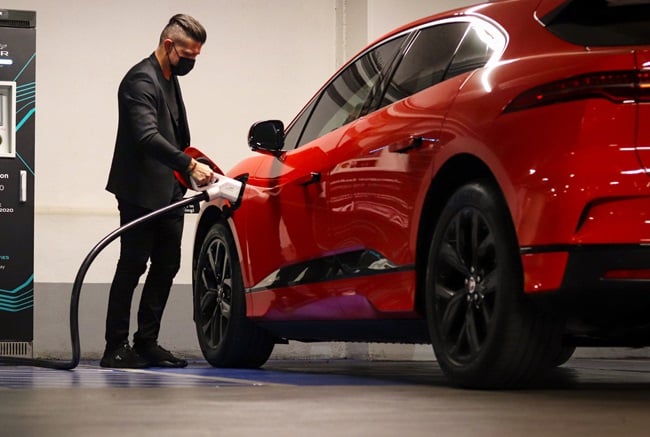
• The all-electric I-Pace managed to sell three units.

Jaguar Land Rover is one of the premium players in the local automotive scene. Their vehicles offer the best of British automotive technology, and South Africans do not doubt how good their vehicles are.

In July 2021, 32 949 new vehicles were sold in South Africa, which, according to Naamsa, the local Automotive Body Council, is a 17% growth over the corresponding period in 2020. Of the almost-33 000 new vehicles sold in July, Jaguar Land Rover sold 230 vehicles. Though this might not seem like a significant number, the Group stands to make a pretty penny when you consider that the most affordable vehicle in its portfolio retails for R785 024.

Here's the breakdown of Jaguar Land Rover's sales figures in July 2021.

 
10 cheapest new automatic cars for sale in South Africa today

While we’re big fans of the manual gearbox here at CARmag.co.za, we’re also acutely aware it’s no fun sitting in heavy traffic with three pedals. So, we decided to take a look at South Africa’s 10 cheapest new automatic cars for sale. Bear in mind, of course, there are plenty of options on the used market if the idea of a budget hatch doesn’t quite appeal to you (you get what you pay for, after all)…

10 – JMC Landwind 5 2,0T Lux auto – R224 995

9 – Hyundai Grand i10 1,0 Motion auto – R222 500

8 – Suzuki Swift/Dzire 1,2 GL auto – R214 900

7 – Datsun Go 1,2 Lux auto – R210 700

6 – Kia Picanto 1,0 Start auto – R203 995

5 – Toyota Agya 1,0 Auto – R192 500

4 – BAIC D20 Hatch/Sedan 1,5 Fashion auto – R189 990

3 – Suzuki Celerio 1,0 GL auto – R185 900

2 – Renault Kwid 1,0 Expression auto – R172 900

1 Suzuki S-Presso 1,0 GL+ auto – R168 900


US government wants half of car sales to be zero-emission by 2030

With executives from the Detroit automakers watching, President Joe Biden on Thursday announced a target for half of all cars sold in the United States to be zero-emission vehicles by 2030.

Biden cast the move as a way to compete with China and other countries that have invested in electric vehicles (EV), while also transforming the US transportation sector, which is the biggest source of the country's carbon emissions.

Speaking at the White House before an array of electric cars, Biden called them "a vision of the future that is now beginning to happen, a future of the automobile industry that is electric, battery electric, plug-in hybrid electric, fuel cell electric."

"It's electric and there's no turning back. The question is whether we'll lead or fall behind," he said.

News of the announcement drew modest praise from environmentalists, who stressed the need for additional measures given the worsening climate situation.

https://www.iol.co.za/motoring/indu...-by-2030-06efec65-97f4-40f9-a7bf-d1ab8a1c7ec6
 
Volvo halts production in Gothenburg due to chip shortage

Volvo Cars will temporarily stop production at its Swedish plant in Gothenburg due to the shortage of semiconductor chips, the Geely-owned carmaker said on Wednesday.

A global chip shortage has hit manufacturing, with carmakers cutting down on production and electronic device makers struggling to keep up with a pandemic-led surge in demand for phones, TVs and gaming consoles.

"Production at Torslanda will be paused temporarily from this evening due to a material shortage linked with the semiconductor issue," Volvo Cars said in an emailed statement.

"Production will restart as soon as possible, at the latest before next week," the Swedish carmaker, which in June halted production at its Belgian plant in Ghent for a week, said.

 
Volvo production halted at Swedish plant due to semiconductor shortage

Volvo is the next manufacturer in line to halt production due to the ongoing semiconductor shortage. The Swedish manufacturer confirms that operations at its plant near Gothenburg will be on hold momentarily.

As Automotive News Europe reports, a Volvo spokesperson said “Production at Torslanda will be paused temporarily from this evening due to a material shortage linked with the semiconductor issue,”

The Volvo spokesperson confirmed that output will restart “as soon as possible, at the latest before next week.”

The semiconductor issue has been ongoing since the hard lockdowns implemented globally due to the COVID-19 pandemic placed a strain on production for many manufacturers. It’s understood that this crisis will continue to leave its mark well into 2022 and possibly even further on.

David Leggett, Automotive Analyst at GlobalData, a leading data and analytics company, claims that this shortage will affect automotive production well into 2022.

“Daimler’s warnings today are the latest in a long line of warnings and actions from vehicle companies being adversely impacted by shortages of semiconductor components. Without critical semiconductor components that govern multiple areas of vehicle functionality, vehicles are simply not able to be finished for sale,” Leggett says.

“The electronic content in modern vehicles is estimated to account for some 30 per cent of a bill of materials, with the prospect of that increasing to 50 per cent by 2030. As a result, automotive production is as reliant on computer chips as the consumer electronics industry.


Mercedes-Benz V8-powered models suspended in select markets in 2022?


A memo that has been sent around the USA dealer network suggests that all Mercedes-Benz V8-powered models will be suspended for all of 2022 due to a supply chain issue. This includes offerings from the manufacturer’s AMG performance and premium Maybach stable.

A post found on reddit with an accredited memo supplied as proof suggests that these Mercedes-Benz V8-powered models include derivatives with the 63 and 580 nomination. The Mercedes-Maybach GLS600 has also been affected but the S580, both Benz and Maybach, will continue to be supplied.

Unfortunately for North American consumers, this includes models that have already been ordered for 2022. The 2021 year Mercedes-Benz V8-powered models will continue to be sold throughout the remainder of the year.

 
SA car sales | 6 key insights into how SA's motor industry is trading in 2021

• The AutoTrader mid-year report gives insight into the local car industry.

• Insights show where and how buyers spend their money.

Despite challenges the local motor industry faced - and is facing - in 2021, the first half of the year was a telling one for the used car market. AutoTrader released their mid-year car industry report, sharing important information on just how and where South African buyers are putting their money.

AutoTrader CEO George Mienie said when the report was published: "Following the recovery of a disrupted South African auto market, the industry focus now needs to shift to forging a path towards the new normal, one that ensures sustainability for the long term. Car shopping behavioural patterns and journeys were analysed, leading to insights into which makes, models and for the first time in South Africa, which variants (including trim level data) have become important to car-buying consumers."

Let's take a look at six key findings from the 56-page report.

 
Toyota to cut global production by 40% in September

Toyota said it will cut global vehicle production by 40 percent in September as the spread of coronavirus in Southeast Asia squeezes its supply chain. This came after Japan's Nikkei daily reported that the global chip shortage was also behind Toyota's planned reduction in new vehicles.

On Thursday the world's largest carmaker announced suspensions in operations at multiple Japanese plants next month due to a "parts shortage resulting from the spread of Covid-19 in Southeast Asia".

"We plan to reduce our global production by some 40 percent in September, from just under 900 000 originally planned," a Toyota spokeswoman told AFP.

The Nikkei said Toyota would also scale back production in North America, China and Europe from early September.

The Japanese giant's rivals have also been forced to slow or temporarily halt production due to the chip shortage.

 
Toyota cuts global production by 40 per cent due to semiconductor crisis

Toyota is the next manufacturer to have its global production affected by the ongoing semiconductor shortage. As a result of this, it is being forced to cut 40 per cent of its global production for a short period.

The models affected include the GR Yaris, Corolla, Prius, Land Cruiser Prado, 70 and 300, C-HR, and RAV4. These shutdowns will commence this month and carry on through to the end of September. Affected factories include those based in Japan, USA, Europe and other parts of Asia.

As Automotive News Europe reports, with this decision, it’s expected that the Toyota production run will decrease by 360 000 units in September alone. North American operations will lose out on 80 000 units, Europe 40 000 units and China 80 000 units. Asian operations will decrease by 8 000 units. Within Japan, 140 000 units will be lost to the cut backs.

Despite the worldwide suspensions, Toyota affirms that it is on-track with its production plan to build 93 million vehicles globally in the current fiscal year which ends in March 31, 2022. That total covers output only from Toyota and Lexus as it excludes Daihatsu and Hino.

“We have factored in risk factors in our annual plan. But as for September, the impact came sooner and deeper than expected,” Chief Communications Officer Jun Nagata said.

 
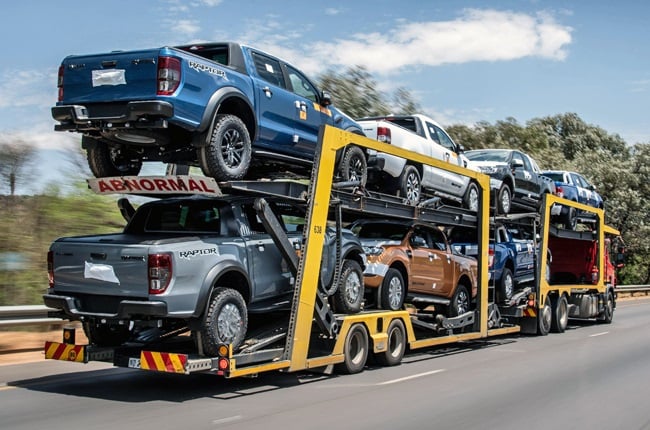
Toyota Hilux vs Ford Ranger: Here’s which bakkie sold the most in July ’21

Although July ended quite some time ago, we finally have an indication of how the double-cab bakkie race is going in South Africa with regards to the Ford Ranger and Toyota Hilux specifically. The information is based on what has been reported by Lightstone Auto.

Including the double-cab, extra-cab and single-cab body configurations, Lightstone confirms that the Toyota Hilux leads the race with a total sales figure of 2 836 units while the Ford Ranger lags a bit behind with a figure of 1 620 units.

The sales driver for the Toyota Hilux was the double-cab variant with a figure of 1 355 units sold. This was followed by the single-cab boasting a result of 1 043 units and the extra-cab with 438 units. The Ford Ranger’s most popular bodystyle was the double-cab as well with a reported sales figure of 1 303 units while the single- and extra-cab sold 165 and 152 units respectively.

Year-to-date, the Hilux is well in the lead with a total of 22 654 units reportedly sold. The Ranger challenges this with a result of 13 134 units.

 
World’s largest semiconductor manufacturer set to raise prices

Reports indicate that Taiwan Semiconductor Manufacturing Company could increase costs by as much as a fifth

The world’s largest semiconductor manufacturer, Taiwan Semiconductor Manufacturing Company (TSMC), is rumoured to be raising its prices by as much as 20%, dealing a further blow to a beleaguered car industry.

According to reports in The Wall Street Journal, TSMC is planning to increase costs for its most advanced chips by 10%, while less advanced items more commonly used in cars will rise by 20%. The newspaper stated that the price increase is set to come in either later in 2021 or in 2022.

Autocar approached TSMC for comment but the company declined to confirm or deny the reports, saying: “TSMC does not comment on pricing, nor market rumours.”

The news comes off the back of many car makers being forced to scale back production to cope with a lack of semiconductors.

Toyota was the latest to announce significant cuts to factory output, reducing its worldwide production levels for September. According to reports, the Japanese company intends to build 540,000 vehicles next month, 40% down on its initial target of 900,000.

 
Volkswagen could phase-out the manual gearbox by the end of this decade

A new report from Germany suggests that Volkswagen may be putting an end to its manual gearbox by the end of this decade as the manufacturer pushes forward towards a fully electrified line-up. The first models to do away with the transmission will be the Tiguan and Passat which are sold with the brand’s six-speed in select markets.

As Auto Motor Sport reports based on information from unnamed sources, this is partly due to the push towards electromobility as well as the diminishing demand for manual transmissions. According to market analyst JATO, of a total of 5 838 models across all manufacturers only 1 870 vehicles were sold with manual transmissions. 218 of these were five-speed and 1 652 were six-speeds. In a total of 353 units sold by Volkswagen, 214 are currently equipped with an automatic transmission including the DSG and 139 with a manual.

While not available in higher-end cars here in South Africa, manual transmission Volkswagen products act as entry-points for certain models such as the Caddy, Polo (including Vivo and Sedan), T-Cross and Transporter.

https://www.carmag.co.za/news/rumours/volkswagen-manual-gearbox-end/
 
Top
Sign up to the MyBroadband newsletter
X