The SA Vehicle Industry Thread

Cheapest Automatic Cars in SA (2021)

Looking for a chilled drive on a shoestring? We list the cheapest automatic cars available in South Africa.

If you are looking for the cheapest automatic cars in SA, then this list is for you! Sit back, relax and let the car do the work! Automatic cars have much to offer, especially if you live and travel within the confines of the city. Not only are automatic cars easier to drive but they also take the stress out of changing gears continuously, particularly if you crawl through traffic jams on a regular basis. Advances in transmission technology have also led to improvements in fuel efficiency, to the point where some automatic cars are actually more efficient than their manual siblings.

To make your life easier, we have created a list of the cheapest automatic cars currently on sale in South Africa, all of which are currently priced under R200k. When this list was first created back in January 2020, there were no less than 6 automatic cars to choose from under R200k. Now there are only 3!

Pricing is accurate as of July 2021.

Cheapest Automatic Cars in SA for Under R200k

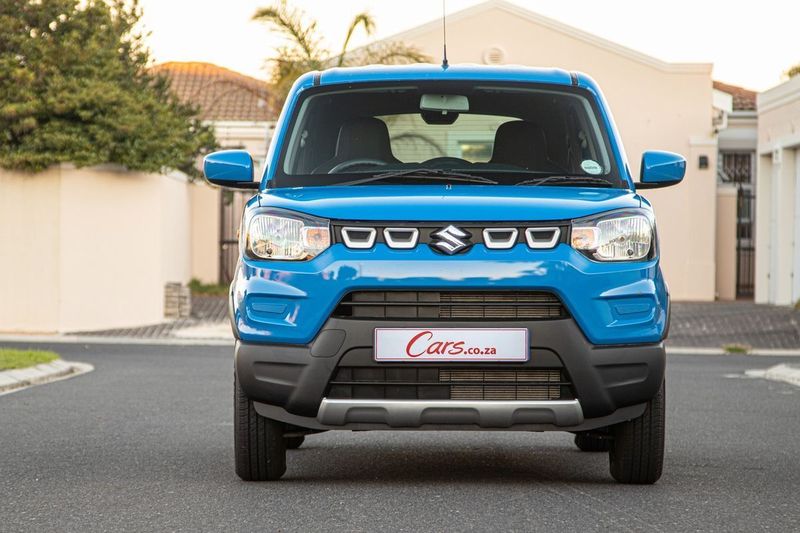
Suzuki S-Presso GL+ Automatic / S-Edition – From R168 900

Renault Kwid 1.0 Expression Automatic / Dynamique / Climber – From R172 900

Suzuki Celerio 1.0 GL Automatic – From R185 900

 
SA's most favourite vehicles in 2021? A German brand, a bakkie and a hot hatch

• BMW remains the most searched vehicle brand in South Africa.

• The Toyota Hilux remains the most desired vehicle by locals.

• Mercedes-Benz and Volkswagen are the next two most-searched brands.

BMW is still the most loved used car brand. The Toyota Hilux is the most desired model. And the Volkswagen Golf GTI is still the most searched for variant.

This is revealed in the 2021 AutoTrader Mid-Year Industry Report, which covers the first six months of this year. This document – which contains anything and everything from insights into the supply of used cars to the increasing demand for electric vehicles – provides precise data for the most searched for make, model and variants in the used car market in South Africa.

According to AutoTrader CEO George Mienie, the study confirms the immense popularity of the BMW brand.

"It remains the most searched for brand by far. However, the lead in searches that BMW traditionally enjoys has diminished further in the last six months. The German company's lead over the second-placed brand is getting narrower as consumers search and compare more brands in their consideration set," he reveals.

 
Industry insight: Here are the top 10 cars dealers get the most calls for in SA

If you hold even a passing interest in cars, you probably enjoy a touch of online window-shopping or browsing all manner of used vehicles you’re perhaps not entirely serious about buying. But which models do consumers actually show genuine intent to purchase?

Thanks to the 2021 AutoTrader Mid-Year Industry Report, we know the answer to that very question. According to the study, which looks at industry data collected in the first six months of the year, the used model that generates the most enquiries with dealerships is the Toyota Hilux.

Of course, this should come as no surprise, considering the venerable Japanese bakkie has long been South Africa’s best-selling new vehicle, meaning there are plenty of examples on the used market (it was also the most searched for model in the reporting period). Over the first half of 2021, AutoTrader’s figures show dealers received more than 93 000 enquiries on the Hilux.

The Ford Ranger is in second place, though the enquiry number is quite a bit lower at around 68 000. Interestingly, the Blue Oval brand’s bakkie has a slightly lower average list price (R373 948 versus the Hilux’s R412 688) and higher average mileage (94 919 km compared to the Toyota’s 91 680 km). Another strong seller on the new market, the Volkswagen Polo, places third, though its average mileage is lower still at 62 184 km.

The presence of the BMW 3 Series and Mercedes-Benz C-Class in fourth and fifth respectively is particularly interesting, considering these two German rivals aren’t nearly as popular on the new market as they were a handful of years ago (illustrated by an average year stretching back to 2015 for both). Clearly, there’s still strong demand for these premium sedans on the used market.


Snip.jpeg
 
Mercedes-Benz halts production in Germany due to semiconductor crisis

A new report claims that Daimler will be reducing production at three Mercedes-Benz facilities in Germany and temporarily halting outputs at Hungary. The reason for this is related to the current shortage of semiconductors.

According to information sourced from Automotive News Europe, the manufacturer has implemented short-time working shifts for employees at the brand’s Sindelfingen, Rastatt and Bremen plants in Germany.

Production in Rastatt will be reduced until the end of next week while Sindelfingen and Bremen will be restricted until the end of next week. The Kecskemet factory in Hungary, where most of its compact cars are built, will not produce cars for the next three weeks until mid-August.

Commenting on the situation, Daimler says that it cannot give a prediction as to when the supply shortage of needed semiconductor components will be resolved.

“The situation is still volatile and we are permanently reevaluating what this means for Mercedes-Benz production,” a Daimler spokeswoman told the publication.

In Sindelfingen, production has only been stopped in some areas as Mercedes-Benz will continue to build its highly profitable large luxury cars such as the S-Class, Mercedes-Maybach S-Class and the EQS full-electric sedan. Production of these cars has not impacted.


Volkswagen sees R31 billion operating profit for the first half of 2021

The Volkswagen passenger car brand has translated positive sales for the first half of 2021 with an operating profit of €1,8 billion (approximately R31,2 billion) being confirmed. Based on previous year’s results, the brand confirms a marked increase in deliveries, sales revenue and earnings.

Volkswagen says that thanks to efficient crisis management, strict cost discipline and systematic implementation of its “accelerate” strategy, its first half of this year was a successful one. Ongoing issues such as the COVID-19 pandemic and semiconductor shortage persist but the number of vehicles delivered worldwide rose to around 2,7 million units; 500 000 more than in the previous year.

Market share was also expanded in nearly all regions. Sales revenue climbed by 42 per cent year-on-year to €40,7 billion (R706 billion) on the back of significant growth in sales volume (H1 2020; €28,6 billion – approximately R496 billion). Earnings improved by €3,3 billion (R57 billion) year-on-year to around €1,8 billion (approximately R31,2 billion, giving an operating return on sales of 4,4 per cent.

 
Is 2021 a good year to buy a car?

If you are thinking of upgrading your car but are in two minds as to whether this is a good time to buy a car – do not feel alone.

2020 saw a great disruption of our economy due to the crippling effect of a global pandemic. While this is far from over, things are certainly looking up. Many forms of relief have been put in place, such as lower interest rates, small business relief funds and tax breaks, which have in fact created a much better climate to buy a car.

There are good deals when it comes to financing a car and there are great offers on previous models, browse over 10 000 cars on motus.cars, guaranteed not stolen or rebuilt. As an extra bonus, there are many 2021 models sporting new features and upgrades, from practical family cars to sport-hatch models, there is something for everyone.

Motus.cars, supported by Motus Ford (previously Imperial Select), provides 5 reasons why 2021 is proving to be a good year to buy a car:

https://www.iol.co.za/motoring/part...uy-a-car-9b9a97b6-5737-495b-8964-0f892eb79923
 
SA’s top-selling car brands in July 2021, a sales month thwarted by riots

The positive growth curve that the South African motor industry has enjoyed so far in 2021 came to an abrupt halt in July. According to industry body Naamsa, the new vehicle market was hindered by the looting in Kwa-Zulu Natal and parts of Gauteng, as well as the adjusted Level 4 lockdown and the cyberattack on Transnet, which affected both exports and imports.

According to Naamsa, a total of 32 949 vehicles were sold in South Africa last month, which represented a 15.4 percent decline versus June 2021. There was at least a small improvement of 1,7 percent over July 2020, although that comes off a low base given that back then the economy was still reeling from the first Covid wave and the associated uncertainty.

Given the aforementioned Transnet complications, exports suffered a far bigger blow in July 2021, decreasing by 33.1 percent year-on-year to 16 931 units.

On the local market, the passenger car market showed some encouraging signs, with sales for this segment increasing by 9.1 percent, something Naamsa attributes to rebounding rental sales, while the light commercial vehicle market saw a decline of 8.1 percent versus July 2020.

As you no doubt would have expected by now, Toyota dominated the local market by a fairly wide margin:

Top 10 vehicle manufacturers

Toyota - 8320
Volkswagen - 5078
Hyundai - 2698
Ford - 2360
Nissan - 2354
Suzuki - 1532
Haval - 1525
Renault - 1522
Kia - 1501
Isuzu - 1193

https://www.iol.co.za/motoring/indu...by-riots-8cf282f7-f39d-4e8e-ad34-cda37c89bf25
 
Top 10 Best Value Used Cars on Cars.co.za

In these tough economic times, South African car buyers are desperate to find good value, which is generating increased demand for quality, well-priced vehicles in the used car market.

We have analysed used car data which indicates that low-mileage vehicles priced at just under R290 000, which were first registered between 2016 and 2019, are the most popular cars on the site, which, at the time this report was compiled exceeded 70 000 used vehicles for sale.

“We looked at the number of enquiries put through to dealers during the past 90 days, rather than the majority of vehicles listed,” says Cars.co.za’s Consumer Experience Manager, Hannes Oosthuizen. “An enquiry, also called a ‘lead’, is, of course, an indicator of intent to purchase.”

A deeper analysis of the headline numbers (of vehicles first registered between 2016 and 2019) reveals that user enquiries about listed used cars that were first registered in 2017 and are priced between R200 000 and R300 000 represent the lion’s share of the lead volume (in fact, 24,4% of leads for vehicles first registered from 2016 to 2019 are from that price bracket).

“It comes as no surprise to find that the ‘R150 000 to R200 000’ and ‘R300 000 to R400 000’ brackets are the next biggest. For vehicles of this particular age (2016- to 2019 models), nearly 60% of leads fall into the price range of R150 000 to R400 000,” Oosthuizen says.

It is also clear that consumers who are shopping in the previously mentioned price and vehicle age categories (2016-2019 and R150 000-R400 000) are looking for low-mileage vehicles.

“A whopping 31,8% of leads are for vehicles with mileages of between 10 000 km and 50 000 km and the overwhelming majority (81,4%) of all leads put through in those categories are for vehicles with a mileage of less than 100 000 km,” he adds.

Top 10 Most Popular Used Cars on Cars.co.za

Based on lead volume during the past 90-day period, the most requested vehicles on Cars.co.za (with no limit on price and mileage) are the following;
  1. Volkswagen Polo
  2. Toyota Hilux
  3. Ford Ranger
  4. Volkswagen Polo Vivo
  5. Mercedes-Benz C-Class
  6. BMW 3 Series
  7. Nissan NP200
  8. Volkswagen Golf
  9. Toyota Fortuner
  10. Ford EcoSport

Info 1.jpegInfo 2.png
 
Will car sales ever recover in South Africa? NADA and WesBank weigh in

“The month of July saw the South African economy being hit by the ‘perfect storm’ and the impact on the motor industry was huge,” says Mark Dommisse, the Chairperson of the National Automobile Dealers’ Association (NADA), after studying the latest vehicle retail sales figures distributed by naamsa.

“The effect is not limited to July and will in all likelihood have an ongoing negative effect for several months to come. Dealers face stock shortages while local manufacturers battle to keep production going due to disruptions in the component supply chain caused by global semi-conductor shortages and the cyber-attack on the port operating systems, disruptions in KwaZulu-Natal and parts of Gauteng as well as the reimposition of Level 4 Lockdown,” Dommisse explains.

“However, the sales figures are certainly not as bad as we had feared, with the aggregate total sales in July of 32 949 units being slightly better – 1.7 percent up - than the situation a year ago. Dealers also did well again, being responsible for an estimated 86 percent of sales, with rental companies taking an encouraging 9.2 percent, while 2.7 percent of sales went to industry corporate fleets and 2.1 percent to government. On a year-to-date basis our total sales after seven months of 2021 stand at 260 466 units, which is 33.7 percent higher than at the same time last year, which is heartening.


Info 1.jpegInfo 2.jpegInfo 3.jpegInfo 4.jpeg
 

SA car sales | Here's which used electric vehicles spark the most interest at local dealers

• South Africans are growing more comfortable with the thought of owning an electric vehicle.

• EVs are too expensive for most South Africans, but this fails to curb keen interest.

• The Mini SE is currently the most affordable EV in the country.


How do South African consumers feel about fully electric vehicles (EVs)? It's an intriguing question with a multifaceted answer, as illustrated by the results of a dedicated EV survey included in the wide-ranging 2021 AutoTrader Mid-Year Industry Report.

Perhaps just as fascinating is the broader level of interest in battery-powered vehicles on the used market. Examining AutoTrader's data for the first six months of 2021, we find that hundreds of used EVs were listed, more than double the 92 units sold on the new market across the entire 2020. Furthermore, the number of EV enquiries received by dealers outpaced the number of listed vehicles by almost three to one, suggesting a surprisingly healthy appetite for such vehicles in the used sector.

The BMW i3 - which debuted in South Africa back in 2015 before gaining improved battery capacity and thus superior cruising range with an update late in 2018 - was the subject of as many as 111 450 searches in the reporting period. It accounted for more than 56% of total EVs listed and nearly 67% of total enquiries, making it the electric car that generated the most leads. Interestingly, 79% of respondents to AutoTrader's EV survey indicated they would be willing to spend up to half a million rand on an EV, just under the i3's average listed used car price of R535 292.


New Car Sales in SA: July 2021

Take a look at how new car sales performed in South Africa during July 2021.

There were a number of momentous events during July that had an effect on new car sales in South Africa. Disruptions due to unrest in KZN and parts of Gauteng, a shift to level 4 lockdown and the cyber attack on the local ports all proved to be the perfect storm for a horrid month of sales. The port closures heavily affected exports and imports resulting in a 33.1% drop in vehicle exports for the month.

There was however a small positive in terms of sales compared with July 2021 (1.7%). Passenger car sales contributed the most towards that number, while LCVs and bakkies saw an 8.1% drop vs the same period last year.

New Car Sales in SA July 2021

  • Aggregate new vehicle sales of 32 949 units up by 1.7% (+544 units) compared to the 32 405 units sold in July 2020.
  • Passenger car sales of 20 575 units up by 9.1% (+1 719 units) compared to the 18 856 units sold in July 2020.
  • Light Commercial Vehicle (LCV) sales of 10 266 units down by 8.1% (-899 units) compared to the 11 165 units sold in July 2020.
  • Export sales of 16 931 units down by 33.1% (-7 381 units) compared to the 25 312 units expired in July 2020.

Top 10 Best Selling Car Brands in South Africa for July 2021

  1. Toyota – 8 320 units
  2. Volkswagen – 5 078 units
  3. Hyundai – 2 698 units
  4. Ford – 2 360
  5. Nissan – 2 354 units
  6. Suzuki – 1 532 units
  7. Haval – 1 525 units
  8. Renault – 1 522 units
  9. Kia – 1 501 units
  10. Isuzu – 1 193 units
 

Top 3: South Africa’s best selling bakkies and cars in July 2021


Although the South African new vehicle market has been on the road to recovery throughout 2021, July presented something of a giant speed bump with the riots that tore through KwaZulu-Natal and parts of Gauteng, as well as disruptions at the country’s ports.

Overall vehicle sales declined by 15.4 percent versus the previous month to 32 949 units, according to Naamsa.

There were no surprises on the sales charts, however, with the Toyota Hilux once again dominating the bakkie market with 2 836 sales, according to figures provided by WesBank, and the Ford Ranger following with 1620 units. The Isuzu D-Max completed the one-tonne bakkie podium with 948 sales, although the Toyota Hiace was technically the third best-selling LCV with its tally of 1241 units.

On the passenger car front, the Volkswagen Poloemerged victorious with 1820 sales. It was followed closely by its Polo Vivo sibling (1619 units), while the Toyota Starlet emerged in third place with 747 sales. The Toyota Fortuner, which usually takes third spot, had a slower sales month, with just 684 units finding homes.

 
New vehicle exports in South Africa down 33,1 per cent for July 2021

New vehicle exports in South Africa have seen a significant decline in sales throughout the month of July this year. Compared to last month’s result, the number is down 33,1 per cent but with regards to year-to-date, this figure is promising.

With a total of 16 931 units being shipped abroad across manufacturers this month, Naamsa notes a decrease compared to last month’s figure of 25 312 units. Compared to July 2020 however, it is noted that an increase of 47,3 per cent has been experienced for new vehicle exports. It’s suggested that the adjusted alert level four lockdown restrictions placed on South Africa for the most of July together with the civil unrest and the cyber-attack on Transnet is to blame for this glaring decrease in performance.

“The devastating economic impact and unintended consequences of these actions not only caused a setback in the fight against the COVID-19 pandemic but could prolong the economic recovery process and also have a lasting impact on the country’s challenges of dealing with poverty, inequality, and unemployment”, said Naamsa CEO Mikel Mabansa,

“Physical damages to assets and property, lost sales orders as well as the cancellation of new developments in the automotive industry are estimated at well over R3 billion. Businesses and consumers already had to brace themselves for the significant price hikes in key living costs such as electricity, fuel, and municipal rates and taxes during July 2021.”

 
OPINION | July's civil unrests halted any gains new vehicle sales have made in 2021

• 32 949 new vehicles were sold in South Africa in July 2021.

• The sales figure is 1.7% better than the same period last year.

• The national protests and social unrests influenced vehicle sales last month.

The momentum being gathered by South Africa's new vehicle sales recovery was given a harsh blow in July as civil protests tore through large parts of the country. In addition, the majority of the sales month was spent in adjusted Level 4 lockdown, and the ongoing impact of stock shortages was exacerbated by disruptions in the logistics chain at ports.

July brought the fragility of the motor industry back into stark focus. Not only did the month bring physical impacts, but the resulting consequences in business and consumer confidence will continue to challenge the industry's recovery for months to come. Once again, the industry's resilience is being put to the test.

We remain optimistic, however, for the industry's continued recovery. Rejuvenating rental fleets, progress in the country's vaccination rollout programme, and revitalising the economy will contribute to building the South African motor industry. The industry needs to remain focused on delivery and the inevitable demand that will rise in the medium term.

 
Top
Sign up to the MyBroadband newsletter
X