The SA Vehicle Industry Thread

Most Fuel Efficient Budget Cars in SA

We list the most fuel-efficient, budget-friendly cars currently available in South Africa!

Fuel prices in South Africa continue to rise and household budgets remain under considerable pressure as the local economy embarks on a slow, arduous recovery from the effects of the ongoing Covid-19 lockdown. In the last 18 months, new car prices have increased significantly and new car buyers would be wise to consider fuel efficiency when considering purchasing a car. By considering fuel-efficient budget cars, you can literally save thousands of Rands every year!

In an effort to assist you in your decision-making process, we have created a fuel efficiency list that’s not only more relevant but also more diverse. Considering that most people can’t afford expensive cars, we decided to list the most fuel-efficient cars with an asking price under R300 000.

Note that claimed manufacturer fuel consumption figures are used here and that real-world consumption figures will differ depending on a number of factors such as driving style, road conditions and so forth.

Pricing is accurate as of October 2021. Here are the most fuel efficient budget cars available in South Africa.

Most Fuel Efficient Budget Cars in South Africa

3.8 L/100 km – Fiat 500 Dolcevita
4.3 L/100 km – Mahindra KUV100 Nxt 1.2 D75 K6+/K8
4.3 L/100km – Peugeot 108 1.0 Active
4.4 L/100 km – Renault Kwid Automatic
4.6 L/100 km – Suzuki Celerio 1.0 GL Automatic
4.8 L/100km – Toyota Agya 1.0 Manual
4.9 L/100km – Suzuki DZire / Suzuki S-Presso / Suzuki Ignis / Suzuki Swift
5.0 L/100km – Datsun Go Lux Automatic
5.0 L/100km – Kia Picanto 1.0 Manual / 1.2 X-Line Manual
5.0 L/100km – Mahindra XUV300 1.5TD W4 / W6
5.0 L/100km – Renault Kiger 1.0 Turbo Intens / 1.0 Turbo Zen

 
New Car Sales in SA: September 2021

The automotive sector showed further signs of recovery in September 2021 as sales improved dramatically in the passenger car sector. Exports however, remain under pressure.

The Automotive Business Council said that the new vehicle market continued its gradual recovery during the month of September but that the knock-on effects of the July 2021 looting disruptions as well as the cyberattack on Transnet operations were still visible on vehicle exports.

New Car Sales in South Africa for September 2021
  • Aggregate new car sales of 43 130 units up by 15.8% (5 893 units) compared to September 2020
  • New passenger car sales of 29 538 units up by 30.5% (6 895 units) compared to September 2020
  • New LCV sales of 10 943 down by 10.9% (762 units) compared to September 2020
  • Export sales of 12 202 units down by 50.7% (16 188 units) compared to September 2020
Best-Selling Car Brands in South Africa for September 2021
  1. Toyota – 10 936 units
  2. Volkswagen – 7 029 units
  3. Suzuki – 3 134 units
  4. Hyundai – 2 930 units
  5. Renault -2 520 units
  6. Nissan – 2 330 units
  7. Kia – 2 230 units
  8. Ford – 2 021 units
  9. Haval – 1 990 units
  10. Isuzu – 1 924 units
  11. BMW Group – 1 114 units
  12. Mazda – 579 units
  13. Stellantis – 534 units
  14. Mahindra – 461 units
  15. Honda – 438 units
 
New vehicle sales in South Africa up 15,8 per cent for September 2021

Naamsa confirms that new vehicle sales saw a noteworthy increase for the month of September 2021. This comes as a continuation of a gradual recovery since the COVID-19 pandemic started but knock-on effects of looting disruptions and the cyberattack on Transnet operations were still visible on vehicle exports.

Aggregate domestic new vehicle sales in September 2021, at 43 130 units, reflected an increase of 5 893 units, or 15,8 per cent, from the 37 237 vehicles sold in September 2020. Export sales recorded a decline of 16 188 units, or 57,0 per cent, to 12 202 units in September 2021 compared to the 28 390 vehicles exported in September 2020.

Overall, out of the total reported industry sales of 43 130 vehicles, an estimated 35 684 units, or 82,7 per cent, represented dealer sales, an estimated 12,4 per cent represented sales to the vehicle rental industry, 2,5 per cent sales to government and 2,4 per cent to industry corporate fleets, Naamsa notes.

The September 2021 new passenger car market at 29 538 units had registered an increase of 6 895 cars, or a gain of 30,5 per cent, compared to the 22 643 new cars sold in September 2020. The car rental industry supported the new passenger car market during the month and accounted for a solid 16,8 per cent of car sales in September 2021.

 
Petrol versus diesel used bakkies: How fuel efficiency differs

• We look at the most searched-for used bakkies on the SA car market.

• According to automaker data, the VW Amarok 2.0-litre TSI is the most fuel-efficient petrol bakkie in SA.

• The Toyota Hilux is the most frugal when it comes to diesel variants in SA.

While you're likely aware that diesel-powered double-cab bakkies are generally more fuel efficient than their petrol-driven counterparts, it's nevertheless interesting to examine just how significant that difference can be.

In order to do so, we'll take a look at the most searched for used double-cab bakkies on AutoTrader during the first eight months of 2021. According to the data, these are the derivatives that are most in demand on the used market.

"Bakkies are big business in South Africa, whether they're bought for commercial or leisure purposes. Regardless of their intended function, fuel economy can play a prominent role in consumer purchasing decisions," points out AutoTrader CEO George Mienie.

According to manufacturer figures, the most efficient petrol-powered double-cab bakkie on the list of most searched for variants is the Volkswagen Amarok 2.0TSI. While no longer available on the new market (its average listed registration year on AutoTrader SA is 2012), this turbocharged four-cylinder version of the German bakkie sips petrol at a claimed 9.6 litres per 100km.


Snip 1.pngSnip 2.png
 
New car market is growing: these were SA’s top-selling brands in September 2021

September 2021 was another positive month for the South African new vehicle market, with overall unit sales growing by 15.8 percent versus the same month last year, to total 43 130 according to The Automotive Business Council formerly known as Naamsa.

But while passenger car sales surged by 30.5% year-on-year on the back of a resurging car rental industry, bakkie sales took a battering last month, falling by 10.9 percent year-on-year.

According to Naamsa, 82.7% of new vehicle sales in September took place through the dealer channels, while the rental industry accounted for 12.4%, government 2.5% and corporate fleets 2.4%.

“New vehicle demand is starting to pick up with consumers, businesses and rental companies returning to the market,” Naamsa said. “However, many Covid-19 disruptive elements remain in play and prevailing market conditions have been hampered by higher logistics costs and supply chain disruptions, such as the global semi-conductor shortages impacting on the availability of certain models.

“However, it is encouraging that new vehicle demand seems to outstrip supply at present and the outlook for the balance of the year looks positive,” the association added.

These were the 10 top-selling brands in September 2021:

1. Toyota - 10 936
2. Volkswagen - 7029
3. Suzuki Auto - 3134
4. Hyundai - 2930
5. Renault - 2520
6. Nissan - 2330
7. Kia - 2230
8. Ford - 2021
9. Haval - 1990
10. Isuzu - 1924

https://www.iol.co.za/motoring/indu...ber-2021-df34d763-baa9-4d85-8dde-d9f60e9f7c10
 
SA car sales | New vehicle sales show impressive resolve, but used car demand is up

• More than 43 000 new vehicles were sold in September 2021.

• The number is 15.8% higher than the same period in 2020.

• Wesbank says that demand for pre-owned vehicles has also seen an increase.

The new vehicle market continued to recover some momentum during September 2021 following the disruptions experienced in the economy during July. Building on August sales successes, September sales continued to capture reassuring consumer demand and provided some reassurance for a stronger final quarter.

According to Naamsa, the Automotive Business Council, September new vehicle sales increased 15.8% to 43 130 units compared to the same month last year. More reflective of actual performance, the month's sales were up 4% relative to August sales, which was the second-best sales month this year prior to September's performance.

Although new vehicle sales are 30.1% up year-to-date to 345 172 units compared to the same pandemic-impacted period last year, WesBank continues to finance well over two used vehicles for every new vehicle.

 
Suzuki South Africa earns top 3 market position for September 2021

Suzuki South Africa confirms that it has achieved a top three market position for September 2021. The Japanese manufacturer confirms that it has broken its previous record by more than 600 units. In total, 3 134 new vehicle sales were secured.

This is the first time that Suzuki has broken through the 3 000-unit mark in one month. To put it in perspective, the manufacturer set a new record of 1 577 units in July 2019 and broke through the 2 000-unit barrier in October 2020 with a record of 2 032 units.

October’s sales record did not last long. In February 2021, Suzuki hit a new record of 2 142 units and a month later, in March 2021, it sold 2 397 units. Less than 12 months after selling more than 2 000 units in one month, the brand shot up to over 3 000 units, despite the effects of a global pandemic and local sales disruptions.

“We are ecstatic about the national sales results,” says Henno Havenga, manager for auto dealer sales at Suzuki Auto. “Virtually every vehicle we were able to deliver to a dealer found a new owner and dealers report many more customers queueing up for passenger vehicle, SUV or Super Carry commercial vehicle.”

With total sales of over 3 000 units, Suzuki now represents 7,2 per cent of the South African market, the company’s highest share to date. If one removes the 82 Super Carry units sold in September, then the firm represents 10,3 per cent of the passenger vehicle market.

 
Toyota South Africa concludes third quarter of 2021 with 86 259 unit sales

Toyota South Africa closes the third quarter of 2021 with a confirmed total of 86 259 unit sales year-to-date. With an industry total figure of 345 172, this means Toyota holds 24,9 per cent of market share thus far.

Commenting on the September industry sales, the Naamsa said “Overall, out of the total reported sales of 43 130 vehicles, an estimated 35 684 units, or 82,7 per cent, represented dealer sales, an estimated 12,4 per cent represented sales to the vehicle rental industry, 2,5 per cent sales to government and 2,4 per cent to industry corporate fleets.”

From a Toyota perspective, September alone proved to be a successful month with the brand posting a total of 10 936 units. This is the highest number recorded since the beginning of the year. It is also the second time this year that Toyota’s passenger sales have surpassed those of LCV.

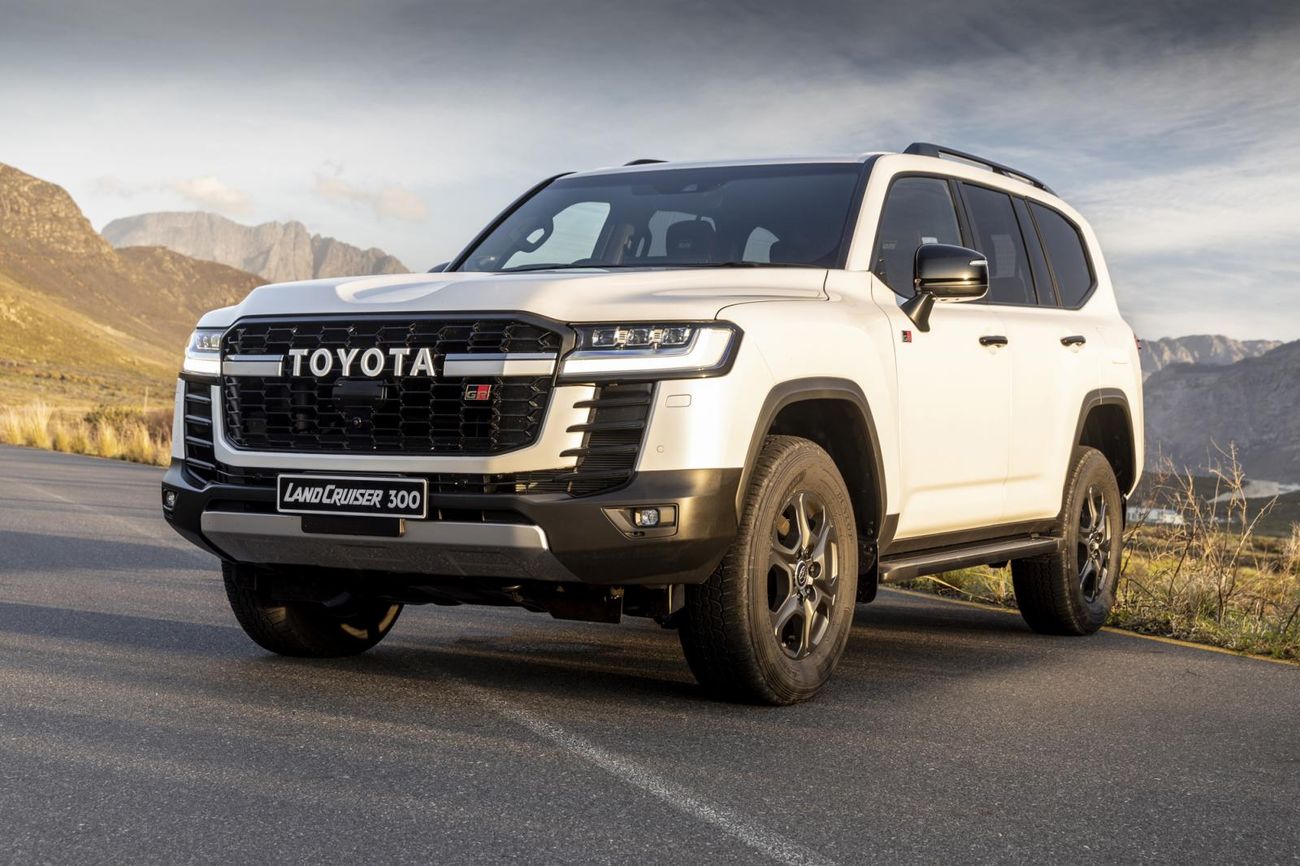
The star of its passenger offering remained the Urban Cruiser with 1 827 units and the Starlet with 1 342 units sold. The Corolla Quest and Fortuner also achieved noteworthy performances with 857 and 847 units apiece, while the Land Cruiser duo of 300 and Prado posted 122 and 114, respectively.

https://www.carmag.co.za/news/industry-news/toyota-south-africa-third-quarter-sales/
 
SEE | Ranger, Hilux, D-Max... These are all the bakkies built in South Africa

• South Africa is a well-renowned country when it comes to bakkie production.

• Bakkies like the Ford Ranger and Toyota Hilux are built for both the local and export markets.

• Several all-new bakkies will arrive locally in 2022.

South Africa is a bakkie-rich nation. So much so that we have world-class facilities where these vehicles are produced.

Here are all the volume bakkies produced in South Africa, and in which city they are built.

Toyota Hilux - Durban

Ford Ranger - Pretoria

Nissan Navara - Pretoria

Mahindra Pik Up - Durban

Isuzu D-Max - Gqeberha


2021 survey uncovers key insights into SA's perception of EVs: Locals still want Tesla cars

• Autotrader and Smarter Mobility Africa have teamed up for the 2021 SA EV Buyers Survey.

• The survey reveals EV appetite had grown significantly year-on-year in SA.

• Despite not being available locally, South Africans are still most interested in Tesla for an EV option.

With the uptake of electric vehicles (EVs) fast increasing in leading markets worldwide, it's worth exploring how South Africans feel about battery-powered cars. Handily, an updated study conducted annually has done precisely that, capturing fascinating insights into what local buyers think of this increasingly important segment of the market.

The 2021 South African EV Buyers Survey, by AutoTrader and in partnership with Smarter Mobility Africa, shines a spotlight on the discrepancies between consumer perception and industry assumptions regarding the use and ownership of EVs.

AutoTrader CEO George Mienie released the survey results during his keynote address at the 2021 Smarter Mobility Africa Summit. He pointed out that data from SA's largest digital automotive marketplace was proof that local EV appetite had grown significantly year-on-year.

"South African shoppers are actively looking for opportunities to buy electric vehicles, though the major challenge is still the initial purchase price. According to AutoTrader's data, there has been a 210% increase in searches for available EVs in South Africa," he revealed.

This is echoed by the number of respondents in the survey stating they were likely or very likely to consider purchasing an electric vehicle in the future, which increased to a significant 70% in 2021.

Still, as Mienie pointed out, cost remains one of the chief barriers to broader adoption, with the survey indicating such vehicles are still out of the financial reach of around two-thirds of consumers.

Interestingly, almost half of the respondents indicated they would consider purchasing a used EV over a new one, listing lower prices as the key motivating factor.

Meanwhile, the perceived lack of national charging infrastructure was again the most cited disadvantage of EV ownership. However, the percentage encouragingly fell two points from 2020's figure to 59% in 2021, just ahead of charging time (likewise down two points to 58%) in the second and initial purchase cost (55%) in third.

Despite being often anecdotally cited, range anxiety (26%) was fascinatingly way down the list of the perceived largest drawbacks of running an EV, behind the potential impact of load-shedding (38%) and inconvenient charging options (34%).

Though 75% of respondents identified BMW as a brand with an EV option in its line-up locally, Tesla intriguingly remained top of mind regarding product availability, despite its wares still not being commercially available in SA. It's a similar case for the most trusted EV manufacturer, with 52% of respondents selecting the Bavarian firm and an astonishing 40% opting for Tesla.

https://www.news24.com/wheels/news/...-of-evs-locals-still-want-tesla-cars-20211006

 
SA motor industry fears impact as Numsa strike commences

The South African motor industry is already under pressure following the recent unrest, port delays and semi-conductor shortage, but now Numsa’s strike action, which commenced on Tuesday, is posing a further threat.

South Africa's biggest metalworkers union is pressing for wage rises in the engineering sector, but the action threatens to spill over and block supplies of parts to make new cars, industry and union officials said.

With around 155 000 members organised in the sector, Numsa has called for a total shutdown of the engineering industry after wage talks with employer bodies deadlocked.

"We are left with no choice but to strike and to withhold our labour indefinitely until the bosses give into our just demands," Numsa said.

Numsa had sought an 8% across-the-board wage rise in the first year of a pay deal, and an increase equal to the rate of inflation plus 2% for the following two years. Annual inflation is currently around 5%.

 
Suzuki SA hit 3rd place in September sales race - these were the most popular models

It wasn’t too long ago that Suzuki Auto South Africa was counted among the country’s smaller importers. But in recent times, the Japanese carmaker - which sources most of its products from the Maruti division in India - has been gunning for the big players.

But few would have expected the brand to sell 3134 new vehicles in September 2021, which not only smashed all previous records, but also put it in the top three behind Volkswagen and Toyota, with a 7.2% share of the overall market and 10.3% slice of the passenger car segment. In the process it edged ahead of Hyundai, Renault, Nissan, Kia and Ford, each of which sold between 2000 and 3000 units last month.

To put these figures into perspective, consider that Suzuki achieved an all-time sales record of 1577 units in July 2019, meaning that the company has effectively doubled up in little over two years.

But which models were driving this sales performance?

According to Suzuki, the company’s top-selling model in September was the Swift, which found 935 new homes. The compact hatch range was followed by the S-Presso budget hatch (504 sales), Vitara Brezza (455) and Ertiga (387).

https://www.iol.co.za/motoring/indu...r-models-a20f6b7f-abc1-4421-ba50-32521dbb567b
 
Spare parts pricing for cars increased by more than 44 per cent since 2013

Spare parts pricing for cars have seen a 44 per cent increase since 2013, a recent study conducted in Germany reveals. According to the German Insurance Association (GDV), pricing in this industry rose by six per cent just over the last year.

As Automobilwoche reports, the association analyses spare parts pricing for cars on an annual basis because these play a decisive role in repair costs after accidents. Over a long-term period, the constant rise in the price of car parts is even more noticeable. The increase of 44 per cent is almost three times larger than the general inflation rate of 13 per cent.

Parts that saw drastic increase in costs were the radiator grille at nine per cent more, boot lids at 60 per cent more and taillamps at 67 per cent more. The GDV criticises spare parts pricing for cars as a “quasi-monopoly”.

This relates to the design protection for visible body parts, which is why there are no cheaper third-party brands for many car parts. “Motorists and workshops can only buy many spare parts from the manufacturer of the car, there is no free and fair competition in this market,” criticized the deputy GDV managing director Anja Käfer-Rohrbach.

 
X3, Hilux, Polo... Locally-built vehicles that are exported to global markets

• South Africa is a vehicle production hub that exports to global markets.

• Ford, Toyota and BMW are among the automakers that build vehicles locally.

• South Africa produces bakkies, SUVs and passenger cars.

South Africa is a hub for vehicle manufacturing, with most models exported to numerous international markets. As most of us are already aware, bakkie manufacturing is one of SA's production cornerstones, contributing a great deal to putting Mzansi on the map.

Though bakkies are the most prominent, several passenger vehicles - sedans, hatchbacks, SUVs - are also built here. Not only does the local assembly and sales of these contribute to our country's GDP, but the exportation of these vehicles contributes to the GDP, as well.

The Ford Ranger and Toyota Hilux are perhaps the two most popular vehicles produced locally. We list all the vehicles produced in South Africa for the export market.

 
September sales indicative of possible high-note end for SA vehicle sales in 2021 - NADA

• September 2021 sales were 15.8% higher than the same month last year.

• More than 43 000 new vehicles were sold last month.

• The used-car market has also been showing positive growth signs.

After analysing the sales figures distributed by Naamsa, the Automotive Business Council, for September 2021, South Africa's retail motor dealers fared better than expected. Overall, the sales figure of 43 130 units in the new vehicle market is a welcome 15.8% higher than the 37 237 units sold in the same month last year. With these sorts of volumes, the industry could expect to end the year at the high-end of analyst forecasts for 2021.

What was heartening to see is that 82.7% of the total new vehicle volume was sold through the retail dealer channel. The 1 506 unit growth month-on-month is encouraging, with the majority increase seen in passenger vehicle sales, which is also a positive sign as the largest volume segment.

The rental industry's healthy contribution of 12.4% bodes well for the future supply of vehicles to the pre-owned market, where stock is currently in short supply. This market segment has only recently seen a resurgence in buying since de-fleeting drastically in 2020 when the global pandemic hit South Africa.

 
Metalwork strike affects production at BMW South Africa Rosslyn plant

BMW South Africa Rosslyn plant output has been negatively affected by a wage strike in the engineering sector as a result of the biggest metalworkers union. The local arm of BMW confirms that around 700 X3 units have been lost as a result of this.

As Reuters reports, the National Union of Metalworkers of South Africa (NUMSA) strike commenced last Tuesday after salary negotiations with employer bodies reached a standstill. This raised fears that the action would trickle down and block supplies of parts to make new cars.

On Friday, NUMSA said its members were considering a new proposal to end the strike but on Monday, the union was still collating feedback before making a decision.

NUMSA, which consists of around 155 000 members, has requested an eight per cent increase across-the-board wage hike in the first year and inflation plus two per cent for the second and third years.

Industry body Steel and Engineering Industries Federation of Southern Africa (SEIFSA) had initially offered 4,4 per cent for 2021, inflation plus 0,5 per cent in 2022 and inflation plus 1 per cent in the third year.

 
Top
Sign up to the MyBroadband newsletter
X