The SA Vehicle Industry Thread

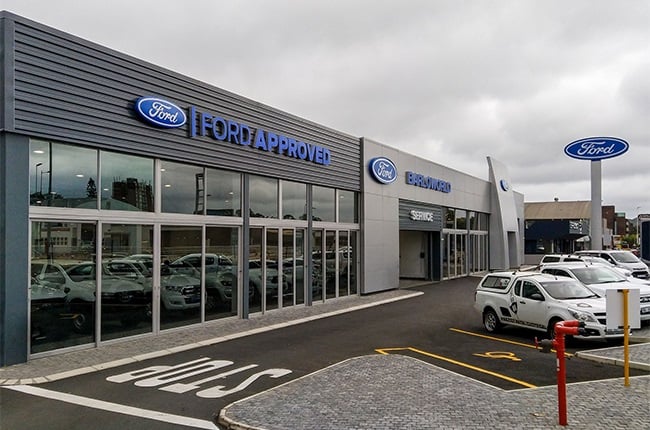
Ford SA takes a major step in approach to service plans as 'Right to Repair' takes flight

• Ford South Africa is committed to the new Automotive Aftermarket Guidelines, also known as 'Right to Repair'.

• From 1 November 2021, Ford Protect service and maintenance plans are unbundled from the purchase price of the vehicle, and will be available as an added-cost option.

• Ford SA says that servicing at one of its 140 dealers guarantees quality workmanship using factory-trained and certified technicians.

Ford South Africa has taken a significant decision as it commits to the new Automotive Aftermarket Guidelines. These guidelines, more commonly known as 'Right to Repair', came into effect on 1 July 2021 in South Africa and allow independent service providers (ISP) to also service and maintain vehicles.

Effective 1 November 2021, all new Ford vehicles sold in South Africa will not come with a service plan as standard. Instead, new owners can purchase it as an optional extra, giving them the freedom to have their vehicles services and maintained either at an authorised Ford dealer or with an ISP.

Neale Hill, President, Ford Motor Company Africa, said: "We are committed to delivering the very best products, services and customer experiences, and are focused on treating each customer as part of the Ford family. Ford is acutely aware of consumers' growing desire and right to choose where they wish to service, maintain or repair their vehicles."
 
Suzuki South Africa breaks through 2 000 local unit sales for October 2021

Suzuki continues its successful year as it closes the sales book for the month of October with a total unit figure of 2 593. Of this, dealerships accounted for 2 083 units while the rest went to the rental industries.

“It is quite fitting that our dealers would set a new aggregate sales record in October, the same month that we announced our Dealer of the Year and awarded our top-performing dealers for the past financial year,” says Henno Havenga, manager for auto dealer sales at Suzuki Auto.

The new record of 2 083 dealer sales in October is a major milestone for Suzuki which, as a brand, first broke through the 2 000-unit mark exactly 12 months earlier. It also clears the previous dealer record of 1 962 units set in March this year.

“One should not discount the importance of growing dealer sales. While the right product at the right price plays a very important role, it would mean little if the dealers did not provide good quality sales and after-sales support.

“The consistent growth of our dealer sales is positive proof that they are meeting customers’ sales and after-sales needs. It also means that they are operating as healthy businesses that have the capital and manpower to keep our customers happy,” says Havenga.

 
Ford SA removes standard service plan in response to Right to Repair act

Ford SA has made the decision to unbundle its standard service plan on its entire product in a response to the Right to Repair act that came into effect as of July this year. The local arm of the American manufacturer says that all service plans, like its current maintenance plans and extended warranties, will be available for its products as an added-cost option.

Ford SA says that, in line with the guidelines of the Right to Repair act, customers that purchase a new vehicle from this month are able to purchase a Ford Protect Service Plan separately, should they wish to do so, as has been the case with the optional comprehensive Ford Protect maintenance plans and extended warranties.

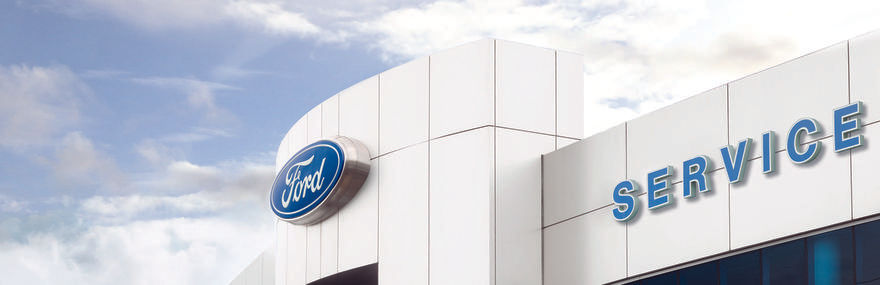
Furthermore, customers that choose not to purchase a Ford Protect service or maintenance plan have the option of servicing at a Ford franchised dealer. Ford South Africa argues that servicing at one of its dealers guarantees quality workmanship using factory-trained and certified technicians, genuine Ford parts and lubricants and access to the latest diagnostic equipment.

“We are committed to delivering the very best products, services and customer experiences, and are focused on treating each customer as part of the Ford family,” says Neale Hill, President, Ford Motor Company Africa. “Ford is acutely aware of consumers’ growing desire and right to choose where they wish to service, maintain or repair their vehicles.

“As a result, we have been working to implement the systems and processes necessary to unbundle the Ford Protect service plans,” Hill says. “It has taken some time to deal with the complexities of unbundling the service plans from the price of the vehicle, but we have now implemented the changes and customers can choose to purchase these separately when buying a new Ford.

 
Ford SA Unbundles Service Plans

The Automotive Aftermarket Guidelines or ‘Right to Repair’ came into effect on 1 July 2021 and Ford South Africa has now unbundled its Ford Protect Service Plans from the purchase price of Ford vehicles.

Ford South Africa has announced that as of 1 November 2021, the previously-inclusive Ford Protect Service Plans have now been unbundled from the pricing of a new Ford vehicle, in line with the Automotive Aftermarket Guidelines (Right to Repair) which came into effect on 1 July 2021.

This essentially means that buyers now have the choice to purchase a Ford Protect Service Plan separately, much like purchasing an optional maintenance plan or extended warranty. More so, buyers can either have their Ford vehicle serviced at a Ford dealer or, alternatively, at an Independent Service Provider (ISP). Ford, however, states that “Servicing at a Ford dealer guarantees quality workmanship using factory-trained and certified technicians, genuine Ford parts and lubricants, and access to the latest diagnostic equipment.”

However, consumers are urged to familiarise themselves with the guidelines as advised by Neale Hill, President, Ford Motor Company Africa.

“Customers have the option of selecting where to service their vehicle, but it’s important that they familiarise themselves with the guidelines. For example, if you choose to service your vehicle outside of the Ford dealer network while you have a Ford Protect Service Plan in place, Ford is not obliged to pay the Independent Service Providers (ISP) for any services rendered. The ISP cost will be for your own account – and although the Ford warranty remains in place, should there be a failure as a result of the parts used or the workmanship of the ISP, that portion of the repair may not be covered by the Ford warranty.”

 
Volkswagen SA confirms 55 000 units sold for the first 10 months of 2021

Despite the hardships of the COVID-19 pandemic, Volkswagen SA has confirmed a rather successful 10 months of sales for 2021. The local arm of the German brand was also able to push through the global shortage of semiconductor chips to remain SA’s best-selling passenger car brand in the first 10 months of 2021.

“In October, the Volkswagen brand (including Volkswagen Commercial Vehicles), sold 5 614 vehicles; the locally-manufactured Polo was our brand’s best-selling model last month with 1 693 units delivered to customers,” said Steffen Knapp, head of the Volkswagen Passenger Car Brand.

In the first 10 months of 2021, the passenger car division of Volkswagen SA has sold 51 381 vehicles in the local market. The Volkswagen Polo Vivo is the best-selling model with 18 241 units sold (2 747 more units when compared to the same period last year). The T-Cross, the leader of the A0 SUV segment, is now the best-selling imported model with 5 912 units sold from January to October.

“Despite the vehicle supply challenges our Brand is experiencing, our dealer partners, which account for over 75 per cent of total Volkswagen sales, displayed resilience to ensure that we maintain our leadership in the passenger car market in SA,” concluded Knapp.

The Volkswagen model range was bolstered by the market introduction of the new Tiguan in July and new Golf GTI in September. The new Tiguan, which is Volkswagen’s second best-selling SUV, has sold 1 301 units since its launch. Meanwhile, the new Golf GTI has sold 201 units during its first two months of retail.

 
New car price inflation is slowing, but used car prices are surging, VPI index shows

New vehicle price inflation slowed significantly in the third quarter of 2021, according to the SA Vehicle Pricing Index (VPI) that’s released by TransUnion.

The index showed that new vehicle inflation effectively halved from the same period in 2020, from 7.6% to 3.8%. However it was a completely different picture on the pre-owned front, with the used vehicle index more than doubling, from 2.3% to 5.9%, in the face of changing consumer demand and supply issues.

Buying patterns are also changing, TransUnion said. Its VPI Index showed that more than 70% of total new and used financed vehicles in the third quarter were hatchbacks and SUVs, with new SUVs making up 32% of all new vehicles financed – which is indicative of consumers looking for practicality. Interestingly, nearly half of the vehicles financed are being bought by consumers between the ages of 26 and 40.

The Q3 report also showed that the percentage of new and used cars being financed below R200 000, R200 000-R300 000 and over R300 000 saw lower volumes in the lowest bracket, and more activity in the over R300 000 bracket. This is due to ongoing price increases which have pushed many new vehicles over the R300K price point.

According to TransUnion, there is also a growing trend of consumers downgrading from a two-car household and opting for one slightly more expensive vehicle, for example, trading two sedans for one SUV. This is expected to continue in the upcoming months as vehicle prices increase in real terms.

 
TOP 20: These were South Africa’s best-selling cars and SUVs in October

South Africa’s new passenger vehicle market has been dominated by the Volkswagen Polo and Polo Vivo hatchbacks for quite some time, and October 2021 was no exception with the two models accounting for 1693 and 1571 units respectively, according to figures released by Naamsa.

However, Toyota’s Suzuki-based Starlet has been breathing down the Vivo’s neck recently, and last month saw its best performance yet with 1452 units finding homes.

But while compact hatchbacks still dominate the top three, likely as a result of the dire economic conditions, below that we see the rise of the SUV is very much in evidence.

South Africa’s fourth best-selling vehicle last month was the Toyota Urban Cruiser, with 1270 sales, while the Haval Jolion took fifth spot with 1020 units moved off showroom floors.

In the top 20 (see full list below) we see seven SUVs, with other notable performers being the Renault Kiger (811 sales), Volkswagen T-Cross (674), Toyota Fortuner (660) and Nissan Magine (625).

TOP 20: OCTOBER 2021

  • 1: Volkswagen Polo - 1693
  • 2: Volkswagen Polo Vivo - 1571
  • 3: Toyota Starlet - 1452
  • 4: Toyota Urban Cruiser - 1270
  • 5: Haval Jolion - 1020
  • 6: Kia Picanto - 982
  • 7: Renault Kwid - 814
  • 8: Renault Kiger - 811
  • 9: Suzuki Swift - 803
  • 10: Toyota Corolla Quest - 802
  • 11: Nissan Almera - 735
  • 12: Volkswagen T-Cross - 674
  • 13: Volkswagen Polo Sedan - 664
  • 14: Toyota Fortuner - 660
  • 15: Nissan Magnite - 625
  • 16: Renault Triber - 604
  • 17: Hyundai Grand i10 - 586
  • 18: Suzuki S-Presso - 502
  • 19: Suzuki Vitara Brezza - 487
  • 20: Hyundai Atos - 466
 
TOP 10: South Africa’s best- and worst-selling bakkies in October 2021

After failing to match the growth seen in the passenger car market in recent times, light commercial vehicle sales gathered momentum in October, growing 15.9% year-on-year versus the 3.1% gain made by cars and SUVs.

There are no prizes for guessing which bakkie dominated the market last month, with the Toyota Hilux putting in another strong performance – 2 470 units sold, according to Naamsa.

However, the Hilux could face a serious challenge in 2022, with all-new versions of the Ford Ranger and Isuzu D-Max entering local production. The current version of these are in the run-out phase, with Isuzu edging its rival out with 1 548 sales in October, versus Ford’s 1363.

The Nissan Navara, which is now locally built and available in a much wider range, took fourth spot, but with a volume of 650 units it has some way to go in outright volume terms.

The GWM Steed completed the top five with 618 sales, and it was followed by the Mahindra Scorpio Pik-Up (561), Nissan NP200 (520) and GWM P-Series (501).

TOP 10 BAKKIES: OCTOBER 2021

  • Toyota Hilux – 2 470
  • Isuzu D-Max – 1 548
  • Ford Ranger – 1 363
  • Nissan Navara – 650
  • GWM Steed – 618
  • Mahindra Scorpio Pik-Up – 561
  • Nissan NP200 – 520
  • GWM P-Series – 501
  • Hyundai H100 – 260
  • Toyota Land Cruiser PU – 216
 
Ford SA invests heavily in fixing faults and improving quality in their cars

• Ford has invested heavily in quality control, and it is paying off.

• Additional quality control processes will be installed ahead of production of the next-gen Ranger.

• The Silverton plant will have the capacity to produce 200 000 vehicles on the new line.

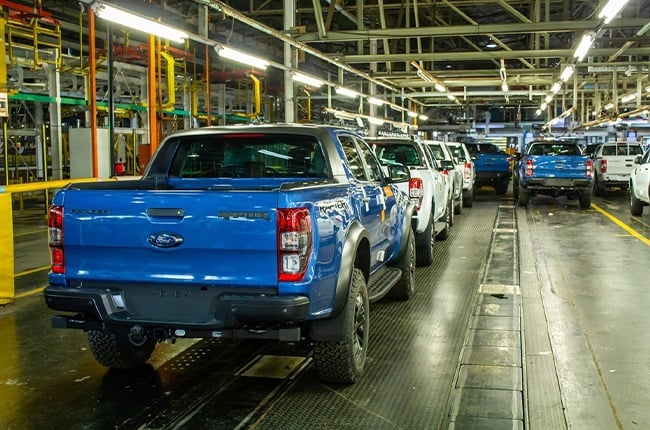
In February this year, Ford Motor Company announced a US$ 1.05 billion investment in the South African operation. This investment will see the annual installed capacity increase from 168 000 to 200 000 vehicles supporting the production of the all-new Ford Ranger bakkie for the South African market and over 100 global markets. The plant will also manufacture Volkswagen bakkies as part of the Ford-VW strategic alliance.

While increased production is necessary, the plant has also implemented several measures to improve the quality of the vehicles they produce sustainably.

"To achieve increased volumes at an improved level of quality, the plant has been changed to produce a single model on a single line. This also helps bring down the cost per unit of manufacture, which is critical in remaining globally competitive," says Kevin Heunis, Quality Director at Ford South Africa.

Upgrades to the plant include a new stamping plant, which will allow for the pressing of body panels and an in-house chassis manufacturing facility. Interestingly, the automation in the body shop is currently at 86%.

 
Six major carmakers agree to go all-electric by 2040 - report

Six major car companies will commit to phasing out the production of fossil-fuel vehicles around the world by 2040, as part of global efforts to cut carbon emissions, the British government said in a statement.

But sources familiar with the pledge’s contents said some big carmakers including the world’s top two, Toyota and Volkswagen, as well as crucial car markets China, the United States and Germany have not signed up. That highlighted the challenges that remain in shifting to a zero-emission future.

Cars, trucks, ships, buses and planes account for about a quarter of all global carbon emissions, data from the International Energy Agency showed, of which the bulk comes from road vehicles.

Volvo, Ford, General Motors, Mercedes-Benz, China’s BYD and Jaguar Land Rover were set to sign the pledge at climate talks in Glasgow, the latest initiative to help cap global warming by mid-century.

Volvo has already committed to going fully electric by 2030.


Mlota says the policy looks at three main issues.
The first is how to best stimulate local NEV, as well as NEV component manufacturing in South Africa. The second issue is how to encourage the local uptake of NEVs to ensure that the South African auto industry does not only service export markets, but that these vehicles are also in demand in the domestic market.
The third focus area is to ensure that South Africa continues to support and create a conducive environment for investment in the automotive sector.
“This is a sector dominated by multinationals and we need to ensure that the environment is good for them to invest in the country,” explains Mlota.
 
ICE Audi Cars in SA Until 2033

Audi is bringing numerous Electric Vehicles (EVs) to South Africa but Audi’s Internal Combustion Engine (ICE) vehicles will still be available until 2033, according to Audi SA’s Managing Director, Sascha Sauer.

Fans of Audi ICE cars have likely had sleepless nights after hearing the news that the Ingolstadt-based firm will soon be launching a brave EV offensive in South Africa in 2022.

Earlier this year, Audi launched a whack (15 to be exact) of exciting RS products in South Africa and we have sampled most of them here at Cars.co.za. These vehicles embody what we love about cars, but sadly, they won’t be around forever — not even in South Africa.

In our latest podcast, Ciro De Siena sat down with Audi SA’s Managing Director, Sascha Sauer, to discuss the firm’s EV plans as well as what the impending EV rollout means for Audi’s ICE products in South Africa.

ICE Audi Cars in SA Until 2033

Sauer commented, “Given the time frame, Audi and many other manufacturers have committed publicly that they will launch only electric cars going forward from a certain period of time, very soon. It also puts pressure on us as a brand here in the country [South Africa] to transform our business proactively and prepare ourselves for the future because from 2026 onwards, any new car launch will be only electric cars and by 2033 we will stop importing and producing cars into South Africa with a combustion engine.”

Yes, that means that the day will come in 2033/2034 when ICE-powered Audis will no longer be sold in South Africa. What a sad day that will be, but what does it mean for you?

https://www.cars.co.za/motoring-news/ice-audi-cars-in-sa-until-2033/109346/

 
INTERVIEW: We spoke to Audi boss Sascha Sauer about the future of electric cars in SA

Like it or not, electric vehicles are here to stay and it’s just a matter of time before the whole world makes the switch to EVs. I feel this was probably also the intro to a story all those years ago when the internal combustion engine (ICE) first appeared and began replacing animals as the preferred mode of transportation.

There are a myriad opinions out there, but what is clear is every car manufacturer in the world has in some way set themselves electrification targets, including the complete phasing out of the internal combustion engine.

One of those is Audi. We recently caught up with Sascha Sauer, who heads Audi South Africa, to get a clearer picture of the company’s stated intention to launch its last combustion engine model in 2026, and to only sell electric vehicles by 2032.

“South Africa, like many other countries, has signed the Paris Agreement [on climate change] so it’s important to put it into context when it comes to emissions, considering that South Africa produces one percent of global CO2 emissions and 90 percent of that is road transport emissions. So it is important that the government starts putting plans in place as a signatory to that agreement.

“It’s also important to note that SA’s automotive industry is 6-7% of the country’s GDP, employing a couple of hundred-thousand people. Government, in my mind, needs to take heed and take the future of EVs into consideration in order to secure a production base because eventually most markets are going to close down for ICE vehicles. So we have to ask, where would South Africa export their products to if that is the case?

 
OPINION | Electric cars garnering interest, but does SA's future actually lie in hydrogen?
  • Electric cars can help reduce emissions, but are they a viable long-term solution?
  • Toyota and Sasol will be working together to see if SA is ready for hydrogen roll-out.
  • Hyundai and Toyota already offer hydrogen powered cars for consumers in some parts of the world.
Reducing emissions, but not with electric cars

Electric vehicles powered by a hybrid solution or dedicated rechargeable battery cells are already available as a lower-pollution alternative. Still, another option on the horizon could change how we move around and how our transport affects the environment.

Vehicles powered by hydrogen cells could dramatically reduce our carbon footprints, with hydrogen having the potential to help reduce greenhouse gas emissions and contribute to managing climate change.

There are already a few hydrogen-powered vehicles in production and on the roads in a few international markets, such as the Toyota Mirai and the Hyundai Nexo; but, closer to home, Sasol and Toyota South Africa Motors (TSAM) announced, earlier this year, a partnership to explore the possibilities of developing a green hydrogen ecosystem in South Africa.

 
Nissan to be carbon neutral by 2050

The Japanese brand is forging ahead with its electric vehicle plans.

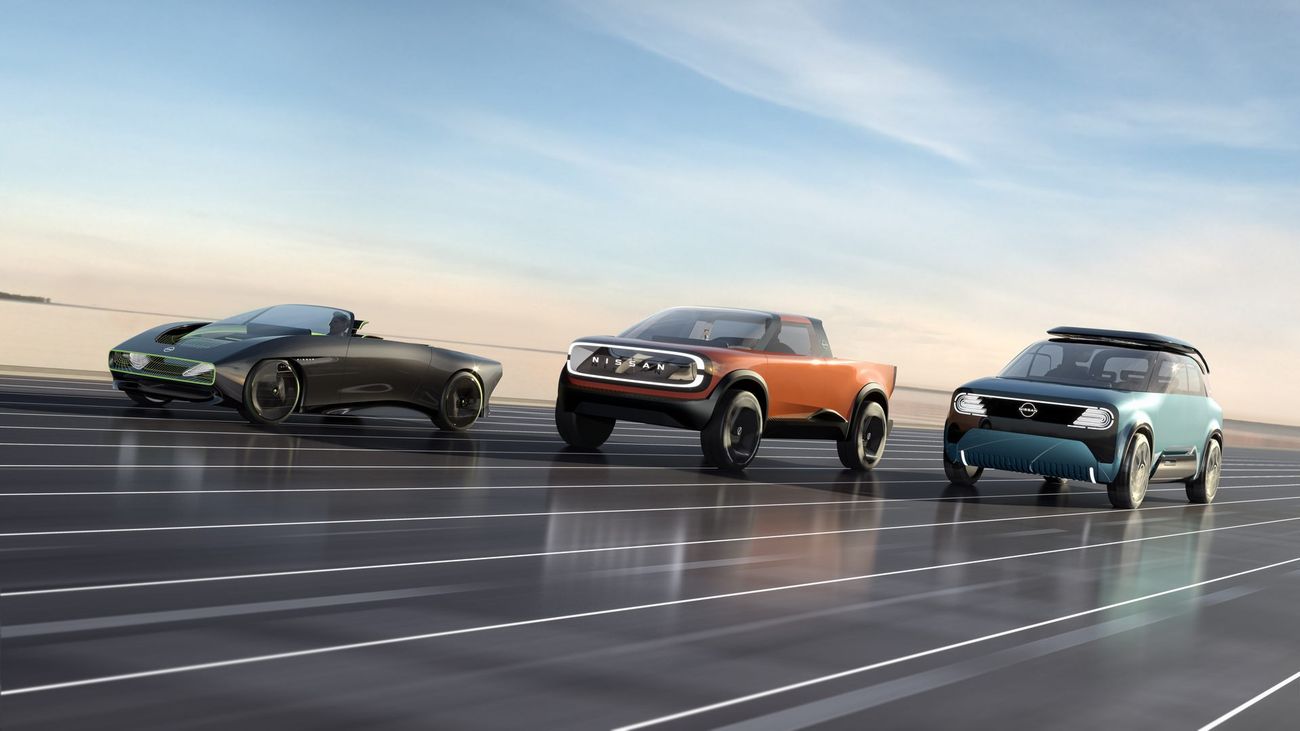
Nissan has announced that it will be launching 23 new electrified vehicles by 2030, 15 of which will be fully electric. Along with its announcement that the brand will be carbon neutral by 2050, the Japanese brand showed off 4 interesting concepts.

This new strategy has been called the Nissan Ambition 2030 long-term vision and will see an investment of 2 trillian yen to speed up the electrification of its entire portfolio. Nissan claims that no fewer than 20 new pure electric vehicles and e-Power (hybrid) vehicles will be launched in the next five years, with the brand expecting up to 75% of its sales will be for electrified vehicles. At home in Japan, Nissan is aiming for 55% of sales and in China, more than 40% of sales to be electrified.

“The role of companies to address societal needs is increasingly heightened,” Nissan chief executive Makoto Uchida said in a statement. “With Nissan Ambition 2030, we will drive the new age of electrification, advance technologies to reduce carbon footprint and pursue new business opportunities. We want to transform Nissan to become a sustainable company that is truly needed by customers and society.”

With the Nissan Ambition 2030, the brand will be improving its lithium-ion battery tech and will introduce cobalt-free technology, which should bring the cost of batteries down. It hopes to launch an EV with solid-state batteries by 2028 and have a pilot plant in Japan ready by 2024. Nissan also intends on increasing its global battery production capacity to 52 GWh by 2026 and 130 GWh by 2030.

 
Hilux vs Ranger: Here’s which bakkie sold the most in October ’21

Yes, we are already at the end of November but we finally have results for the double-cab bakkie race in South Africa with regards to the Ford Ranger and Toyota Hilux specifically, for October 2021. The information is based on what has been reported by Lightstone Auto.

Including the double-cab, extra-cab and single-cab body configurations, Lightstone confirms that the Toyota Hilux continues to lead the race with a total sales figure of 2 470 units while the Ford Ranger, which is soon to be replaced by a new model, paces behind with a figure of 1 363 units.

The sales driver for the Toyota Hilux once again was the double-cab variant with a figure of 1 116 units sold. This was followed by the single-cab boasting a result of 900 units and the extra-cab with 454 units. The Ford Ranger’s most popular bodystyle was the double-cab as well with a reported sales figure of 1 079 units while the single- and extra-cab sold 142 units each.

Year-to-date, the Hilux is well in the lead with a total of 31 101 units reportedly sold. The Ranger challenges this with a result of 16 983 units.

With a combined sales figure of 1 548 units of October 2021 is Isuzu D-Max, placing it above the Ranger in the sales charts. This model sold 828 double-cabs, 609 single-cabs and 111 extra-cabs. The year-to-date figure for this model is reportedly 13 521 units.

 
SUVs surging, sedans sinking: Here’s how SA buying patterns have changed in 10 years

SUVs and crossovers are an increasingly common sight on the roads, both in South Africa and abroad, while traditional body styles like four-door sedans are becoming increasingly rare.

But to what extent have buying patterns actually changed in the last decade? New research released by Lightstone Auto sheds some light on how the market is evolving and it includes some interesting insights.

For instance, SUVs and crossovers accounted for just 14% of the total vehicle market in 2011, but in the year to October 2021, these high-riders had a total market share of 31%.

This means SUVs and crossovers are now the biggest market segment, knocking hatchbacks down to second place. The latter body style fell from just under 35% in 2011 to around 27% in 2021 YTD.

However, the four-door sedan is the biggest loser, its market share having dropped from 20% in 2011 to 6% in 2021. In fact the decline of the sedan dates back even further, with this body style having accounted for 30% of the market as recently as 2003, says Lightstone.


Snip.png
 
New Car Sales in SA for November 2021

Take a look at new car sales in South Africa for November 2021 as released by naamsa | The Automotive Business Council.

November was a challenging month for car sales with multiple bouts of loadshedding affecting the manufacturers and persistent Covid19 challenges. The new vehicle market showed resilience and continued to show positive growth over the last 12 months.

A strong showing from the rental companies, which are stocking up in hope of a tourism uptick over the December period accounted for some 15.6% of passenger car sales.

New Car Sales in SA for November 2021
  • Aggregate new vehicle sales of 41 588 units up by 6.6% (+2 573 units) compared to November 2020.
  • New passenger car sales of 27 828 units up by 9.4% (+2 406 units) compared to November 2020.
  • LCV sales of 11 156 units down by 0.8% (-90 units) compared to November 2020.
  • Export sales of 19 548 units down by 42.2% (-14 277 units) compared to November 2020.
Best-Selling Car Brands in South Africa
  1. Toyota – 11 892 units
  2. Volkswagen – 5 498 units
  3. Suzuki – 3 082 units
  4. Hyundai – 2 869 units
  5. Nissan – 2 328 units
  6. Ford – 2 245 units
  7. Isuzu – 2 157 units
  8. Kia – 2 062 units
  9. Haval – 1 730 units
  10. Mahindra – 825 units

Snip.jpeg
 
Latest rumour suggests there will be no new Jaguar products until 2025

It looks like Jaguar is putting the pin in new vehicle releases until it goes fully electric in 2025. This decision is being made so that the British manufacturer can focus on product development for its monumental shift towards electrification.

According to a report conducted by Le Monde, Jaguar is dedicated to its complete overhaul which will not only see the switch to electrification but also position it as a more luxurious brand. The British manufacturer has revealed its desires to shift away from the premium segment where it competes with BMW and Mercedes-Benz and start taking on the likes of Porsche and Bentley, head-on.

Models that are currently sold by the brand will still be available to consumers but with a reduced choise of engines and features. Together with this, the brand promises that there will be no factory closures during the adjustment but its work force has already been reduced from 42 000 to 35 000 employees to decrease costs.

Jaguar revealed in 2020 that its “Reimagine” plan will cost the company €3 billion (approximately R54 billion). The British company has admitted that volume race in which it had entered was not a success. Furthermore, it’s understood that sourcing engines that comply with environmental standards or to offer a degree of sophistication, a rate of renewal and reliability comparable to the German competition, has been a challenging task.

 
Top
Sign up to the MyBroadband newsletter
X