The SA Vehicle Industry Thread

Semiconductor crisis: latest updates as chip shortage cripples industry

Production shortages are still biting hard, with supply troubles expected well into 2022

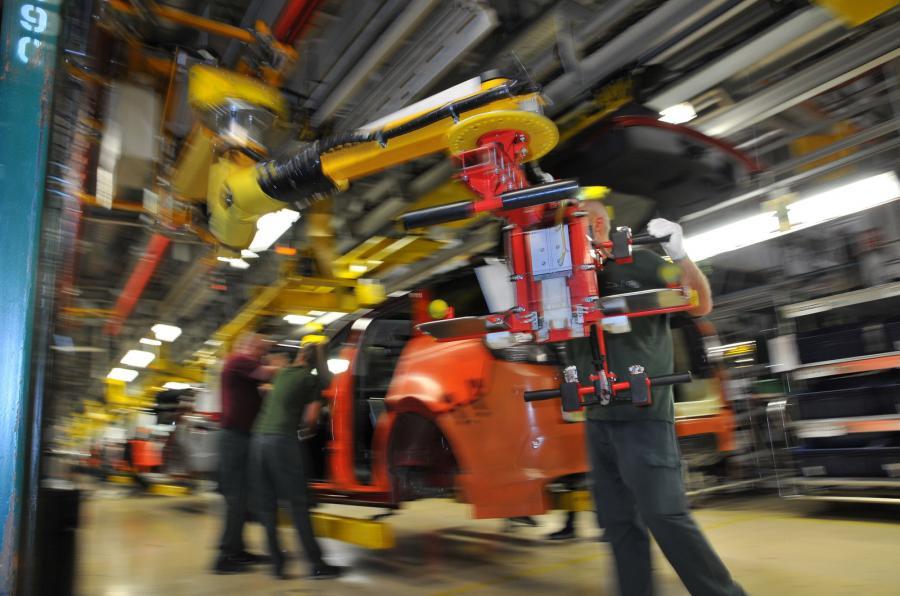
After a difficult year where the automotive and technology industries have been hampered by production shortages, several manufacturers are still feeling the strain with some having to close production lines earlier than originally planned.

The crisis looks likely to continue well into 2022 despite some, including Toyota, believing the worst was already over. Many firms have now moved to agree significant deals with large electronic manufacturers to ensure a consistent supply of semiconductors well into the future.

The shortage of semiconductors initially stemmed from increased demand for personal computers, tablets and smartphones at the height of the Covid-19 pandemic, which largely diverted supply away from the automotive sector, and now extends to Covid-related closures at semiconductor factories and international shipping ports.

Previously, Autocar reported that a number of manufacturers were urgently seeking to overhaul their components supply chains as a workaround to ensure continued production. Analysis company IHS Markit said at the time that the shortage could cut global production by nearly 700,000 vehicles year on year, although the final figure could be even higher.
 
Toyota boosts electric vehicle sales target

Toyota hiked its electric vehicle sales goal by 75% on Tuesday (14 Tuesday), unveiling a more ambitious plan for the sector as part of efforts to drive down carbon emissions.

The world's top-selling carmaker has risked falling behind its rivals including Volkswagen and Tesla in the race to develop less polluting cars, seen as a key market for the future.

And the Japanese auto giant, like other big car manufacturers, has faced pressure from environmental groups to work harder to phase out engines that burn planet-warming fossil fuels in favour of electric vehicles (EVs).

CEO Akio Toyoda said Toyota aims to sell 3.5 million EVs per year from 2030, and also plans to roll out 30 battery-powered electric models by the turn of the decade.

It had previously set a yearly sales target for 2030 of two million EVs and fuel cell vehicles.

"Two million is a significant number. And we are trying to bring that to 3.5 million units," Toyoda said.

"We've been thinking of our carbon neutrality initiatives, and have come up with a realistic plan."

The company currently sells around 10 million vehicles a year but did not say what proportion of future sales its new target represented.

Toyota will also aim to make its high-end Lexus range 100% electric by the end of the decade in the European, North American and Chinese markets, and worldwide by 2035.

The company announced a total investment of eight trillion yen ($70 billion) for its electrification drive by 2030.

 
New Cars For South Africa in 2022

As 2021 draws to a close, we cast our attention to the new cars destined to reach South Africa in 2022. Take a look at what’s coming your way!

Despite the supply difficulties the global automotive industry is facing as a result of the ongoing Covid-19 pandemic and semi-conductor shortage, 2022 is shaping up to be an exciting one for new car buyers and petrolheads.

There’s a flood of exciting new cars expected to reach South Africa in 2022 and most importantly, there’s something to suit everyone’s budget. From budget cars, compact crossovers, family SUVs to luxury SUVs, bakkies, MPVs, supercars and electric cars, there’s something for everyone!

Please note that this new cars list is generated based on feedback from manufacturers as well as from what has been reported publicly either on Cars.co.za or elsewhere. We have tried our utmost to make this list as accurate and as definitive as possible but please note that we will update this list regularly as we receive relevant information from manufacturers.

It’s also worth mentioning that arrival timings for new cars are tentative and are subject to change due to ongoing changes and delays in the global supply chain.

 
Here’s how many Hilux, Ranger and D-Max units have been sold in SA this year

With 2021 drawing close to an end, we now have final figures of how many Toyota Hilux, Ford Ranger, Isuzu D-Max and Mahindra Scorpio Pik-Up units have been sold in South Africa. The sales figures supplied by Lightstone Auto account for single-cab, extra-cab and double-cab body styles.

Sitting at the top of the charts is the Toyota Hilux with a total sales figure of 33 659. For the month of November, the Hilux cleared 2 558 units with the double-cab fetching the most sales at 1 292 units. The single-cab at 862 units was followed by the extra –cab which sold 404 units. In total, 16 030 double-cab, 11 922 single-cab and 5 707 extra-cabs found new homes.

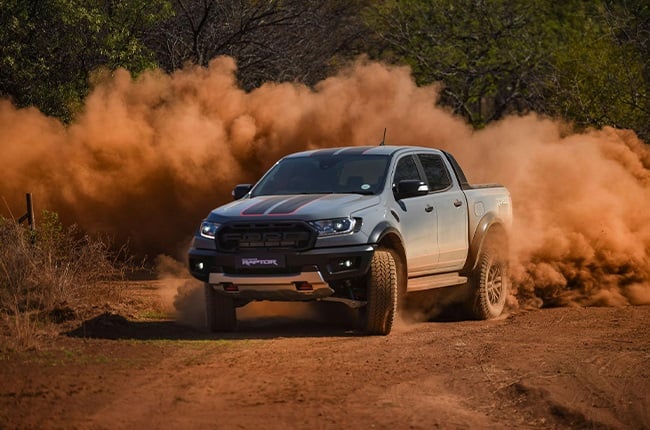
The Ford Ranger is the runner-up for 2021 with a total of 18 148 units cleared, ahead of the imminent arrival of the next-generation model. The biggest seller of the lot here as well was the double-cab with 14 532 units sold. This was followed by 1 921 single-cab and 1 695 extra-cab units. For the month of November 2021, the Ranger sold 908 double-cabs, 138 single-cabs and 119 extra-cabs.

The Isuzu D-Max, which is also expecting an all-new model next year, closely rivaled the Ranger with a final figure of 15 187 units. This was broken down to 7 494 double-cabs, 6 738 single-cabs and 955 extra-cabs. For November 2021, 1 665 units were sold which means that it bested the Ranger yet again. In total, this equated to 759 double-cabs, 787 single-cabs and 119 extra-cabs.

 
SA car sales | Ranger bakkie pulls it through for Ford in tough November

Ford sold 2 245 units in South Africa in November 2021.

The Ranger was the brand's top-selling vehicle, accounting for more than 50% of total sales.

The Ranger and Everest are built in South Africa.

November 2021 has been a tough month for Ford South Africa as the automaker only sold 2 245 units. The low numbers could be attributed to several factors, including the global microchip shortage ravaging the automotive industry and leaving many automakers in challenging positions.

Though Ford builds its Ranger and Everest locally, it imports its passenger car portfolio, including the Transit and Tourneo Custom commercial vehicles. Still, despite the challenges, the automaker manages always to pull through and make itself count as a reckoned player in South Africa's new-vehicle market.

In the overall South African market, Ford sold the sixth most vehicles in the country, bested by Toyota (11 892), Volkswagen Group (5 498), Suzuki (3 082), Hyundai (2 869), and Nissan (2 328).

November car sales: Ford

Ranger: 1 165

EcoSport: 630

Everest: 227

Figo: 105

Fiesta: 65

Mustang: 26

Tourneo Custom: 16

Transit: 11

 
Motor Industry Cartel.
A good friend gave SARS a whipping when they confiscated an imported car registered in his business from Lesotho.
He happened to be driving it in SA.
SARS then impounded the vehicle.
They had to return the vehicle and pay costs.
Hopefully this will be the end of the cartel.
Nice to dream.
Nissan GTR R75 000. 30k k/m. 7 years old.
Now see how we are being screwed over by the government and the motor cartel.
 
Motor Industry Cartel.
A good friend gave SARS a whipping when they confiscated an imported car registered in his business from Lesotho.
He happened to be driving it in SA.
SARS then impounded the vehicle.
They had to return the vehicle and pay costs.
Hopefully this will be the end of the cartel.
Nice to dream.
Nissan GTR R75 000. 30k k/m. 7 years old.
Now see how we are being screwed over by the government and the motor cartel.

Mind sharing the details ?
Second time I've seen a post alluding to Lesotho and Botswana cars being able to be bought into SA without driving them in and out of the border.
 
Mercedes-Benz sales drop 5% but EV volume doubles

More than two million vehicles were sold in 2021 but firm was hit hard by supply bottlenecks

Mercedes-Benz suffered a 5.0% drop in sales in 2021, as the firm was heavily impacted by semiconductor supply chain bottlenecks which gripped the automotive industry.

The German firm sold 2,093,496 vehicles between January and December 2021, 70,691 units down on pandemic-blighted 2020, and was hit particularly badly in quarter four, when sales dropped by 24.7%.

Sales of plug-in vehicles climbed significantly, though, with 227,458 sold, representing growth of 69.3%. Of these, nearly 99,301 were pure-electric - a 90.3% uptick.

The firm's luxury, performance and off-road sub-brands also recorded positive results. "In a challenging year, Maybach, AMG and G-Class vehicles posted new records,” said Britta Seeger, Mercedes-Benz board member for marketing and sales.

Some 15,730 Maybach models were sold, mostly to China where almost 900 units of its ultra-luxurious take on the S-Class were delivered each month, while global sales of AMG models soared by 16.7% to 145,979 units and 41,174 examples of the ultra-rugged G-Class SUV found homes worldwide.

Orders for the all-electric EQS reached 16,370 since its launch in August last year, Mercedes said. As its electric and electrified car line-up continues to grow, the firm anticipates it will record a continuing decline in emissions across its line-up.

 
2021 South African vehicle sales numbers are in, showing some encouraging growth

Given the disaster of a year that 2020 was, it certainly wasn’t hard for the South African new vehicle market to improve on the previous year’s numbers. But those figures, released by Naamsa on Monday, are still fairly encouraging.

A total of 464 122 new vehicles were sold in Mzansi last year, which represents a 22.1% increase over 2020. However, it could take at least another year for the market to reach pre-pandemic levels, given that vehicle sales declined by 29.2% versus the previous year. Historically speaking, SA car sales are still relatively low given that the market was averaging around 600 000 units a year 10 years ago (572 249 in 2011 and 630 619 in 2012).

Numerous challenges

Last year’s market growth came in spite of numerous challenges experienced throughout the year, including global supply chain disruptions that led to stock shortages, the civil unrest in July, persistent load shedding and a three-week strike in the engineering sector. Clearly the market wants to grow and is doing so in spite of all of these circumstances and one can only imagine how things would improve if the conditions were actually more ideal.

“A close correlation exists between domestic new vehicle sales and the overall performance of the economy and the new vehicle market’s performance was aligned with the country’s projected GDP growth rate of around 5% for 2021,” Naamsa said in response to last year’s sales figures. “It was a very satisfying performance by an industry that has had to deal with numerous challenges over the course of the year.”

Exports constrained

Sadly the export picture was not as positive, with the aforementioned civil unrest, shipping disruptions caused by the Transnet cyber attack and the global semiconductor chip shortage having severely stifled exports in the second half of the year.

The first half of 2021 actually saw export sales on par with pre-pandemic levels, and as a result the year saw an overall year-on-year gain of 8.8%.

 
New Car Sales in SA: December 2021

Take a look at what transpired in terms of new car sales in South Africa during the month of December 2021 as well as what to expect in 2022!

New car sales remain under pressure but the local automotive industry bounced back somewhat in 2021.

Covid-19 wreaked havoc on the industry in 2020 with a massive 29.2% decline in new car sales. Consequently, 2021 was a year of recovery with a year-on-year increase of 22.1% and total industry sales amounting to 464 122 units. Those gains are fairly impressive when you consider the major challenges faced by the industry during 2021, such as global supply chain disruptions, stock shortages, load-shedding, increasing fuel costs, cyberattacks, strikes and civil unrest.

December 2021 new car sales reflected mixed results as indicated below.

New Car Sales for December 2021

  • Aggregate new car sales of 35 948 units down by 3.5% (-1 302 units) compared to December 2020
  • New passenger car sales of 24 949 units up by 1.7% (+408 units) compared to December 2020
  • Light Commercial Vehicle (LCV) sales of 8 990 units down by 16.6% (-1 794 units) compared to December 2020
  • Export sales of 21 430 units up by 19.4% (+3 487 units) compared to December 2020
Top 10 Car Brands in South Africa for December 2021

1. Toyota – 9 580 units

2. Volkswagen – 5 131 units

3. Hyundai – 2 892 units

4. Nissan – 2 417 units

5. Ford – 2 181 units

6. Suzuki – 2 102 units

7. Kia – 1 862 units

8. Renault – 1 758 units

9. Isuzu – 1 481 units

10. Haval – 1 453 units

Best-Selling Cars in South Africa for December 2021

1. Toyota Hilux – 2 426 units

2. VW Polo Vivo – 2 028 units

3. Toyota Corolla Cross – 1 752 units

4. Isuzu D-Max – 1 247 units

5. Toyota Starlet – 1 180 units

6. Toyota Hi-Ace – 1 019 units

7. Ford Ranger – 929 units

8. Suzuki Swift – 798 units

9. VW T-Cross – 766 units

10. Ford EcoSport – 765 units

https://www.cars.co.za/motoring-news/new-cars-sales-in-sa-december-2021/112710/
 
One in four cars sold in SA in 2021 were Toyotas, these were the top sellers

Following a dismal 2020 that we’d all like to forget, 2021 saw a return to growth for the South African new vehicle market, in spite of many supply chain disruptions among other challenges. A total of 464 122 units were sold last year, up 22.1% on the previous year, albeit still 15% below 2019 levels.

2021 was a particularly stellar year for Toyota, which sold a total of 117 659 vehicles, giving it an impressive overall market share of 25.4%, the highest since 2003. This means that that one in every four vehicles sold in SA last year was a Toyota. This also marked Toyota’s 42nd year of overall market leadership in the country.

There are no prizes for guessing which vehicle was Toyota’s best seller, with the Hilux bakkie surging ahead of all its stablemates with a total volume of 36 085 units for the year, which works out to an average of just over 3000 vehicles a month.

Toyota’s second best seller, and by far the country’s most popular people mover, was the Hiace taxi, which achieved an impressive volume of 15 699 units in 2021, or 1308 per month.

These two vehicles, as well as the Land Cruiser pick-up and Dyna, allowed Toyota to achieve a record light commercial vehicle market share of 42.2% last year.

 
10 best-selling bakkies in South Africa: December 2021

We’ve laid our paws on detailed Naamsa figures and picked out the country’s best-selling bakkies for the month. Here’s what you need to know!

While the year-on-year sales performance of South Africa’s total new vehicle market fell 3.5% in December 2021, the decline was a little more aggressive in the light-commercial space at 16.6%. This part of the market, of course, is dominated by bakkies, with a handful of dropside workhorses and commercial vans thrown in for good measure.

Here, we’ll concentrate on exactly how the individual players in the traditional bakkie market fared in the final month of 2021. We’ve combed through the statistics to identify the models that proved most popular with local buyers as well as those that found themselves languishing at the very foot of the table.

Predictably, the venerable Toyota Hilux was the strongest-selling bakkie in December, with 2 426 units registered. The Prospecton-built Hilux finished 2021 with a considerable tally of 36 085 units, again making it the country’s top-selling vehicle by quite some margin. With a new flagship GR-S version set to hit the market towards the middle of the year, the Hilux’s crushing dominance shows no signs of abating.

Best of the rest in December 2021

So, what about the bit-part players? Well, the Mahindra Bolero found 52 buyers in December. Peugeot registered 38 units of its Landtrek in what was the Chinese-built bakkie’s first full month on sale, enough to put it just ahead of the often-overlooked Mitsubishi Triton (32). The Mazda BT-50, meanwhile, continued to disappoint on the sales charts, with the imported D-Max-based bakkie settling for a mere 14 units for the month.

Export winners in December 2021

While the Ranger found itself quite some way off the pace in terms of local sales in the final month of 2021, its export figure of 5 093 units wasn’t far behind the Hilux’s tally of 5 771 units. The D-Max (292) was third in the export race, ahead of the facelifted Navara (232). Interestingly, Nissan also shipped off 158 examples of its Hardbody – a model that has since been discontinued locally – during the month.

10 best-selling bakkies in South Africa for December 2021

1. Toyota Hilux – 2 426 units

2. Isuzu D-Max – 1 247 units

3. Ford Ranger – 929 units

4. GWM P-Series – 724 units

5. Nissan NP200 – 565 units

6. Nissan Navara – 477 units

7. Mahindra Pik Up – 463 units

8. Toyota Land Cruiser 79 – 163 units

9. GWM Steed – 138 units

10. Volkswagen Amarok – 124 units

 
BMW Tops Global Premium Sales in 2021

BMW has claimed the leading sales position in the premium segment after achieving record global sales results in 2021.

BMW Group (BMW, Mini, Rolls-Royce) has rocked the sales charts in 2021 with a total of 2 521 525 units delivered resulting in 8.4% year-on-year sales growth. BMW alone delivered 2 213 795 units to customers, representing year-on-year growth of 9.1%, making the Bavarian firm the sales leader in the global premium segment.

But that’s not all. BMW has been forging ahead with its electrification strategy and for 2021, BMW reports that electric sales more than doubled to 103 855 units! More so, BMW is optimistic about its sales prospects in 2022 and the firm will aim to further expand on its EV success and will look to more than double EV sales in 2022.

“Despite supply bottlenecks and the continuing coronavirus pandemic: We achieved a strong sales performance in 2021, thanks to a powerful operational performance and stellar product line-up. Our brands reported numerous all-time best sales results around the globe – spearheaded by the BMW brand, which is number one in the global premium segment. With more than 100,000 fully-electric vehicles sold last year, ramping up electromobility was our clear focus” said Pieter Nota, member of the Board of Management of BMW AG responsible for Customer, Brands, Sales.

It’s worthwhile noting that 13% (37 939 units) of BMW and Mini vehicles sold worldwide in 2021 were EVs. In Europe alone, BMW and Mini achieved 23% (225 415 unite) EV sales.

The BMW iX3 achieved 37 939 worldwide sales while the BMW i3’s sales performance grew by 5.4% with 28 216 units delivered to customers. The Mini Electric also posted impressive results with global sales of 34 851 units.

Late in 2021 BMW launched the iX and the i4 and in 2022 the firm will welcome all-electric version of the 7 Series and X1 while a high volume electric 5 Series is expected in 2023. Over the next 10 years, BMW aims to sell roughly 10 million EVs!

Rolls-Royce will be an all-electric brand by 2030 and so will Mini.

Rolls-Royce posted its highest ever sales result in 2021 with a 48.7% year-on-year increase with 5 586 units delivered worldwide. The Ghost, Cullinan and all Black Badge derivatives proved to be hugely popular in China, the Americas and the Asia-Pacific region. The first all-electric Rolls-Royce Spectre is due for market introduction in Q4 2023.

 
Not dead yet! Decade-old Ford EcoSport outsells fresher Indian-built rivals

Ford’s EcoSport is long in the tooth and its future unclear, so it shouldn’t be a strong seller, should it? Well, South African buyers seem to disagree.

The BK-generation Ford EcoSport was revealed a full decade ago, before hitting the South African market a year later. Locally, the small Fiesta-based crossover quickly skipped up the sales charts, endearing itself to South Africans with its compact exterior dimensions, penchant for fuel efficiency and attractive entry price (back in 2013, you could have one for R199 000).

Over time, the EcoSport supplanted the Fiesta and Figo as the Blue Oval brand’s most consistent volume driver in the passenger-vehicle space, playing a crucial support role to the popular light-commercial Ranger. Thing is, the little crossover has been afforded just a single major update (along with a smattering of minor tweaks and an obligatory special-edition variant) over the past 10 or so years, with its mid-cycle refresh having rolled around in 2018.

Today, the landscape in this part of the market looks markedly different, having since erupted with pint-sized, high-riding competitors, most of which are imported from India (and are a little more compact at around four metres long). In addition, the EcoSport’s local future seems somewhat uncertain since the Chennai plant from which base-spec derivatives are sourced is currently winding down its operations, with the doors scheduled to shut in the second quarter of 2022.

So, with more – not to mention exceedingly fresher – competitors than ever and a starting price that’s crept to the wrong side of R300 000, one might think EcoSport sales would falter. Based on December 2021’s sales statistics, the opposite is in fact the case. Ford registered as many as 765 units of the EcoSport during the month (up 135 units on November’s figures), which was enough to make it the sixth best-selling passenger car in the country. That’s no mean feat.

Ford EcoSport versus Indian-built rivals in December 2021

1. Ford EcoSport – 765 units

2. Nissan Magnite – 679 units

3. Renault Kiger – 555 units

4. Toyota Urban Cruiser – 488 units

5. Hyundai Venue – 482 units

6. Kia Sonet – 360 units

7. Suzuki Vitara Brezza – 332 units

8. Honda WR-V – 38 units

9. Mahindra XUV300 – 2 units

https://www.cars.co.za/motoring-new...-outsells-fresher-indian-built-rivals/112943/
 
It make sense though, the comparison are cheaply made entry level cars with two airbags, the Ecosport is a much more solid car, has 6 airbags, a decent 91kW engine, I am happy that consumers are seeing where the value is instead of buying a car just because it's new.
 
Top
Sign up to the MyBroadband newsletter
X