The SA Vehicle Industry Thread

I'm in the windscreen replacement game. Every single one that has requested a new windscreen was a taxi here in Slummies.
Taxis as in Santaco kind of taxis? And where is Slummies? Where I come from they still believe in the good, old fashioned RWD for people movers, and that's Venture, Condor and Avanza, the maintenance costs are lower, no CV joints to worry about and working on straight engines is much easier.
 
Taxis as in Santaco kind of taxis? And where is Slummies? Where I come from they still believe in the good, old fashioned RWD for people movers, and that's Venture, Condor and Avanza, the maintenance costs are lower, no CV joints to worry about and working on straight engines is much easier.
Here in East London, aka, Mthatha by the Sea, anything is a taxi. Unregistered, unPDP'ed, anything goes.
 
SA’s car manufacturing industry charges towards 2030, but then what?

“‘Dirty engine vehicles.’ That is how the European Union refers to the internal combustion engine (ICE) vehicles manufactured in South Africa,” writes Daily Maverick’s Sasha Planting.

The EU has made it explicitly clear that BMWs, Volkswagens, Toyotas, Fords and Mercedes-Benzes that are manufactured South Africa will no longer be accepted as imports. When one considers that 75% of all vehicles produced in South Africa are exported, the prospect of this is frightening for both investors, as well as those who work in the manufacturing plants – decreased demand equals lower production, which equates to fewer hands being needed. The knock-on will be catastrophic.

Aggressive targets for the phasing out of ICE vehicles and the introduction of alternatives such as EV’s have been set by the EU and the UK, with the 2035 ban in the UK having been brought forward to 2030, and nations such as Norway banning diesel- and petrol-powered vehicles as soon as 2025, notes Planting.

By stark contrast, bans like that are not even on the radar of local lawmakers and our very nearly non-existent EV market is an indication of just how far we are behind other nations. Part of the reason for this is that EV’s carry an absurd 25% import duty, 7% higher than that of traditional vehicles, whereas other nations offer incentives and rebates to those interested in purchasing EV’s. Additionally, EV’s are still relatively new and as a result, price parity with ICE equivalents has not yet been achieved, although at the rate that things are changing and the EV market developing, this is likely to happen by 2024.

 
2030 a scary deadline for SA’s car manufacturing industry

The EU has made it explicitly clear that BMWs, Volkswagens, Toyotas, Fords and Mercedes-Benzes that are manufactured South Africa will no longer be accepted as imports. When one considers that 75% of all vehicles produced in South Africa are exported, the prospect of this is frightening for both investors, as well as those who work in the manufacturing plants – decreased demand equals lower production, which equates to fewer hands being needed. The knock-on will be catastrophic.

 
Toyota – world’s best-selling brand after 10,6% sales increase in 2021

Despite what have undoubtedly been some of the most trying times for many over the past 24 months, it would seem as though the motor vehicle industry has soldiered on, despite the woes, supply-chain issues and myriad stresses presented by the COVID-19 pandemic.

With Rolls-Royce having reported a record year in 2021 with a record 49% increase in sales from 2020, and Lamborghini having sold 8 405 units, a 13% growth over 2020, it would seem as though motor car manufacturers have sprung back with exceptional and in some cases record sales numbers.

The latest to report remarkable sales figures is Toyota whose sales numbers grew by 10,6% in 2021, dethroning GM and their 90-year run as best-selling brand in the US, and selling a total of 9,6 million units globally in 2021. For the second year in a row, Toyota takes the title as the world’s best selling vehicle manufacturer. To put their 10,6% growth into perspective, the motor giant’s closest competitor, Volkswagen Group, sold 4,8 million fewer cars over the twelve-month period…

A significant growth of 33,8% in the sales of Toyota EV’s and hybrids was also recorded, amounting to a total of 2,6 million vehicles in 2021. Contributing to this was local production of the Toyota Corolla Cross Hybrid, the first Toyota hybrid to be manufactured in South Africa and an important statement of intent for the brand locally. It’s no secret that the local manufacturing of EV’s and hybrids needs to be expedited, and Toyota are the first to have started the process in this regard.

 
Toyota beats Volkswagen in 2021 global sales race, same story in SA

Toyota retained its crown as the world's top-selling car company in 2021, having overcome a chip shortage and supply chain woes to beat Volkswagen for a second straight year.

The Japanese auto giant said it sold nearly 10.5 million vehicles in 2021, a jump of about 10 percent from 2020, including units made by its Daihatsu and Hino subsidiaries.

German rival Volkswagen, which Toyota overtook last year to reclaim the top spot for global sales, said earlier this month that it had shifted 8.9 million vehicles in 2021, down 4.5 percent on-year as the chip shortage squeezed sales.

It was a similar scenario in South Africa, where Toyota achieved an overall market share of 25.4 percent last year. The company sold a total of 117 659 units, including 36 085 Hilux bakkies. The Toyota Hiace came second with 15 699 sales while the Starlet was the company’s third most popular vehicle with 12 103 sales.

However, Volkswagen led the passenger car race in SA, with it and its Audi brand commanding a 22.3 percent market share. The group sold a total of 71 577 vehicles locally.

 
SUV sales surging in South Africa while hatchbacks wane, 2021 figures show

To the casual automotive observer who hasn’t been living beneath a rock for the last decade, it would be pretty evident that SUVs and crossovers are gaining in popularity, while traditional car types like hatchbacks and sedans are getting a smaller slice of the pie.

But exactly how quickly are SUVs gaining ground? A graphic, shown to us during one of Hyundai’s famously informative business sessions recently, spelled out exactly how the different vehicle segments evolved between 2020 and 2021.

Although almost all automotive segments grew during 2021, mostly due to the fact that 2020 was such an abysmal year, only two body types actually gained market share. SUVs and crossovers grew their share of the pie by 2.8 percent, while MPVs gained 0.8%.

By contrast, sedans lost 1.4% of their market share, while 5-door hatchbacks gave away 1.3%. Light commercial vehicles (which include bakkies) were down by 0.7%, while coupes lost 0.2%.

2021 was also the first year ever that SUVs and crossovers overtook five-door hatchbacks in terms of outright volume, with 128 507 sales versus 127 233. LCVs were third with 108 716 sales. This represents a significant jump from 2020, when hatchbacks led with 107 903, versus 95 005 SUVs/crossovers and 91 075 LCVs.


Snip.png
 
Daimer to rebrand as Mercedes-Benz AG from tomorrow

Having spun off commercial vehicle division, company focuses on future of Benz, AMG, Maybach and EQ brands

Daimler will rebrand itself as Mercedes Benz AG from 1 February as it looks to focus on the changing environment of the automotive industry, with a particular emphasis on electrification.

The German company says the rebranding will allow a greater focus on its Mercedes-Benz, Mercedes-AMG, Mercedes-Maybach and Mercedes-EQ brands.

The move comes almost a year after Daimler announced that it would spin off its commercial vehicles division as a standlone entity, Daimler Truck.

Daimler CEO Ola Källenius also hopes the move will potentially unlock shareholder value and “unlock the full potential” of both companies as leaders in automotive innovation.

"We have a real chance to raise the multiple," Källenius told reporters, according to Automotive News Europe.

Daimler is currently worth around €77 billion (£63.9bn), but Källenius didn't suggest a specific valuation target for the firm.

"If we can boost cashflow and our multiples, there’s lots of potential in the Mercedes-Benz stock," he said.

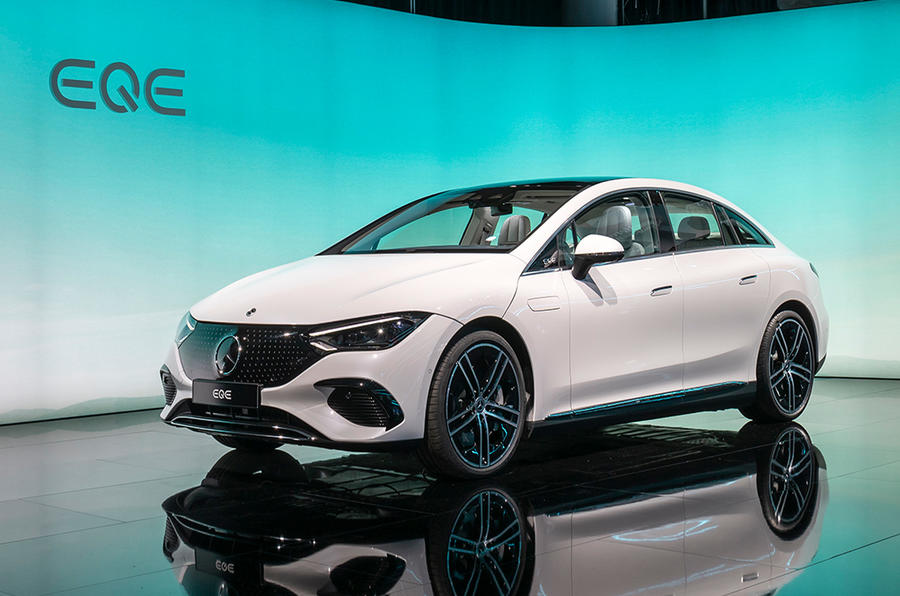
Daimler's shift to electric vehicles is already well under way. Its all-electric EQ range already contains six models: the EQC SUV, the EQA and EQB crossovers, the EQS limousine, the EQV MPV and the soon-to-arrive EQE saloon.

 
Daimler rebranded as Mercedes-Benz AG

Having spun off commercial vehicle division, company focuses on future of Benz, AMG, Maybach and EQ brands

Daimler has rebranded itself as Mercedes-Benz AG as it looks to focus on the changing environment of the automotive industry, with a particular emphasis on electrification.

The German company says the rebranding will allow it to "fully concentrate" on its Mercedes-Benz, Mercedes-AMG, Mercedes-Maybach and Mercedes-EQ brands.

The move comes almost a year after Daimler announced that it would spin off its commercial vehicles division as a standalone entity, Daimler Truck.

“The renaming to Mercedes-Benz Group AG underlines our renewed strategic focus. In doing so, we want to make clear where we see the core of our company – building the most desirable cars in the world,” said Ola Källenius, chairman of the now-renamed Mercedes-Benz AG.

“The Mercedes star has always been a promise for the future: Changing the present in order to improve it. We want to continue this legacy of our founders by taking the lead in electric mobility and vehicle software,” Källenius said.

Daimler Mobility, which offers mobility services in financing, leasing and insurance, will also adapt under the name of ‘Mercedes-Benz Mobility AG.’

 
SA vehicle sales off to a very good start; these were the top brands in January

2022 has gotten off to a very positive start for the South African automotive industry, with new vehicle sales increasing by 19.5% versus the same month last year.

According to Naamsa, the Automotive Business Council, a total of 41 382 vehicles were sold last month. Passenger vehicle sales led the way with 30 037 units and a 26.6% year-on-year gain, with the rental car industry contributing a noteworthy 15.3% to the tally.

Light commercial vehicle sales grew by just 3.8%, while the medium and heavy commercial sectors registered declines of 4.3% and 9.6% respectively.

New vehicle exports were also down year-on-year, by 9.3%, although new model introductions during the year are expected to improve the outlook.

On the sales front Toyota led the way as always, with a total tally of 12 480. It was followed by Volkswagen (5393) and Suzuki (3232).

Top-selling brands: January 2022

  • Toyota - 12 480
  • Volkswagen - 5393
  • Suzuki - 3232
  • Hyundai - 2668
  • Haval - 2442
  • Renault - 2247
  • Nissan - 2172
  • Ford - 1639
  • Kia - 1507
  • Isuzu - 1433
 
For the number of models they have Haval is punching way above its weight, they are too slow, but they are too slow and giving the big boys time to breath, I would overwhelm them and pund into submission if I were them.
 
New vehicle sales in South Africa: January 2022

South Africa’s new vehicle sales figures for January 2022 have been released, with the latest stats illustrating that the industry enjoyed a mostly positive start to the year. Let’s take a look at what you need to know…

According to Naamsa, South Africa’s aggregate domestic new vehicle sales in January 2022 increased a healthy 19.5% year on year to a total of 41 382 units, suggesting the local automotive industry is “continuing on its gradual recovery path to pre-COVID-19 levels”.

However, export sales for January 2022 interestingly fell 9.3% year on year to 19 089 units. Still, Naamsa says it expects this sector to “gain traction during the year on the back of further new model introductions by major vehicle exporters” as well as a generally “favourable global economic outlook”.

WesBank, meanwhile, points out that while year-on-year comparisons are “difficult to interpret” owing to differing pandemic circumstances, it remains positive about the prospects of a continued “slow recovery” of the market during 2022.

“January new vehicle sales kicked off the year at similar levels to the momentum created during the second half of 2021,” said Lebogang Gaoaketse, Head of Marketing and Communications at WesBank. “While some purchase decisions may have been deferred out of December into the new year, January sales provide a solid start to the year, raising the hopes of manufacturers and dealers for ongoing market improvement.”

New vehicle sales summary for January 2022

- Aggregate new vehicle sales of 41 382 units increased by 19.5% (6 743 units) compared to January 2021.
- New passenger vehicle sales of 30 037 units increased by 26.6% (6 305 units) compared to January 2021.
- New light commercial vehicle sales of 9 629 units increased by 3.8% (349 units) compared to January 2021.
- Export sales of 19 089 units decreased by 9.3% (-1 962 units) compared to January 2021.

10 best-selling vehicles in South Africa for January 2022

There were no surprises at the top of the list, with the venerable Toyota Hilux again leading the charge as the country’s best-seller. However, Toyota’s Suzuki-built Starlet climbed to second, nudging the Volkswagen Polo hatchback down to third (VW will be hoping its facelifted Polo that’s due later this month provides renewed sales impetus). Toyota’s likewise Suzuki-produced Urban Cruiser, meanwhile, grabbed fourth (just a single unit behind the Polo!) to knock VW’s Polo Vivo down to fifth. The new Corolla Cross snuck in at sixth, while the Suzuki Swift and Haval Jolion placed ninth and tenth respectively, with both models cracking four figures.

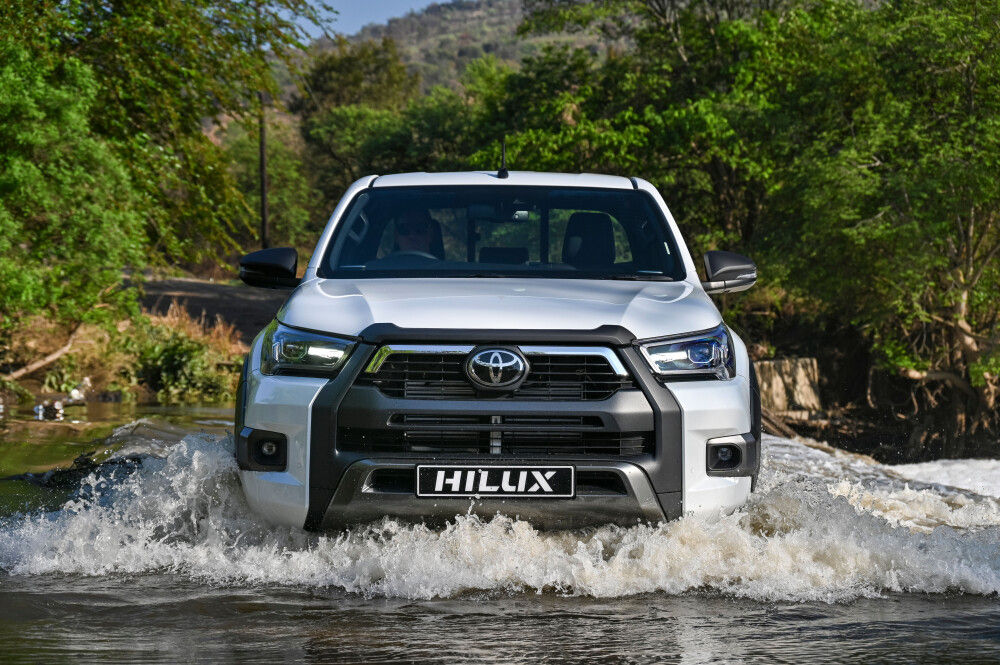
1. Toyota Hilux – 2 803 units

2. Toyota Starlet – 1 472 units

3. Volkswagen Polo (hatch) – 1 455 units

4. Toyota Urban Cruiser – 1 454 units

5. Volkswagen Polo Vivo – 1 373 units

6. Toyota Corolla Cross – 1 356 units

7. Isuzu D-Max – 1 141 units

8. Toyota Hi-Ace – 1 118 units

9. Suzuki Swift – 1 069 units

10. Haval Jolion – 1 038 units

 
SA car sales: January provides a strong launch pad for the rest of 2022

More than 41 000 new vehicles were sold in January 2022.

The total sales figure is a 19.5% improvement over the same period in 2021.

Wesbank says it remains optimistic for further market recovery in 2022.

South Africans were faced with fuel price hikes and another increase in interest rates as they started the new year, but that didn't deter them from buying new vehicles during January.

According to Naamsa, South Africa's Automotive Business Council, new vehicle sales in January 2022 increased 19.5% to 41 382 units compared to the start of 2021, creating a solid start to the year and the market's continued recovery.

The year kicked off at similar levels to the momentum created during the second half of 2021. While some purchase decisions may have been deferred out of December into the new year, January sales provide a solid start to the year, raising the hopes of manufacturers and dealers for ongoing market improvement.

While year-on-year comparisons remain challenging to interpret because of differing pandemic circumstances, at WesBank, we remain optimistic for a continued slow recovery of the market during 2022.

 
Best-selling bakkies in South Africa: January 2022

We’ve again managed to secure Naamsa’s detailed monthly sales figures, allowing us to identify South Africa’s best-selling bakkies for January 2022. Here’s everything you need to know!

South Africa’s new-vehicle market enjoyed a largely positive start to the year, a trend that was echoed in the light-commercial space where year-on-year sales grew 3.8% to 9 629 units. While this segment also includes body styles such as commercial vans, here we’ll focus exclusively on individual models in the traditional bakkie market.

So, which pick-ups did South African buyers flock to in the first month of the year? And which bakkies found themselves consigned to the very bottom of the table (or indeed unable to even crack the top 10)? Let’s take a closer look at the figures.

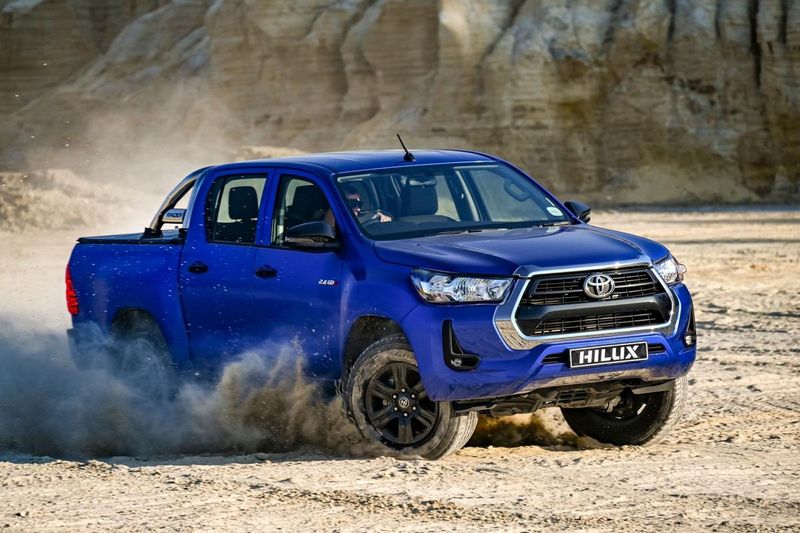
As you were no doubt expecting, the Toyota Hilux (2 803 units) – which earned the title of SA’s top-selling vehicle overall in 2021 before receiving yet more positive press when Nasser Al-Attiyah triumphed at the 2022 Dakar Rally in the V6-powered GR DKR Hilux T1 – was again the country’s best-selling bakkie for the month, more than doubling the efforts of its closest rival. Interestingly, some 243 units were listed as government sales, while a further 159 units were registered in the rental market.

The second-placed Isuzu D-Max (1 141 units) was the only other contender to hit four figures during the reporting period. That’s another fine performance from the ageing Isuzu bakkie considering the long-awaited new-generation version is just a couple of months away from rolling out of the Struandale facility and hitting local roads.

10 best-selling bakkies in South Africa for January 2022

1. Toyota Hilux – 2 803 units

2. Isuzu D-Max – 1 141 units

3. Mahindra Pik Up – 618 units

4. Ford Ranger – 608 units

5. GWM P-Series – 539 units

6. GWM Steed – 461 units

7. Nissan NP200 – 445 units

8. Nissan Navara – 441 units

9. Toyota Land Cruiser 79 – 303 units

10. Volkswagen Amarok – 195 units

 
SA car sales: Suzuki sold over 1000 Swifts in January, and broke a whole lot of records

Suzuki set new sales records in South Africa this past January.

Having sold more than 3 200 new vehicles, the brand was behind Toyota and Volkswagen for total number of units sold.

The Swift was again the top-selling model.

While Covid-19 and its damning effects have ravaged South Africa's automotive sector, Suzuki Auto South Africa has performed exceptionally well. Over the last two years, the automaker's sales have been steadily growing in South Africa and have they set new sales records on several occasions.

January 2022 is no different as Suzuki can again stand proud as a brand forever growing. Last month, the first official sales month for the new year, a total of 3 232 new Suzuki vehicles were sold in South Africa - the highest figure yet for the Japanese automaker in SA. They were also the third-best ranked automaker after Toyota and Volkswagen.

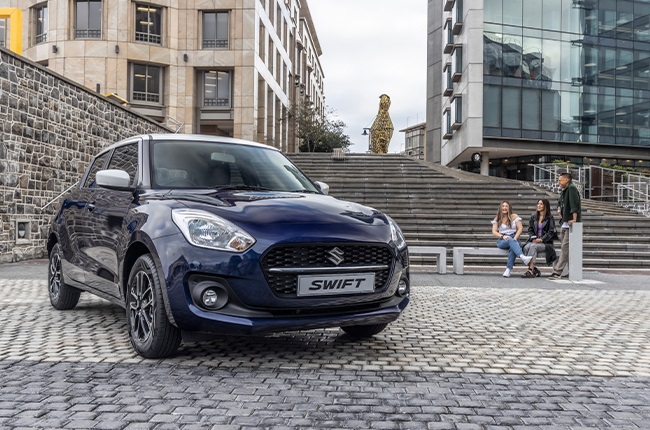
And the sales leader? That honour goes to the popular Swift and Swift Sport, accounting for 1 069 units last month. The Vitara Brezza also did well with 558 models sold. It's safe to say every model in the Japanese automaker's model line-up moves pretty good numbers for the brand, even its seven-seater Ertiga and its sedan offering, Dzire. Even the popular Jimny found 281 new owners while the budget-friendly S-Presso sold 332 units.

 
WATCH | Toyota sales return to pre-Covid highs but the economy is still under pressure

  • 12 480 new Toyota-produced vehicles found homes in SA in January 2022.
  • Toyota, Lexus and Hino's sales remain positive despite economic uncertainty.
  • Luxury SUVs are selling like hotcakes, Land Cruiser 300 and Prado in particular.
Toyota South Africa Motors (TSAM) has announced that January 2022 was one of its best starts to the year to date, particularly since the Covid-19 pandemic established a grip on the country, as it sold 12 480 new vehicles in SA last month.

The company makes it noteworthy that its new vehicle sales aggregate accounts for a remarkable market share of 30.2% out of the 41 382 total units sold in South Africa in January. Toyota, Lexus and Hino brands did well last month, despite a rise in the repo rate and the ongoing economic impact of the coronavirus on disposable incomes.

 
Vehicle finance slap down

The Competition Commission has delivered a damning report on vehicle finance collusion.

The Competition Commission has implicated JSE-listed FirstRand Bank Limited, through its WesBank division, as well as Toyota Financial Services South Africa in a vehicle finance collusion scheme, recommending that the Competition Tribunal fine each of the companies 10% of their total turnover.

In a statement released on Thursday, the commission noted that it had referred both companies to the tribunal on allegations of dividing the market by allocating either customers or suppliers.

The investigation revealed that Toyota Financial Services and WesBank were in contravention of section 4(1)(b)(ii) of the Competition Act 89 of 1998 by entering into the aforementioned agreement to divide markets for the provision of vehicle finance.

The Competition Commission said, “FirstRand, through its WesBank, division and TFS are involved in the provision of vehicle finance services. They are therefore supposed to compete. They, however, concluded a shareholder agreement which contains clauses that prevent them from competing.”

 
Where would Toyota be without Suzuki? A look at sales figures in SA

Just how big would Suzuki Auto SA be if the models it builds for Toyota were included in its local sales figures? And where would that leave Toyota in terms of monthly volumes? We delve into January 2022’s sales statistics to find out…

Alliances are hardly new to the automotive scene. In fact, they’ve enjoyed somewhat of a resurgence in recent years, as manufacturers have again opted to team up in an attempt to mitigate rising research and development costs. One of the most obvious current examples in the South African market is the partnership between Toyota and Suzuki.

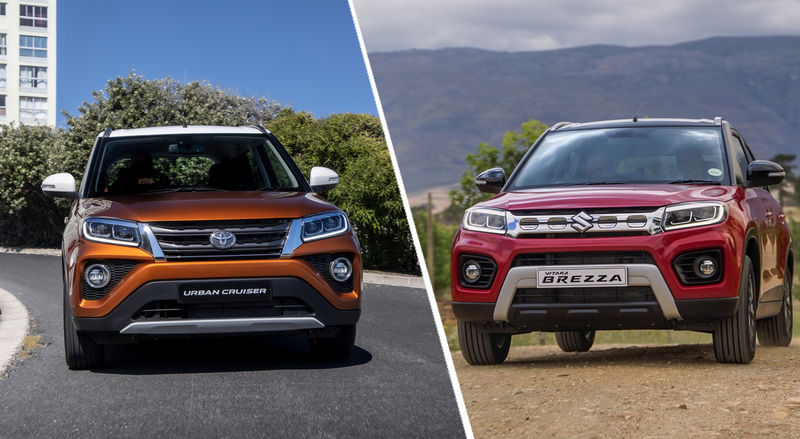
We say obvious since the first locally available products of this Japanese alliance – the Indian-built Starlet, Urban Cruiser and Rumion – return to the sort of badge engineering not seen here for decades. Other than an insignia here, a specification tweak there and in some cases a grille or bumper redesign, the final products are identical. Despite this, the rebadged versions have made a habit of easily outselling the originals on which they are based.

Although this fact provides fascinating insight into the power of the Toyota brand in South Africa, it also has us wondering just how big Suzuki Auto SA would be in volume terms if we were to include the models it builds for its alliance partner in its sales figures. And, just as interestingly, where such an experiment would leave the Aichi-based giant.

January 2022’s sales stats as an example

For the purposes of this exercise, we’ll use January 2022’s freshly released industry figures, which show the Toyota versions again outperformed their Suzuki donors on the sales charts. As the best-selling passenger vehicle of the month, the Starlet (1 472 units) positively thumped the Baleno (110 units). The Urban Cruiser (1 454 units) likewise outpaced the Vitara Brezza (558 units), while even the Rumion (368 units) edged the Ertiga (325 units).

A spot of quick maths illustrates that Suzuki-built models (3 294 units) accounted for a whopping 41.73% of Toyota’s passenger-vehicle sales (7 893 units, excluding Lexus) for the month. Tellingly, that 3 294 figure eclipses Suzuki’s total sales (3 232 units, including light commercial vehicles) for January 2022, despite it being another record month for the Hamamatsu-based company.

So, if we were to add the Toyota-badged versions to Suzuki’s passenger-vehicle tally (3 131 units), we’d end up at a heady 6 425 units, which would put the company comfortably ahead of the Volkswagen Group (5 118 units, including Audi) in the passenger-vehicle sales race. Furthermore, were the Suzuki-built models to be removed from Toyota’s passenger-vehicle total, Suzuki would top the country’s passenger-vehicle sales charts. That’s quite something, isn’t it?

 
How Ford SA plans to overcome the global 'chip' shortage issue hampering local operations

Ford has been hampered by the global microchip and semi-conductor shortage.

Locally, the Blue Oval has seen a decline in sales and vehicle production.

Ford SA confirmed to Wheels24 that they are continuously working to remedy the current situation.

Many automakers have been hit hard by the global microchip and semi-conductor shortage. Because of it, several countries where these automakers are competing are experiencing a lack of stock. South Africa, too, has been affected by this and have we seen a massive decline in new vehicle sales numbers. Of course, the chip shortage has come into play when the Covid-19 pandemic hit the world.

Locally, several automakers struggle to meet sales figures, among those being Ford. The Blue Oval has seen declining figures over the last two years, gradually dropping down the sales order. Where Ford SA sold the third most vehicles in South Africa just a year ago, they only managed the eighth highest number of all automakers in South Africa in January 2022.

Ford South Africa sold 1 639 new vehicles last month, bested by the likes of Suzuki (third, 3 232 units), Haval (fifth, 2 442 units), and Nissan (seventh, 2 172 units).

 
Top
Sign up to the MyBroadband newsletter
X