The SA Vehicle Industry Thread

TOP 40: These were South Africa’s best-selling cars, SUVs and bakkies in January 2022

The South African new vehicle market got off to an encouraging start in January, with overall sales amounting to 41 382 vehicles, an increase of 19.5% over the same month in 2020.

Cars and SUVs made a stronger showing, with passenger vehicle sales growing by 26.6 percent year-on-year, while the bakkies and other LCVs saw a gain of just 3.8%.

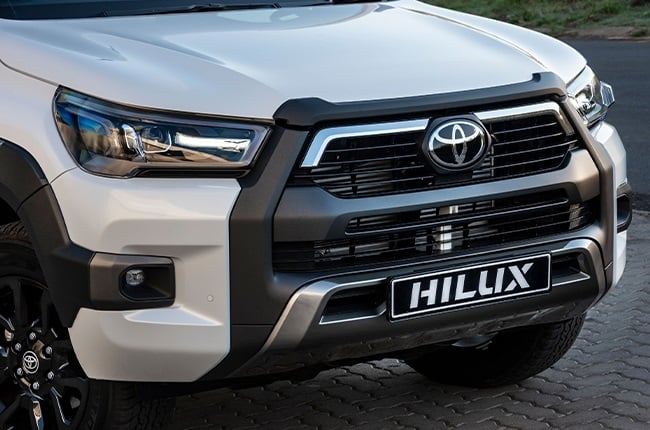
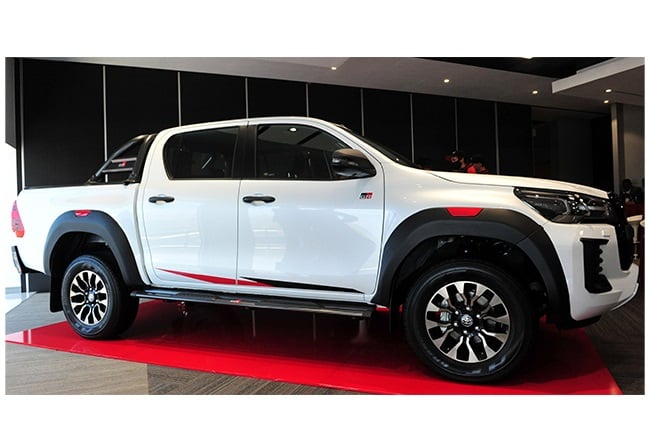
Toyota led the way in terms of overall sales (click here to see the top-performing manufacturers), and as usual the Toyota Hilux topped the charts as South Africa’s best selling vehicle overall.

On the passenger car front, the Toyota Starlet rose to the top last month with 1472 sales, narrowly beating the Polo (which is undergoing a model change) and its cheaper Polo Vivo sibling.

The Suzuki Swift was not too far behind, breaking through the 1000 unit barrier for the first time, while the Toyota Agya enjoyed a better than usual month with 888 sales.

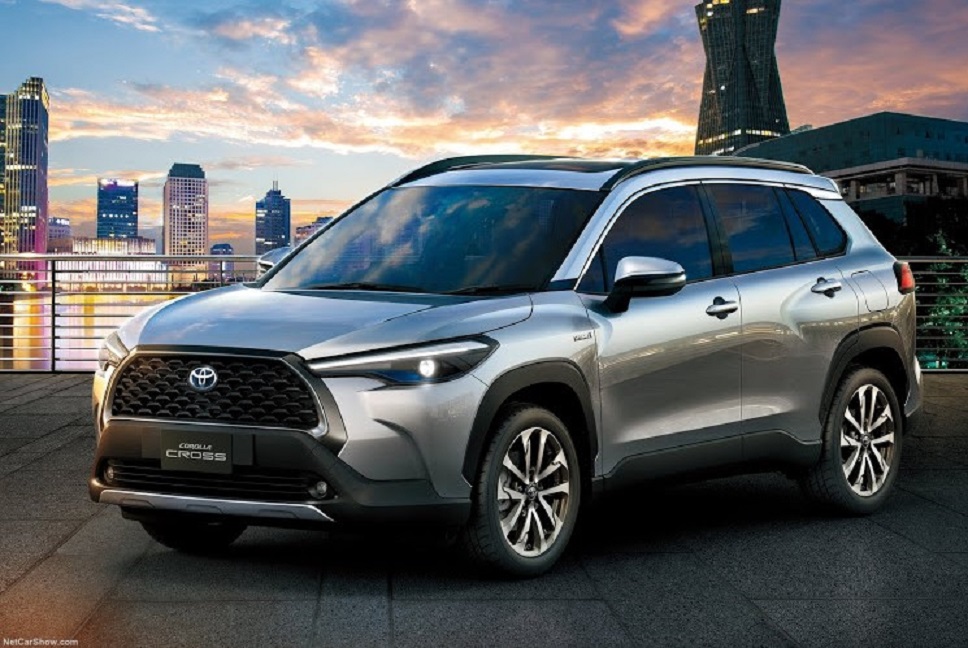
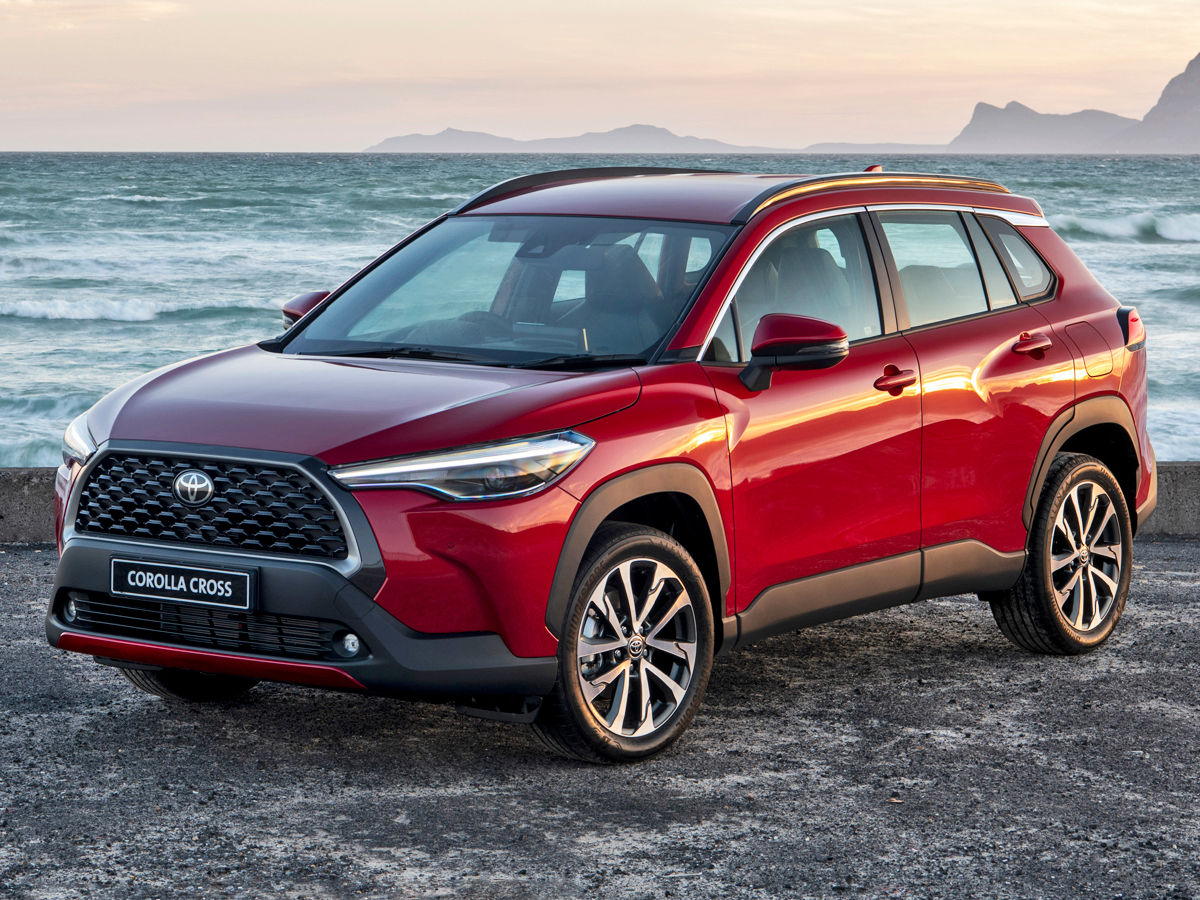
The Toyota Urban Cruiser was the nation’s top selling SUV in January, proving that there is indeed a big appetite for affordable SUVs. With a total tally if 1454 units, it beat the locally-built Toyota Corolla Cross (1373), while the Haval Jolion also enjoyed a stellar month with 1038 of these Chinese SUVs finding homes.

The Volkswagen T-Cross (781), Toyota Fortuner (707) and Ford EcoSport (691) also enjoyed strong sales last month.

TOP 40: South Africa’s best sellers in January 2022

  • 1. Toyota Hilux - 2803
  • 2. Toyota Starlet - 1472
  • 3. Volkswagen Polo - 1455
  • 4. Toyota Urban Cruiser - 1454
  • 5. Volkswagen Polo Vivo - 1373
  • 6. Toyota Corolla Cross - 1356
  • 7. Isuzu D-Max - 1141
  • 8. Toyota Hiace - 1076
  • 9. Suzuki Swift - 1069
  • 10. Haval Jolion - 1038
  • 11. Toyota Agya - 888
  • 12. Renault Kwid - 812
  • 13. Hyundai Atos - 795
  • 14. Volkswagen T-Cross - 781
  • 15. Toyota Corolla Quest - 741
  • 16. Toyota Fortuner - 707
  • 17. Ford EcoSport - 691
  • 18. Renault Triber - 648
  • 19. Mahindra Scorpio Pik-Up - 618
  • 20. Ford Ranger - 608
  • 21. Renault Kiger - 604
  • 22. Nissan Magnite - 570
  • 23. Suzuki Vitara Brezza - 558
  • 24. GWM P-Series 539
  • 25. Nissan Almera - 477
  • 26. Hyundai Grand i10 - 465
  • 27. GWM Steed - 461
  • 28. Hyundai Venue - 464
  • 29. Nissan NP200 - 445
  • 30. Nissan Navara - 441
  • 31. Kia Picanto - 430
  • 32. Volkswagen Polo Sedan - 427
  • 33. Haval H6 - 394
  • 34. Toyota Rumion - 368
  • 35. Suzuki S-Presso - 332
  • 36. Suzuki Ertiga - 325
  • 37. Kia Rio - 310
  • 38. Toyota Land Cruiser PU - 303
  • 39. Suzuki Dzire - 282
  • 40. Suzuki Jimny - 281
 
When will chip shortage ease? Carmakers and chip firms have different answers

Carmakers, including General Motors, Ford and Hyundai, predict that the current chip constraint will ease in the second half of 2022, but automotive chipmakers, on the other hand, expect the recovery to take longer.

During their quarterly results reporting over the past two weeks, GM CEO Mary Barra projected the semiconductor shortage would diminish in the second half, Ford forecast a significant improvement in the second half after a first-quarter low in vehicle sales, and Hyundai predicted chip supply would return to normal levels in the third quarter of this year.

But leading automotive chipmakers like NXP and Infineon forecast a supply squeeze to persist despite production increases.

The differing outlooks on the most pressing issue facing the automobile industry prolongs uncertainty about its recovery from the coronavirus pandemic and risks hampering its efforts to transition to new, chip-intensive technologies such as electrification and safety and driving-assistant features.

The chip shortage will cost the global auto industry $210 billion (R3.2 trillion) in revenues, for 2021 alone, and lost production of 7.7 million vehicles, consultant AlixPartners estimated in September.

 
SA car sales: Toyota Hilux gets 2022 off to a cracking start with empathic sales win

The Toyota Hilux got its 2022 off to a good start by selling the most number of units.

• The Isuzu D-Max was the only other bakkie to sell more than a thousand units in January.

• Nissan sold 441 units of its locally-produced Navara.

The official sales figures for January 2022 are in, and bakkies were again the talk of the town. Expectedly, the Toyota Hilux got its year off to a very good start, bringing home a sales figure of 2 803 units for the Japanese automaker.

Behind it, the Isuzu D-Max secured the signatures of 1 141 new owners. These two bakkies were the only ones to have sold more than a thousand units last month. Behind them, the Mahindra Pik Up had a sales figure of 618 units, followed by the Ford Ranger with 608 units.

These are trying times for Ford South Africa as the global microchip shortage is hampering the automaker's local operations. Though the Blue Oval's local team is already underway with plans to remedy the situation, they will look to bounce back from a dismal January.

Ford SA revealed to Wheels24: "We continue working closely with suppliers to address near-term production constraints, while Ford teams are working hard to maximise production, prioritising key vehicle lines our customers and dealers most want. In addition, we are working to create new ways of working to give Ford greater independence in delivering the technologies and features our customers will most value in the future."

 
Found the reason for Ford's poor sales numbers. I was at the dealer this morning (we need another single cab for our fleet) and they can't get stock until April or May! That's got to be hurting them country wide.
 
Nissan to stop developing internal combustion engines for global markets - report

Nissan plans to stop developing new internal combustion engines in all its major markets except the United States as the Japanese carmaker shifts its focus to electric cars, the Nikkei business daily reported this week.

The carmaker will continue limited development of its petrol-powered engines for its US market, mainly for pick-up trucks, according to Nikkei, which did not cite any sources. The company will reportedly also continue to develop ICE engines that form part of hybrid drivetrains.

Nissan did not immediately respond to a Reuters request for comment.

The Japanese company has plans to build new battery recycling factories in the United States and Europe by the end of fiscal 2025, Nikkei had reported in December. Carmakers worldwide, including General Motors and Ford, have been involved in a series of efforts to shift their line-ups to electric vehicles.

Renault and Nissan announced late last month that they would work more closely together to make electric cars, as part of a $26 billion (R400bn) investment plan over the next five years. The two-decade old alliance, which also includes Mitsubishi Motors, said it would increase the number of common platforms for electric vehicles to five from four.

 
New vehicle sales to increase by 15% despite predicted 1.5% spike in interest rate - NADA

New vehicle sales in South Africa is on the up after two years of continuous struggles.

NADA expects sales to increase by 10-15% in 2022.

NADA further predicts that the interest rate will be increased by a further 15% this year.

The National Automobile Dealers' Association (NADA) is looking to sales growth of between 10% and 15% in the South African new-vehicle market in 2022. The estimate is based on buoyant sales in the first month of the year, together with positive trends in 2021, though the projection depends on stock supply normalising swiftly.

NADA expect sales to be back to pre-pandemic numbers in 2022. Last year proved to be a much better year than expected compared to 2020, with 22% growth thanks to local sales of 86 7673 more units than in 2020. We were, however, still not back to the market levels of 2019 and lagged by 14% or 72 490 units compared to results from two years ago.

The average growth of 16% across all vehicle categories in 2021 was heartening, with extra-heavy commercials the best performer, with sales up 24%. Passenger car sales followed closely, with sales up 23% (57 177 more cars sold).

 
#SOMI: South African vehicle sales projected to grow by over 15% in 2022

Despite the many industrial headwinds currently hampering the industry, South Africa’s new vehicle market is expected to grow by more than 15% in 2022, Toyota South Africa Motors (TSAM) President and CEO Andrew Kirby said on Thursday.

Kirby was speaking at the company’s annual State of the Motor Industry event held at Kyalami Raceway. He predicted that total industry sales would amount to 540 000 units, effectively bringing the industry back to pre-pandemic levels, given that 536 612 vehicles were sold in 2019. However, it must be borne in mind that 2019 was not a particularly good year for the industry, with South Africa’s annual sales having gradually declined to that level from 649 216 units in 2013.

“The extrapolation (540 000 units) is based on a variety of socio-economic factors that do not bode well for the local motor industry, including the rising interest rate cycle, the strain taken by the agricultural sector due to heavy rainfall, the muted tourism recovery as well as possible market instability owing to ANC leadership elections and NBF wage negotiations,” Kirby said.

However, the CEO said his prediction was “constrained” and that the market could grow by an even bigger margin if the current issues in the automotive supply chain were to be resolved. This includes current shipping challenges as well as the ongoing semiconductor chip shortage, which many analysts believe will improve later in 2022.

The National Automobile Dealers’ Association was less bullish but still somewhat optimistic, with its prediction of a 10% to 15% overall market growth for 2022.


Toyota is betting big on electric vehicles globally, but it will be a while before they become commonplace in South Africa, says the president of Toyota South Motors Andrew Kirby.
Key to this is government incentives which are needed in South Africa to encourage the adoption of new energy vehicles as well as make the cost attractive to the local market, he said at a media briefing in Johannesburg on Thursday (10 February).
He added that the local market is not yet conducive for the full adoption of Battery Electric Vehicles (BEVs), citing infrastructural shortcomings related to energy generation as well as high import duties.
 
GR-Sport Hilux, fresh Lexus models, and new car sales growth expected for 2022, says Toyota SA

- This week, Toyota South Africa hosted its fifth State of the Motor Industry (SOMI) event in Johannesburg.
- The company's spokespeople discussed the challenges of selling cars during the pandemic.
- New car sales are expected to return to pre-Covid levels in 2022 in SA, but that's if car makers can secure enough vehicle stock.

This week, a jam-packed programme greeted us at the Kyalami Grand Prix Circuit in Johannesburg as Toyota South Africa Motors hosted its fifth State of the Motor Industry (SOMI) event. The company's President and CEO, Andrew Kirby, together with Toyota SA and Lexus SA representatives, discussed several pertinent topics affecting the auto industry – including the future of mobility, and international and local market trends.

According to Kirby, gazing into his crystal ball, total vehicle sales for 2022 will continue the post-lockdown recovery trend and will settle at approximately 540 000 units at the end of this year.

"The breakdown for this year's forecast includes 334 800 Passenger models, 178 198 Light Commercial Vehicles (LCV), as well as a total of 27 002 Medium and Heavy vehicles. The extrapolation (540 000 units) is based on a variety of socio-economic factors that do not bode well for the local motor industry, including the rising interest rate cycle, the strain taken by the agricultural sector due to heavy rainfall, the muted tourism recovery as well as possible market instability owing to political party leadership elections," says Kirby.

He explains that his forecast was "constrained" and that the industry could even sell more vehicles if the economy performed better than expected or if issues affecting the automotive supply chain were resolved.

 
Government’s new energy vehicle policy delayed further

Timeframe has shifted out by another six months – Toyota South Africa

The government’s drive to develop a support framework for new energy vehicles (NEVs) that includes the production of electric vehicles in South Africa and the components that go into them appears to have run out of … er, energy.

 
Bye-bye dealerships? Industry insiders set to explore the future of automotive retail in SA

  • Consumers are migrating toward digital retail services across business verticals.
  • Some of SA's leading automotive experts will discuss the future of auto retail.
  • You can join the conversation by registering to participate in the upcoming webinar.
It should come as no surprise to anyone living under lockdown conditions for nearly two years; the emergence and rising adoption of digital technologies have created consumer demand for customised solutions. Look at how we buy groceries these days via apps and websites. Gifts? Those too are shopped online and delivered to loved ones - you don't even have to wrap anything anymore.

It's the same in the automotive space. We'll never forget the dark month when dealerships were forced to shut down due to the pandemic. Consequently, the automotive retail landscape is faced with a transition from physical dealerships toward digital retailing whilst grappling with the relationship between the two.

An upcoming webinar, hosted by Messe Frankfurt South Africa, the organisers of Automechanika Johannesburg, and Absa, will hone in on the future of auto retail in SA, where industry leaders will unpack the key trends shaping the local market. They say delegates will delve deep and discuss critical changes and how the motor industry, and consumers, can best adapt to them.

 
February new car sales reflect 18% increase in buying trends compared to last year

Just before the surging petrol price puts South Africans into a state of dismay, a report on the latest new vehicle sales on local soil is providing some good news for the automotive sector. February new car sales have reflected a significant increase to the same time last year which means buying patterns are returning to what they once were.

Naamsa, the Automotive Business Council stated that February new car sales in 2022 grew 18.4% compared to the same time last year. Lebogang Gaoaketse, Head of Marketing and Communication at WesBank further added that “Despite the traditionally short February selling month and in the face of interest rate hikes and fuel price increases, new vehicle sales performed reassuringly well during the month.”

The passenger segment improved most significantly by 22.4% with a total of 29,563 units sold within the 28 day month as opposed to 24,144 from the year before. The LCV segment enjoyed a 9.4% increase with 12,290 new units being sold in comparison to 11,232 from 2021 while the commercial segment also enjoyed a notable improvement with 2,376 new vehicles being sold as opposed to 1,993 from a year ago, this is a 19.2% increase.

 
New vehicle sales in South Africa: February 2022

South Africa’s new-vehicle sales figures for February 2022 have been released, with the latest stats showing it was the country’s best sales month in nearly a year. Let’s take a look at exactly what you need to know…

According to Naamsa, South Africa’s aggregate domestic new-vehicle sales grew a strong 18.4% year on year to a total of 44 229 units in February 2022, suggesting that the local automotive industry was continuing to “gain traction”. In fact, February’s figures represented the country’s best sales month since March 2021.

The organisation furthermore pointed out that export sales for February 2022 increased an “encouraging” 12.3% year on year to 32 867 units. Following what Naamsa described as an “extended downward trajectory period since the second half of 2021”, it said the improvement in February “perhaps marked the start of a renewed upward momentum” in exports for the remainder of the year.

Lebogang Gaoaketse, head of marketing and communication at WesBank, added that despite the traditionally short selling month and in the face of interest rate hikes and hefty fuel price increases, new vehicle sales performed “reassuringly well during the month”.

“Consumer demand was strong during February, particularly for new vehicles as opposed to used, borne out by WesBank’s 14.2% increase in finance applications for new vehicles alone,” Gaoaketse revealed.

New vehicle sales summary for February 2022

- Aggregate new vehicle sales of 44 229 units increased by 18.4% (6 860 units) compared to February 2021.
- New passenger vehicle sales of 29 563 units increased by 22.4% (5 419 units) compared to February 2021.
- New light commercial vehicle sales of 12 290 units increased by 9.4% (1 058 units) compared to February 2021.
- Export sales of 32 867 units increased by 12.3% (3 590 units) compared to February 2021.

10 best-selling vehicles in South Africa for February 2022

1. Toyota Hilux – 3 503 units

2. Toyota Corolla Cross – 1 693 units

3. Volkswagen Polo Vivo – 1 634 units

4. Toyota Starlet – 1 607 units

5. Toyota Hi-Ace – 1 458 units

6. Isuzu D-Max – 1 401 units

7. Suzuki Swift – 1 313 units

8. Volkswagen Polo (hatch) – 1 186 units

9. Toyota Fortuner – 1 101 units

10. Renault Kwid – 1 041 units

 
South African vehicle sales surge ahead, but Ukraine conflict could slow momentum

The South African motor industry continued its robust recovery in February, with new vehicle sales rising by 18.4%, versus the same month last year, to a total of 44 229 units. Export sales increased by 12.3% to 32 867 units, According to Naamsa.

The new passenger car market led the way with 29 563 sales, representing a year-on-year gain of 22.4%. Light commercial vehicles and bakkies grew by 9.4%, while the medium and heavy commercial vehicle segments saw respective growth of 7.5% and 23.5%.

84.9% of sales took place through dealerships, while the rental industry accounted for 10.1%, government sales 3.8% and corporate fleets 1.2%.

Toyota led the way with overall sales of 13 458 units, followed distantly by Volkswagen (6153 units), Suzuki (3240), Hyundai (3017), Nissan (2126) and Haval (2054).

But tougher times could lie ahead and the Automotive Business Council, Naamsa, is concerned about the escalating geo-political tensions due to Russia’s invasion of Ukraine.

 
These were South Africa’s best (and worst) selling bakkies in February 2022

A whole lot of cautious optimism. That seems to be the overall feeling in the South African motor industry this year, with January and February showing strong year-on-year gains.

According to Automotive Business Council Naamsa, 44 229 vehicles were sold in the country last month, which is an increase of 18.4% over the same month in 2021.

However, when it comes to growth, the bakkies continue to trail cars, with LCV sales having increased by just 9.4% year-on-year in February, versus 22.4% for passenger vehicles.

That could all change by the end of this year though, with the all-new Ford Ranger and Isuzu D-Max models set to launch in 2022, with the Isuzu D-Max expected to debut in March and the Ford Ranger by year-end.

It begs the question of whether the Toyota Hilux will remain the dominant player by this time next year. In February, it enjoyed a dominant lead, with 3 503 units sold. It was followed by the Isuzu D-Max, Nissan NP200 and Ford Ranger.

TOP 10 BAKKIES: FEBRUARY 2022

Toyota Hilux - 3 503
Isuzu D-Max - 1 401
Nissan NP200 - 1 020
Ford Ranger - 879
Mahindra Scorpio Pik-Up - 766
GWM P-Series - 623
GWM Steed - 526
Nissan Navara - 476
Toyota Land Cruiser PU - 244
Hyundai H100 Bakkie - 242

 
Toyota recorded highest monthly sales total with new personal best market share

As you can expect, a good sales month for new vehicles in South Africa inadvertently means a good sales month for revered local brands like Toyota. The Japanese brand now has its largest market share to date and as for the second month in a row, Toyota recorded its highest monthly sales total.

A whopping 30.4% market share posted by Toyota South Africa Motors (TSAM) has the respected brand in elation after its second highest ever monthly sales total, retailing 13,458 units in February. This is the highest total since retail trade was upset by Covid lockdowns just under two years ago.

A strong dealer network and customer base are the reason for this resounding success as Leon Theron Senior Vice President of Sales and Marketing at TSAM stated that: “Despite obvious market detractors such as shrinking disposable income and volatile trading conditions, I am very proud of Toyota’s performance in the first couple months of this year. Over 13 400 units retailed last month and a market share of 30.4% is a phenomenal result – all credit has to go to our dealer network and, of course, our loyal customer base. Thank you!”

The standout models sold after Toyota recorded their best month were expectedly the Hilux which took overall honours in the LCV segment with 3,503 sales while the people carrier Hiace Ses’fikile dominated the minibus segment once again with 1,438 units sold.

 
Historic reorganisation as Ford splits up EV and ICE businesses

Ford Motor will separate its fast-growing electric vehicle operations from its legacy combustion engine business in a historic reorganisation of the 118-year-old company.

The newly formed Ford Model e unit will scale up the carmaker's EV offerings and develop software and connected-vehicle technology and services for all of the company. Ford Blue will focus on combustion vehicles, cutting costs and simplifying operations.

Ford's ambition will be "to become a truly great, world-changing company again, and that requires focus," Chief Executive Officer Jim Farley said in a statement Wednesday. "We are going all in, creating separate but complementary businesses that give us start-up speed and unbridled innovation."

Ford said it plans to be able to make 2 million electric vehicles annually by 2026, a big step up from the 600 000 it's aiming for in 2024. The carmaker also is now targeting adjusted earnings before interest and taxes of 10% by 2026, up from as much as 8% expected for this year.

Accelerating Ford's transition to a battery-electric future has been a major focal point for Farley. He raised the company's wager on EVs months after taking over as CEO. Bloomberg News first reported last month that the carmaker was contemplating a further increase in expenditures toward EVs, and that Farley had wanted to wall off electric operations from Ford's internal combustion engine business.

 
Top
Sign up to the MyBroadband newsletter
X