The SA Vehicle Industry Thread

SA vehicle market gaining momentum, these were the top-selling brands in November

The South African new vehicle market continued its gradual recovery in November 2021. According to Naamsa, a total of 41 588 vehicles were sold last month, a gain of 553 units over the previous month and a 6.6% improvement over November 2020.

Passenger cars led this charge with a 9.4% year-on-year growth, supported by a resurgent rental car market, while the light commercial vehicle market declined by 0.8%. The medium and heavy commercial market segments grew by an encouraging 22.1% and 8.1% respectively.

84.2% of November’s vehicle sales took place through the dealer channels, and the rental market accounted for 11.5%, while government and corporate sales represented 2.4% and 1.9% respectively.

Sadly, vehicle exports plunged by 42.2% year-on-year, amounting to just 19 548 units in October, as supply chain disruptions and Europe’s fourth Covid-19 wave took effect. However, Naamsa expects the export market to resurge in 2022, as new locally-produced models such as the Mercedes C-Class, Ford Ranger and facelifted Volkswagen Polo come on stream, and international economic conditions improve.

 
These were the six best selling cars in South Africa in November 2021

The month of November this year in South Africa displayed impressive resilience for the new car market, considering the hardships caused by the COVID-19 pandemic. On top of this, first interest rate hike in three years, consecutive fuel price hikes, a new variation on the pandemic theme, and the return of load shedding didn’t deter sales too much.


As WesBank reveals, the top six cars sold in South Africa over November 2021 is as follows:


  1. Toyota Hilux – 2 558
  2. Volkswagen Polo – 1 890
  3. Toyota HiAce – 1 789
  4. Toyota Corolla Cross – 1 757
  5. Isuzu D-Max – 1 666
  6. Volkswagen Polo Vivo – 1 608
The introduction of the Corolla Cross, which is built locally just like its peers on that list, only took place last month which makes this a highly impressive debut in South Africa.

Overall, the market’s resilience continued, recording 41 588 sales during November according to Naamsa. This represents a 6,6 per cent growth over the same period last year and a marginal improvement (553 units) over October. Year-to-date, the market has recorded 428 131 sales, up 24,8 per cent on 2020’s 342 956 figure.


The passenger car market increased 9,4 per cent to 27 828 units. Dealer sales in the segment grew similarly by nine per cent, injecting much-needed confidence into the retail network’s sustainability as well as an indication of consumer confidence.

 
Suzuki SA concludes another month of successful sales in November 2021

Naamsa, the automotive industry business council, noted on Wednesday that Suzuki sold no less than 3 082 units in November. This is not far off from its overall record of 3 134 units sold in September this year.


This sales performance places Suzuki firmly in third place, behind Toyota and Volkswagen. It also gives the brand a 7,4 per cent share of the total South African market, which, according to Naamsa, sold a combined 41 588 units in November.


Suzuki had a 10,72 per cent share of the passenger vehicle market. Both its overall share and their passenger market share are Suzuki’s highest on record. Hidden within the massive sales figures are two other major milestones. The first is a new dealer sales record of 2 097 Suzuki vehicles sold in November.


This is a new overall sales record for the dealer channel and the second month in a row that the dealer network has sold more than 2 000 Suzuki cars, SUVs and commercial vehicles to customers.

The second figure is, according to the sales statistics, 17 dealers each sold more than 50 units in one month. What’s more, is that these top-selling dealers are geographically spread across South Africa.


“As the vehicle manufacturer, we are always monitoring dealer sales to gauge the health of the dealer network and of the Suzuki brand among private buyers,” says Henno Havenga, Manager for Auto Dealer Sales at Suzuki Auto.

 
Ford Struandale Engine Plant surpasses 3,8 million engine assemblies

The Ford Struandale Engine Plant in Gqeberha has reached several significant production milestones for its two current engine programs as of December 2021.

This coincides with the announcement of Ford’s R600-million investment in the facility for the introduction of a third engine program, in the form of the new 3,0-litre V6 turbodiesel engine, and upgrades to the existing 2,0-litre SiT and BiT engine assembly operations. These engines will be used in the next-generation Ranger, scheduled for launch in 2022.

“To date, the Struandale Engine Plant has produced more than 3,81-million engines, comprising 10 different engine programs, since opening its doors in 1964,” says Shawn Govender, Plant Manager of the Ford Struandale Engine Plant. “Ford remains one of the key automotive manufacturers and investors in Nelson Mandela Bay, supporting approximately 850 employees at the Struandale Engine Plant, and thousands more in the total value chain.”

Production of the 2,0-litre Single Turbo and Bi-Turbo four-cylinder turbodiesel engines has hit the 175 000-unit mark since it was launched in 2019 for the current Ranger pick-up. The 2,0-litre turbodiesel powerplant has become the mainstay of the Ranger line-up, with the full range of Ranger models manufactured at Ford’s Silverton Assembly Plant in Pretoria for domestic sales and exports to more than 100 global markets. The 2,0-litre diesel engines also power the Everest seven-seater (SUV) which is built alongside the Ranger in Silverton.

“The 2,0L Single Turbo and 2,0L Bi-Turbo engines are modern and sophisticated units assembled on a high-tech line that includes automated robotic head sub-assembly, fully automated sealant application, along with extensive error-proofing and traceability mechanisms by means of multiple camera and transponder systems to ensure the highest level of production quality,” Govender says.

“Having now reached the 175 000 mark, we are proud to be further enhancing the capability of the line to accommodate additional complexity and engine derivatives as part of the R600 million investment in the Struandale Engine Plant for the next-generation Ranger,” Govender adds.

All these engines are supplied to the Silverton Assembly Plant in Pretoria for the Ranger and Everest, with around two thirds of the locally produced Rangers destined for export markets.


Snip 1.jpegSnip 2.jpeg
 
SA car sales | Compounding struggles not enough to flatten strong sales curve

• More than 41 000 new vehicles were sold in South Africa in November 2021.

• The sales figure is a 6.6% improvement over the same period last year.

• November is the fifth month in 2021 to show a sales figure of more than 40 000.

South Africa's new-vehicle market has faced numerous challenges this year, but many seemed to arrive all at once during November 2021. However, the first interest rate hike in three years, consecutive fuel price hikes, a new variation on the pandemic theme, and the return of load shedding didn't deter sales too much.

The market's resilience continued, recording 41 588 sales during November, according to Naamsa, South Africa's Automotive Business Council. November sales represent a 6.6% growth over the same period last year and a marginal improvement (553 units) over October 2021.

While it remains difficult to compare data over periods given the uncertainty of the pandemic for the past two years, a more certain sign of market improvement can be seen in a broader view of sales performance. In 2020, just two months of the year exceeded 40 000 units, and those were the first two months, before lockdown regulations were put in place. However, five months of 2021 have recorded sales of more than 40 000 units, including the past four months consecutively. Market conditions are certainly improving.

Year-to-date, the market has recorded 428 131 sales, up 24.8% on 2020's 342 956.

Lebogang Gaoaketse is the head of Marketing and Communication at WesBank.

 
SA car sales | Dealers could be in for a rough ride over the upcoming holiday season

• NADA believes that the South African new vehicle market is holding up well.

• The local economy has been hit hard by by increased fuel prices and higher interest rates.

• December and January could prove more challenging for new vehicle sales.

After analysing the figures distributed by Naamsa, South Africa's Automotive Business Council, new vehicle sales figures for November 2021 show that the market is holding up surprisingly well, despite several factors that we thought would have resulted in a slowdown of new vehicle business.

The figures indicate the positive direction the market has been taking this year. Conclusion: there were improvements in all market segments in sales at a dealer level compared with the statistics in November 2020.

Better than expected

For NADA (National Automobile Dealer Association), this is far better than expected, particularly with the arrival of the Omicron variant of Covid-19 and Southern Africa being placed on a travel Red List by many countries. Despite the challenges, the going rate for new vehicle sales kicked up at the end of the month.

What is particularly encouraging as we move towards the end of 2021 is that year-to-date total vehicle sales are 24.8% ahead of the figure for the same 11-month period last year, with all market segments, except buses, showing significant improvements.

However, we could see December and January sales demonstrate the negative effect of the arrival of the new Covid-19 variant and the huge increases in fuel prices, and the impact of the weaker rand on vehicle pricing. Dealers will need to be focused and resourceful during the testing sales period. Still, consumers can expect some special offers as manufacturers and distributors seek to meet annual sales targets.

Mark Dommisse is the chairperson of the National Automobile Dealer Association (NADA).

 
TOP 20: Toyota Corolla Cross was SA’s best-selling passenger car in November

For the time ever, South Africa’s best-selling passenger vehicle last month was an SUV. The locally-produced Toyota Corolla Cross surged to the top of SA’s passenger car market in its first sales month, with 1757 units sold, according to Naamsa figures.

The Volkswagen Polo Vivo took second spot with 1608 sales, with its Toyota Starlet rival completing the podium with 1477 units.

These were the 20 top-selling passenger cars in November:

  • 1. Toyota Corolla Cross - 1757
  • 2. Volkswagen Polo Vivo - 1608
  • 3. Toyota Starlet - 1477
  • 4. Volkswagen Polo hatch - 1221
  • 5. Suzuki S-Presso - 926
  • 6. Toyota Agya - 911
  • 7. Renault Kwid - 876
  • 8. Suzuki Swift - 859
  • 9. Volkswagen T-Cross - 838
  • 10. Kia Picanto - 729
  • 11. Renault Triber - 719
  • 12. Toyota Fortuner - 701
  • 13. Toyota Urban Cruiser - 699
  • 14. Volkswagen Polo Sedan - 669
  • 15. Ford EcoSport - 630
  • 16. Hyundai Atos - 551
  • 17. Hyundai Creta - 525
  • 18. Toyota Corolla Quest - 517
  • 19. Haval Jolion - 468
  • 20. Hyundai Grand i10 - 444
While the bakkie and LCV market declined by 0.8 percent versus the same month last year (watch this space for a list of the best and worst sellers on Tuesday), the passenger car market actually enjoyed year-on-year growth of 9.4%.

This was partly due to a resurging rental car industry, which accounted for 15.6% of car sales last month, Naamsa reported, but the industry association warned that the new travel bans imposed after the discovery of the Omicron variant could put a damper on rental sales going forward.

 
Can Ford become the world’s second-biggest electric car maker in just two years?

Ford is hoping to become the world’s second biggest maker of electric vehicles in just two years from now, a top company executive said recently. This would be made possible by an annual production capacity of nearly 600 000 units.

The carmaker's optimism stems from increasing demand for its new Ford F-150 Lightning pick-up, with retail reservations approaching the 200 000 mark, according to COO of Ford North America, Lisa Drake.

Reuters reported last week that Ford would likely be vying with Stellantis for third place in the EV race by 2025, behind Tesla and the Volkswagen Group, based on production forecast data provided by AutoForecast Solutions.

Speaking at an investor conference, Drake said Ford is working to vertically integrate more EV components, including power electronics and e-drives, at existing facilities that build parts for combustion vehicles - a modern take on founder Henry Ford's pioneering work in building many of his own components.

"We haven't used 'vertical integration' in this industry in a long time," Drake said, but "you're going to hear it a lot more" as Ford and other carmakers transition from combustion to electric vehicles.

She said Ford was working with five global battery suppliers to manufacture and help develop battery cells for its future EVs, with the aim of building 240 gigawatt-hours of production capacity around the globe by 2030. Those suppliers include SK On, LG Energy Solution, CATL, BYD and Panasonic.

 
New Electric Cars for SA in 2022

The shift towards electric mobility is gaining momentum and many manufacturers are looking to the future and introducing electric vehicles (EVs) to the mass market. While electric cars aren’t as common in South Africa as in other parts of the world, things are changing steadily… Here are the major electric car introductions that you can expect to see in South Africa in the near future.

Vast distances, lack of charging infrastructure, range anxiety and the prohibitively high purchase prices of electric vehicles are likely to remain key factors that will continue to stifle the adoption of electric cars in South Africa for the foreseeable future.

However, the wheel is slowly turning and rapid technological developments in terms of fast charging, improved electric vehicle range, design and integration are addressing these concerns. The Jaguar Powerway (in partnership with GridCars) which was the result of a R30-million investment has made a significant difference in bolstering new charging infrastructure in major hubs and along major holiday routes across South Africa. Furthermore, brands such as BMW and Nissan have also collaborated to increase access to public charging infrastructure across the country.

Electric Cars Coming to South Africa in 2022

Audi e-tron SUV / e-tron Sportback / e-tron GT – Q1 2022

Mercedes-Benz EQA / EQB / EQC / EQS – Mid 2022

BMW iX3 and i4 – Q2 2022


TOP 10: South Africa’s best- and worst-selling bakkies in November 2021

After a strong showing in October, the South African bakkie and light commercial vehicle market fell flat in November, registering a year-on-year decline of 0.8 percent, according to Naamsa figures.

However, with a new Ford Ranger and Isuzu D-Max on the way in 2022, this vehicle segment is likely to see growth again in the not-too-distant future. For now though, the Toyota Hilux, with 2558 sales in November, continues to outsell the current D-Max and Ranger models, which registered sales of 1666 and 1165 respectively. The top five also saw a close tussle between the GWM P-Series (655) and Nissan Navara (617).

These were the 10 top-selling bakkies in November:

  • Toyota Hilux - 2558
  • Isuzu D-Max - 1666
  • Ford Ranger - 1165
  • GWM P-Series - 655
  • Nissan Navara - 617
  • Nissan NP200 - 589
  • Mahindra Scorpio Pik-Up - 506
  • GWM Steed - 344
  • Toyota Land Cruiser PU - 229
  • Hyundai H100 Bakkie - 176
Peugeot performs surprisingly well

It’s worth noting that the Volkswagen Amarok narrowly missed out on a top 10 placing with its 161 unit sales last month, but it still fared considerably better than many other imported double cabs.

Best of the worst sellers was the newly introduced Peugeot Landtrek which fared surprisingly well with a volume of 71 units last month.

 
New Electric Cars for SA in 2022

The shift towards electric mobility is gaining momentum and many manufacturers are looking to the future and introducing electric vehicles (EVs) to the mass market. While electric cars aren’t as common in South Africa as in other parts of the world, things are changing steadily… Here are the major electric car introductions that you can expect to see in South Africa in the near future.

Vast distances, lack of charging infrastructure, range anxiety and the prohibitively high purchase prices of electric vehicles are likely to remain key factors that will continue to stifle the adoption of electric cars in South Africa for the foreseeable future.

However, the wheel is slowly turning and rapid technological developments in terms of fast charging, improved electric vehicle range, design and integration are addressing these concerns. The Jaguar Powerway (in partnership with GridCars) which was the result of a R30-million investment has made a significant difference in bolstering new charging infrastructure in major hubs and along major holiday routes across South Africa. Furthermore, brands such as BMW and Nissan have also collaborated to increase access to public charging infrastructure across the country.

Electric Cars Coming to South Africa in 2022

Audi e-tron SUV / e-tron Sportback / e-tron GT – Q1 2022

Mercedes-Benz EQA / EQB / EQC / EQS – Mid 2022

BMW iX3 and i4 – Q2 2022


When will our beloved government make an announcement wrt import duties and incentives for EV's???
 
Peugeot will be EV-only by 2030

French assets in Stellantis want to go electric earlier than most.

Peugeot is accelerating its transitioning to an all-electric vehicle line-up, which leaves very little room, for any future petrol cars, by the end of this decade.

The French brand, which is part of the Stellantis group, has confirmed that by 2030, it will only market electric vehicles in Europe.

A broader theme is how that decision could impact Peugeot’s international business. Like South Africa.

Will Peugeot retain some petrol engines to power its vehicles by 2030, for intentional markets? In theory, it could be the case. But in practice, it could be challenging.

As part of Stellantis global product strategy, Europe will become Peugeot’s market of choice. Peugeot’s strategy sounds quite clever because of favourable incentives toward electric car ownership and its legacy brand equity in Europe.

Smaller markets, like South Africa, could become a complicated issue. It is improbable that South Africa will have the required investment in electric vehicle charging infrastructure by 2030 – a date at which Peugeot’s product portfolio will be nearly wholly electric.

The French brand’s designers and engineers are working towards a future where four dedicated electric vehicle platforms will underpin all its products. And that leaves very little possibility for petrol engines – unless they are part of PHEV vehicle configurations. And what about the diesel double-cab bakkie question?

 
Is Suzuki on track to remain a 'top 3' passenger car brand in South Africa?
  • Suzuki once again sold more than 3000 new cars in one month in South Africa.
  • November 2021 performance secures its spot as a top-three retailer of new cars in SA.
  • S-Presso remains the best-selling car for the Japanese automaker.
Go ahead. Scream and shout and say what you will about the state of the South African economy; the weakening of the rand, and the rapid rise of the fuel price. Pause a moment, take a deep breath, then look at the latest Naamsa (the automotive business council) numbers for November 2021.

Scuderia Ferrari South Africa sold six new F8 Tributo models and one new 812 last month. Porsche? They sold 92 brand new cars here in November. Lamborghini sold five new cars, and Bentley sold five new vehicles. Other premium car makers did well last month, too, Jaguar Land Rover selling 240 new cars here and BMW selling 635 new cars.

It seems, if South Africans have the bucks, they're spending their bucks on new luxury and premium sports cars and sports utility vehicles.

Looking at the Naamsa numbers, it is clear that South Africans love the Suzuki brand, not just a single model:
  • The Suzuki S-Presso was the top seller in November with 926 sales.
  • The Suzuki Swift followed with 859 sales.
  • The Suzuki Vitara Brezza, the doppelganger of the popular Toyota Urban Cruiser, also found 310 new homes.
  • The Suzuki Jimny, now available in higher numbers thanks to a new source factory, secured 254 sales.
"2021, despite its challenges and disruptions, has been Suzuki's best year yet, and our dealer network has outperformed every sales target we set. This bodes well for the future, as it shows that our dealer network is stable and healthy and that it can support customers, regardless of the external circumstances," Havenga concludes.

https://www.news24.com/wheels/news/...-passenger-car-brand-in-south-africa-20211208
 
Here’s which option was the most popular on Volkswagen products in 2021

Now that the sales year has just about come to an end for Volkswagen South Africa, it has been revealed to us which additional option was the most popular among consumers.

Of the 55 737 Volkswagen cars (including Volkswagen Commercial Vehicles) sold in the first 10 months of 2021, the majority of them were sold with the tilting and sliding panoramic sunroof – making it the most popular optional feature across the model range.

“The panoramic sunroof is especially popular in the Polo GTI and Golf GTI model ranges, which have seen 90 per cent of all of these vehicles being sold with this optional feature. The panoramic sunroof is a standard feature in the Golf R and Touareg. The only reason we do not have a 100 per cent uptake in the GTI models is due to the fact that some of our corporate customers do not opt for the panoramic sunroof for their fleets,” said Steffen Knapp, head of the Volkswagen Passenger Car brand.

The panoramic sunroof was also the most selected optional feature in the Tiguan model range. In the outgoing Caddy model range however, only the fixed sunroof is available and this was the most popular optional feature in 2021.

In the T-Cross and the T-Roc model ranges, Park Assist with the rear view camera was the most popular. In the Touareg, the Advanced Safety Package, which consists of Lane Assist and Side Assist with Night Vision and Head-up display, was the most selected optional feature in 2021. Due to the utilitarian nature of the Volkswagen Commercial Vehicles and particularly the Amarok, the best-selling optional feature was the heavy duty suspension and tow bar which enhances durability and practicality.

The wheel offerings in the Volkswagen range start from 14-inch wheels available in the Polo Vivo up to the 21-inch Suzuka alloy wheels available in the Touareg. The 15-inch Estrada alloy wheel is the most common in the Polo Vivo, while in the Polo it is the 16-inch Torsby alloy wheel. The 17-inch Manilla alloy wheel, offered in conjunction with R-line, is the best-selling in the T-Cross and the 18-inch Montego alloy wheel is the most popular in the T-Roc. The 20-inch and 21-inch Suzuka alloy wheels in dark graphite were the best-selling in the Tiguan and Touareg respectively. In the Amarok, the 19-inch Milford alloy wheels were the most selected. In the Kombi, the 17-inch Woodstock alloy wheels were the most popular while in the Caravelle and California models, the 17-inch Aracaju alloy wheels were the favourite amongst customers.

 
Polo Vivo, Amarok ensure Volkswagen is second best-selling automaker in SA for November

The Volkswagen Group sold more than 5 400 new vehicles in South Africa last month.

Volkswagen sold the lion share of that number, with the passenger vehicles accounting for 4 971 units.

The VW Polo Vivo sold 1 608 units in November 2021.

The Volkswagen Group of South Africa sold an impressive 5 498 new vehicles in November 2021, making it the country's second most successful automotive group. With total sales split between Volkswagen and Audi, VW took the lion share.

According to Naamsa, South Africa's Automotive Business Council, the Volkswagen Group sold an impressive 5 239 passenger cars, with Volkswagen's end taking care of 4 971 units. As always, the VW Polo Vivo and VW Polo were the top-sellers for the brand, selling 1 608 and 1 221 units, respectively.

Volkswagen South Africa recently announced that the facelifted Polo and Polo GTI would launch from January 2022. And with the updated models ready to make their imminent arrivals, dealers would be giving deals on current models that could give the outgoing ranges one final sales spike. In November, other VW passenger cars that impressed were the Tiguan (355 units) and T-Roc (235 units).

November new vehicle sales: Volkswagen

Passenger cars (4 971 units):


• VW Polo Vivo: 1 608

• VW Polo: 1 221

• VW T-Cross: 838

• VW Polo Sedan: 669

• VW Tiguan: 355

• VW T-Roc: 235

• VW Golf 8: 18

• VW Kombi: 15

• VW Touareg: 9

• VW Caravelle: 3

Light commercial vehicles (219 units):

• VW Amarok: 161

• VW Transporter Cr-Bus: 35

• VW Transporter PU: 19

• VW Caddy: 2

• VW Transporter P-Van: 2

Medium commercial vehicles (40 units):

• VW Crafter: 40

 
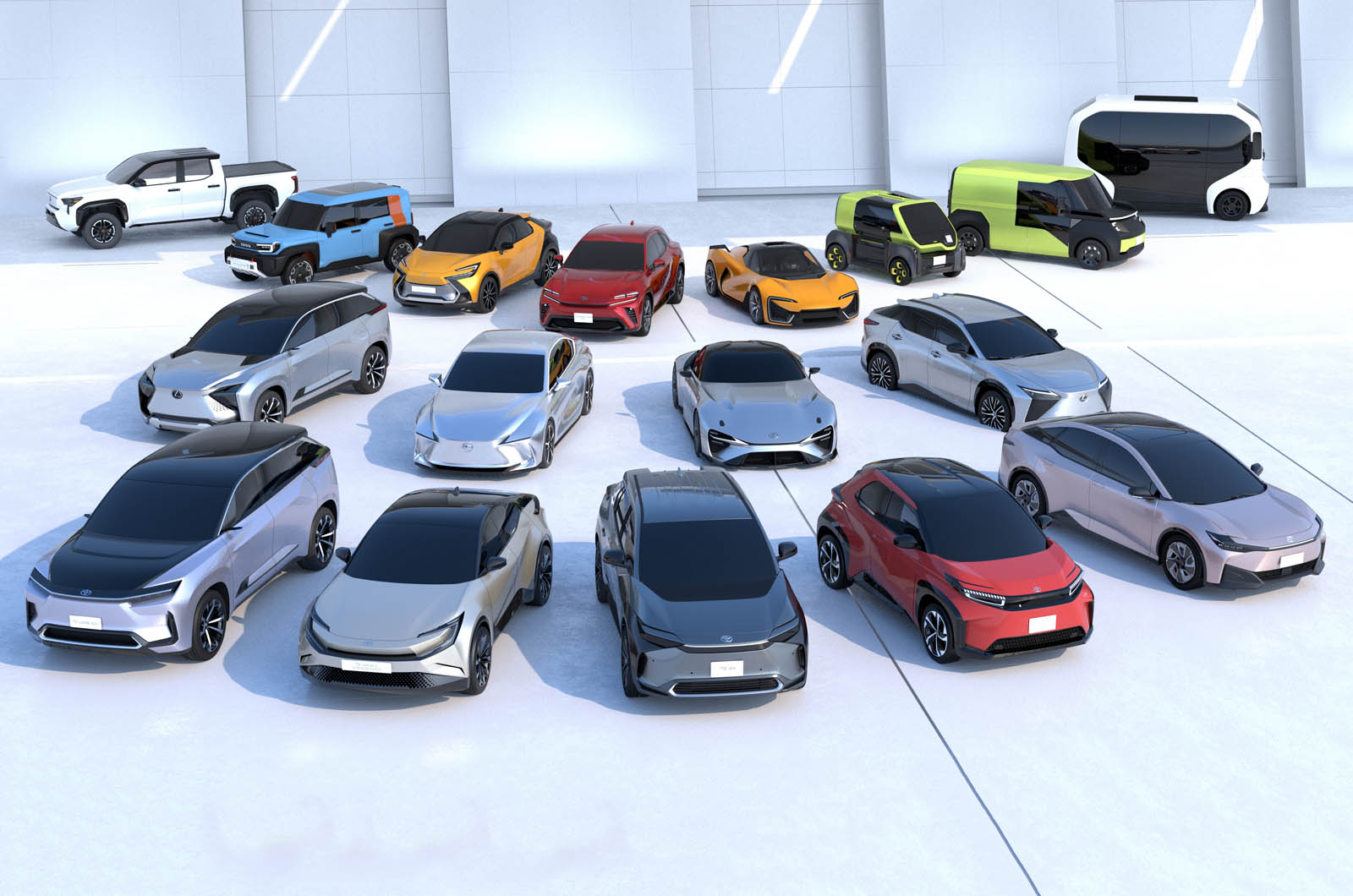
Toyota CEO reveals 15 new EV products to be launched by 2030

Toyota’s CEO and grandson of the company’s founder Akio Toyoda, has taken to the stage to reveal 15 new and exciting products that it will be launching throughout the course of the decade. These new models will act as the new generation for both Toyota and Lexus.

The upcoming offering will be known as the Toyota BZ range and will introduce the group’s new EV platform. The first model in the line-up is the BZ4X which was announced fairly recently. This model is developed in part with Subaru which Toyoda-san says allowed the firm to develop with smoothness and maneuverability as well as the drivability of a genuine SUV. Deliveries for this model are expected to take place sometime next year.

The BZ series line-up will be expanded to the BZ Compact SUV and Small Crossover. These will act as entry points to the BZ4X with the Compact SUV being a sleeker coupe-esque product that appeals to driving enthusiasts while the Small Crossover caters to those who need to navigate tight urban spaces. With the latter product, Toyota is aiming for an energy consumption figure of 125 Wh/km which it claims is the highest in the compact EV segment.

The BX SDN enters next as a mid-sized sedan that meets the expectations of consumers that still want something a bit more conventional. The BZ Large SUV will round off-the line-up as a flagship offering and have a third row of seats to cater to larger families.


Toyota commits to 30 new EVs by 2030 – Including a Hilux

Toyota and its premium brand Lexus showed 15 new concepts as it bids to produce 30 new EVs by the end of the decade.

Toyota has taken its time before committing huge investments into EVs. While European brands have gone ‘all-in’ on the battery revolution, Toyota has investigated other forms of zero-emissions possibilities such as hydrogen, something it still believes to be part of its future model lineup. Toyota plans to be carbon neutral by 2035 and in achieving that goal it plans to produce both carbon-neutral vehicles and carbon-reducing vehicles. It also plans to increase production of zero-emissions vehicles to 3.5 million globally by 2030 equating to around one-third of its current sales volume and up from the 2 million vehicles it had previously expected to sell by that date.

Further investment was also made into battery development including solid-state battery development. Gerald Killmann, Vice President of TME R&D confirmed that prototype testing has already taken place on solid-state battery vehicles and that they would likely make their introduction on hybrid vehicles before wider deployment across BEVs. Solid-state batteries produce higher output, longer range and require shorter charging times. Killman also mentioned that Toyota expects to see a 50% reduction in battery cost per vehicle, without deteriorating range, in the second half of the 2020s; thereby making battery electric vehicles more affordable and accessible.

President of Toyota, Akio Toyoda introduced the new concept models that will fill its electric portfolio over the next 15 years. The bZ range (such as the bZ4x) will expand to include a midsize SUV and a compact SUV, which is said to have Europe and Japan in mind.

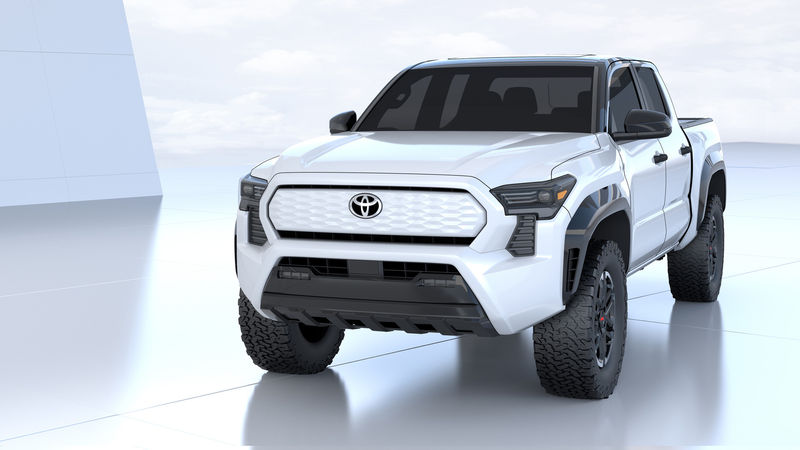
Mr Toyoda also stated that its current lineup would feature electric versions at reasonable prices. Interestingly, the concepts show a bakkie not too dissimilar from a Hilux that certainly indicates the brands intentions to at least investigate an all-electric version of SA’s favourite bakkie. During the reveal, it was also mentioned that Toyota would look into building on its off-road heritage to create new exciting recreational experiences or finding new ways to combine versatility with dynamic driving.


3BE61944-B355-4339-B824-653360BA0126.jpegED0B9A8E-3473-4CF2-84EC-03EC056D7CA5.jpeg
 
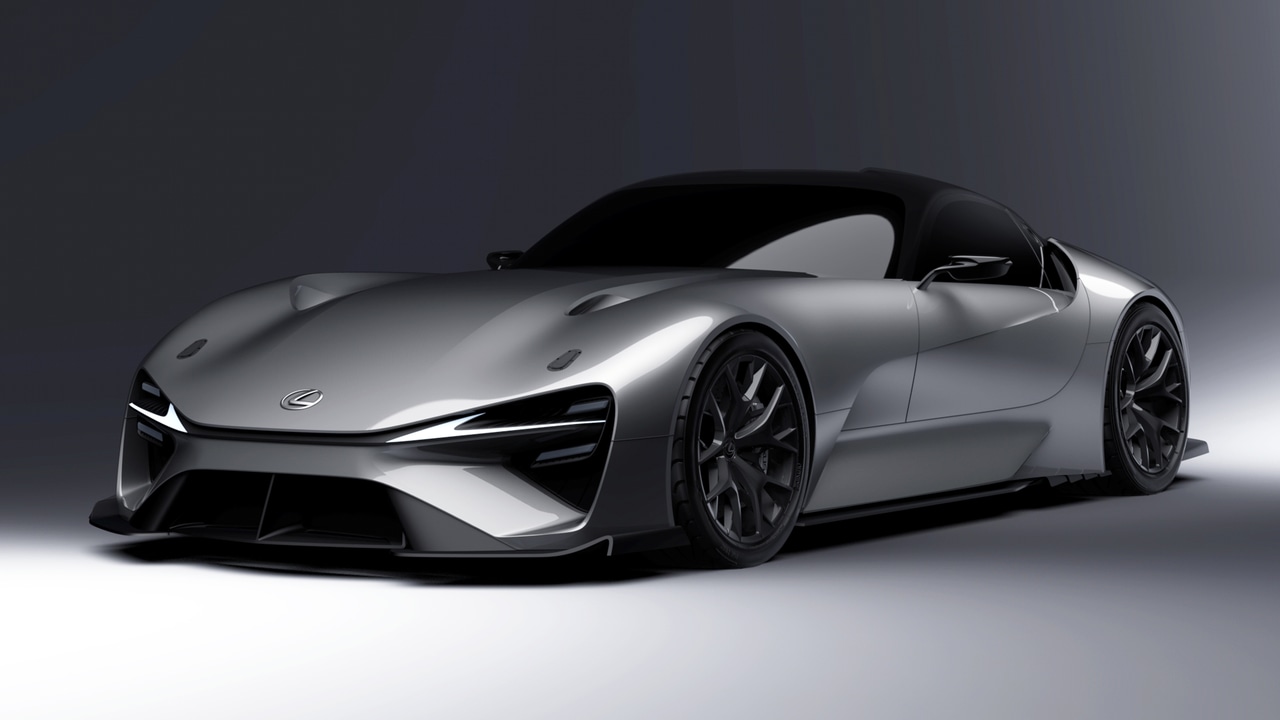
Stop the press: Lexus will build an e-supercar that’ll do 0-62mph in the low twos

And it’ll inherit the ‘secret sauce’ of the – drumroll please – Lexus LFA. We’re in

Toyota boss Akio Toyoda has today revealed that Lexus intends on building a fully electric supercar that embodies the spirit of the V10-engined LFA.

On a relatively slow news day for the Japanese carmaker where it announced the small matter of 30 battery electric cars by 2030, the biggest surprise came when boss Toyoda outlined his plans for Lexus.

Specifically, outlining Lexus’s ideal of pursuing what he calls the brand’s “driving signature”... with a load of batteries stuffed underneath. “Lexus will develop a next generation battery EV sports car that inherits the driving taste, or the secret sauce, of the performance cultivated via the development of the LFA,” Toyoda said.

That's right friends, he said the magic three letters. L. F. A. Though the new car is currently dubbed ‘Sports Battery EV’, it'll get some gorgeous proportions and a low ride height that’ll signpost the future of Lexus as a complete brand. And Toyoda confirmed this SBEV will accelerate from 0-62mph in the low two-second range. Faster than an LFA. Much, much faster.

Which feels about fast enough. Good. Toyoda said this spiritual successor to the LFA will also target a cruising range of over 435 miles (700km), which also seems sufficient.


476915EC-4991-4AD5-91D1-8C333D38F40F.jpeg
 
Toyota and Lexus shock with reveal of 15 new electric cars

Half of Japanese firms' pre-2030 EV line-up shown, including commercial vehicles, saloons, SUVs and sports cars

Toyota president Akio Toyoda has unwrapped no less than 15 wildly diverse concepts for upcoming Toyota and Lexus electric cars, as he detailed plans for the two firms to launch a total of 30 battery EVs by 2030.

The machines – shown alongside Toyota's first bespoke EV, the bZ4X - include a range of new SUVs, commercial vehicles, off-roaders and a Lexus LFA-inspired supercar.

Revealing a bold strategy for the two firms to sell some 3.5 million battery-electric cars by 2030, Toyoda explained that "we need to reduce emissions as much as possible, as soon as possible", and the brands will "expand options for carbon-neutral vehicles", which run on 'clean' energy.

Toyota and Lexus's plan to sell 3.5 million electric cars by 2030, including BEVs and FCEVs, is up from its previous target of two million. Toyoda compares this target to Daimler, PSA and other manufacturers with comparable global volumes to Toyota. "A significant volume is what we're talking about here," he said.

The company has increased its investment in battery development by ¥500 billion (£3.3bn) to ¥2 trillion (£13.3bn).

He highlighted the disparity between carbon-neutral and carbon-reducing vehicles, emphasising that the source of the energy used to run the company's EVs is one of the most important factors in the strategy. Toyota and Lexus, he said, will achieve carbon neutrality by 2035.

 
Top
Sign up to the MyBroadband newsletter
X