The SA Vehicle Industry Thread

Top 5 best-selling brands as of April 2023

Naamsa has recently released its monthly update which provides crucial automotive statistics. In this segment we will have a look at the top 5 best-selling brands from the month of April.

According to Naamsa, aggregate domestic new vehicle sales in April 2023, at 37 107 units reflected a decline of 88 vehicle units, or 0,2%, from the 37 195 vehicles sold in April last year. Overall, out of the total reported industry sales of 37 107 vehicles, an estimated 33 492 units, or 90,3%, represented dealer sales, an estimated 5,2% represented sales to the vehicle rental industry, 2,8% to industry corporate fleets and 1,7% sales to the government.

Top 5 best selling brands for April 2023:

  • Toyota – 9 423
  • Volkswagen SA – 4 644
  • Suzuki Auto – 3 620
  • Ford Motor Company – 2 804
  • Hyundai Auto – 2 371
Despite the challenges faced by the industry, Toyota maintained its position as the top-selling brand with 9 423 units sold in April 2023. The Volkswagen Group followed with 4 644 units, while Suzuki Auto, Ford and Hyundai Automotive South Africa rounded out the top five with 3 620, 2 804 and 2 371 units sold, respectively.

 
Ranger pips Hilux! SA’s best-selling vehicles in April 2023

South Africa’s new-vehicle sales fell slightly year on year in April 2023, with the industry total coming in at 37 107 units. Here’s a look at the country’s best-selling vehicles, most popular brands and more…

In April 2023, South Africa’s new-vehicle industry registered a slight year-on-year drop of 0.2% to 37 107 units, resulting in the 2nd consecutive month of market decline. Of course, the month-on-month fall was a far more significant 26%, since March 2023’s effort stood at a hefty 50 157 units.

So, what’s behind the drop? Well, Naamsa noted “continued constraints as a result of ongoing subdued economic conditions” had again impacted the industry last month. We should, of course, also point out April is traditionally a relatively slow month for the local market, with sales often softened by a raft of public holidays (this year, there were just 17 trading days in the month).

Anyway, let’s drill down into the figures. Out of the total reported industry sales of 37 107 vehicles, Naamsa says an estimated 33 492 units (or 90.3%) came courtesy of the dealer channel, with 5.2% representing sales to the rental industry, 2.8% to industry corporate fleets and 1.7% to government.

The new passenger-vehicle market came in at 24 174 units, registering a decline of 6.1% compared with April 2022’s figure. Meanwhile, domestic sales of new light-commercial vehicles, bakkies and mini-buses grew 11% year on year to 10 611 units. And export sales? Well, April 2023’s tally increased 13.4% to 30 756 units, taking the year-to-date vehicle export number to 115 567 units.

New vehicle sales summary for April 2023

  • Aggregate new-vehicle sales of 37 107 units decreased by 0.2% (-88 units) compared to April 2022.
  • New passenger-vehicle sales of 24 174 units decreased by 6.1% (-1 561 units) compared to April 2022.
  • New light-commercial vehicle sales of 10 611 units increased by 11.0% (1 049 units) compared to April 2022.
  • Export sales of 30 756 units increased by 13.4% (3 639 units) compared to April 2022.

10 best-selling vehicles in South Africa for April 2023

1. Ford Ranger – 2 201 units

2. Toyota Hilux – 2 187 units

3. Volkswagen Polo Vivo – 1 510 units

4. Toyota Corolla Cross – 1 281 units

5. Toyota Hi-Ace – 1 267 units

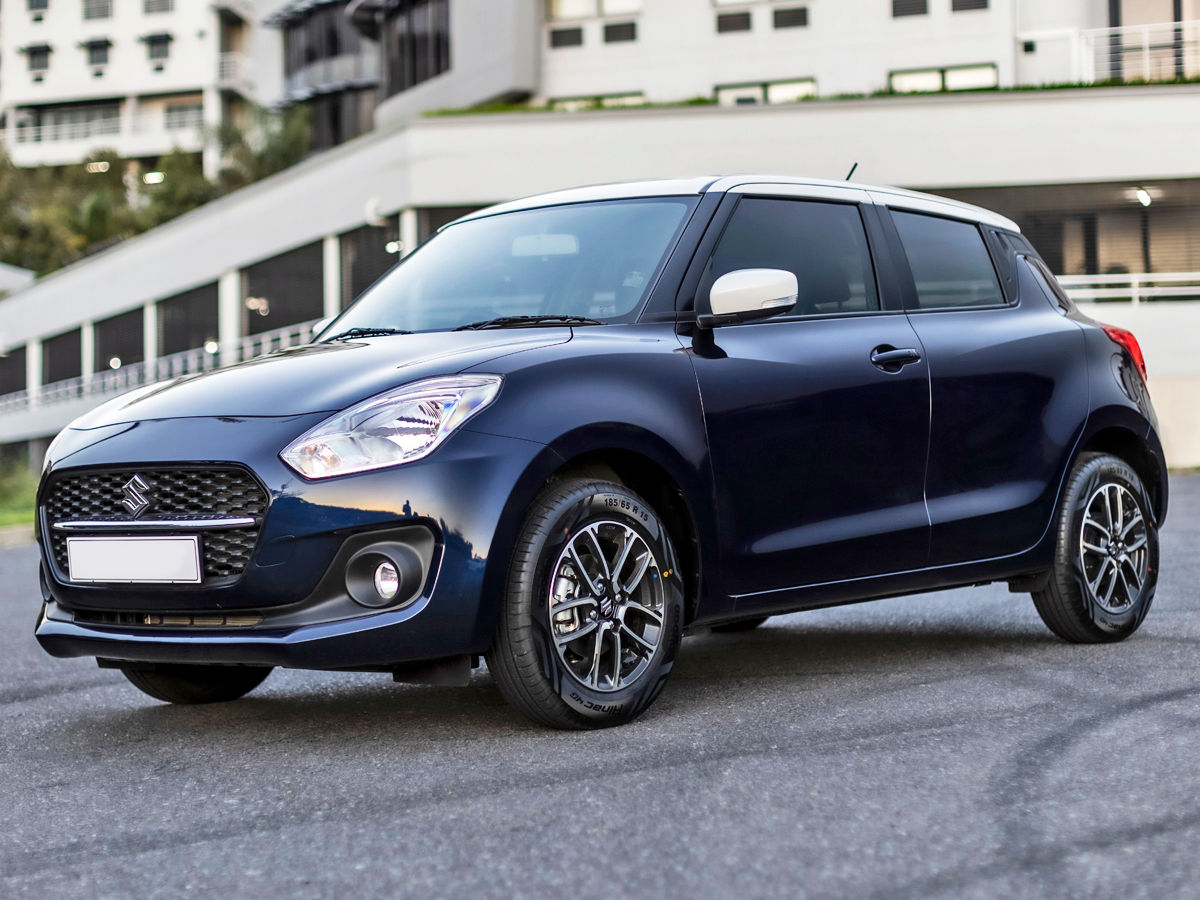
6. Suzuki Swift – 1 216 units

7. Isuzu D-Max – 1 183 units

8. Toyota Starlet – 1 098 units

9. Nissan NP200 – 910 units

10. Hyundai Grand i10 – 807 units

 
These were South Africa’s top selling cars and SUVs in April 2023

April is usually a slow sales month due to public holidays, but the mood was particularly sombre last month.

April 2023 saw a 0.2% year-on-year decline for the new vehicle industry as a whole despite there being an extra selling day on this year’s calendar. It was a particularly slow month for the passenger car market, which declined by 6.1% year-on-year to total 24 174 units, according to the Automotive Business Council (Naamsa).

The bakkie and light commercial vehicle sector, on the other hand, saw an 11% sales increase versus the same month last year, with the Ford Ranger outselling the Toyota Hilux. Click here to see how the bakkies ranked in April.

On the passenger car sales charts, the Volkswagen Polo Vivo led the way overall and among its hatchback peers, with Suzuki’s Swift coming in second (1 216) followed by the Toyota Starlet (1 098), Hyundai Grand i10 (807) and Volkswagen Polo (777).

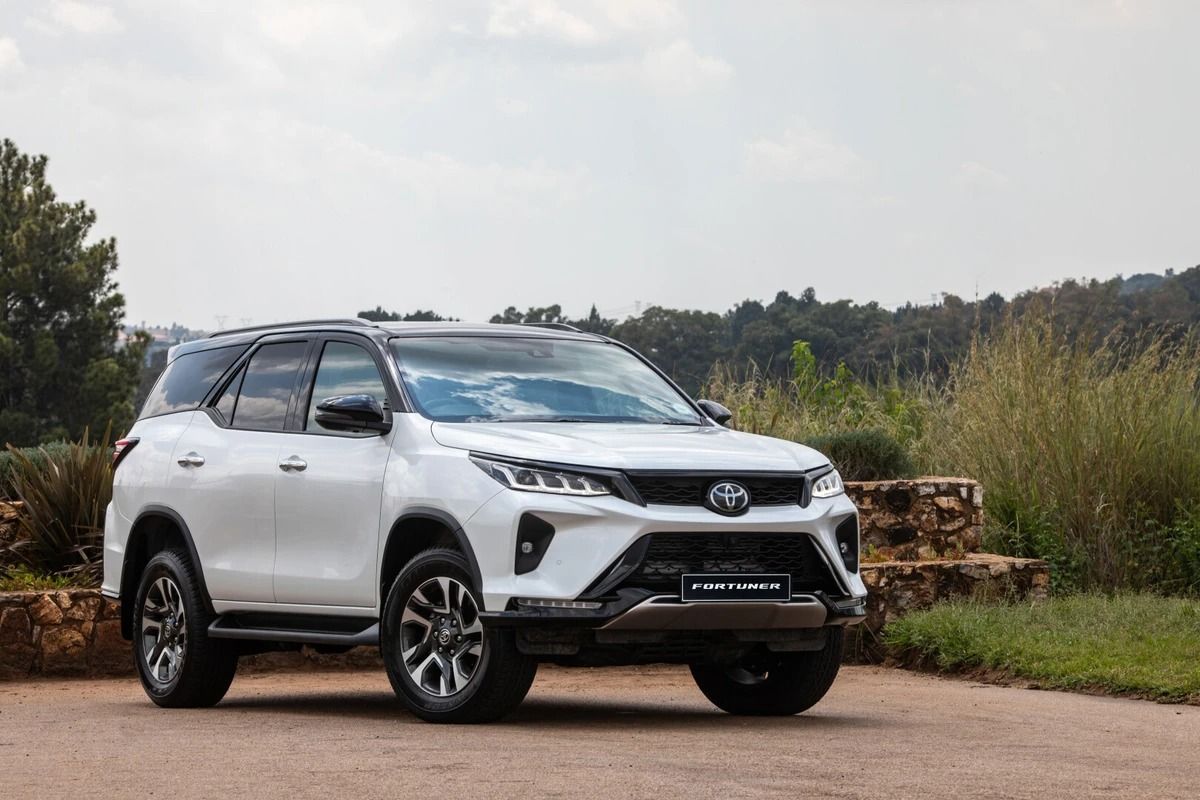
In the SUV sales race, the Toyota Corolla Cross topped the charts, and emerged second overall among passenger cars, with a volume of 1 281. It was followed by the Chery Tiggo 4 Pro (708), Toyota Fortuner (695) and Haval Jolion (677).

Below is a list of the 30 top-selling cars and SUVs in South Africa during April 2023:

  • 1. Volkswagen Polo Vivo – 1 510
  • 2. Toyota Corolla Cross – 1 281
  • 3. Suzuki Swift – 1 216
  • 4. Toyota Starlet – 1 098
  • 5. Hyundai Grand i10 – 807
  • 6. Volkswagen Polo – 777
  • 7. Chery Tiggo 4 Pro – 708
  • 8. Toyota Fortuner – 695
  • 9. Haval Jolion – 677
  • 10. Renault Kiger – 625
  • 11. Suzuki Baleno – 554
  • 12. Toyota Agya – 551
  • 13. Volkswagen T-Cross – 492
  • 14. Kia Sonet – 454
  • 15. Nissan Magnite – 430
  • 16. Suzuki Ertiga – 412
  • 17. Suzuki S-Presso – 391
  • 18. Kia Picanto – 368
  • 19. Haval H6 – 357
  • 20. Toyota Rumion – 345
  • 21. Hyundai i20 – 343
  • 22. Renault Triber – 338
  • 23. Hyundai Venue – 329
  • 24. Toyota Corolla Quest – 328
  • 25. Toyota Urban Cruiser – 317
  • 26. Chery Tiggo 7 Pro – 312
  • 27. Volkswagen Tiguan – 278
  • 28. Renault Kwid – 273
  • 29. Suzuki Jimny – 255
  • 30. Volkswagen Polo Sedan – 247
 
Ford Ranger outsells Toyota Hilux! Here’s how all the bakkies ranked in April 2023

We’ve become accustomed to seeing the Toyota Hilux dominate South Africa’s sales charts but, last month, the tides turned, with the Ford Ranger taking the bakkie lead.

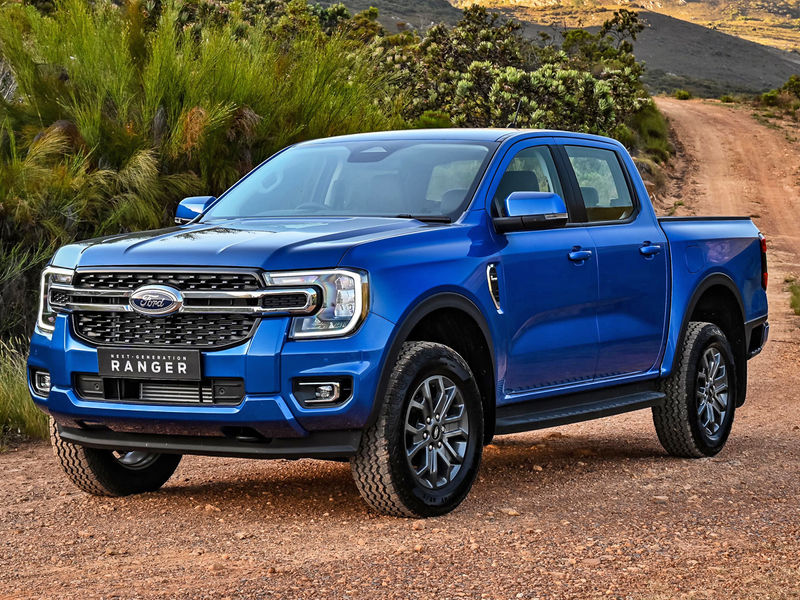
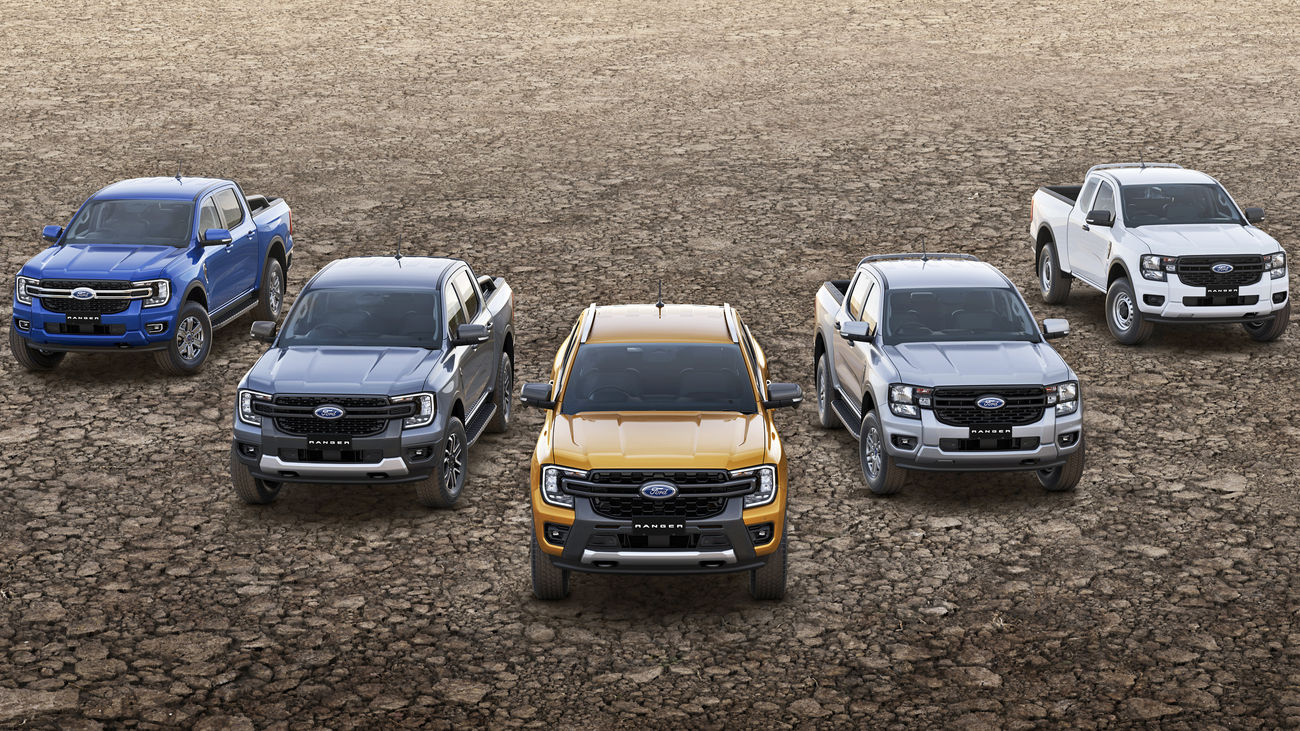
The new-generation Ford Ranger, which was launched late last year, found 2 201 homes in April, also making it the country’s top-selling vehicle overall.

It narrowly beat the Toyota Hilux, which managed a volume of 2 187 units. The Isuzu D-Max followed in a distant third, with 1 183 sales. The new Ranger-based Volkswagen Amarok also enjoyed a particularly strong month, relative to what its predecessor sold, entering the top seven with a volume of 339 units.

Bakkie Sales Ranking: April 2023

  • 1. Ford Ranger – 2 201
  • 2. Toyota Hilux – 2 187
  • 3. Isuzu D-Max – 1 183
  • 4. Nissan NP200 – 910
  • 5. Mahindra Scorpio Pik-Up – 548
  • 6. Toyota Land Cruiser PU – 369
  • 7. Volkswagen Amarok – 339
  • 8. GWM P-Series – 257
  • 9. Nissan Navara – 218
  • 10. Hyundai H100 Bakkie – 158
  • 11. Kia K2700 – 122
  • 12. Suzuki Super Carry – 94
  • 13. Mitsubishi Triton – 71
  • 14. GWM Steed – 68
  • 15. JAC X-Series – 48
  • 16. JAC T-Series – 30
  • 17. Kia K2500 – 26
  • 18. Volkswagen Transporter PU – 21
  • 19. Jeep Gladiator – 11
  • 20. Peugeot Landtrek – 10
  • 21. Mazda BT-50 – 7
  • 22. Mahindra Bolero – 4
 
10 best-selling bakkies in South Africa: April 2023

The Toyota Hilux has been toppled – but only just! Let’s take a closer at South Africa’s best- and worst-selling bakkies for April 2023…

Despite South Africa’s overall new-vehicle market shrinking slightly year on year to 37 107 units in April 2023, the light-commercial segment (where volume is driven primarily by bakkies) posted 11% growth, ending the month on 10 611 units.

The big news, though, is the fact the Ford Ranger grabbed the monthly sales crown from the vehicle that has long been South Africa’s strongest seller. Yes, the Toyota Hilux found itself in an unfamiliar 2nd place in April 2023, with the Japanese bakkie’s total of 2 187 units seeing it finish a mere 14 registrations behind the Ranger (2 201 units).

The Ranger clinched the top spot despite the Blue Oval brand’s Silverton facility grappling with production interruptions in April owing to vandalised electricity pylons in Pretoria. In addition, the Hilux benefited from 315 sales to the rental industry last month, while Ford moved just 13 Ranger units through this channel.

10 best-selling bakkies in South Africa for April 2023

1. Ford Ranger – 2 201 units

2. Toyota Hilux – 2 187 units

3. Isuzu D-Max – 1 183 units

4. Nissan NP200 – 910 units

5. Mahindra Pik Up – 548 units

6. Toyota Land Cruiser 79 – 369 units

7. Volkswagen Amarok – 339 units

8. GWM P-Series – 257 units

9. Nissan Navara – 218 units

10. Mitsubishi Triton – 71 units

 
Where do most of SA’s imported vehicles come from?

Around 65% of light vehicles sold in South Africa in 2022 were imported rather than locally built. So, which countries ship over most of our imported cars?

In 2022, light-vehicle imports as a percentage of total new light-vehicle (passenger cars and light-commercial vehicles) sales in South Africa increased to 64.8%. Yes, as many as 323 800 new vehicles (out of the 529 562-unit total) were shipped into South Africa last year. But which countries do these imported vehicles come from?

Well, while imports originated from as many as 23 nations, we’re going to focus on the top 10 countries of origin for the SA market. For the record, passenger-car imports accounted for 80.0% of SA’s total passenger-car sales in 2022, while light-commercial vehicle (LCV) imports represented 23.5% of sales in the broader LCV segment.

According to Naamsa, the top country of origin in pure volume terms was again India, from which a whopping 165 910 vehicles (up from 129 364 units in 2021) were sourced. That translates to 51.2% of total light vehicles – yes, more than half – imported in 2022.

Of course, several global brands have established large-scale production facilities in India, focusing primarily on entry-level vehicles. Indeed, 2 of SA’s 5 best-selling passenger cars in 2022 came from India (the Suzuki Swift and Toyota Urban Cruiser), with the remaining 3 produced locally.

Top 10 countries of origin for SA’s imported light vehicles in 2022

1. India – 165 910 units (51.2%)

2. China – 34 939 units (10.79%)

3. Japan – 29 830 units (9.21%)

4. Germany – 20 345 units (6.28%)

5. South Korea – 19 491 units (6.02%)

6. Spain – 18 402 units (5.68%)

7. Indonesia – 6 833 units (2.11%)

8. United States – 4 644 units (1.43%)

9. Thailand – 4 435 units (1.37%)

10. United Kingdom – 3 595 units (1.11%)

 
These countries buy the majority of SA-built cars and bakkies

The majority of light vehicles produced in South Africa in 2022 were exported rather than sold locally. So, which countries receive most of our “Made-in-SA” cars and bakkies?

In 2022, a whopping 351 785 locally built new vehicles were exported from South Africa, representing a year-on-year increase of 18% and 66.9% of total vehicle production in the country. In the process, SA-built cars and bakkies were shipped off to 110 nations around the world last year.

But which countries received the majority of these “Made-in-SA” vehicles? Well, according to Naamsa, the United Kingdom was again the top export destination in 2022, accounting for 67 884 units or 19.34% of light vehicles exported. However, Germany was a mere 485 vehicles behind in 2nd, with 67 399 units (or 19.21%) sent over to the central European country.

France (23 772 units) completed the podium, though Japan (23 750 units) was right on its tail in 4th position, gaining a place compared with 2021. The United States rocketed up the table to 5th spot, with SA shipping off 20 566 units (a year-on-year increase of 171.7%) to the major North American market.

Fascinatingly, Italy (18 914 units) slipped 2 rankings to 6th, though still finished well ahead of 7th-placed Belgium (14 812 units). Australia (11 507 units), Spain (9 588 units) and the Netherlands (7 484) closed out the top 10, while the remaining 100 destinations contributed 85 268 units between them.

Top 10 export destinations for SA-built light vehicles in 2022

1. United Kingdom – 67 884 units (19.34%)

2. Germany – 67 399 units (19.21%)

3. France – 23 772 units (6.77%)

4. Japan – 23 750 units (6.77%)

5. United States – 20 566 units (5.86%)

6. Italy – 18 914 units (5.39%)

7. Belgium – 14 812 units (4.22%)

8. Australia – 11 507 units (3.28%)

9. Spain – 9 588 units (2.73%)

10. Netherlands – 7 484 units (2.13%)

 
Toyota SA Announces NEV Strategy, Fortuner / Hilux Hybrids Coming!

Toyota South Africa Motors (TSAM) has aligned with its Toyota Motor Corporation (TMC) mothership to announce a new Global and Regional Policy which will see the local arm adopt a multi-pathway product approach that will result in an increase in New Energy Vehicles being introduced locally. See the details below!

This week, TSAM welcomed Hiroki Nakajima, Executive Vice President for Toyota Motor Corporation (TMC), as well as Toshimitsu Imai, CEO of TMC Africa Region and Executive Vice President of the Toyota Tsusho Corporation (TTC), and Shinichiro Otsuka, Chief Operating Officer for TTC Africa Region, to share the new Toyota Mobility Concept that incorporates increased electrification, diversification and intelligence across Toyota’s future product range.

Toyota aims to achieve carbon neutrality by 2050 and the Japanese company is expanding its Battery Electric Vehicle (BEV) portfolio worldwide, aiming to launch no fewer than 10 new BEV models by 2026 to generate around 1.5 million sales per annum.

Apart from BEV expansion, TMC will also expand its Plug-In Hybrid Electric Vehicle (PHEV) footprint, positioning this powertrain type as a “practical BEV”.

 
These were the world’s best-selling cars in 2022

By now we’re quite familiar with the cars that dominate the South African market, but essentially we make up less than 1% of the world’s market.

But what vehicles are our counterparts around the globe buying most frequently? Information specialist JATO Dynamics set out to answer that question – and it’s certainly no mean feat considering that just under 80 million vehicles were sold across the globe last year.

While the Toyota Hilux dominates the South African market (with last month being an exception that worked in the favour of Ford’s Ranger), the venerable bakkie range only managed sixth place in the global ranking, with a total of 632 000.

Toyota’s RAV4 took top honours as the world’s top-selling vehicle in 2022, with estimated sales of 1 016 000, albeit a 10% drop from last year. This insight is based on JATO’s own data for 53 markets as well as further research and estimations for 95 other markets.

The Toyota Corolla Sedan came second with 992K units, but if you include the Corolla Cross, which was listed separately in 8th place with 530K sales, then the Corolla nameplate as a whole is still the world’s most popular, accounting for over 1.5 million sales.

World’s best-sellers, 2022: JATO Dynamics

1. Toyota RAV4 – 1 016 000
2. Toyota Corolla Sedan – 992 000
3. Tesla Model Y – 747 000
4. Honda CR-V – 733 000
5. Toyota Camry – 673 000
6. Toyota Hilux – 632 000
7. Nissan Sentra – 566 000
8. Toyota Corolla Cross – 530 000
9. Ford F-150 – 525 000
10. Tesla Model 3 – 482 000

 
Toyota SA outlines plans to increase sales of new energy vehicles in region

Toyota South Africa Motors (TSAM) recently hosted a special visit from Hiroki Nakajima, Executive Vice President for Toyota Motor Corporation (TMC), in which a new Global and Regional Policy was announced.

The event in Durban was a special occasion in that TSAM was the first affiliate outside of Japan to receive this regional visit following the organisational changes and policy announcement by new TMC President, Koji Sato, on April 7th.

Accompanying Nakajima to deliver the message was Toshimitsu Imai, CEO of TMC Africa Region and Executive Vice President of the Toyota Tsusho Corporation (TTC), and Shinichiro Otsuka, Chief Operating Officer for TTC Africa Region, who shared how the direction would work in Africa. Finally, Andrew Kirby, President and CEO of TSAM, elaborated on how the company would adapt to and embrace the direction going forward.

Electrification, Intelligence and Diversification

Nakajima, the former Chief Engineer for Hilux, is no stranger to South Africa, and he introduced the three key pillars of the Toyota Mobility Concept: Electrification, Diversification, and Intelligence.

 
How many model derivatives are offered in SA?

Exactly how many model derivatives are offered in South Africa? Though local buyers still have huge choice, the number has actually fallen markedly since 2018…

According to Naamsa, South African new-car buyers have the widest choice-to-market-size ratio in the world. But the lofty local model-derivative count has actually fallen markedly – by 31.13%, according to our maths – since 2018.

The organisation describes the new-car trading environment in South Africa as “extremely competitive compared to global standards”, saying original equipment manufacturers (OEMs) continue to “introduce a growing range of model variations and body shapes of each model”.

Indeed, Naamsa lists South Africa’s new passenger-vehicle market as having encompassed as many as 43 brands and 2 513 model derivatives in 2022. In the light-commercial vehicle (LCV) segment, meanwhile, 22 brands were operating last year, with 498 model derivatives from which to choose.

While those are certainly sky-high numbers considering the local market’s size in global terms, they’re down on 2021’s figures, when 43 passenger-vehicles brands offered 3 077 model derivatives and 23 LCV brands put forward 746 model derivatives. Meanwhile, in 2020, the model-derivative count in the passenger-car space was higher still at 3 132, while the LCV figure was slightly lower at 689.

 
Toyota’s badge-engineered models outsell Suzuki

Toyota and Suzuki offer similar products, and in some cases, these offerings are indistinguishable from the untrained eye. Sales reports have highlighted a stark difference in sales of these badge-engineered vehicles.

Suzuki has several venerated nameplates in its stable that have garnered a strong following and demand in the local market. Toyota may arguably have a greater number of seasoned nameplates, but it does possess a few badge-engineered vehicles from Suzuki’s lineup namely, the Baleno, Vitz and Ertiga. As nameplates that share many characteristics, sales reports highlight a stark difference in the performance these models have experienced in the past few months.

Here are the badge-engineered offerings head to head

Suzuki Toyota
Celerio – 182 Vitz – 186
Baleno – 554 Starlet – 1 098
Ertiga – 412 Rumion – 345

 
China overtakes Japan to become world's biggest exporter of cars

China said that it has become the world's biggest exporter of cars after overtaking Japan in the first three months of the year.

China exported 1.07 million vehicles in the period, up 58 percent compared to the first quarter of 2022, the BBC reported.

At the same time Japan's vehicle exports stood at 954 185, after edging up 6 percent from a year earlier.

China's exports were boosted by demand for electric cars and sales to Russia.

Last year, the Asian giant overtook Germany to become the world's second largest car exporter.

According to China's General Administration of Customs, the country exported 3.2 million vehicles in 2022, compared to Germany's 2.6 million vehicle exports, the BBC reported.

South Africa remains a significantly smaller player in global export terms, shipping 84 811 cars abroad in 2022.

 
Here’s How Many EVs and Hybrids Were Sold in SA in Q1 2023

Wondering exactly how many EVs and hybrids were registered in South Africa in the opening quarter of 2023? Well, we have the sales figures…

The opening quarter of 2023 has come and gone, which had us wondering: exactly how many electric vehicles (EVs), traditional hybrids and plug-in hybrids were sold in South Africa over this 3-month reporting period?

Well, thanks to the release of Naamsa’s quarterly review of business conditions for South Africa’s motor-vehicle manufacturing industry, we have the answer.

First, let’s remind you of 2022’s efforts in this section of the local market. Last year, overall new-energy vehicle (NEV) sales – so, registrations comprising EVs, traditional hybrids and plug-in hybrids – reflected a whopping year-on-year increase of 431.7% from 896 units in 2021 to 4 674 units in 2022. Note, of course, this tally comprised just 0.88% of SA’s total new-vehicle sales for the year.

During the 1st quarter of 2023, NEV sales by 14 automotive brands increased by 18.8% year on year, growing from 1 401 units in the opening quarter of 2022 to 1 665 units in the same period in 2023. By our maths, that translates to 1.96% of the industry total (84 774 units) for the first 3 months of 2023.

As you might have guessed, traditional hybrids made up the bulk of that figure (nearly 85%, in fact), with 1 408 units registered locally from the start of January to the end of March 2023. Key local players in this segment include dual-powered versions of Toyota’s Corolla hatch and sedan, the Corolla Cross and the RAV4, plus various Lexus models as well as the Honda Fit and Haval’s H6 and Jolion hybrids.

 
Top
Sign up to the MyBroadband newsletter
X