The SA Vehicle Industry Thread

Special Edition BMW a possibility for Plant Rosslyn anniversary

Throughout their history in South Africa, BMW has presented homologated versions of revered models and special editions to line the ranks for local buyers. To commemorate the 50 years of Plant Rosslyn, we may receive something special yet again.

First thing first, the days of homologated specials are behind us. The current motorsport climate no longer requires that race-prepared models be produced in limited numbers and sold to the public, although there are exceptions. The 70s and the 80s were the heydays for that and automakers like BMW, Alfa Romeo and Ford to name a few left their mark on the history of South Africa’s motoring world.

In recent years, few seem to have risen to local popularity more than the BMW 333i, which was produced in limited numbers just outside of Pretoria. Only 210 rolled off of those production lines, enough volume to satisfy Group 1 racing regulations. A reason for their growing popularity and skyrocketing value is that hey were often perceived as a better E30 M3 than the actual E30 M3, which only packed a four-banger up front.


 
Who topped the export list for March? Here are the Top 5

Top 5 exporters for March

Volkswagen Group SA – 10 029
Mercedes-Benz – 7 075
BMW – 5 988
Ford Motor Company- 5 708
Toyota – 3 804

 
Bumper month for bakkie sales in SA - these were the best and worst sellers

While March 2023 saw the overall vehicle market decline by 0.6% versus the same month last year, light commercial vehicles saw some robust growth.

A total of 50 465 new vehicles were sold last month, according to Naamsa, with passenger car sales declining by 6.1% year-on-year, and LCVs gaining 11.1% to total 15 529 units.

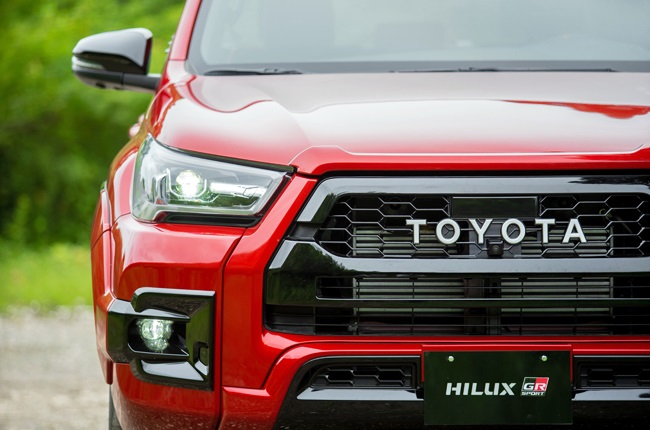
Looking at the sales charts, it was clearly a bumper month for many of South Africa’s one-tonne bakkie contenders, and no surprises here, the Toyota Hilux led the way with 3 920 sales.

But it was also a better-than-usual month for the Isuzu D-Max and new Ford Ranger, with respective sales totals of 2 289 and 2 247 units, while the new Volkswagen Amarok also enjoyed a surprisingly strong month with 401 units registered.

1. Toyota Hilux - 3 920
2. Isuzu D-Max - 2 289
3. Ford Ranger - 2 247
4. Nissan NP200 - 1 404
5. Mahindra Scorpio Pik-Up - 966
6. Nissan Navara - 475
7. Toyota Land Cruiser PU - 406
8. Volkswagen Amarok - 401
9. GWM P-Series - 372
10. Hyundai H100 - 253
11. Suzuki Super Carry - 161
12. Kia K2700 - 145
13. GWM Steed - 118
14. JAC T-Series - 45
15. Kia K2500 - 40
16. Peugeot Landtrek - 37
17. JAC X-Series - 31
18. Mahindra Bolero - 21
19. Jeep Gladiator - 13
20. Mazda BT-50 - 6
21. Volkswagen Transporter PU - 2

 
Polo Vivo, Fortuner move up the ranks: SA’s top selling cars and SUVs in March

March was a tough month for the new car market in South Africa.

While overall vehicle sales declined by 0.6% versus the same month last year, to total 50 465 units, passenger car sales fell by 6.4% year-on-year to 33 788 units.

But it was a good month for some of SA’s passenger car contenders, with the Volkswagen Polo Vivo reclaiming its number one position from the Toyota Corolla Cross with 2 016 sales versus Toyota’s 1 839.

The Toyota Fortuner, which has lost popularity in recent times, surged up the ranks to third place. In the first full month of sales for the facelifted model, it managed a volume of 1 409 units.

The Toyota Starlet enjoyed another solid month with 1 276 sales, narrowly ousting the Suzuki Swift, which found 1 276 homes, while the Volkswagen Polo (1 008) and Hyundai Grand i10 (957) completed the hatchback top five.

 
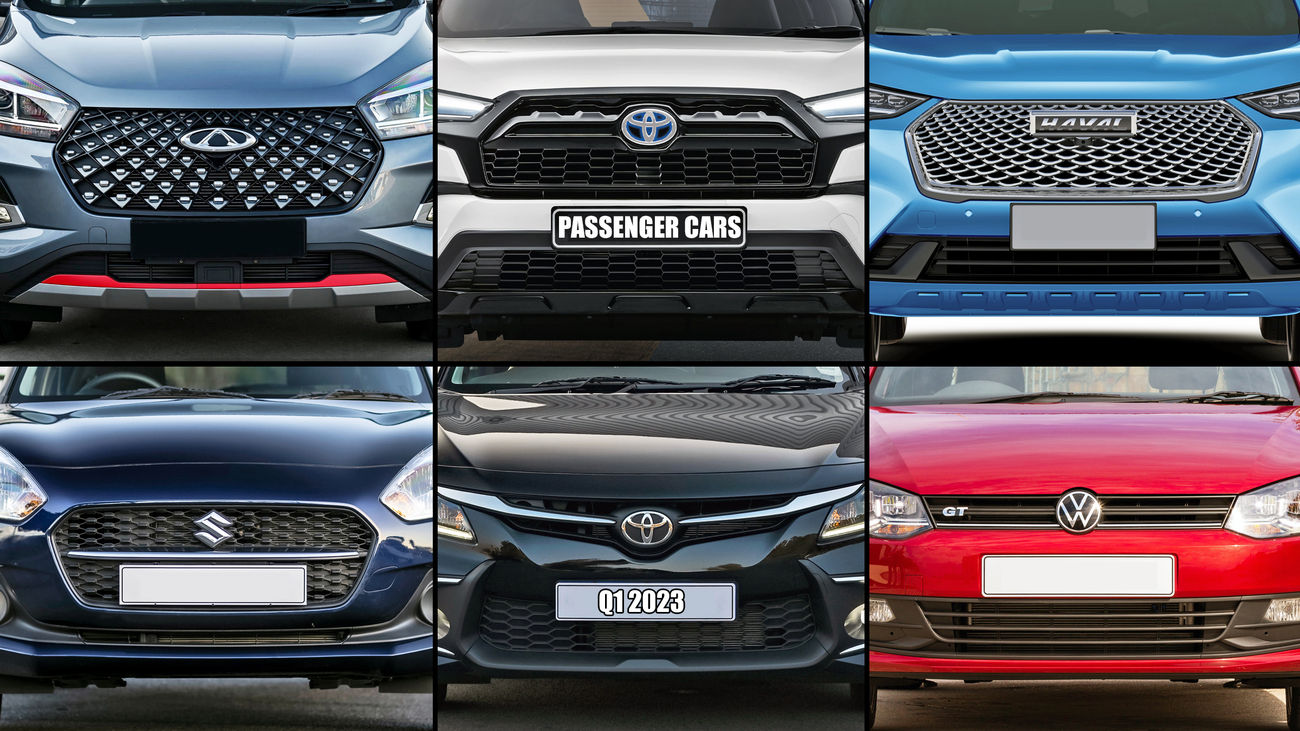
Fresh front-runners! SA’s 20 best-selling passenger vehicles in Q1 2023

We’ve tallied up the figures to identify South Africa’s 20 best-selling passenger vehicles for Q1 2023. And there was plenty of movement on the list of the SA’s favourite new cars in the 1st quarter of the year…

The opening quarter of the year has already come and gone, giving us an opportunity to sort through the sales figures and list South Africa’s best-selling passenger vehicles for the year so far. So, which were the country’s most popular new cars in Q1 2023?

Well, before we dive into the individual model sales figures, it’s worth noting total domestic new-vehicle sales stood at 139 437 units after the first 3 months of 2023, representing an increase of 2.4% compared with the same Q1 period in 2022. The passenger-car market accounted for 93 100 of those year-to-date registrations, down 0.6% on the opening quarter of last year.

There was plenty of movement on the list when compared with 2022’s final standings. As an overview, Toyota grabbed 5 of the top 20 spots, while Volkswagen and Renault each took 3 positions. In addition, a trio of Chinese vehicles made the cut. Right, let’s take a closer look at the numbers, starting with the top 5…

SA’s 20 best-selling passenger vehicles for Q1 2023

1. Toyota Corolla Cross – 5 564 units

2. Toyota Starlet – 4 624 units

3. Volkswagen Polo Vivo – 4 583 units

4. Suzuki Swift – 4 114 units

5. Volkswagen Polo (hatch) – 2 967 units

6. Chery Tiggo 4 Pro – 2 730 units

7. Toyota Fortuner – 2 643 units

8. Volkswagen T-Cross – 2 613 units

9. Haval Jolion – 2 392 units

10. Hyundai Grand i10 – 2 286 units

11. Renault Kiger – 2 188 units

12. Nissan Magnite – 1 989 units

13. Toyota Corolla Quest – 1 984 units

14. Renault Triber – 1 924 units

15. Suzuki Baleno – 1 889 units

16. Hyundai i20 – 1 595 units

17. Toyota Urban Cruiser – 1 594 units

18. Nissan Almera – 1 516 units

19. Renault Kwid – 1 493 units

20. Haval H6 – 1 488 units

 
@FiestaST

Maybe you have posted this already.


5 new cars expected to arrive in April.
Will be interesting to see how the Grand vitara compares to the new Honda BR-V
 
Ford Ranger production grinds to a halt after Pretoria power lines collapse

Ford South Africa has been forced to temporarily halt production at its Silverton assembly plant east of Pretoria after six power lines collapsed in Pretoria on Monday night, leaving large parts of the city without power.

The new Ford Ranger, which is built at the Gauteng plant, is one of South Africa’s biggest automotive exports, reaching over 100 global markets.

Ford SA’s corporate communications manager Duduzile Nxele confirmed to IOL on Tuesday that all three shifts at the plant were suspended, resulting in a production loss of around 720 bakkies per day.

“We are working with both the City of Tshwane and Eskom to resolve the issue, but as yet do not have an indication of when power will be fully restored to our facilities,” Nxele added.

 
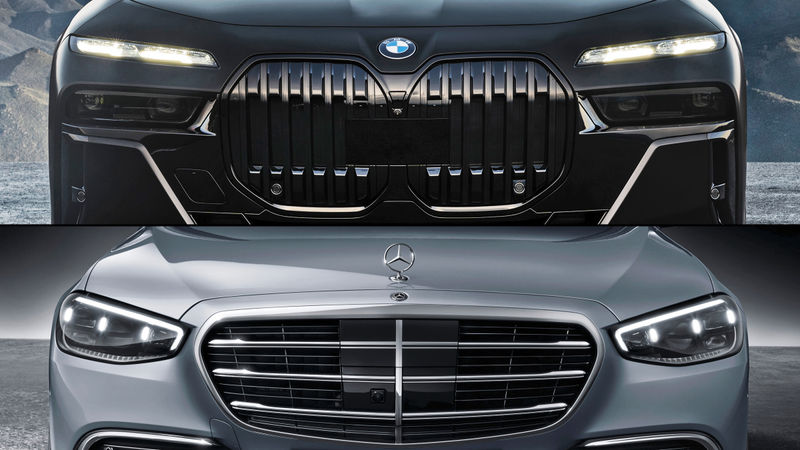
BMW vs Mercedes-Benz: premium sales race after Q1 2023

BMW and Mercedes-Benz have resumed their fight for sales dominance in the premium market. So, which of these Teutonic foes is leading the global race after the opening quarter of 2023?

With the opening quarter of 2023 now behind us, it’s time to see which German automaker is leading the premium sales race. So, let’s examine the latest global sales figures from BMW and Mercedes-Benz.

In Q1 2023, the BMW Group – which, as a reminder, comprises the BMW, Mini, Rolls-Royce and BMW Motorrad brands – reported a worldwide sales figure of 588 138 units, interestingly representing a year-on-year drop of 1.5%.

Meanwhile, Mercedes-Benz Cars (which includes Smart but seemingly excludes Mercedes-Benz Vans products) ended the same January-to-March period on 503 500 units, or a year-on-year improvement of 3%. Add 98 900 sales from Mercedes-Benz Vans in Q1, however, and the Stuttgart-based firm’s total swells to 602 400 units.

Of course, as always, it’s worth examining the statistics a little more closely. For instance, BMW’s figures show the Mini brand accounted for 68 541 units of the group’s tally, while a further 47 935 units came courtesy of the motorcycle division, plus another 1 640 units from luxury marque Rolls-Royce.

 
Where is the locally manufactured BMW X3 exported to?

Plant Rosslyn serves as a historical vantage point for BMW’s exponential international growth as an automaker. The latest model in the Bavarian firm’s lineup to be born proudly South African is the X3. Here is a descending list of all global markets it is exported to.

In 2018 however, a massive R6 billion investment catalyzed the retooling of the facility for the BMW X3, which still flows out of the factory facility to this day. BMW recently celebrated the 300 000th unit to roll off of the production line and despite being produced locally, the majority are prepared for foreign markets, many along the line configured for left-hand drive.

Germany – 26,5%
USA – 19,4%
Italy – 7,6%
Great Britain – 6,5%
Spain – 6,2%
BMW Central and Eastern Europe – 5,6%
Japan – 4,5%
South Africa – 4,1%
Australia – 3,9%
Taiwan – 2,8%
Switzerland – 2,7%
Belgium – 1,8%
France – 1,7%
Mexico – 1,7%
Turkey – 1,2%
Austria – 1,1%
Abu Dhabi/Oman – 0,7%
Nordic – 0,5%
Middle East 3 – 0,3%
Baltic – 0,2%
East EU, KA, AFR – 0,2%
Sub-Saharan – 0,2%
Portugal – 0,1%
Vorserie (pilot Production) – 0,1%
New Zealand – 0,1%
Singapour – 0.1%
Greece – 0,1%
Cyprus – 0,1%
Croatia – 0,1%
Netherlands – 0,0%
Vorserie (pilot production) – 0,0%
Diplomatic – 0,0%
Middle East 2 – 0,0%

 
VW’s mystery ‘made-in-SA’ model: fresh details emerge…

The mystery vehicle Volkswagen SA plans to add to its production line will be part of the “Polo family” and positioned “below the T-Cross”, but it won’t be as “SUV-ish” as the latter…

The head of Volkswagen Group South Africa has dropped a few more hints about the identity of the mystery 3rd product the German firm plans to build – alongside the Polo hatchback and the Polo Vivo – at its Kariega plant in the Eastern Cape.

In November 2022, VWSA announced an intention to add a new model to its local production line, confirming the vehicle will ride on the same MQB-A0 platform as the Polo and numerous other VW Group products. Now, Martina Biene, chairperson and managing director of Volkswagen Group South Africa, has revealed some fresh information.

Speaking to Cars.co.za video journalist Ciro De Siena during an exclusive podcast interview covering a wide range of topics, Biene confirmed the new model under consideration will feature an internal combustion engine rather than an electrified powertrain.

Biene, who previously held the position of head of the Volkswagen passenger brand in South Africa (from October 2018 to August 2020) before briefly returning to Germany, added production of the newcomer will likely commence in 2026 or “probably 2027”.

“It [will be positioned] below the T-Cross – we call it ‘A0 Entry SUV’ currently. So, it’s an SUV body style but it’s on the Polo platform,” she explained.


Where is the locally manufactured BMW X3 exported to?

Plant Rosslyn serves as a historical vantage point for BMW’s exponential international growth as an automaker. The latest model in the Bavarian firm’s lineup to be born proudly South African is the X3. Here is a descending list of all global markets it is exported to.

In 2018 however, a massive R6 billion investment catalyzed the retooling of the facility for the BMW X3, which still flows out of the factory facility to this day. BMW recently celebrated the 300 000th unit to roll off of the production line and despite being produced locally, the majority are prepared for foreign markets, many along the line configured for left-hand drive.

Germany – 26,5%
USA – 19,4%
Italy – 7,6%
Great Britain – 6,5%
Spain – 6,2%
BMW Central and Eastern Europe – 5,6%
Japan – 4,5%
South Africa – 4,1%
Australia – 3,9%
Taiwan – 2,8%
Switzerland – 2,7%
Belgium – 1,8%
France – 1,7%
Mexico – 1,7%
Turkey – 1,2%
Austria – 1,1%
Abu Dhabi/Oman – 0,7%
Nordic – 0,5%
Middle East 3 – 0,3%
Baltic – 0,2%
East EU, KA, AFR – 0,2%
Sub-Saharan – 0,2%
Portugal – 0,1%
Vorserie (pilot Production) – 0,1%
New Zealand – 0,1%
Singapour – 0.1%
Greece – 0,1%
Cyprus – 0,1%
Croatia – 0,1%
Netherlands – 0,0%
Vorserie (pilot production) – 0,0%
Diplomatic – 0,0%
Middle East 2 – 0,0%

Top 2 show just how valuable export credits are. I am pretty sure most of BMW's other models come from Germany and the US, so the only way to reduce the import taxes is to export X3's out of SA for there.

Take away the import taxes and I am sure BMW, along with many others, wouldn't retain their SA production facilities with how unstable our power and human resources are....
 
Ford Ranger production resumes ‘slowly’ after Pretoria power restored

Ford was forced to suspend production at its Silverton assembly plant east of Pretoria on Tuesday after six power lines collapsed in Pretoria on Monday night, but production has now resumed following quicker-than-expected restoration.

Ford released a statement late on Thursday afternoon, confirming that power had been restored to the area in stages, starting on the evening of April 12, and that production at the Silverton plant had slowly resumed.

“The estimated total loss of production to date is 1440 units. Due to the scale of the Eskom infrastructure concern there remains some risk of interrupted supply - however we continue to liaise with Eskom and local government as they work to balance the system and fully restore the network,” corporate communications manager Duduzile Nxele said.

The prolonged outage was caused by the collapse of six 132 kV power lines on the N4 freeway, and leaving large parts of Pretoria East and North without power.

 
SA-built half-tonne bakkie: VW says ‘there is hope’

Still patiently waiting for a new half-tonne bakkie from Volkswagen? Well, the head of VW’s local division has revealed “there is hope” for such a model – and it might be built in South Africa…

The head of Volkswagen Group South Africa has ruled out a local launch of the current-generation Saveiro (a unibody pick-up offered in Latin America), but confirmed “there is hope” for a Kariega-built half-tonne bakkie that would slot in below the new Amarok.

Martina Biene, chairperson and managing director of Volkswagen Group South Africa, made the comments during an exclusive podcast interview with Cars.co.za video journalist, Ciro De Siena.

When asked whether VWSA had any plans to offer the Saveiro locally – a question the German firm’s management has fielded time and again – Biene suggested numerous feasibility studies had been conducted over the years, but each one indicated converting the Latin America-only bakkie to right-hand-drive would be prohibitively expensive.

“We’ve done multiple calculations [in an attempt] to get the current Saveiro converted to right-hand drive. Unfortunately, the downside of our Brazilian partnership is that all these [Latin American] countries are left-hand-drive countries,” she explained.

So, what about building a similar unibody bakkie right here in South Africa? Well, Biene revealed such an opportunity may well present itself down the line, making reference to the mystery 3rd product the German firm’s local division plans to build – alongside the Polohatchback and the Polo Vivo – at the Kariega plant in the Eastern Cape.


Why VW won’t build EVs in SA anytime soon

Think Volkswagen will start producing EVs in South Africa in the next couple of years? Think again. VWSA’s boss explains why that likely won’t happen until around 2035…

The head of Volkswagen Group South Africa has explained why it will likely be more than a decade before the German brand starts producing electric vehicles (EVs) at its Kariega plant in the Eastern Cape.

Martina Biene, chairperson and managing director of Volkswagen Group South Africa, made the comments during an exclusive podcast interview with Cars.co.za video journalist, Ciro De Siena, saying she sees locally produced EVs becoming a reality only around 2035.

VWSA currently manufactures the Polo hatchback and Polo Vivo at its local facility, while it plans to add a mystery 3rd model to the Kariega production line in the next few years. In addition, a half-tonne bakkie could be spun off the same platform, based on separate comments from Biene.

Of course, all of those models are or will be powered by internal combustion engines. Considering the global shift towards electric mobility – including in key export markets in Europe – what are the chances of the Wolfsburg-based firm adding an EV to its production line in the next few years? Well, Biene suggested such a move was quite some way off.

“The first step is getting EVs into the country on an FBU basis – a fully built unit basis – import them and then grow and also get South African customers to experience them,” she said, pointing out potential buyers still have concerns around range anxiety and indeed whether EVs can really work in South Africa considering the enduring load-shedding crisis.

“I see us producing electric vehicles probably by 2035, in our South African plant. Why is that? That’s also related to our strong local footprint,” said Biene, explaining that around 30 to 35% of vehicles – in the form of the Polo hatchback and Polo Vivo – currently produced at the Kariega facility are sold locally rather than exported.

“We don’t want to be only an export plant for EVs to Europe or to somewhere [else]. So, we would probably need, say, 50 000 units for one model per year to make it meaningful to localise,” she said.


Top
Sign up to the MyBroadband newsletter
X