-
- News
-
Categories
- 5G
- ADSL
- AI
- Banking
- Black Friday
- Broadband
- Broadcasting
- Business
- Business Telecoms
- Cellular
- Cloud and Hosting
- Columns
- Cryptocurrency
- Energy
- Enterprise
- Fibre
- Gadgets
- Gaming
- Government
- Hardware
- Industry News
- Internet
- Internet of Things
- Investing
- IT Services
- Motoring
- Reviews
- Science
- Security
- Smartphones
- Software
- Technology
- Telecoms
- Trending
- Wireless
- Press Office
- Forum
- Industry News
- What's Next
- Company hub
- Speed Test
- About us
- Advertise with us
- Contact
- Careers


-
Join the MyBroadband community
South Africa’s biggest forum. Discuss, discover, and connect with thousands of members.
-
Question of the Day: Do you get motion sick?

- Forums
- General discussions
- Motoring and Transportation: Cars, Bikes and Plane
- General Motoring News and Reviews
You are using an out of date browser. It may not display this or other websites correctly.
You should upgrade or use an alternative browser.
You should upgrade or use an alternative browser.
The Suzuki Swift & Dzire Thread
- Thread starter FiestaST
- Start date

HAL 9000
Honorary Master
- Joined
- May 27, 2008
- Messages
- 22,623
- Reaction score
- 26,420
They have heated seats and extra fog lights etc. Unnecessary extras that add to the cost that we don't need in SA
Looks like those additional switches are for 'driver assistance' features like Auto Start/Stop & lane departure / AEB functions.
HAL 9000
Honorary Master
- Joined
- May 27, 2008
- Messages
- 22,623
- Reaction score
- 26,420
Indeed so - no adaptive cruise control capability buttons on the right side of the steering wheel in the SA models:Steering wheel as well with a lot less functionality.

Unlike in the UK models, which do have adaptive cruise control buttons:

Also, the UK models seem to have a larger full colour MID screen in the instrument cluster, unlike the smaller monochrome one fitted in the SA models.

FiestaST
Honorary Master
Juliet drives the updated Swift
Last edited:
FiestaST
Honorary Master
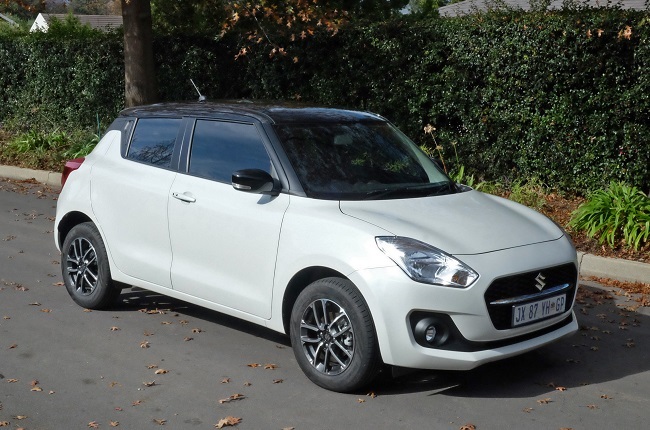
REVIEW | Suzuki's refreshed Swift combines an attractive package in one offering
 www.news24.com


REVIEW | Suzuki's refreshed Swift combines an attractive package in one offering | Life
Some cars tick all the boxes in their category. The Suzuki Swift is one of them. In the light and compact budget class, the Swift is perhaps the benchmark.
www.news24.com
FiestaST
Honorary Master
REVIEW | Suzuki Dzire represents value for money with more tech for the same price
• Pricing for the Suzuki Dzire starts from R182 900.
• Under the bonnet is a 1.2-litre engine that produces 61kW and 113Nm.
• Suzuki claims a fuel consumption of 4.9-litres/100km.
Economical
Suzuki claims a fuel consumption of 4.9-litres/100km, but a more realistic figure is around the think 5.5 to 6 mark. Suzuki uses the 1.2-litre K12M engine in several models. It can be mated to either a five-speed manual gearbox with a new convergent shifting system for smoother, more secure shifts (which I can attest to) or the automated manual gearbox (AMT). I found the Dzire pleasant to drive around town with easy, predictable handling.
Pricing is very keen compared to its immediate competition like the VW Polo, which starts at R246 700 without optional equipment added, Honda Amaze from R198 400 and Ford Figo Sedan from R221 900. The list price of the GA manual is R182 900, the slightly grander GL is R196 900, and the GL AMT is R210 900, which includes a two-year service plan.
https://www.news24.com/wheels/newmo...-with-more-tech-for-the-same-price-20210712-2


• Pricing for the Suzuki Dzire starts from R182 900.
• Under the bonnet is a 1.2-litre engine that produces 61kW and 113Nm.
• Suzuki claims a fuel consumption of 4.9-litres/100km.
Economical
Suzuki claims a fuel consumption of 4.9-litres/100km, but a more realistic figure is around the think 5.5 to 6 mark. Suzuki uses the 1.2-litre K12M engine in several models. It can be mated to either a five-speed manual gearbox with a new convergent shifting system for smoother, more secure shifts (which I can attest to) or the automated manual gearbox (AMT). I found the Dzire pleasant to drive around town with easy, predictable handling.
Pricing is very keen compared to its immediate competition like the VW Polo, which starts at R246 700 without optional equipment added, Honda Amaze from R198 400 and Ford Figo Sedan from R221 900. The list price of the GA manual is R182 900, the slightly grander GL is R196 900, and the GL AMT is R210 900, which includes a two-year service plan.
https://www.news24.com/wheels/newmo...-with-more-tech-for-the-same-price-20210712-2
FiestaST
Honorary Master
MotorMatters review of the updated Swift 1.2 GLX
FiestaST
Honorary Master


Jet-Fighter7700
Honorary Master
thats not a test^^^^
a real test is can you fit a washing machine (with the tailgate open), to transport it home?
a real test is can you fit a washing machine (with the tailgate open), to transport it home?

Hemi300c
Honorary Master
thats not a test^^^^
a real test is can you fit a washing machine (with the tailgate open), to transport it home?

Jet-Fighter7700
Honorary Master
the true Hijackers test,
good thing this car is low on the hijackers lists.
people would far rather steal a Corolla or a Hilux.
FiestaST
Honorary Master
LibeRebil review of the 2021 Swift
HAL 9000
Honorary Master
- Joined
- May 27, 2008
- Messages
- 22,623
- Reaction score
- 26,420
Convert a Maruti Dzire into an electric car in Rs. 5 lakh - Team-BHP
The EV conversion kits for the Maruti Dzire offer a maximum range of 120-250 km.

Pune-based Northway Motorsport has launched an EV conversion kit for the Maruti Suzuki Dzire.
For the Dzire, the company offers two conversion kits - Drive EZ and Travel EZ, with a range of 120 km and 250 km, respectively.
While the Drive EZ kit takes 5-6 hours to recharge, the charging time for the Travel EZ kit is 8-10 hours. The top speed is restricted to 80 km/h (commercial use) and 140 km/h (private vehicles).
The company has not announced the exact price of the EV conversion kits for the Dzire, but it is said to cost around Rs. 5-6 lakh.
Bookings are expected to open soon, and customers will be able to order the kits by paying a token amount of Rs. 25,000.
According to the company, these are plug and play kits and don't require any modifications. That said, the internal combustion engine has to be removed to install these kits.
Northway Motorsport has also partnered with Bhartiya EV to set up charging infrastructure across India. It plans to set up a dealer and charging network in Maharashtra in the next 3-7 months.

Convert a Maruti Dzire into an electric car in Rs. 5 lakh | Team-BHP
Pune-based Northway Motorsport has launched an EV conversion kit for the Maruti Suzuki Dzire and Tata Ace.For the Dzire, the company offers two conversion kits - Drive EZ and Travel EZ, with a range of ...
HAL 9000
Honorary Master
- Joined
- May 27, 2008
- Messages
- 22,623
- Reaction score
- 26,420
Made In India Suzuki Swift Receives A Zero Star Safety Rating From Latin NCAP - carandbike
The made in India Suzuki Swift has scored a zero-star safety rating in the Latin NCAP crash test results, with borderline unstable bodyshell and poor side impact protection.The safety watchdog also pointed that the car missed out on side airbags and Electronic Stability control on the base variant.
The made in India Swift’s crash test results aren’t too different from the previous years.
HAL 9000
Honorary Master
- Joined
- May 27, 2008
- Messages
- 22,623
- Reaction score
- 26,420
FiestaST
Honorary Master
Indian Suzuki Swift & Renault Duster score zero stars in Latin NCAP test
The Indian-built Suzuki Swift and Latin and Romanian-built Renault Duster have delivered a poor set of outcomes after rigorous testing at the hands of the Latin NCAP. The safety testing firm states that the results were very disappointing and calls for urgent improvements.
The Renault Duster tested here comes standard with double airbags and electronic stability control . Despite this, it achieved zero stars under Latin NCAP’s latest protocol with a 29,47 per cent in the adult occupant box, 22,93 per cent in child occupant box, 50,79 per cent in pedestrian protection and vulnerable road users box and 34,88 per cent in safety assist box.
The Suzuki Swift, which is built in India and Japan with two airbags as standard, achieved zero stars as well. The compact car achieved 15,53 per cent in the adult occupant box, 0 per cent in child occupant box, 66,07 per cent in pedestrian protection and vulnerable road users box and 6,98 per cent in safety assist box. The result is valid for the hatchback and sedan versions.
The zero star result is due to the poor side impact protection and an open door during the test. A low whiplash score is due to the lack of UN32 for rear impact test. Furthermore, the result is accredited to the lack of standard side head protection airbags and ESC. Latin NCAP states that this model would not pass the Regulation UN95 requirements due to the door opening on impact.

 www.carmag.co.za
The Indian-built Suzuki Swift and Latin and Romanian-built Renault Duster have delivered a poor set of outcomes after rigorous testing at the hands of the Latin NCAP. The safety testing firm states that the results were very disappointing and calls for urgent improvements.
The Renault Duster tested here comes standard with double airbags and electronic stability control . Despite this, it achieved zero stars under Latin NCAP’s latest protocol with a 29,47 per cent in the adult occupant box, 22,93 per cent in child occupant box, 50,79 per cent in pedestrian protection and vulnerable road users box and 34,88 per cent in safety assist box.
The Suzuki Swift, which is built in India and Japan with two airbags as standard, achieved zero stars as well. The compact car achieved 15,53 per cent in the adult occupant box, 0 per cent in child occupant box, 66,07 per cent in pedestrian protection and vulnerable road users box and 6,98 per cent in safety assist box. The result is valid for the hatchback and sedan versions.
The zero star result is due to the poor side impact protection and an open door during the test. A low whiplash score is due to the lack of UN32 for rear impact test. Furthermore, the result is accredited to the lack of standard side head protection airbags and ESC. Latin NCAP states that this model would not pass the Regulation UN95 requirements due to the door opening on impact.
Indian Suzuki Swift & Renault Duster score zero stars in Latin NCAP test
The Indian-built Suzuki Swift and Latin and Romanian-built Renault Duster have delivered a poor set of outcomes after rigorous testing at the hands of the Latin NCAP. The safety testing firm states that the results were very disappointing and calls for urgent improvements.
www.carmag.co.za
HAL 9000
Honorary Master
- Joined
- May 27, 2008
- Messages
- 22,623
- Reaction score
- 26,420
Tata takes a dig at the Swift for poor safety rating - Team-BHP
Last week, we reported that the made-in-India Maruti Suzuki Swift failed the Latin NCAP crash test, securing a zero-star rating.Tata has now taken to social media to take a dig at the Swift's poor result. Tata uploaded a picture mocking the Swift's zero-star rating, with a caption that read:

While the Swift failed the Latin NCAP crash test, the hatchback received a 2-star rating in the Global NCAP crash test in 2018.
This isn't the first time Tata is targeting its rivals for poor safety ratings. The Indian carmaker has taken a dig at the Maruti S-Presso, WagonR as well as the Hyundai Grand i10 Nios in the past.
Tata takes a dig at the Swift for poor safety rating | Team-BHP
Last week, we reported that the made-in-India Maruti Suzuki Swift failed the Latin NCAP crash test, securing a zero-star rating.Tata has now taken to social media to take a dig at the Swift's poor result....
HAL 9000
Honorary Master
- Joined
- May 27, 2008
- Messages
- 22,623
- Reaction score
- 26,420
PART 1 - Suzuki buyer told rust on new car was 'normal' (09 December 2020) - SUNDAY TIMES - CONSUMER WATCH
The thrill of that new car smell quickly turned sour for André Bosman.
On November 12 he took delivery of a Suzuki S-Presso from the Centurion dealership and had paid for the vehicle in full two days earlier.
It was the GL+ version, equipped with the automated-manual transmission (AMT). According to the website of the manufacturer, the model is priced at R164,900, while the range itself kicks off at R145,900. The S-Presso carries a five-year/200,000km “promotional” warranty. That weekend Bosman opted to apply rubberising under the wheel-arches of his vehicle: the exposure left him concerned. It was a job that necessitated removing the wheels.
What he discovered left him uneasy.
“On removal, I saw that the wheel hubs [were] rusted as well as the exhaust bracket,” he said. Bosman claims he did not bother to seek out further areas of corrosion, before taking the vehicle back to the dealership.
He took the vehicle to Suzuki Centurion on November 19. On November 20, he received correspondence from Jennefer Jackson, customer relationship manager.
An e-mail forwarded to Sowetan Motoring reads: “Surface rust and rust on [the] undercarriage is not a warrantable defect and [is] not covered by warranty.” Jackson added: “This is normal surface rust and [will] come off [in] time.”
Bosman was taken aback and countered with his concerns, expressing disdain at the dismissal of corrosion on a new vehicle as “normal.”
He cited Sections 53 and 54 of the Consumer Protection Act (CPA) and its definitions pertaining to the condition of new products. He alleges he was told in conversation that “this is the way they come off the ship and there is nothing they can do about it”.
“Considering that the vehicle is brand new, I consider it unacceptable that any form of rust anywhere on the vehicle is [acceptable]. Whether it is a warranty issue or not, should in my opinion not even be the subject of discussion. ‘New’ means all parts are new and should literally look same.”
Full article link here:

CONSUMER WATCH | Rusted 2017 Suzuki Swift is ‘a write-off’
Suzuki Swift owner Michael Stewart said the brand’s service knocked his socks off for all the wrong reasons. His 2017 1.2 GA is corroded so extensively, that an independent repairer had recently quoted him R290,101 for refurbishment
 www.timeslive.co.za
PART 2 - Rusted 2017 Suzuki Swift is ‘a write-off’- (30 June 2021) - SUNDAY TIMES - CONSUMER WATCH
Suzuki Swift owner Michael Stewart said the brand’s service knocked his socks off for all the wrong reasons.
His 2017 1.2 GA is corroded so extensively that an independent repairer recently quoted him R290,101 for refurbishment, which effectively includes a complete overhaul of the chassis and suspension components, in addition to a cosmetic attention.
“One of the panel beaters I showed the car to indicated the car is so bad it is a write-off after just three years,” Stewart told us.
The vehicle was purchased new from Suzuki Bramley in Johannesburg for his son to use to school and university, moving with him to Cape Town in 2018.
Suzuki Auto South Africa (SASA) was unwilling to pay for the fix, but in a statement released to us on June 15, it backtracked on an initial assessment, claiming water damage was the cause.
“We noticed rusting on the outside of the body just before the first lockdown,” Stewart said.
March 2020 saw the model checked into the Suzuki Table View dealership. It was kept for a full day for inspection.
“They never got back to us so I called them and asked about progress, I was informed they were still dealing with it but they would revert back to me. All of the above happened before the lockdown was announced.”
Full article link here:
CONSUMER WATCH | Rusted 2017 Suzuki Swift is ‘a write-off’
Suzuki Swift owner Michael Stewart said the brand’s service knocked his socks off for all the wrong reasons. His 2017 1.2 GA is corroded so extensively, that an independent repairer had recently quoted him R290,101 for refurbishment
www.timeslive.co.za
PART 3 - The Rusty Suzuki Swift saga continues - (15 October 2021) - SUNDAY TIMES - CONSUMER WATCH
The battle isn’t over for the owner of a Suzuki Swift that became severely corroded.
Michael Stewart purchased a 2017 1.2 GA derivative as a new vehicle from the Bramley branch in Johannesburg. The vehicle was relocated to Cape Town in 2018.
Before the first round of national lockdown in March 2020, Stewart claims he noticed rust forming on the body of the Swift.
He took the vehicle to the Suzuki dealership in Table View – where it had been serviced since moving – for an inspection.
A lengthy back-and-forth resulted, only coming to a head as the first quarter of 2021 drew to an end, when Stewart was told that repairs were not warrantable. They believed the damage was a result of water. Extent of the rust went as far as the undercarriage.
The manufacturer commented that “water damage is from the long standing close to the sea” in an e-mail statement, when this publication initially ran the story in June.
The owner countered by saying the dealership neglected to stay abreast of the annual bodywork inspection, as evidenced by the empty corresponding pages in the handbook.
He alleged that he was asked in February this year to bring the handbook to the dealership, which he did, after taking pictures of the blank sections. He claimed the vehicle was not parked in an area where it would be vulnerable to submersion.
“I also explained I have two other cars in Cape Town under the same conditions, both of which are much older than the Suzuki and neither have rust issues,” he said.
A complaint was lodged with the Motor Industry Ombudsman of South Africa (MIOSA); whose recommendations were released to the owner on September 23. The organisation sided with the manufacturer. Stewart had been aiming for a full refund.
Their report concluded: “According to the information at our disposal, the failure is due to extensive water damage and not due to a manufacturing defect."
“The respondent also confirms that the year body inspections are incomplete and as a result we cannot hold the respondent liable for the necessary repairs and recommend that the complainant must attempt to claim from his insurer.”
Full article link here:

CONSUMER WATCH | The Rusty Suzuki Swift saga continues
The battle isn’t over for the owner of a Suzuki Swift that became severely corroded. Michael Stewart purchased a 2017 1.2 GA derivative as a new vehicle from the Bramley branch in Johannesburg. The vehicle was relocated to Cape Town in 2018.
 www.timeslive.co.za

Rust around the door handle of Michael Stewart's 2017 Suzuki Swift 1.2 GA.

More rust visible around the window frames.

FiestaST
Honorary Master
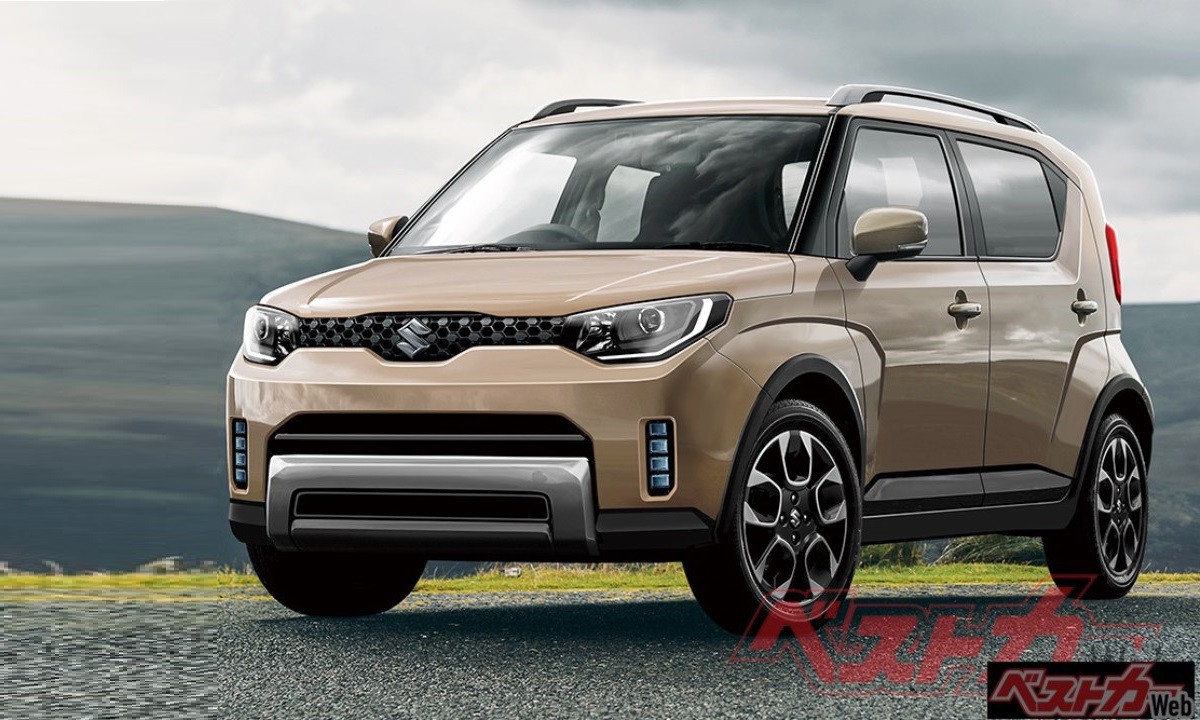
Suzuki Swift Cross rumoured for next generation model
Currently, the Suzuki Ignis was somewhat considered the crossover variant for the Swift, given they share almost exactly the same chassis. A new rumour out of Japan however, suggests that the next-generation model may introduce an all-new Suzuki Swift Cross.
As reported by Best Car Web, the Suzuki Swift Cross could be introduced along with the new model range which is due for a global release by 2023. This decision is being made to captilise on the success of the Ignis, Japan-specific Crosby, Jimny and Vitara Brezza.
The publication suggests that the new model will use the Suzuki Swift Sport as a base which means it could inherit the already rumoured BoosterJet turbocharged 1,4-litre four-cylinder engine with the 12-volt mild-hybrid system.
 www.carmag.co.za

Currently, the Suzuki Ignis was somewhat considered the crossover variant for the Swift, given they share almost exactly the same chassis. A new rumour out of Japan however, suggests that the next-generation model may introduce an all-new Suzuki Swift Cross.
As reported by Best Car Web, the Suzuki Swift Cross could be introduced along with the new model range which is due for a global release by 2023. This decision is being made to captilise on the success of the Ignis, Japan-specific Crosby, Jimny and Vitara Brezza.
The publication suggests that the new model will use the Suzuki Swift Sport as a base which means it could inherit the already rumoured BoosterJet turbocharged 1,4-litre four-cylinder engine with the 12-volt mild-hybrid system.
Suzuki Swift Cross rumoured for next generation model
Currently, the Suzuki Ignis was somewhat considered the crossover variant for the Swift, given they share almost exactly the same chassis. A new rumour out of Japan however, suggests that the next-generation model may introduce an all-new Suzuki Swift Cross.
www.carmag.co.za
HAL 9000
Honorary Master
- Joined
- May 27, 2008
- Messages
- 22,623
- Reaction score
- 26,420