


-
- News
-
Categories
- 5G
- ADSL
- AI
- Banking
- Black Friday
- Broadband
- Broadcasting
- Business
- Business Telecoms
- Cellular
- Cloud and Hosting
- Columns
- Cryptocurrency
- Energy
- Enterprise
- Fibre
- Gadgets
- Gaming
- Government
- Hardware
- Industry News
- Internet
- Internet of Things
- Investing
- IT Services
- Motoring
- Reviews
- Science
- Security
- Smartphones
- Software
- Technology
- Telecoms
- Trending
- Wireless
- Press Office
- Forum
- Industry News
- What's Next
- Company hub
- Speed Test
- About us
- Advertise with us
- Contact
- Careers
-
Join the MyBroadband community
South Africa’s biggest forum. Discuss, discover, and connect with thousands of members.
-
Question of the Day: Do you get motion sick?
- Forums
- General discussions
- Motoring and Transportation: Cars, Bikes and Plane
- General Motoring News and Reviews
You are using an out of date browser. It may not display this or other websites correctly.
You should upgrade or use an alternative browser.
You should upgrade or use an alternative browser.
The Xiaomi EV Thread
- Thread starter FiestaST
- Start date
FiestaST
Honorary Master
FiestaST
Honorary Master
Here’s a glimpse of Xiaomi’s next move: the full-size YU9 SUV
After the impressive launch of its YU7 sport utility vehicle, Xiaomi appears to be accelerating its automotive ambitions. A new, heavily camouflaged full-size SUV has been spotted undergoing road tests in China, and all signs point to this being the company's third electric car, codenamed "Kunlun."
This new model, rumored to be badged as the YU9, is venturing into the large family SUV segment and, reportedly, away from a purely battery-powered setup. Unlike its siblings, the SU7 sedan and the recently unveiled YU7, the YU9 is rumored to be an extended-range electric vehicle (EREV). This means it will pair a battery and electric motors with a small gasoline power generator.
The ICE will act as a generator to recharge the battery on the go, aiming to eliminate range anxiety. This approach is not new; it's a formula successfully employed by key rivals Xiaomi is targeting - Li Auto L9 and the Huawei-backed Aito M9.
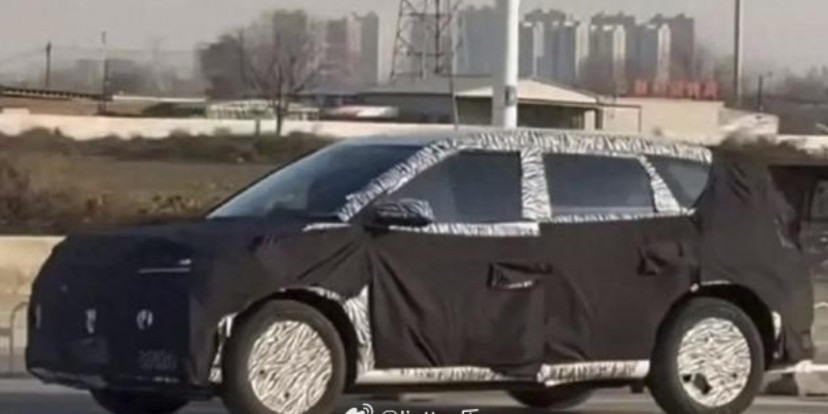
Spy shots circulating on Chinese social media reveal a vehicle with a commanding presence. The YU9 is a big machine, estimated to be around 5.3 m long. Its design is tall and boxy, with a high beltline and sharp, defined edges that contrast with the sleeker, more athletic profiles of the SU7 and YU7.
 www.arenaev.com


After the impressive launch of its YU7 sport utility vehicle, Xiaomi appears to be accelerating its automotive ambitions. A new, heavily camouflaged full-size SUV has been spotted undergoing road tests in China, and all signs point to this being the company's third electric car, codenamed "Kunlun."
This new model, rumored to be badged as the YU9, is venturing into the large family SUV segment and, reportedly, away from a purely battery-powered setup. Unlike its siblings, the SU7 sedan and the recently unveiled YU7, the YU9 is rumored to be an extended-range electric vehicle (EREV). This means it will pair a battery and electric motors with a small gasoline power generator.
The ICE will act as a generator to recharge the battery on the go, aiming to eliminate range anxiety. This approach is not new; it's a formula successfully employed by key rivals Xiaomi is targeting - Li Auto L9 and the Huawei-backed Aito M9.
Spy shots circulating on Chinese social media reveal a vehicle with a commanding presence. The YU9 is a big machine, estimated to be around 5.3 m long. Its design is tall and boxy, with a high beltline and sharp, defined edges that contrast with the sleeker, more athletic profiles of the SU7 and YU7.
Here’s a glimpse of Xiaomi’s next move: the full-size YU9 SUV
Technology giant Xiaomi is ready to enter the large family electric vehicle market with the YU9, a full-size, three-row SUV that opts for a range-extender powertrain.
www.arenaev.com
FiestaST
Honorary Master
Xiaomi is already testing a 1,548 hp YU7 Ultra
You’d think that after breaking records with the ridiculously fast SU7 Ultra, after launching the YU7 SUV to pretty much a stratosphere of popularity, and after revealing there is an even bigger SUV on the way - the YU9 - Xiaomi would rest a little. But no, it seems the word “rest” is not in Xiaomi’s dictionary.
During the launch of the YU7 last week, many people asked the one question that sounds so obvious - will there be an Ultra version of its sleek SUV? Xiaomi wasn’t forthcoming, ignored the question mostly and claimed it was focusing on getting the production of the YU7 up and running to deliver those 300,000 orders as soon as possible.
Well, we didn’t need to wait long for the answer, and since Xiaomi refused to admit it - the internet provided. These are the first photos of YU7 Ultra - a true beast of an SUV. There is no doubt it’ll be the fastest production SUV once it goes on sale, and it’ll rewrite the books on what it means a “fast” family hauler.
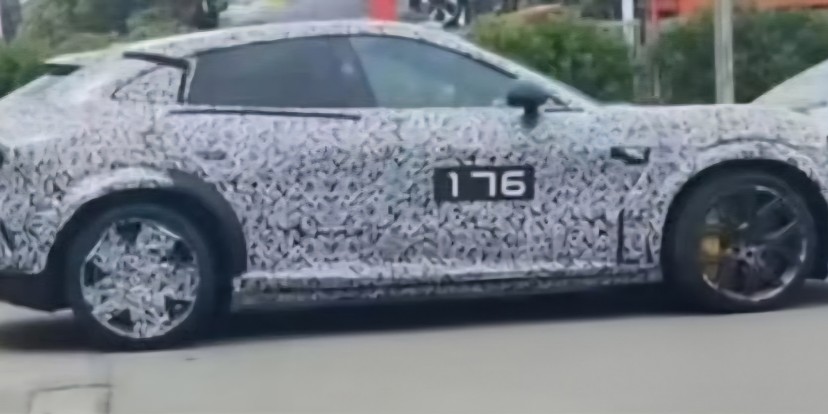
What we see in the photos is a very restrained design - no fancy spoilers, no wings at the back. The drivetrain is obviously wider with extended wheel arches needed to accommodate the SU7’s larger 21” wheels on a wider track. We can spot the same ceramic brakes with giant 6-piston calipers poking from behind those wheels.
 www.arenaev.com
You’d think that after breaking records with the ridiculously fast SU7 Ultra, after launching the YU7 SUV to pretty much a stratosphere of popularity, and after revealing there is an even bigger SUV on the way - the YU9 - Xiaomi would rest a little. But no, it seems the word “rest” is not in Xiaomi’s dictionary.
During the launch of the YU7 last week, many people asked the one question that sounds so obvious - will there be an Ultra version of its sleek SUV? Xiaomi wasn’t forthcoming, ignored the question mostly and claimed it was focusing on getting the production of the YU7 up and running to deliver those 300,000 orders as soon as possible.
Well, we didn’t need to wait long for the answer, and since Xiaomi refused to admit it - the internet provided. These are the first photos of YU7 Ultra - a true beast of an SUV. There is no doubt it’ll be the fastest production SUV once it goes on sale, and it’ll rewrite the books on what it means a “fast” family hauler.
What we see in the photos is a very restrained design - no fancy spoilers, no wings at the back. The drivetrain is obviously wider with extended wheel arches needed to accommodate the SU7’s larger 21” wheels on a wider track. We can spot the same ceramic brakes with giant 6-piston calipers poking from behind those wheels.
Xiaomi is already testing a 1,548 hp YU7 Ultra
This wild kitten is truly out of the bag - Xiaomi is making the fastest SUV in the world. The 1,548-hp YU7 Ultra has been spotted for the first time on the streets of China.
www.arenaev.com
FiestaST
Honorary Master
FiestaST
Honorary Master
12 ways the Xiaomi YU7 outdoes the Tesla Model Y
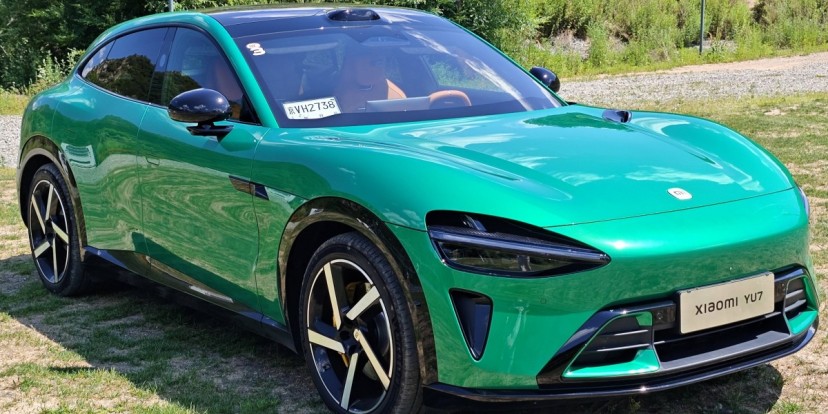
The debut of the Xiaomi YU7 came and went like a storm, but the dust still hasn't settled. The deeper we look into this Chinese revolutionary SUV, the more we discover. And although it is larger than Tesla Model Y, nobody has a shadow of a doubt that Xiaomi picked Tesla's SUV as its main rival. And the newcomer certainly looks prepared for the battle, brining a number of innovations and creature comforts that are absent in the popular Model Y.
The Xiaomi YU7, which shares a platform with its SU7 sedan sibling, enters a crowded field but distinguishes itself with a clear focus on technology integration. For a company that built its empire on smartphones and smart home devices, this tech-first approach is probably not a huge surprise. And here go the main upgrades it offers when compared to the new version of the most popular EV on the planet.
 www.arenaev.com
The debut of the Xiaomi YU7 came and went like a storm, but the dust still hasn't settled. The deeper we look into this Chinese revolutionary SUV, the more we discover. And although it is larger than Tesla Model Y, nobody has a shadow of a doubt that Xiaomi picked Tesla's SUV as its main rival. And the newcomer certainly looks prepared for the battle, brining a number of innovations and creature comforts that are absent in the popular Model Y.
The Xiaomi YU7, which shares a platform with its SU7 sedan sibling, enters a crowded field but distinguishes itself with a clear focus on technology integration. For a company that built its empire on smartphones and smart home devices, this tech-first approach is probably not a huge surprise. And here go the main upgrades it offers when compared to the new version of the most popular EV on the planet.
12 ways the Xiaomi YU7 outdoes the Tesla Model Y
Xiaomi's new YU7 electric SUV challenges the Tesla Model Y with a host of exclusive features.
www.arenaev.com
FiestaST
Honorary Master
Everything Electric Cars first drive of the Xiaomi SU7 Ultra
FiestaST
Honorary Master
Xiaomi YU7 Max real-world range test falls short of official numbers
The Xiaomi YU7 is getting a lot of attention for its technology and performance. Unfortunately, a recent independent highway range test of the top-tier YU7 Max model suggests that its real-world driving distance may not quite live up to the official numbers advertised. While still delivering a respectable performance, the results highlight a common theme in the world of EVs: the gap between lab-tested figures and everyday reality.
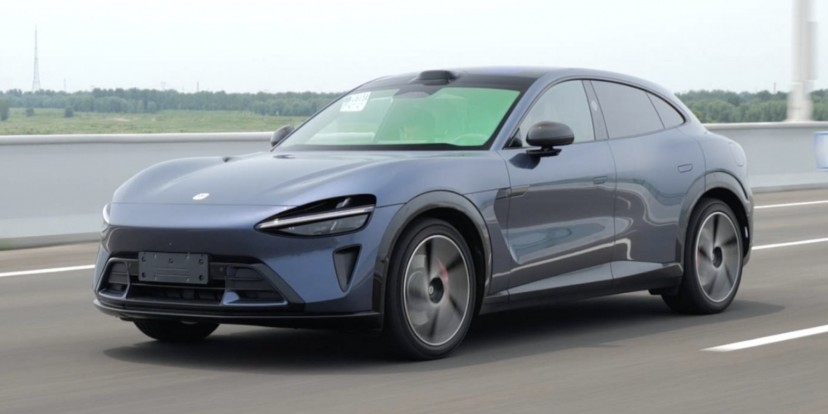
The test, conducted by the Chinese media outlet Sohu, took a brand-new Xiaomi YU7 Max for a lengthy drive focused exclusively on highway cruising. This specific model comes equipped with a large 101.7 kWh battery pack and dual motors for all-wheel drive. Officially, Xiaomi and the China Light-Duty Vehicle Test Cycle (CLTC) rate this car for 750 km of range. The test vehicle was fitted with 21-inch wheels wrapped in Michelin Primacy 5 Energy tires, designed for efficiency.
To simulate a typical road trip, two people occupied the car. They set the climate control to a comfortable 24°C and drove at the legal speed limit along an 84 km highway loop. The ambient temperature was around 30°C, a favorable condition for an EV battery. Under these realistic conditions, the YU7 Max traveled 483 km before the digital dashboard showed a range of zero. That's 64.4% of its official CLTC range. The average speed during this run was 99.6 km/h.
Curious about what happens when the counter hits zero, the drivers pushed on. The YU7 Max managed to travel an additional 9 km before the battery was completely depleted and the car shut down, resulting in a total "dead-on-the-road" range of 492 km. This brings the final achievement rate to 65.5% of the official claim, falling short of the 80-90% range efficiency that Xiaomi has previously suggested its cars can achieve. The result is actually considered average among the electric cars Sohu has tested.
 www.arenaev.com
The Xiaomi YU7 is getting a lot of attention for its technology and performance. Unfortunately, a recent independent highway range test of the top-tier YU7 Max model suggests that its real-world driving distance may not quite live up to the official numbers advertised. While still delivering a respectable performance, the results highlight a common theme in the world of EVs: the gap between lab-tested figures and everyday reality.
The test, conducted by the Chinese media outlet Sohu, took a brand-new Xiaomi YU7 Max for a lengthy drive focused exclusively on highway cruising. This specific model comes equipped with a large 101.7 kWh battery pack and dual motors for all-wheel drive. Officially, Xiaomi and the China Light-Duty Vehicle Test Cycle (CLTC) rate this car for 750 km of range. The test vehicle was fitted with 21-inch wheels wrapped in Michelin Primacy 5 Energy tires, designed for efficiency.
To simulate a typical road trip, two people occupied the car. They set the climate control to a comfortable 24°C and drove at the legal speed limit along an 84 km highway loop. The ambient temperature was around 30°C, a favorable condition for an EV battery. Under these realistic conditions, the YU7 Max traveled 483 km before the digital dashboard showed a range of zero. That's 64.4% of its official CLTC range. The average speed during this run was 99.6 km/h.
Curious about what happens when the counter hits zero, the drivers pushed on. The YU7 Max managed to travel an additional 9 km before the battery was completely depleted and the car shut down, resulting in a total "dead-on-the-road" range of 492 km. This brings the final achievement rate to 65.5% of the official claim, falling short of the 80-90% range efficiency that Xiaomi has previously suggested its cars can achieve. The result is actually considered average among the electric cars Sohu has tested.
Xiaomi YU7 Max real-world range test falls short of official numbers
An independent highway test of the Xiaomi YU7 Max revealed a real-world range of {{492 km}}.
www.arenaev.com
FiestaST
Honorary Master
carwow.de review of the Xiaomi SU7 Ultra
FiestaST
Honorary Master
FiestaST
Honorary Master
Xiaomi delivers over 30,000 EVs in July, YU7 waiting times stretch to H2 2026
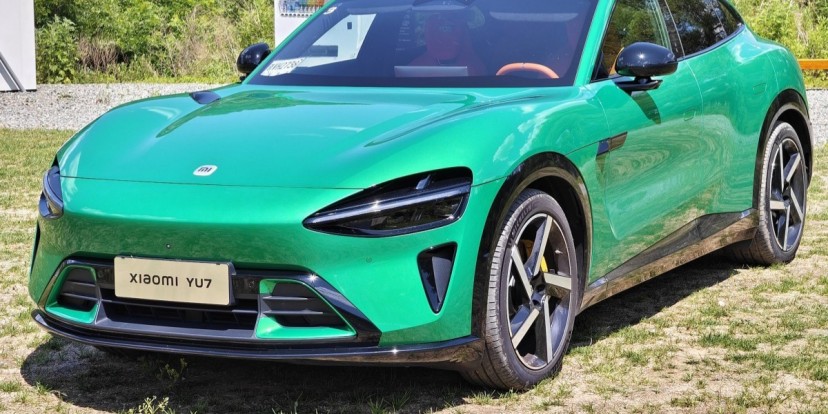
Xiaomi has a problem, but it is the kind of problem most automakers would kill for: its new electric car is so popular that it can't build them fast enough. The company announced it delivered over 30,000 electric vehicles in July, a new monthly record for its fledgling automotive division. This impressive figure is largely thanks to the overwhelming reception of its first-ever electric SUV, the Xiaomi YU7.
The story of the YU7's launch sounds less like a vehicle release and more like a blockbuster concert ticket sale. When the order books officially opened on June 26, Xiaomi secured 200,000 firm orders in the first three minutes - that's roughly the time it takes to listen to a song. Within 18 hours, that number swelled to over 240,000 locked-in orders from customers who had put down deposits, showing a serious commitment to buy.
Unfortunately, this instant success has created a massive challenge. The company's production facilities are struggling to keep up with the flood of orders. Anyone hoping to place a new order for the YU7 today is in for a long wait.
According to Xiaomi's own mobile app, the estimated delivery time for a new YU7 has stretched to 59 weeks. That means a customer ordering their electric SUV today might not see it in their driveway until the latter half of 2026.
 www.arenaev.com
Xiaomi has a problem, but it is the kind of problem most automakers would kill for: its new electric car is so popular that it can't build them fast enough. The company announced it delivered over 30,000 electric vehicles in July, a new monthly record for its fledgling automotive division. This impressive figure is largely thanks to the overwhelming reception of its first-ever electric SUV, the Xiaomi YU7.
The story of the YU7's launch sounds less like a vehicle release and more like a blockbuster concert ticket sale. When the order books officially opened on June 26, Xiaomi secured 200,000 firm orders in the first three minutes - that's roughly the time it takes to listen to a song. Within 18 hours, that number swelled to over 240,000 locked-in orders from customers who had put down deposits, showing a serious commitment to buy.
Unfortunately, this instant success has created a massive challenge. The company's production facilities are struggling to keep up with the flood of orders. Anyone hoping to place a new order for the YU7 today is in for a long wait.
According to Xiaomi's own mobile app, the estimated delivery time for a new YU7 has stretched to 59 weeks. That means a customer ordering their electric SUV today might not see it in their driveway until the latter half of 2026.
Xiaomi delivers over 30,000 EVs in July, YU7 waiting times stretch to H2 2026
Xiaomi had a record-breaking July and with the new YU7 electric SUV facing unprecedented demand the trend will likely continue.
www.arenaev.com
FiestaST
Honorary Master
FiestaST
Honorary Master
Xiaomi YU7 deliveries reach 6,042 in its first month as production ramps up
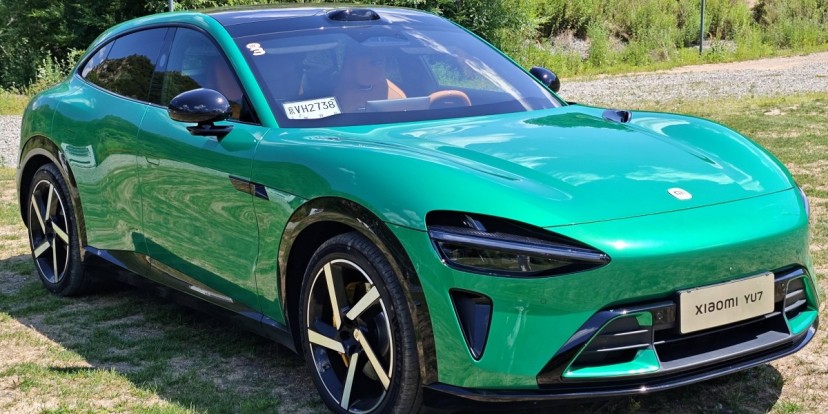
Xiaomi has run into a problem most automakers would envy. Its new electric SUV, the YU7, has attracted an incredible number of buyers. The challenge now is no longer convincing customers, but building them fast enough in a situation that tests the young carmaker's abilities and its customers' patience.
When the Xiaomi YU7 launched on June 26, the response was immediate and immense. Within the first 72 hours, the company secured what is reported to be between 280,800 and 315,900 locked-in orders, and that number excludes online orders. To put that in perspective, that's more cars than many established brands sell of a single model in an entire year. The hype was real.
Then, the first monthly delivery numbers for July came in, revealing a starkly different picture. Xiaomi delivered just 6,042 units of its new YU7. For the hundreds of thousands of people who put money down, that number just revealed the long road ahead.
The bottleneck is, unsurprisingly, production. Xiaomi Auto's first factory has an annual capacity of 150,000 vehicles. A second factory, which will eventually match that capacity, only finished construction in mid-June 2025 and is still in the process of ramping up. Even with both plants running at full steam, the company's total output would struggle to clear the initial wave of YU7 orders alone.
 www.arenaev.com
Xiaomi has run into a problem most automakers would envy. Its new electric SUV, the YU7, has attracted an incredible number of buyers. The challenge now is no longer convincing customers, but building them fast enough in a situation that tests the young carmaker's abilities and its customers' patience.
When the Xiaomi YU7 launched on June 26, the response was immediate and immense. Within the first 72 hours, the company secured what is reported to be between 280,800 and 315,900 locked-in orders, and that number excludes online orders. To put that in perspective, that's more cars than many established brands sell of a single model in an entire year. The hype was real.
Then, the first monthly delivery numbers for July came in, revealing a starkly different picture. Xiaomi delivered just 6,042 units of its new YU7. For the hundreds of thousands of people who put money down, that number just revealed the long road ahead.
The bottleneck is, unsurprisingly, production. Xiaomi Auto's first factory has an annual capacity of 150,000 vehicles. A second factory, which will eventually match that capacity, only finished construction in mid-June 2025 and is still in the process of ramping up. Even with both plants running at full steam, the company's total output would struggle to clear the initial wave of YU7 orders alone.
Xiaomi YU7 deliveries reach 6,042 in its first month as production ramps up
Tech giant Xiaomi is facing a major production challenge as overwhelming demand for its new YU7 electric SUV creates a delivery wait time of over 10 months for hundreds of thousands of customers.
www.arenaev.com
FiestaST
Honorary Master
FiestaST
Honorary Master
FiestaST
Honorary Master
FiestaST
Honorary Master
More than just phones: Xiaomi EV brings nearly $3 billion in Q2
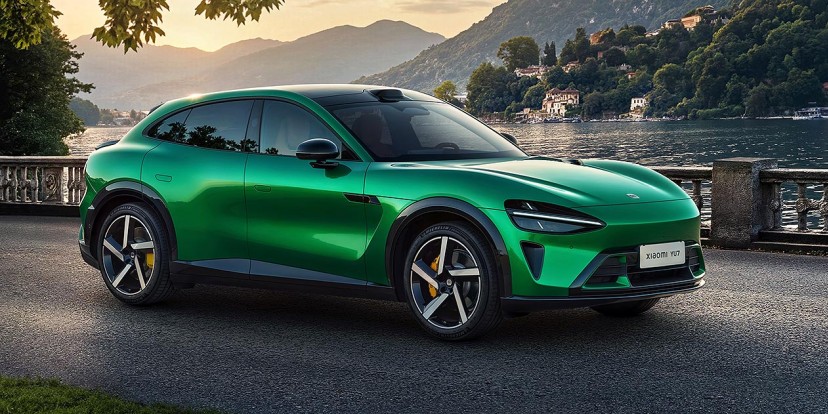
Xiaomi is proving it has serious ambitions in the car space. The tech giant's new electric vehicle division reported impressive financial results for the second quarter, showing that its entry into the crowded EV market is more than just an experiment.
In the second quarter, Xiaomi's EV business brought in €2.45 billion (RMB 20.6 billion). This is nearly a 14% jump from the first quarter and a 232% increase compared to the same period last year. The last number looks great until you realize Xiaomi only started selling the SU7 towards the end of Q2 2024.
Profitability in the car business, especially for a newcomer, is a tough mountain to climb, but Xiaomi is already showing positive signs. The gross margin for its "innovative businesses," which includes both electric vehicles and artificial intelligence, climbed to 26.4%.
That is a healthy improvement from the 23.2% margin seen in the first quarter. The division still posted an operating loss, but it shrank from RMB 500 million in the first quarter to RMB 300 million in the second, suggesting the company is on its way toward breaking even.
 www.arenaev.com
Xiaomi is proving it has serious ambitions in the car space. The tech giant's new electric vehicle division reported impressive financial results for the second quarter, showing that its entry into the crowded EV market is more than just an experiment.
In the second quarter, Xiaomi's EV business brought in €2.45 billion (RMB 20.6 billion). This is nearly a 14% jump from the first quarter and a 232% increase compared to the same period last year. The last number looks great until you realize Xiaomi only started selling the SU7 towards the end of Q2 2024.
Profitability in the car business, especially for a newcomer, is a tough mountain to climb, but Xiaomi is already showing positive signs. The gross margin for its "innovative businesses," which includes both electric vehicles and artificial intelligence, climbed to 26.4%.
That is a healthy improvement from the 23.2% margin seen in the first quarter. The division still posted an operating loss, but it shrank from RMB 500 million in the first quarter to RMB 300 million in the second, suggesting the company is on its way toward breaking even.
More than just phones: Xiaomi EV brings nearly $3 billion in Q2
Smartphone giant Xiaomi's new electric vehicle division reported a massive 232% year-on-year revenue increase in the second quarter, driven by record deliveries of its popular SU7 sedan.
www.arenaev.com
FiestaST
Honorary Master
FiestaST
Honorary Master
FiestaST
Honorary Master
How China’s Xiaomi Beat Apple and Is Taking on Tesla