


-
- News
-
Categories
- 5G
- ADSL
- AI
- Banking
- Black Friday
- Broadband
- Broadcasting
- Business
- Business Telecoms
- Cellular
- Cloud and Hosting
- Columns
- Cryptocurrency
- Energy
- Enterprise
- Fibre
- Gadgets
- Gaming
- Government
- Hardware
- Industry News
- Internet
- Internet of Things
- Investing
- IT Services
- Motoring
- Reviews
- Science
- Security
- Smartphones
- Software
- Technology
- Telecoms
- Trending
- Wireless
- Press Office
- Forum
- Industry News
- What's Next
- Company hub
- Speed Test
- About us
- Advertise with us
- Contact
- Careers
-
Join the MyBroadband community
South Africa’s biggest forum. Discuss, discover, and connect with thousands of members.
-
Question of the Day: Do you get motion sick?
- Forums
- General discussions
- Motoring and Transportation: Cars, Bikes and Plane
- General Motoring News and Reviews
You are using an out of date browser. It may not display this or other websites correctly.
You should upgrade or use an alternative browser.
You should upgrade or use an alternative browser.
The Xiaomi EV Thread
- Thread starter FiestaST
- Start date
FiestaST
Honorary Master
FiestaST
Honorary Master
Former Lamborghini chief exterior designer joins Xiaomi as head of European Design
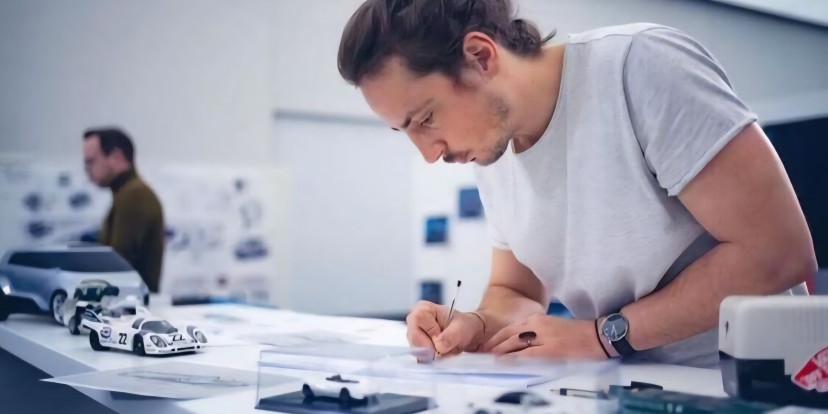
Fabian Schmolz, who recently led exterior design at Lamborghini, will now take on the role of Head of Exterior Design for Xiaomi Auto Europe. The hire sends a clear message that the Chinese tech giant, now a serious player in the electric car market, has its sights set firmly on international expansion.
Schmolz brings an impressive resume to the ambitious EV maker. Before his work on the the famous Italian supercar company, he spent years at Porsche. There, he contributed to the design of several cars, including the 718 Boxster and the VisionGT concept. What's really important for Xiaomi is the fact that he was part of the team that penned the Mission E prototype, the very concept car that would later become the Porsche Taycan. This not-so-tiny detail is especially interesting, given the public's reaction to Xiaomi's first electric car.
When Xiaomi launched its first EVs, the SU7 sedan and the upcoming YU7 SUV, the internet quickly noticed some familiar shapes. Many people pointed out that the sleek lines of the Xiaomi SU7 looked a lot like the Porsche Taycan. This led to the creation of the nickname "Mi-sche," a mash-up of Xiaomi and Porsche.
Similarly, the YU7 has been compared to the Ferrari Purosangue, earning it the label "Ferra-mi." While imitation can be a form of flattery, for a new company trying to build its own brand, such comparisons can be a double-edged sword.
Li Tianyuan, the company's General Manager of Industrial Design, explained that his team focuses on creating "emotional value." He argues that while you can copy performance numbers, you cannot copy the feeling a car gives you.
According to Li, Xiaomi's design goal is to create cars that are scientific and feel natural and intuitive. He also believes that the shift to electric cars gives Chinese designers a unique opportunity to get ahead. Without the long history of gasoline cars to hold them back, they are free to innovate and create new designs for the EV era.
 www.arenaev.com
Fabian Schmolz, who recently led exterior design at Lamborghini, will now take on the role of Head of Exterior Design for Xiaomi Auto Europe. The hire sends a clear message that the Chinese tech giant, now a serious player in the electric car market, has its sights set firmly on international expansion.
Schmolz brings an impressive resume to the ambitious EV maker. Before his work on the the famous Italian supercar company, he spent years at Porsche. There, he contributed to the design of several cars, including the 718 Boxster and the VisionGT concept. What's really important for Xiaomi is the fact that he was part of the team that penned the Mission E prototype, the very concept car that would later become the Porsche Taycan. This not-so-tiny detail is especially interesting, given the public's reaction to Xiaomi's first electric car.
When Xiaomi launched its first EVs, the SU7 sedan and the upcoming YU7 SUV, the internet quickly noticed some familiar shapes. Many people pointed out that the sleek lines of the Xiaomi SU7 looked a lot like the Porsche Taycan. This led to the creation of the nickname "Mi-sche," a mash-up of Xiaomi and Porsche.
Similarly, the YU7 has been compared to the Ferrari Purosangue, earning it the label "Ferra-mi." While imitation can be a form of flattery, for a new company trying to build its own brand, such comparisons can be a double-edged sword.
Li Tianyuan, the company's General Manager of Industrial Design, explained that his team focuses on creating "emotional value." He argues that while you can copy performance numbers, you cannot copy the feeling a car gives you.
According to Li, Xiaomi's design goal is to create cars that are scientific and feel natural and intuitive. He also believes that the shift to electric cars gives Chinese designers a unique opportunity to get ahead. Without the long history of gasoline cars to hold them back, they are free to innovate and create new designs for the EV era.
Former Lamborghini chief exterior designer joins Xiaomi as head of European Design
Facing design comparisons to European supercars, Chinese EV maker Xiaomi Auto has hired former Lamborghini and Porsche designer Fabian Schmölz to lead its European design efforts.
www.arenaev.com
FiestaST
Honorary Master
FiestaST
Honorary Master
FiestaST
Honorary Master
FiestaST
Honorary Master
Xiaomi to update 116,000 SU7 EVs due to self-driving software issue
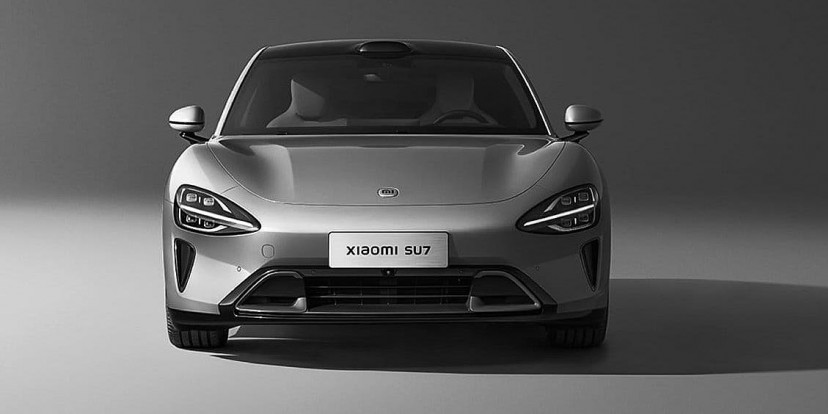
Xiaomi is recalling a big chunk of the SU7 cars, its debut model. The company found a software defect in its driver-assistance feature that could pose a safety risk in specific situations. The recall affects nearly 117,000 vehicles and comes months after a fatal crash involving an SU7 brought increased scrutiny to the new electric vehicle maker.
The recall was announced through China's State Administration for Market Regulation (SAMR), and it targets 116,887 units of the SU7 Standard Edition. These electric cars were manufactured between February 6, 2024, and August 30, 2025.
According to the regulatory filing, the problem is with the Level 2 highway pilot driving assistance function. The system may have "insufficient recognition, warning, or handling capabilities in extreme special scenarios." In plain English, the car's computer might not react correctly or quickly enough in unusual road conditions, increasing the risk of a collision if the driver isn't paying close attention.
For SU7 owners, the fix will not require a trip to the dealership. Xiaomi announced it will push a free, over-the-air (OTA) software update to all affected electric cars. This update will upgrade the vehicles to the latest Xiaomi HyperOS 1.10.0 system.
 www.arenaev.com
Xiaomi is recalling a big chunk of the SU7 cars, its debut model. The company found a software defect in its driver-assistance feature that could pose a safety risk in specific situations. The recall affects nearly 117,000 vehicles and comes months after a fatal crash involving an SU7 brought increased scrutiny to the new electric vehicle maker.
The recall was announced through China's State Administration for Market Regulation (SAMR), and it targets 116,887 units of the SU7 Standard Edition. These electric cars were manufactured between February 6, 2024, and August 30, 2025.
According to the regulatory filing, the problem is with the Level 2 highway pilot driving assistance function. The system may have "insufficient recognition, warning, or handling capabilities in extreme special scenarios." In plain English, the car's computer might not react correctly or quickly enough in unusual road conditions, increasing the risk of a collision if the driver isn't paying close attention.
For SU7 owners, the fix will not require a trip to the dealership. Xiaomi announced it will push a free, over-the-air (OTA) software update to all affected electric cars. This update will upgrade the vehicles to the latest Xiaomi HyperOS 1.10.0 system.
Xiaomi to update 116,000 SU7 EVs due to self-driving software issue
Xiaomi is recalling over 116,000 of its new SU7 electric cars to fix a software flaw in its driver-assistance system following a fatal crash earlier this year.
www.arenaev.com
FiestaST
Honorary Master
Xiaomi ready to reveal its 1,000+ horsepower YU7 GT
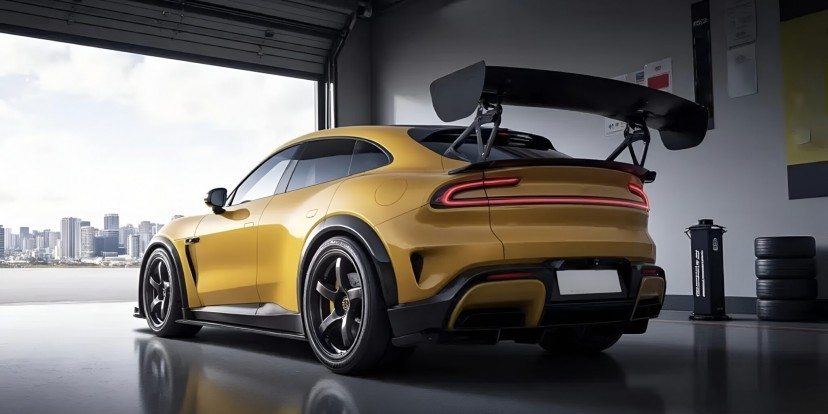
After Xiaomi's record-setting SU7 Ultra sedan, the tech giant appears to be ready for a second act. A mysterious, high-performance electric SUV, believed to be the Xiaomi YU7 GT, has been spotted turning laps at the Nürburgring racetrack.
Whispers from industry insiders, coupled with founder Lei Jun's annual speech scheduled for September 25, suggest an official reveal is near. While Xiaomi remains tight-lipped, the evidence circulating from the grueling German track paints a picture of a family hauler with the heart of a supercar.
The prototype, wrapped in a now-familiar red-and-grey camouflage similar to the one worn by its sedan sibling, the SU7 Ultra, displays several tell-tale signs of its potent ambitions. Keen-eyed observers noted significantly wider fenders, a more muscular rear profile, and a lower, more aggressive stance compared to the standard YU7 SUV that was launched last June.
Underneath the disguised bodywork, the YU7 GT is expected to borrow the astonishing powertrain from the SU7 Ultra. If the rumors hold true, this means a tri-motor electric setup capable of delivering an output of well over 1,000 horsepower - more power than many exotic supercars. The SU7 Ultra already proved its mettle by setting a new lap record for a production EV at the Nürburgring, and Xiaomi seems keen on having the SUV follow its sibling.
 www.arenaev.com
After Xiaomi's record-setting SU7 Ultra sedan, the tech giant appears to be ready for a second act. A mysterious, high-performance electric SUV, believed to be the Xiaomi YU7 GT, has been spotted turning laps at the Nürburgring racetrack.
Whispers from industry insiders, coupled with founder Lei Jun's annual speech scheduled for September 25, suggest an official reveal is near. While Xiaomi remains tight-lipped, the evidence circulating from the grueling German track paints a picture of a family hauler with the heart of a supercar.
The prototype, wrapped in a now-familiar red-and-grey camouflage similar to the one worn by its sedan sibling, the SU7 Ultra, displays several tell-tale signs of its potent ambitions. Keen-eyed observers noted significantly wider fenders, a more muscular rear profile, and a lower, more aggressive stance compared to the standard YU7 SUV that was launched last June.
Underneath the disguised bodywork, the YU7 GT is expected to borrow the astonishing powertrain from the SU7 Ultra. If the rumors hold true, this means a tri-motor electric setup capable of delivering an output of well over 1,000 horsepower - more power than many exotic supercars. The SU7 Ultra already proved its mettle by setting a new lap record for a production EV at the Nürburgring, and Xiaomi seems keen on having the SUV follow its sibling.
Xiaomi ready to reveal its 1,000+ horsepower YU7 GT
Following the success of its record-breaking sedan, Xiaomi is teasing a high-performance electric SUV, the YU7 GT, with a power output exceeding 1,000 horsepower.
www.arenaev.com
FiestaST
Honorary Master
Xiaomi EV is now officially in Europe as research hub opens in Germany
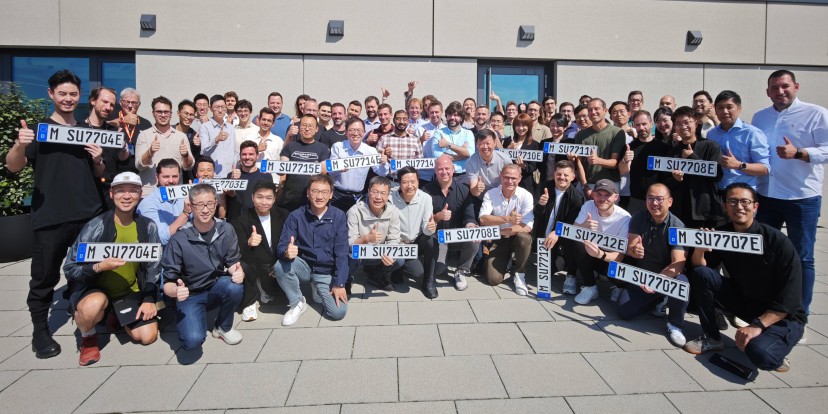
Chinese technology giant Xiaomi has officially planted its flag on European soil, opening its first EV research and design center outside of China. The new facility is located in the German automotive stronghold of Munich, and is a big step in the company's plan to bring its popular electric cars to the European market.
It's easy to forget that Xiaomi only announced its venture into electric cars about four years ago. In that short time, the company moved at incredible speed. Its first model, the sleek SU7 sedan, became an instant sensation in its home market of China. The demand was so high that Xiaomi delivered an astonishing 200,000 vehicles to customers in just 119 days, a pace that has put established automakers on notice.
Xiaomi's choice of Germany for its first international outpost is no coincidence. The automaker has already been making a name for itself in the country's demanding motorsports scene. Xiaomi has earned considerable respect at the world-famous Nürburgring.
The company was invited to join the exclusive "Industriepool," a group of manufacturers that conduct research and development on the track and has even signed on as a long-term partner of the circuit, which now features a dedicated "Xiaomi Curve" on its Grand Prix layout.
 www.arenaev.com
Chinese technology giant Xiaomi has officially planted its flag on European soil, opening its first EV research and design center outside of China. The new facility is located in the German automotive stronghold of Munich, and is a big step in the company's plan to bring its popular electric cars to the European market.
It's easy to forget that Xiaomi only announced its venture into electric cars about four years ago. In that short time, the company moved at incredible speed. Its first model, the sleek SU7 sedan, became an instant sensation in its home market of China. The demand was so high that Xiaomi delivered an astonishing 200,000 vehicles to customers in just 119 days, a pace that has put established automakers on notice.
Xiaomi's choice of Germany for its first international outpost is no coincidence. The automaker has already been making a name for itself in the country's demanding motorsports scene. Xiaomi has earned considerable respect at the world-famous Nürburgring.
The company was invited to join the exclusive "Industriepool," a group of manufacturers that conduct research and development on the track and has even signed on as a long-term partner of the circuit, which now features a dedicated "Xiaomi Curve" on its Grand Prix layout.
Xiaomi EV is now officially in Europe as research hub opens in Germany
Xiaomi has opened its first international electric vehicle R&D and design center in Munich, Germany.
www.arenaev.com
FiestaST
Honorary Master
FiestaST
Honorary Master
Xiaomi SU7 Ultra v Tesla Model S Plaid: Drag Race - Carwow
FiestaST
Honorary Master
Xiaomi's recipe for a new EV: buy three Teslas and take them apart
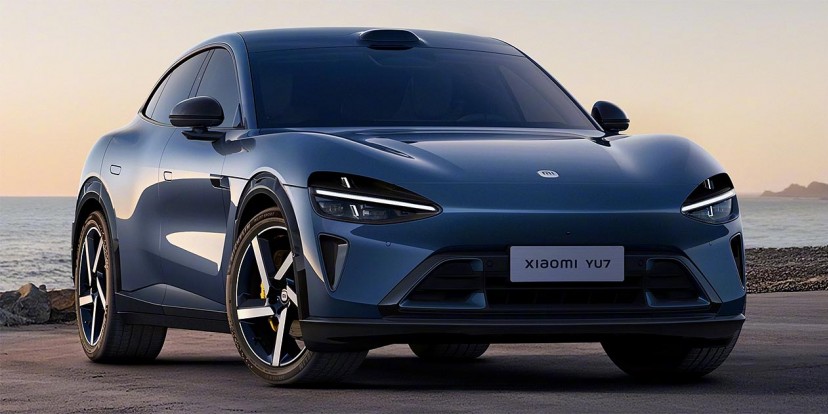
It is often said that imitation is the sincerest form of flattery. For Chinese tech giant Xiaomi, that flattery involves wrenches, screwdrivers, and a deep dive into the competition's nuts and bolts. The company's chief executive, Lei Jun, confirmed what many in the industry suspected: to build its new YU7 electric SUV, Xiaomi started by buying three of its biggest rivals, the Tesla Model Y, and systematically taking them apart.
Speaking to a large audience at the Beijing National Convention Center, Lei laid out the company's strategy with surprising openness. "We bought 3 Model Ys at the start of this year, disassembling the parts one by one, and studied every component, one at a time," he explained.
This was a meticulous engineering exercise designed to understand every decision Tesla's designers and engineers made, from the chassis construction to the software integration. The goal was to benchmark against what many consider the industry standard for electric SUVs before finalizing the design for Xiaomi's own YU7.
What's more surprising than the admission of a teardown was the CEO's tone. In an industry where executives often dismiss or criticize their rivals, Lei Jun was remarkably complimentary of Elon Musk's creation. With a side-by-side comparison of the YU7 and the Model Y displayed on a large screen behind him, Lei told the crowd that Tesla had built a truly impressive vehicle.
"I'm not criticizing the Model Y. The Model Y is a very, very outstanding car," he stated, adding, "If you don't choose YU7, you can consider Model Y." This kind of public praise for a direct competitor is a rare sight in the automotive world.
The practice is known as benchmarking or teardown analysis, and is far from unique to Xiaomi. Automakers and electronics companies buy competitors' products all the time to reverse-engineer their successes. It's a standard operating procedure for understanding material choices, manufacturing techniques, and cost-saving measures that aren't visible from the outside.
 www.arenaev.com
It is often said that imitation is the sincerest form of flattery. For Chinese tech giant Xiaomi, that flattery involves wrenches, screwdrivers, and a deep dive into the competition's nuts and bolts. The company's chief executive, Lei Jun, confirmed what many in the industry suspected: to build its new YU7 electric SUV, Xiaomi started by buying three of its biggest rivals, the Tesla Model Y, and systematically taking them apart.
Speaking to a large audience at the Beijing National Convention Center, Lei laid out the company's strategy with surprising openness. "We bought 3 Model Ys at the start of this year, disassembling the parts one by one, and studied every component, one at a time," he explained.
This was a meticulous engineering exercise designed to understand every decision Tesla's designers and engineers made, from the chassis construction to the software integration. The goal was to benchmark against what many consider the industry standard for electric SUVs before finalizing the design for Xiaomi's own YU7.
What's more surprising than the admission of a teardown was the CEO's tone. In an industry where executives often dismiss or criticize their rivals, Lei Jun was remarkably complimentary of Elon Musk's creation. With a side-by-side comparison of the YU7 and the Model Y displayed on a large screen behind him, Lei told the crowd that Tesla had built a truly impressive vehicle.
"I'm not criticizing the Model Y. The Model Y is a very, very outstanding car," he stated, adding, "If you don't choose YU7, you can consider Model Y." This kind of public praise for a direct competitor is a rare sight in the automotive world.
The practice is known as benchmarking or teardown analysis, and is far from unique to Xiaomi. Automakers and electronics companies buy competitors' products all the time to reverse-engineer their successes. It's a standard operating procedure for understanding material choices, manufacturing techniques, and cost-saving measures that aren't visible from the outside.
Xiaomi's recipe for a new EV: buy three Teslas and take them apart
Chinese tech giant Xiaomi admitted to purchasing and completely disassembling three Tesla Model Ys to learn how to build its own popular YU7 electric SUV.
www.arenaev.com
FiestaST
Honorary Master
FiestaST
Honorary Master
Carwow review of the Xiaomi SU7 Ultra
FiestaST
Honorary Master
FiestaST
Honorary Master
FiestaST
Honorary Master
Xiaomi SU7 and YU7 order-flipping market collapses
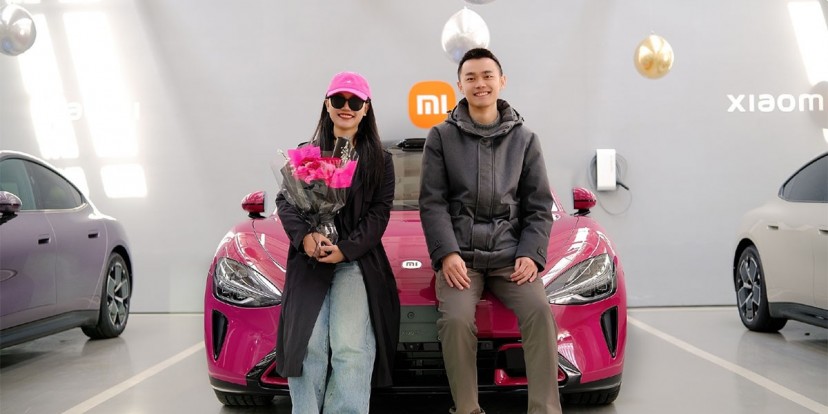
The launch of Xiaomi's first electric car, the SU7, created a frenzy that looked more like a tech gadget drop than a vehicle release. Hopeful entrepreneurs and tech fans rushed to place deposits, not necessarily to drive the sleek new EV, but to sell their spot in the long production queue for a quick and hefty profit.
For a moment, it worked. The secondary market for Xiaomi SU7 pre-orders was booming, with reservations commanding premiums of over RMB 10,000 (€1,200). Today, that market has completely imploded, leaving many amateur car flippers holding a reservation that is now worth less than the deposit they paid. According to Chinese media reports, dealers are buying back SU7 reservations for around RMB 1,500 (€179).
Just a few months ago, the hype was undeniable. After Xiaomi threw its hat into the electric car ring in the form of its second EV, it secured 240,000 orders within the first 18 hours of the YU7's launch. This overwhelming demand created a scalper's paradise. Desperate buyers, unwilling to wait in the official queue, paid handsomely for an early spot.
Order transfers for YU7 were fetching premiums between RMB 3,000 and RMB 20,000 (€359 to €2,400), and they dropped as low as RMB 2,000 (€239). Considering the initial deposit was RMB 5,000 (€598), sellers are accepting a loss of roughly RMB 3,000 (€359) just to walk away.
 www.arenaev.com
The launch of Xiaomi's first electric car, the SU7, created a frenzy that looked more like a tech gadget drop than a vehicle release. Hopeful entrepreneurs and tech fans rushed to place deposits, not necessarily to drive the sleek new EV, but to sell their spot in the long production queue for a quick and hefty profit.
For a moment, it worked. The secondary market for Xiaomi SU7 pre-orders was booming, with reservations commanding premiums of over RMB 10,000 (€1,200). Today, that market has completely imploded, leaving many amateur car flippers holding a reservation that is now worth less than the deposit they paid. According to Chinese media reports, dealers are buying back SU7 reservations for around RMB 1,500 (€179).
Just a few months ago, the hype was undeniable. After Xiaomi threw its hat into the electric car ring in the form of its second EV, it secured 240,000 orders within the first 18 hours of the YU7's launch. This overwhelming demand created a scalper's paradise. Desperate buyers, unwilling to wait in the official queue, paid handsomely for an early spot.
Order transfers for YU7 were fetching premiums between RMB 3,000 and RMB 20,000 (€359 to €2,400), and they dropped as low as RMB 2,000 (€239). Considering the initial deposit was RMB 5,000 (€598), sellers are accepting a loss of roughly RMB 3,000 (€359) just to walk away.
Xiaomi SU7 and YU7 order-flipping market collapses
The once-profitable market for reselling Xiaomi SU7 electric car pre-orders has collapsed, forcing speculators to sell their reservations at a loss due to oversupply and waning hype.
www.arenaev.com
FiestaST
Honorary Master
FiestaST
Honorary Master
FiestaST
Honorary Master
Xiaomi is on a roll with another 40,000 sales month
Xiaomi's car division just announced it delivered more than 40,000 vehicles in October. This is the second month in a row the company has passed this major milestone. Xiaomi confirmed the news on the social media site Weibo, but it did not give a precise number for October, which is a common practice for the company.
To understand this success, we only need to look at September. Xiaomi EV delivered an exact total of 41,948 cars. This was a new record for the company. It was also the third straight month that Xiaomi set a new delivery record. This shows strong, building momentum.
The growth figures are startling. The September number was a 209.37 percent increase from the 13,559 cars it delivered in the same month last year. It also showed a 15.25 percent jump from the 36,396 EVs it sold just one month earlier in August. These are not small steps of an EV startup - they are giant leaps.
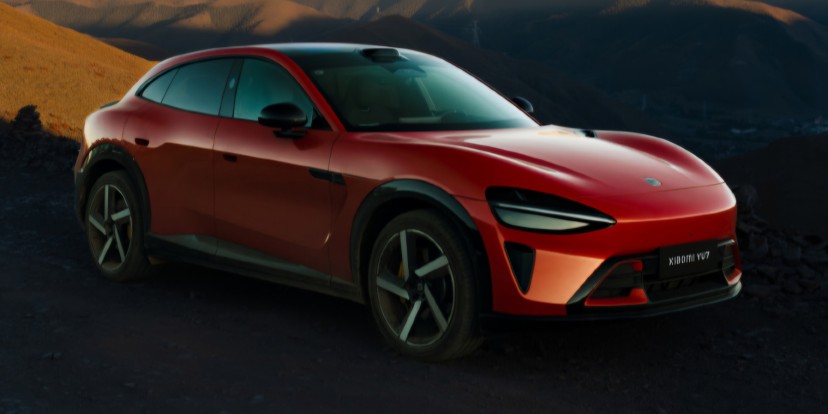
The company entered the EV market with an aggressive, multi-car strategy in 2024. The main vehicle initially was the Xiaomi SU7, an electric sedan. This car officially launched on March 28, 2024. Xiaomi has made its goal very clear - the SU7 is designed to compete directly with the Tesla Model 3, at the time one of the most popular electric cars in the world.
 www.arenaev.com

Xiaomi's car division just announced it delivered more than 40,000 vehicles in October. This is the second month in a row the company has passed this major milestone. Xiaomi confirmed the news on the social media site Weibo, but it did not give a precise number for October, which is a common practice for the company.
To understand this success, we only need to look at September. Xiaomi EV delivered an exact total of 41,948 cars. This was a new record for the company. It was also the third straight month that Xiaomi set a new delivery record. This shows strong, building momentum.
The growth figures are startling. The September number was a 209.37 percent increase from the 13,559 cars it delivered in the same month last year. It also showed a 15.25 percent jump from the 36,396 EVs it sold just one month earlier in August. These are not small steps of an EV startup - they are giant leaps.
The company entered the EV market with an aggressive, multi-car strategy in 2024. The main vehicle initially was the Xiaomi SU7, an electric sedan. This car officially launched on March 28, 2024. Xiaomi has made its goal very clear - the SU7 is designed to compete directly with the Tesla Model 3, at the time one of the most popular electric cars in the world.
Xiaomi is on a roll with another 40,000 sales month
Xiaomi delivered over 40,000 electric cars for the second straight month, even as it faces serious safety concerns following a fatal crash.
www.arenaev.com