The Xiaomi EV Thread

Xiaomi's president went on a road trip with the SU7 Ultra in Germany, reaching 260 km/h

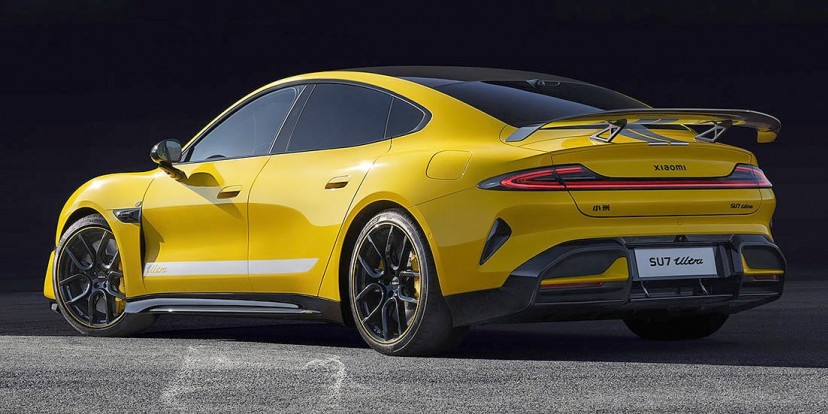
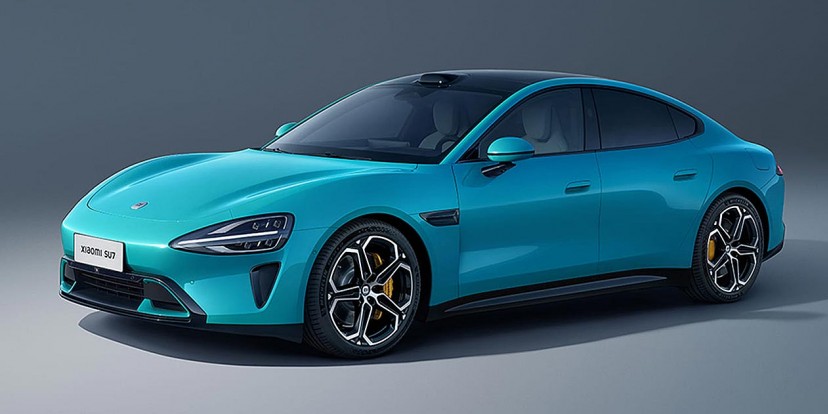
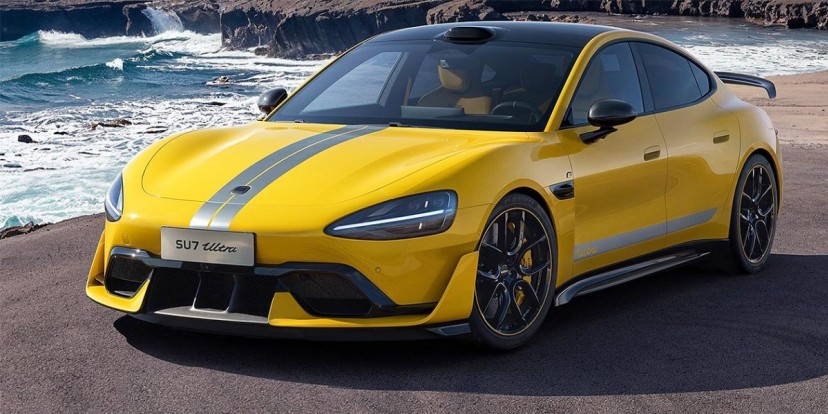
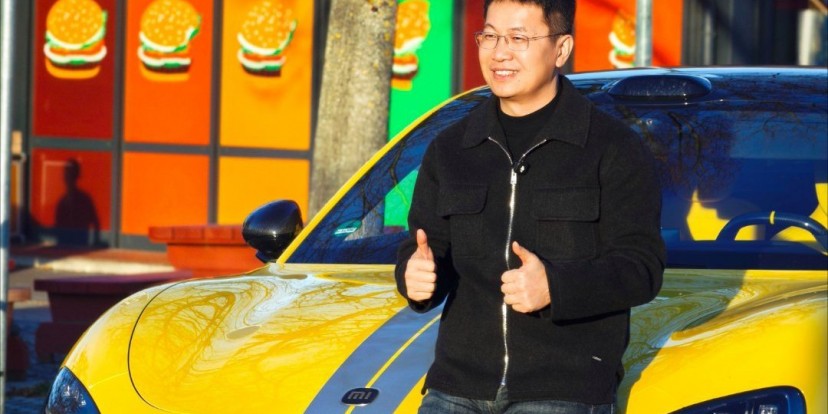
Xiaomi President Lu Weibing was recently in Germany, where he took the company's SU7 Ultra for a test drive from Berlin to Hamburg and Hamburg to Frankfurt.

In total, Lu drove around 800 km, and, since parts of the German highway network (Autobahn) don't have a speed limit, managed to reach a top speed of 260 km/h in the car, which remained "very stable" in the process, according to his own words posted to Weibo.

Inevitably, Lu also had to experience the charging facilities in Germany on his way, and he thinks they are rather good. While he was waiting for the car to charge, many people recognized it - some even knew it by name, and came over to take a closer look.

1762535207797.png

1762535230136.png
 
Xiaomi’s record October EV deliveries reveal massive demand for the YU7

The electric car market is shifting, and one name keeps popping up: Xiaomi EV. The Chinese manufacturer recently announced a stunning October performance, delivering 48,654 vehicles in a single month. This is a new record for the company and is the second month in a row that Xiaomi EV has topped 40,000 deliveries. With this strong finish, the brand is now just shy of the 50,000-unit monthly milestone.

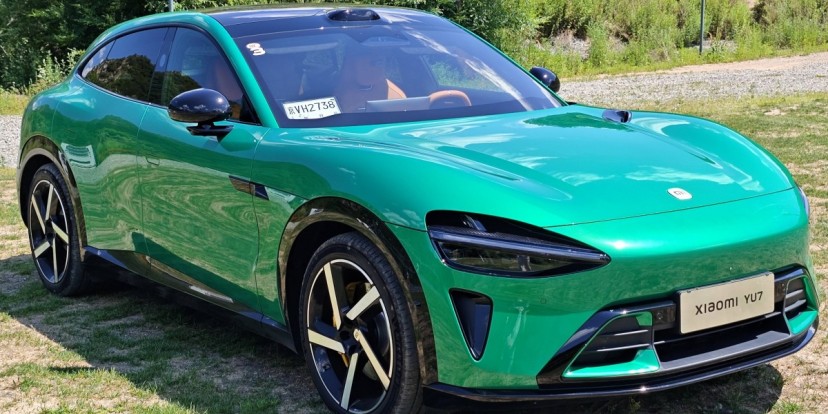
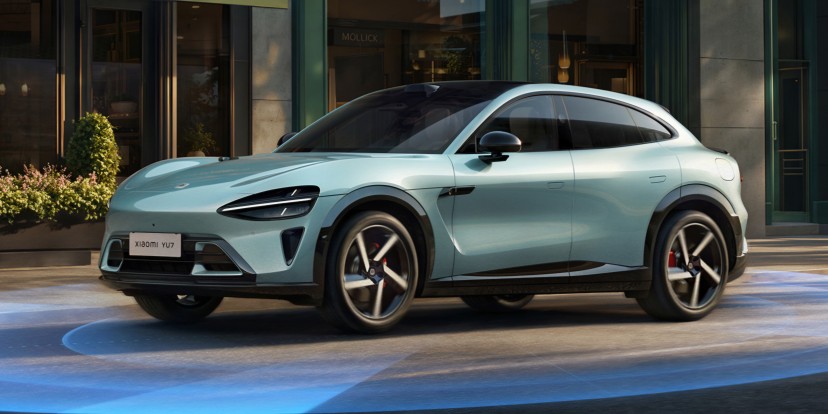
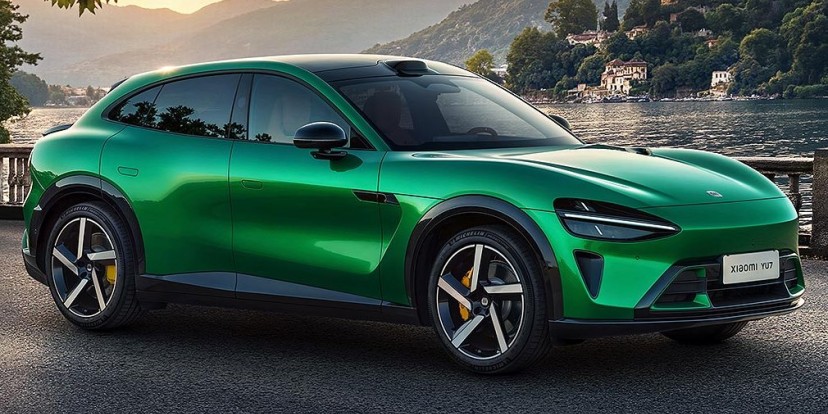
The engine driving this record-breaking success is undeniably the YU7, Xiaomi's first electric SUV. This vehicle, which directly competes with the Tesla Model Y, has captured the attention of buyers. In October, the company delivered a remarkable 33,662 units of the YU7, cementing its position as the company's best-seller with the electric SUV responsible for nearly 69.19 percent of all deliveries made by Xiaomi EV during the month.

This explosive performance resulted from a clear business decision. Deliveries of the YU7 SUV surged by an impressive 50.49 percent in October compared to the 22,369 units sold in September. This massive jump reflects Xiaomi EV's move to allocate more of its factory capacity toward building the YU7. When a competitor to one of the world's most popular EVs is proving this successful, it is simply good business to feed that demand.

Management clearly saw the opportunity and prioritized the SUV, which first launched on June 26. As a result of this focus, the YU7 has already accumulated 80,855 deliveries since its debut, a very quick climb in less than half a year. Unfortunately, this strategic prioritization of the YU7, while lucrative, did impact Xiaomi's sedan series.

 
Xiaomi's electric car factory hits overdrive, SU7 wait times tumble

The tech giant Xiaomi is learning how to build electric cars, and it's learning fast. In a market where new EV companies often struggle with "production hell," Xiaomi is showing signs that it's cracking the code. The company has dramatically cut the delivery wait times for two of its popular SU7 electric sedans, suggesting that its factories are hitting a serious new stride.

Customers in China ordering the mid-range SU7 Pro and the top-tier SU7 Max now look at a wait of only 6-9 weeks. This is a big improvement from the previous estimate, which stretched to roughly 30 weeks. This change means customers who order soon can likely get their new electric cars before the end of 2025. That timing is important, as it qualifies them for better purchase tax incentives compared to waiting until 2026.

But not all models get the same treatment. Buyers of the entry-level SU7 Standard edition are still looking at a long 29-32 week delivery window. The performance-focused SU7 Ultra, a separate high-power model, has held steady at a 6-9 week wait since September, but there are apparently some units available from stock.

This sudden speed-up is almost certainly due to factory output, not a drop in orders. Reports from earlier in 2025 showed Xiaomi's car factory was running at nearly 200% capacity. The Beijing Phase I factory, designed for 150,000 electric cars per year, was already pushing out far more by using a double-shift operation. The company is proving it can build EVs at scale, a major problem for any new automaker.

 
Is Xiaomi SU7 heading for a refresh? New spy shots, and an official shrug

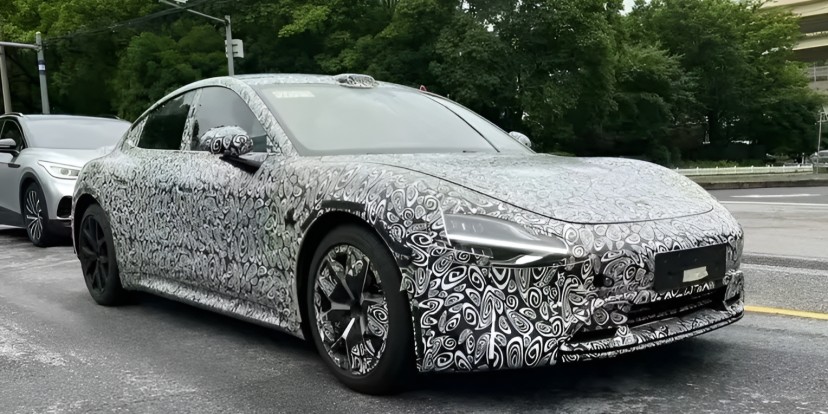
Nowhere does the world of electric cars move faster than in China, where new models and updates seem to appear weekly. The latest vehicle caught in the frenzy of speculation is the Xiaomi SU7. Spy photos of a potentially refreshed SU7 have just surfaced, sparking an absolute firestorm of online rumors about big upgrades and a possible price bump.

The photographs, which spread quickly, show a prototype with a few subtle styling changes. Observers pointed to a new front lip design and what looks like a modified air intake layout. These changes are minor, but they add fuel to earlier internal leaks. Those leaks suggested the new Xiaomi SU7 might borrow the vertical-partition grille from its high-performance sibling, the SU7 Ultra. The current model uses a horizontal structure. While a grille change sounds purely cosmetic, some commentators believe it could offer minor improvements in cooling or aerodynamics, helping a bit with the overall efficiency.

But styling tweaks are just the tip of the iceberg. The real excitement comes from a list of 12 rumored hardware upgrades floating around on social media. According to these unverified posts, the refreshed SU7 could get a second-generation Kirin battery. This new battery would reportedly support "5C" charging, meaning it allows the EV to add about 200 km of range in just five minutes. This new battery might also push the car's total range beyond 800 km.

The list of potential upgrades continues. Rumors suggest the new model will be built on a 900V high-voltage system. For EV buyers, higher voltage is a good thing as it helps a vehicle charge faster and can improve efficiency. The reports also claim the car will get a new "Thor-U" chip to manage its intelligent driving functions.

 
Xiaomi EV about to reach its yearly sales target, records first profitable quarter

Xiaomi is celebrating two major victories this week. The company announced that its electric vehicle division, known as Xiaomi EV, is on track to meet its ambitious annual delivery target of 350,000 units before this week ends.

The financial results for the third quarter of 2025 revealed that the company's innovative business segment - the one housing its smart EVs and artificial intelligence projects - has finally achieved operating profitability. This is a critical sign that the push into advanced mobility is paying off, and company President Lu Weibing confirmed the delivery success shortly after the new financial report dropped.

The unprecedented speed of Xiaomi's production surge demonstrates how fast a major tech company can learn to mass-produce electric cars. The manufacturer's first 100,000 vehicle deliveries took 230 days to accomplish.

That pace might seem quick enough, but the company then delivered the next 200,000 vehicles in only 232 days. Essentially, the team managed to double their delivery capacity with efficiency gains in a remarkably short time. This rapid acceleration pushed the cumulative deliveries for the first three quarters of the year past 260,000 units.

 
Xiaomi just built its 500,000th electric cars

The world of electric cars is known for its dizzying speed - not just the cars themselves, but the pace at which new brands pop up and start to challenge the old guard. And while some of those newcomers fail and disappear, no company challenges the establishment more than Xiaomi.

The Chinese tech giant, famous for its phones and smart devices, just announced it has built its 500,000th vehicle. Remember - this isn't a slow, century-old auto maker we're talking about. Xiaomi reached this massive production number in only one year and seven months after its very first car rolled off the line. That kind of speed makes them one of the fastest companies in the world to hit such a milestone.

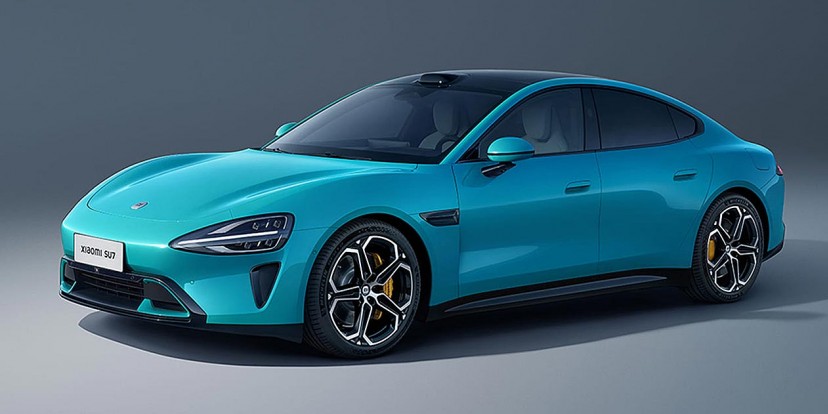
The company formally jumped into the automotive world back in March 2021, but it was the launch of its first model, the SU7 electric sedan, that really kicked things off. Launched in March 2024, the SU7 is their direct rival to a certain other famous electric sedan, and it comes in several versions. To cover all the bases, Xiaomi also introduced the YU7 in June.

The production milestone might be impressive, but it only tells half the story. Deliveries are even more important, since they actually reveal how many people buy these EVs. In 2024, Xiaomi's first year of sales, 135,000 vehicles found buyers. Fast forward to today, and the company has already delivered 315,376 electric cars between January and October.

Breaking that down, the company delivered a record 108,796 vehicles in the third quarter alone, marking a massive 173.43 percent jump from the same time last year. Just last month, the company delivered 48,654 units, showing that the appetite for their EVs is as strong as ever.

Company founder, chairman, and CEO Lei Jun stated that Xiaomi EV expects to exceed 400,000 total deliveries in 2025. That's a big increase from their earlier goal of 350,000 units. The 500,000th vehicle that rolled off the production line is expected to be delivered within days, showing that the sales pipeline is just as quick as the factory line.


1763659445507.png
 
Xiaomi EV reveals next-generation driver assistance with 'World Model'

Xiaomi EV, the automotive branch of the tech giant, pulled the covers off a major upgrade to its driver-assistance system. The new feature, called Xiaomi HAD (Hyper Autonomous Driving) Enhanced Edition, uses cutting-edge artificial intelligence to make driving an EV safer and smoother. This is a big deal because the system now includes "world model" capabilities and reinforcement learning, building upon the original version trained on 10 million video clips of real human driving.

"World model" is a simulation where the car's computer can predict what will happen next, just like an experienced human driver would. Many Chinese mainstream EV makers are now aiming for this "end-to-end" assisted driving technology, but Xiaomi is pushing the limits by using these models to closely mimic human behavior behind the wheel.

The foundation for this leap is massive training data - those 10 million video clips of drivers navigating different traffic situations - allowing the AI model to learn superior skills. To prove its technological prowess, Xiaomi EV points to its recent wins, including its ViSE algorithm for the world model taking the championship at the 2025 ICCV professional challenge, and its Genesis generative model paper being accepted by NeurIPS, a top-tier AI conference.

These tech upgrades directly translate into greater safety on the road. The Xiaomi HAD Enhanced Edition brings two big improvements to the car's safety toolkit. First, it upgrades the performance of the AEB (Autonomous Emergency Braking), making the car better at slamming on the brakes when a crash is likely.

 
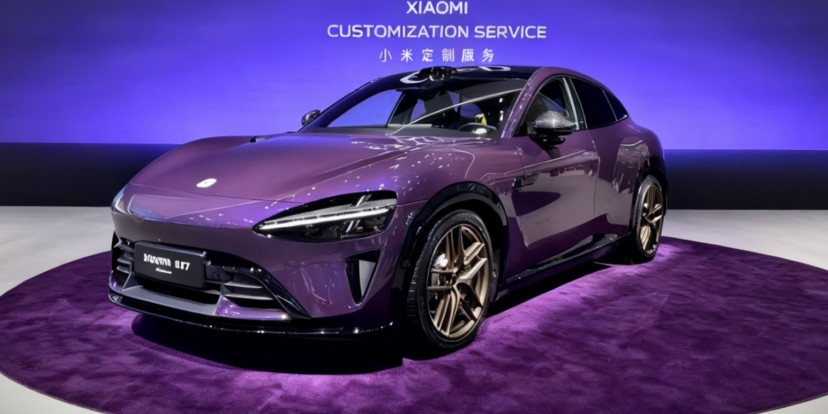
Xiaomi YU7 outsells Tesla Model Y, gets a Crystal Purple limited edition

Tech giant Xiaomi is quickly proving its expertise in the EV sector. The YU7 SUV has become a high-volume seller in a very short time and it managed to pull off quite a market upset. According to fresh October 2025 data, total retail sales of Xiaomi EVs came in at 48,654 vehicles, with the YU7 responsible for 33,662 units out of that total.

Independent market analysis shows this number actually exceeded the domestic deliveries of the long-reigning champion, the Tesla Model Y, for the same month. Since it began shipping in July, cumulative YU7 deliveries have passed 70,000 units, securing Xiaomi's spot among the country's leading EV manufacturers.

The YU7 uses an advanced 800V silicon-carbide high-voltage architecture, and buyers have several powertrain choices, starting with a 2WD version. This model has a single motor generating 235 kW and 528 Nm of torque, allowing it to accelerate from 0 to 100 km/h in 5.88 seconds. Moving up to the 4WD dual-motor versions unlocks serious power - output jumps to 365 kW and 690 Nm, cutting the 0–100 km/h time to 4.27 seconds. The top-spec model unleashes 508 kW and a massive 866 Nm of torque, launching the EV from a stop to 100 km/h in 3.23 seconds.

There are two different battery systems to choose from: the 2WD and mid-spec 4WD models use a 96.3-kWh LFP battery, providing a CLTC-rated range of up to 835 km. The highest-performance 4WD variant steps up to a 101.7 kWh NMC battery, achieving a still-strong 760-km range. The top-spec Xiaomi YU7 Max supports an ultra-fast 5.2C charge rate, allowing the vehicle to charge from 10 percent to 80 percent in 12 minutes, or add up to 620 km of energy in just 15 minutes.

Xiaomi is not resting on its laurels and is making major improvements to safety through its over-the-air updates. The enhanced driver-assist system, called Xiaomi HAD Enhanced, rolls out across the lineup via Xiaomi HyperOS 1.11. One major upgrade is the addition of new low-speed forward and reverse automatic emergency braking (LAEB/RAEB).

This system now operates at speeds as low as 1 km/h forward and up to 30 km/h in reverse, stepping in automatically to brake if it detects pedestrians, other vehicles, or two-wheelers and the driver fails to act. The updated system now also recognizes static obstacles that drivers often miss, such as walls, pillars, and crash barriers.


1764015089014.png

1764015104366.png

1764015114039.png
 
Xiaomi YU7 hits new delivery high in November at the expense of the SU7

Xiaomi already announced that it managed to ship more than 40,000 cars again in November, but the full numbers only came out earlier today, courtesy of the China Passenger Car Association.

So, in November Xiaomi delivered 46,249 cars. And from January to November, the total is 361,625. The November number is 4.94% lower than October's, and this is the first month-on-month drop since July.

The star of Xiaomi's show was the YU7, launched in June. It saw 33,729 deliveries in November, slightly higher than October's 33,662 and thus setting a new record for the SUV.

At least some of the YU7's growth seems to have come at the expense of the SU7, the sedan launched before it. Only 12,520 units were delivered in November (and this number includes the SU7 Ultra), 16.49% less than in October.

 
Xiaomi will add EREVs to its lineup for the first time in 2026

After the success of its first sedan and SUV, Xiaomi has big plans for the year 2026. Reports from China show that Xiaomi will release four new models to keep its momentum going. The lineup includes two different SUVs and two new versions of its popular SU7 sedan. And it turns out that these new models will address the biggest problem people have with EVs: the fear of running out of battery power on long trips.

The company is putting a lot of focus on Extended Range Electric Vehicle technology. These are still electric cars, but they carry a small gas engine that acts like a generator. This engine does not turn the wheels directly, but instead, it creates electricity to keep the battery full while you drive. It seems the tech giants realized that some drivers still want the safety net of a gas tank. Xiaomi has been hiring dozens of experts for this specific technology since 2023. They want to make sure their "large-battery hybrids" can compete with the biggest names in China.

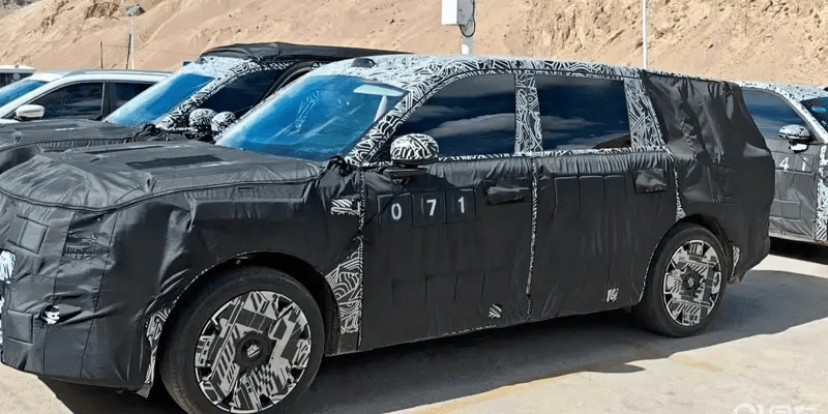
The biggest star of the 2026 launch is a large, 7-seater SUV. This vehicle currently goes by the code name "Kunlun." It is a massive car built for big families who need a lot of space, and it will likely arrive in the first half of 2026. Recently, Xiaomi boss Lei Jun took a team to Xinjiang for high-heat testing. The camouflaged SUV spotted during this trip had an exhaust pipe, confirming that Xiaomi is serious about using gas engines to help their electric cars go further.

The Kunlun SUV will be a direct rival to cars like the Li Auto L9. It will use a large battery with a capacity of more than 70 kWh. This battery alone should allow the car to travel between 400 km and 500 km without using any gas. When you add the range-extender engine, the total distance it can travel will be even higher, making this SUV a great choice for family road trips where charging stations might be hard to find.

 
Xiaomi hits major milestone with 400,000 electric cars delivered in 2025

Xiaomi just finished a massive year - after entering the market with its first car only in 2024, the brand has already delivered more than 400,000 electric cars by the end of 2025. This is a huge achievement for a company that most people used to know only for making smartphones.

A strong finish in December helped the company reach these record-breaking numbers. During the last month of 2025, Xiaomi delivered over 50,000 EVs. The company did not release the exact final number for the month, but the total for the first eleven months of the year was already at 361,625 vehicles. The high volume in December pushed the company well past its original targets.

Xiaomi started its journey with the SU7 sedan, which launched on March 28, 2024. The car is known for its sleek design and high-tech interior, and in November 2025 alone, the company managed to sell 12,520 of these sedans. The SU7 was the first model to hit the streets, but it soon had a big brother to help boost sales.

In June 2025, Xiaomi launched its second model, the YU7. This SUV was built to compete directly with the popular Tesla Model Y. It seems the strategy worked. Only six months after its launch, Xiaomi CEO Lei Jun announced that the Xiaomi YU7 reached a delivery milestone of 150,000 units. In November, this SUV accounted for 33,729 of the company's total deliveries, showing that many buyers now prefer the larger utility vehicle over the sedan.

Xiaomi is not slowing down. For 2026, the company plans to launch two brand-new models. Interestingly, these will be EREVs (Extended Range Electric Vehicles) - they will use a small gasoline engine to charge the battery while driving. One of these will be a large 7-seater SUV, while the other will be a smaller 5-seater SUV.

Along with the new models, the original SU7 will get some attention. Xiaomi plans to release a facelifted version of the sedan in 2026 to keep the design fresh. There will also be a new "executive" version of the SU7, likely aimed at business professionals who want more luxury.

 
Xiaomi targets half a million electric cars sold in 2026

It was not long ago that Xiaomi was only known for making smartphones and affordable fitness trackers. Now, the tech giant is proving that it can build electric cars just as fast as it builds phones. During a recent live stream, Xiaomi CEO Lei Jun shared some big news about where the company is headed. The brand wants to deliver 550,000 EVs in 2026 - a big step up from the already high numbers they saw in 2025.

To understand why this number is so large, we have to look at what Xiaomi did last year. For 2025, the company originally set a goal to deliver 350,000 electric cars. They hit that goal in early December, which was much earlier than anyone expected. By the end of 2025, the company delivered more than 410,000 units. To go from 410,000 to 550,000 in just one year means the company expects to grow by about 34%. That is a lot of new EVs hitting the streets in a very short amount of time.

Xiaomi is still a very new name in the world of electric cars. The company officially said it would start making cars on March 30, 2021. Many people thought they were starting too late because other Chinese brands and Tesla were already very popular. But Xiaomi proved the doubters wrong by becoming one of the fastest-growing brands in the industry. They even managed to make money sooner than most new car companies. In the third quarter of last year, the EV unit reported its first profit after delivering 108,796 cars.

Right now, if you want a Xiaomi car, you usually look at the SU7, a sleek electric sedan, or the YU7, which is a larger SUV. These two models have been the main reason for the company's quick success. But Xiaomi knows that it needs more variety if it wants to reach that 550,000 delivery goal in 2026. Buyers like choices, and the company is getting ready to provide several new ones.

 
Updated Xiaomi SU7 electric sedan gets bigger range and tech boost

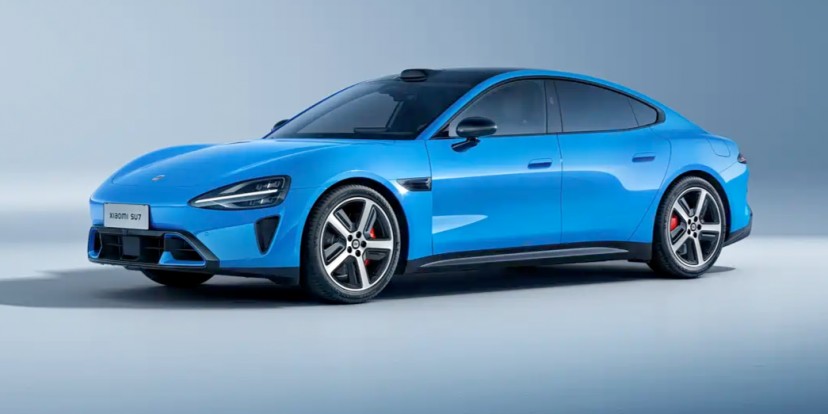
Xiaomi is proving that the world of electric cars moves fast with a major update to its SU7 sedan. The tech giant just opened up pre-sales for the new version of the SU7, and the specifications look very promising. The refreshed lineup brings more power, better safety features, and a much longer driving range. The official launch won't happen until April 2026, but buyers can put their names down now.

Pricing has gone up slightly compared to the older models. The base Standard model now costs about €28,000 (RMB 229,900). The middle-tier Pro version comes in at around €31,700 (RMB 259,900), and the top-tier Max version will set buyers back roughly €37,800 (RMB 309,900).

This is a price bump of about €1,200 to €1,700 compared to the outgoing model, depending on which car you choose. Xiaomi notes that these prices might drop when the car officially launches, and people who already reserved the old model but haven't received it yet can switch to this new version until January 10 without losing their tax benefits.

The most exciting changes for most drivers involve the battery and motors. Xiaomi replaced the old motors with a new "V6s Plus" unit in every single car. This means the Standard and Pro models now deliver 320 horsepower, up from 299. The high-performance Max model jumps to a massive 690 horsepower.

The electrical system also got a huge upgrade. The Standard and Pro models moved from a 400V system to a 752V system, allowing for much faster charging. The Max model charges even quicker now, adding 670 km of range in just 15 minutes thanks to its 897V architecture.

The Pro model is the long-distance champion, boasting a CLTC range of 902 km. The Standard model now travels 720 km on a full charge, and the powerful Max model hits 835 km thanks to its larger battery.

To help handle this performance, Xiaomi changed the tires. The rear tires are now wider at 265mm, which helps the car grip the road better. The Pro model also now gets the dual-chamber air suspension that used to be exclusive to the Max version.

Technology and safety saw big improvements across the board. In the past, cheaper models did not have LiDAR, which is a laser sensor used for self-driving features. Now, every new Xiaomi SU7 comes with LiDAR as standard equipment.


1767804666649.png

1767804680811.png

1767804693537.png

1767804704435.png
 
Top
Sign up to the MyBroadband newsletter
X