


greg0205
Honorary Master
- Joined
- Apr 18, 2010
- Messages
- 29,734
- Reaction score
- 31,554
South Africa’s biggest forum. Discuss, discover, and connect with thousands of members.

"The company founded by a man named Henry Ford. Good bloodlines, good bloodlines, if you believe in that stuff, you've got good blood." - Donald J Trump
Henry Ford:
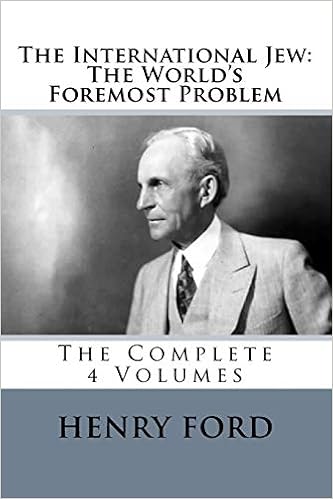
Also, y'all might wanna scroll down this wiki to see if you recognise any names:

Order of the German Eagle - Wikipedia
en.wikipedia.org
Spoiler Alert:

MIAMI — A Trump election conspiracy theory has fallen apart after Florida’s law enforcement agency said it had found no widespread voter fraud in the 2018 races for Senate and governor.
President Donald Trump had complained repeatedly about election “fraud” and theft in heavily populated, Democrat-rich Broward and Palm Beach counties, which had slowly but erratically updated their vote totals after polls closed on Election Day.
With each updated tally, Republican candidates Rick Scott, who was running for U.S. Senate, and Ron DeSantis, in a bid for the governor’s mansion, saw their margins of victory narrow. Both races ultimately went to recounts.
It’s common for election margins to change as more ballots are counted, but Scott, who was governor at the time, claimed without evidence that the counts reeked of Democratic fraud, a conspiracy theory Trump amplified on Twitter. Scott called for an investigation. Trump backed him up.
“Law Enforcement is looking into another big corruption scandal having to do with Election Fraud in #Broward and Palm Beach. Florida voted for Rick Scott!” wrote Trump on Nov. 8, 2018.
In a tweet the next day, the president falsely accused Democrats of sending “their best Election stealing lawyer, Marc Elias, to Broward County they miraculously started finding Democrat votes. Don’t worry, Florida - I am sending much better lawyers to expose the FRAUD!”
But neither Trump’s unnamed “lawyers” nor the Florida Department of Law Enforcement found evidence of a “big corruption scandal.” The state took more than 17 months to wrap up its investigation Wednesday, and found none of the wrongdoing alleged by Trump and Scott.
At the time, Trump’s interest in the races for Senate and governor went beyond the usual partisan support for Republican candidates. Scott and DeSantis are among the president’s two closest allies, and Florida could decide his political future as he runs for reelection.
Trump’s corruption conspiracy in Florida collapsed as he sought to discredit vote-by-mail efforts in two other battleground states, Michigan and Nevada, with incendiary and false rhetoric. As Trump tweeted falsities about vote-by-mail in those states, the Florida GOP sent a fundraising email urging donors to "Stop Voter Fraud."
The president’s attacks on mail-in voting have increased in recent months as demand for mail-in ballots has increased during the coronavirus outbreak. Polls consistently show Trump marginally trailing Joe Biden ahead of the November election.
In the 2016 Republican primary in Florida, Trump baselessly complained of “dishonest” voting and falsely accused his opponent, Sen. Marco Rubio, of working with the Republican Party chairman “& their minions ... to rig the vote.” Trump stopped complaining after he won the primary.
But he stepped up his complaints again before the general election with conspiracy theories about rigged voting that Republicans as far west as Idaho and Washington condemned as false. After Trump won the Electoral College but lost the popular vote, he claimed that California had illegal voters in 2016.
After the nonprofit, nonpartisan fact-checking organization PolitiFact labeled that claim a “pants-on-fire” lie, Trump repeated it at a White House press briefing in April.
I just don't know what to say about that. What could he possibly mean?

It's actually hard to tell whether this is a statement in Murica or SA. Pretty much the same message we have seen grow here for the past two weeks.Well, there's a sentence for you...

Out-of-town Trump backers rally outside Williamsburg barber shop looking to reopen businesses • Brooklyn Paper
A handful of mostly out-of-state protesters with a President Trump-aligned group held a small rally outside a Lorimer Street barbershop in Williamsburg Tuesday.www.brooklynpaper.com


View attachment 844205
So that made me look up the gender composition of those who actually vote:
I was actually surprised by the results. Thought men would be more likely to vote than women. Doesn't appear to be the case.

 www.nbcnews.com


Shows why women shouldn't be allowed to vote. They vote emotionally and not rationally.View attachment 844205
So that made me look up the gender composition of those who actually vote:
I was actually surprised by the results. Thought men would be more likely to vote than women. Doesn't appear to be the case.
Shows why women shouldn't be allowed to vote. They vote emotionally and not rationally.
Same energy


Ahh Herr Rietrot, the Fuhrer will be pleased.Shows why women shouldn't be allowed to vote. They vote emotionally and not rationally.
It's kind of silly that the left are again pinning their hopes on some random poll. Feels like deja vu.
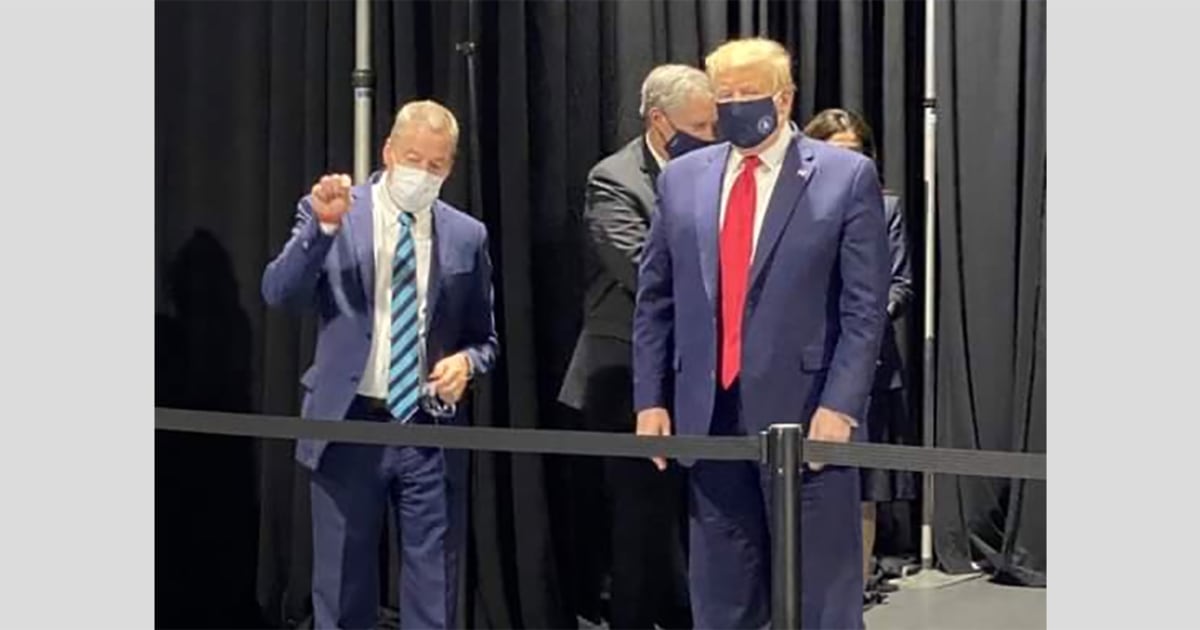
He is so worried about how he looks, he ends up looking even more idiotic.Same energy
He is so worried about how he looks, he ends up looking even more idiotic.
Why can't he just do something normal for once.
¯\_(ツ)_/¯
It's a mystery.
I wasn't aware of Trump's obsession until you mentioned it.It's so obvious he wears lifts, then his poor arms flop in the front like a weird mannequin. Thing is he's still pretty tall but he's so damn insecure he can't handle being an inch lower than Obama


What really get him though, is that he's probably got a smaller dick than MichelleI wasn't aware of Trump's obsession until you mentioned it.


I wasn't aware of Trump's obsession until you mentioned it.


What really get him though, is that he's probably got a smaller dick than Michelle
