"Gaming" NFTs, a dedicated thread

Apparently Frontier game will eb bi with Ubisoft backing I think. If you are looking to invest the best value for money play is cheapest genesis. https://opensea.io/assets/0x236672ed575e1e479b8e101aeeb920f32361f6f9/6


They haven't released their white paper?


What is the Game Token?​

The Game Token may have several utilities such as:

✚ Governance (all details will be presented in our whitepaper)
✚ Airdrops (all details will be presented in our whitepaper)
✚ In-Game Utility (all details will be presented in our whitepaper)
✚ Copyrights (all details will be presented in our whitepaper)
✚ Valuation (all details will be presented in our whitepaper)

We are exploring utilities such as Staking, Governance and Royalties.

Note that this is a non-exhaustive list that is subject to change.
The Game Token will go through all legal verifications, requirements and regulations.
It is currently being developed with a team of partners and certified professionals.

It seems the game is punted as community owned. I want to see this.

I don't think this game has Ubi's backing other than the developers having an interest to use Ubi's Quartz. They promoted Quartz on their socials, when it launched.


Ubi is the only large publisher at this time whom have their own, and live, NFT ecosystem.
 
Last edited:
Old tech bad, new tech good.


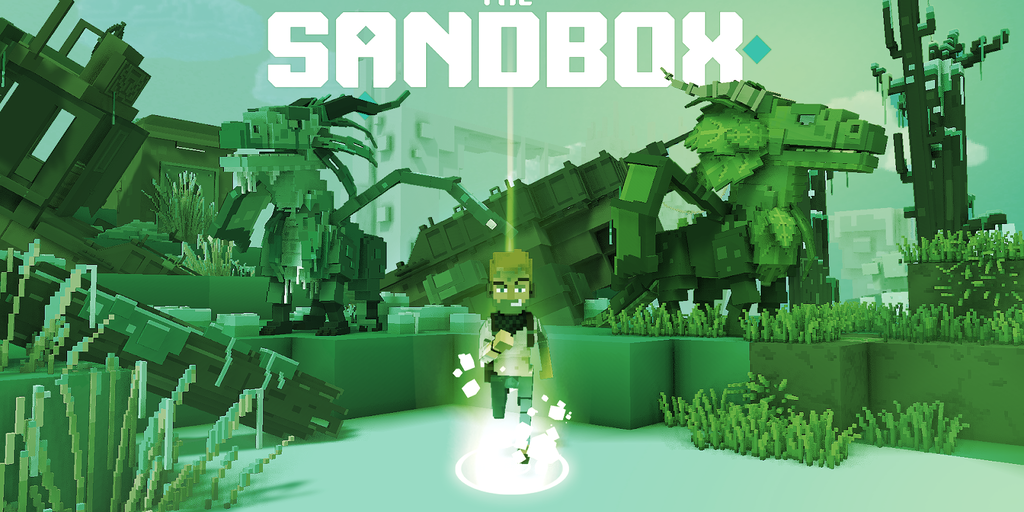
Game Industry Will Rapidly Adopt NFTs Despite Backlash: Sandbox COO​

The Sandbox’s co-founder thinks 2022 will be a breakout year for in-game NFTs, and explains the “risk” of Facebook’s metaverse push.​

Gaming has quickly become a significant sector of the maturing NFT industry. Play-to-earn Ethereum game Axie Infinity has generated $3.8 billion worth of trading volume to date, while metaverse games like The Sandbox and Decentraland have benefitted from the increasing hype around digital land.

...

Sebastien Borget, co-founder and chief operating officer of The Sandbox, told Decrypt that such friction from players is “inevitable” given the significant shifts that user-owned NFT items and tokenized game economies represent. Creating games around NFTs and crypto tokens, he says, can shake up the game experience by providing monetary benefits to players, enabling them to freely buy and sell fully-owned in-game items, and potentially even use items across multiple games and online platforms.

Still, despite the backlash, Borget believes that crypto gaming adoption from the wider games industry will come rapidly in 2022 following recent successes in the space.

“Every single [game] studio I know of—from the largest, top company to the smallest—will have a product, if not many involving blockchain [in 2022],” he said. “What this will create is the fastest and most adopted business model transition that we've ever seen.”

An NFT acts like a deed of ownership for an individual, unique digital item. Such tokens are minted on the immutable ledger of blockchain platforms like Ethereum and Solana, providing provable scarcity and the ability to buy, sell, and transfer such assets.

...

Such NFT assets are truly owned by players and can be sold or traded, and may accrue value over time. That’s a big difference from current games like Fortnite and Roblox, in which players pay real money for virtual currency and then exchange that for digital items—but those items are locked within the game world and cannot be resold. Some Web3 proponents describe it as “renting” the digital items: they still technically belong to the game publisher.

What I have realised is that Gaming NFT proponents don't like their ideas and ideals compared to the Steam Marketplace. This Sandbox CEO is sure high on NFTs, promoting it to be potentially used across multiple games, and he is wrong, the intellectual property belongs to the game publisher, or product owner, however he wants to rub the ‘Web2/3’ competition, so yes, that is a real technicality also applicable to the blockchain. The blockchain isn't its own law, it is a ledger. As a reminder, NFTs exist only by virtue, where the ownership record is maintained in the associated blockchain, like where Steam record item IDs to account IDs in their own hosted database.
 
I am definitely not the market here, as I would never purchase a lootbox or a skin, etc.

As long as it doesn’t negatively affect my experience then I dont really care
 
Some people have too much money . . .

The NFT space is ridiculous with people throwing money at everything, there will be a blow off top eventually but smart contracts are the future. The amount of fliping 12 year olds that have made millions is starting to piss me off

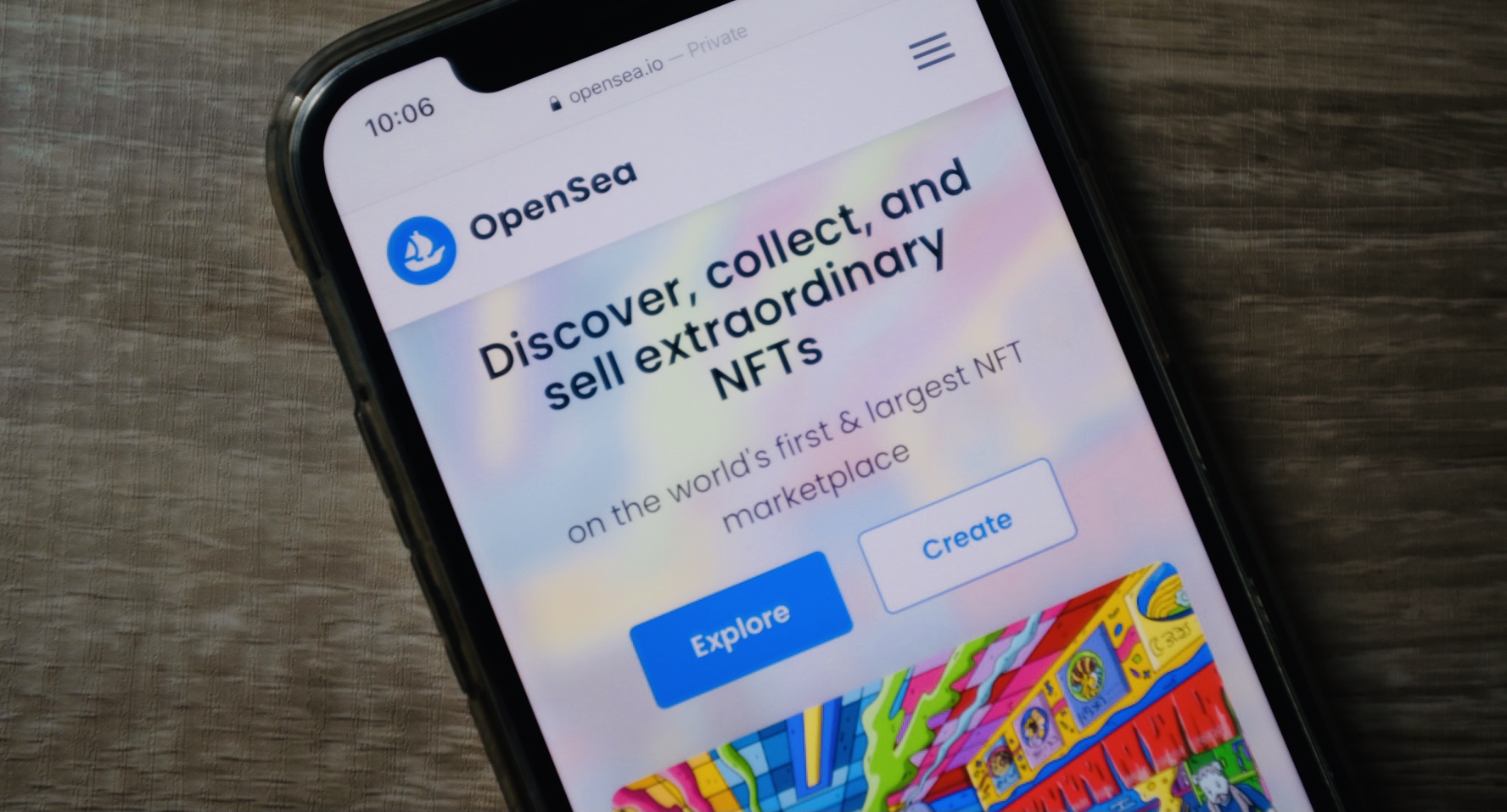
Opensea the biggest NFT market place is valued at $13.3 billion with almost no customer support and constant serer issues
 
Last edited:
I watched this argument yesterday,


Though his presentation is poorly visualised, he does make some bold opinions, however, people don't understand ownership, or rather digital ownership, and that is what is being ignored by the YouTuber, the commercials, and obviously that the Steam Markeplace already allows all this the exception being that 'game' licenses are account locked to a legal person though it can be shared. All that we own as a user is the right to use.

Valve has been locked in such a case made in France, though I am not going to discuss it in detail since it is being appealed and will be a lengthy proceeding there are good remarks made in this article,

https://gamedaily.biz/article/1227/steam-must-allow-users-to-resell-their-games-says-french-court

Drilling down into the ruling, Richard Hoeg, attorney at Hoeg Law, explained to GameDaily that the French court seems to have “adopted a kind of ‘first sale doctrine’ for digital products."

“Stated simply, that doctrine says that when a person buys a copyrighted work, they have the right to sell the instance of the right that they purchased (and do other things like display it). It’s why you can sell a book and not run afoul of copyright laws that give the right to sell solely to the copyright holder,” he explained. “Such a doctrine has not traditionally been applied to the digital space, because the conveyance of digital goods is all done by contract (i.e., that EULA or Terms of Service box users click through) and not solely as a function of copyright.

“Said another way, if you went to a book store and as part of purchasing a book from that store entered into a contract in which you agreed not to resell the book, that prohibition would generally be enforced regardless of First Sale Doctrine, because you individually have agreed to further prohibitions.”

Hoeg added that while he completely disagrees with the court ruling, “publishers and platforms are going to have to take it seriously.”

On the chance that a final verdict is in favor of UFC Que Choisir, it’s going to be very interesting to see how the rest of Europe and the global games industry reacts to the news.


Ownership is a key word in this case. Ironically, while UFC Que Choisir has positioned this a win for consumers, the industry’s reaction to the ruling may take away any semblance of ownership in digital gaming. As one commenter on the Reddit thread observed, a world where players have to stream and subscribe to all their games is “the ultimate form of DRM.”

There are some in the industry who would love to see consumers granted the right to resell their digital games, especially those in the blockchain business. Blockchain has had a mixed reception from game companies thus far, but the fledgling decentralized ledger technology could be the answer for both consumers and game makers, the team at Robot Cache believes. InXile boss Brian Fargo announced the blockchain-based storefront last year, stressing that it would only take a 5% cut of sales.

Yes, people may be in view that they have the right to own a product, but you don't own the properties. As a business or product owner, I am quite sure that want to retain your property. It is only that it is being better governed digitally. Unless you are a true socialist who believes that all property must be shared. Look, I am pro-consumer, but I wholly understand the right to ownership as it should be in my view. I have no issue with reselling digital goods, it is only that in the digital world that a sale will beat a second-hand price.

All-in-all, NFT is being punted with the idea that it will grant a person with ownership, ownership where they have governance or a vote, but that won't be true commercially. This is the problem I have with the community believes behind NFT, and it is incredibly complicated come to gaming. This is ignoring illicit activities.

To continue to quote the article,

In an email to GameDaily, Robot Cache CEO Lee Jacobson remarked, “We've always felt that gamers should be able to resale their games when they are done playing and we built Robot Cache for that exact thing. Our model allows developers to participate in that revenue making it a win-win. The ruling in France says it should be a consumer right, and we agree that gamers should be able to monetize their library, not just in France but everywhere. We’ve found a clever way to solve for this, and in fact it’s live and working in our closed beta... We are seeing gamers buying and reselling digital PC games from their library. There is no other platform that allows this to happen.

Oh, so the holier than thou developers want to participate in the revenue... that would mean that they want to skim on every transaction. Yes, this is already done in the Steam Marketplace, again, the exception being that 'games' can't be traded due to use rights, ever read the EULA when you purchase a use licence on Steam, Epic, GOG, etc, that is governance. All in all, developers and publishers will be enabled with a money cow, like the Steam Marketplace is to Valve what Ubi endeavoured to do with Quartz.

Blockchain aside, there’s another important facet to the second-hand digital game sales issue, and it’s one that’s proven highly controversial on its own: loot boxes. Hoeg explained that a legal digital resale market would pose yet another hurdle for purveyors of loot boxes to overcome.

“It would significantly change the loot box/gambling mechanics discussion,” he said. “Right now, the industry is hanging on to the fact that loot boxes cannot be considered gambling because what pops out of them cannot have value (by EULA and by contract). If the First Sales Doctrine is applied to digital goods entirely, whatever comes out of a loot box would likely need to be transferable and the existence of a secondary market becomes all the harder to deny. With a known, public secondary market, it becomes very difficult to argue that purchasing and opening such ‘surprise mechanics’ does not have value for ‘money or money’s worth.’ I think if anything, that’s where I would focus my attention were I a big publisher or the ESA.”

Hoeg needs to go have a chat with GabeN to be enlightened on how all this works. Valve pioneered this, without the blockchain.

I do welcome the NFT ecosystem, but it won't change the commercials regarding ownership. It does, however, allow many smaller companies to compete with Steam with limited resources and I won't be surprised to see Epic adopt the blockchain in the time to come, and I am sure that Valve has long been dabbling therein though they don't need to adopt it since they already own their own contained ecosystem. Who knows, perhaps blockchain technology may save GOG, though in principle GOG would then become a DRM service.

My qualm with NFT, and with NFT in gaming, remain that scams will be rampant and that there will be scum, and illicit, behaviour as already observed in the Steam Marketplace. Time will tell. Just know that NFT in gaming will vehicle all games participating therein as a service.

Just to point out, the product owner can delist any item at any time, which would obliterate its value. Say Anthem was a NFT title, or its inventory ecosystem was NFT based, well... the outcry would have been worse.

I hope this post will serve to represent both positive and negative views.
 
Shinoda got this wrong,


and I pretty much explained why in my previous posts. It all depends on whether the ecosystem is open or closed, and the terms and conditions attached to the smart contract. CSGO skins would have no value in R6S, PUBG, etc. The game dies, so will the skin.

That's just cause of how games work at the moment. Let's say, that the NFT craze drives game devs to start to develop a "standardised model" in their game, and your NFT refers to certain parameters, then, it should be entirely possible to take a skin bought in 1 game to another. Doesn't maybe refer to all the graphics and the like. So like a "game model builder" middlelayer that gets integrated into future games. Or similar.

Personally, I'd like the ability to "buy" my nickname on a platform and then that purchase allows me to just use it on other platforms - with my nickname already there, hell, it could be like a "internet identity" that you register for that contains an email, twitter, discord etc.. If that makes sense. So you know that person is always the same person.
 
That's just cause of how games work at the moment. Let's say, that the NFT craze drives game devs to start to develop a "standardised model" in their game, and your NFT refers to certain parameters, then, it should be entirely possible to take a skin bought in 1 game to another. Doesn't maybe refer to all the graphics and the like. So like a "game model builder" middlelayer that gets integrated into future games. Or similar.

In the case that IP is shared, yes, then sure a EULA by design would enable the consumer to use one skin in another game governed by the same commercials, however, you won’t be able to use a Rainbow 6 Siege skin in CSGO, because those legal properties aren’t shared unless it is agreed to which have nothing to do with standardisation. As I said, you own the right to use the skin, but you don’t own the skin’s properties, your use is governed.

Fortnite is a popular title where there are intellectual property partnerships, and that would be a good vehicle to leverage in such instances, but the shared items enabled by the partnership will only remain sharable as long as that partnership exists, once that partnership comes to an end so will those items which are shared to be delisted on the one or other side. This should already be possible on Steam in any case, but EULA...

Personally, I'd like the ability to "buy" my nickname on a platform and then that purchase allows me to just use it on other platforms - with my nickname already there, hell, it could be like a "internet identity" that you register for that contains an email, twitter, discord etc.. If that makes sense. So you know that person is always the same person.

There is no single governing NFT ecosystem, there are multiple, and many will develop their own NFT ecosystem like Ubi did with Quartz. I am sure many would want their nickname to be standardised, but again, not all ecosystems are shared. Just go have a look at the recent case between Epic and Apple, and what the ruling entailed, Apple insists on ecosystems being contained and the court mostly agreed. The blockchain isn't going to change the commercials. Then there are the identities, in most laws, there is a commercial requirement to be a legal person when making an online transaction and reasonably so, and this is not something which will ever be standardised as there is no global rule.

It will also not stop people to create multiple identities, speculating with it, as it is already being done with domain names. The blockchain is camped with bots, so are the NFT marketplaces, yes, it is scalping like.
 
Mike Shinoda continued his debate,

Wow, everyone sure wants to talk about gaming & NFTs. I wanted to post a follow up to cover a couple corrections and some new thoughts. This was the original post:

"Real Saturday convo. I’m surprised by so much negative sentiment by gamers about NFTs. Can we chat? Of all the applications, gaming is a place that *players* can benefit a LOT from blockchain. Do they not know yet that there are eco friendly NFTs? Lets talk, keep it civil!"

While heated discussion was inevitable, some great stuff happened too. Thank you to the devs in gaming and blockchain spaces, and gamers all around for joining.

Keep in mind, I’m not a blind supporter of NFTs, crypto, etc. There are people of all walks in the space. Among them, there are bad actors and greedy con artists. And there are insanely bright, good, imaginative people. I’m in the space to engage with the latter.

In reading your posts, takeaway #1 is definitely that when gamers see “NFT” and “game publisher” together, the first thing they imagine is a cash grab. We all agree: that’s horrible.

#2. A thing I said that got misunderstood was that NFTs open a possibility of moving assets between games. I didn’t mean *literally* moving things between Fortnite and Minecraft; I meant the concept of moving between 2 games that you love (these 2 games might not exist yet).


On that note, many game devs said NFT integration w/ games (as we know them) is not possible or wildly impractical. After some thought, I felt like if an NFT game integration becomes popular, it probably won’t come from an existing / legacy game. Also, the devs might be right

At the same time, our job as creators is to learn and imagine; take the position “what might work?” instead of “why won’t this work?” After all, this form of technology is verifiably new…

After all, recently I was able to make a limited-edition, generative mixtape of 5000 pieces with unique music and album art (http://ziggurats.xyz), delivered digitally to all owners, with automated, instantaneous royalties to all parties involved. That is new.

I think the bottom line is, I urge creators out there: pay attention to the comments in these threads. If you’re going to work with NFTs, you have to give, not take. You are working against a headwind. It will take a lot of work to impress them with something great.

If you respond to this thread, please do your best to listen, and keep it civil. Keep learning. Thanks

My only qualm is abuse, and not it being a cash grab. I am in the view that NFT in gaming will be open to the same issues which are plaguing the Steam Marketplace. Valve has a contained ecosystem where they have all the control to regulate their marketplace, though some practices are very much open to scrutiny.

I do believe that NFT in gaming can be leveraged as competition to the Steam Marketplace, but regulatory is vague in a supposed decentralised ecosystem, hence there will be containers because there is money to be legally made. NFT trading will be made into a revenue stream, same as Valve did with trading within their marketplace and with their API allowing external trading, though still linked to Steam’s Marketplace.

I am pro into sharing ecosystems, though accountability (and security) is an issue, especially come to DRM. I have highlighted my points in the Epic vs Apple threads and not going to elaborate here. Furthermore, I am unsure how separate blockchains can be interlinked in this capacity, and yes, Ethereum and Tezos are interoperable I want to see it in practice with NFT in gaming.

In addition, I do believe that a certain IP, or rather two, by a certain popular gaming studio in Poland with their community ideals may introduce NFTs into their two IPs… Maybe I am right, perhaps NFTs will be attempted to rescue GOG :whistling:
 
Blockchain is just MySQL that went to the gym.

It is only that the arguments being made by the pro-NFT crowd, are arguments already in practice without the blockchain. All they wish, the exception being game ownership (which will still be the right to use in any case), are already being broadly commercially applied by Valve with Steam. I know that these small upstart NFT ecosystem will grow into a contained ecosystem because it makes commercially sense. People want to protect their property, it is almost human instinct to do so.

The arguments may be made in the best community interests, but see what Ubi has established, and that is a model to compete directly with the Steam Marketplace. The only current advantage I see is ecosystems being established with capital not competitive to the competition by leveraging the blockchain to compete by drawing on resources powered by a global 'decentralised' community. You need to trust the network...

I am curious how implied warranties are going to work in digital reselling NFTs on the blockchain? I guess it will be tested quite soon.

How people believe that a smart contract grant them ownership I don’t know, that ownership needs to be addressed in the sales agreement (commercials). As I said, it will most be ownership to the right to use, and I am certain that this will become controversial sooner than later as adoption grows. Property… know your laws.

In time, we will be exposed to the positives and the negatives. Early adopters, as with most crypto, can score whilst clarity is still lacking.
 
I think I need to get onto Fiverr and find an artist to create a whole bunch of images for me that I can sell for $$ as NFTs....why not?
 
I think I need to get onto Fiverr and find an artist to create a whole bunch of images for me that I can sell for $$ as NFTs....why not?

As long as it is your property then there is no issue to sell NFTs, you would still need buyers.
 
I like how this article questions Ubi's Quartz,


Putting aside any opinion on NFTs as a whole, attempting to kick off a form of digital gaming ownership in a game that received a poor reception, contributed to the delay of Ubisoft's entire AAA release schedule back by months, among other issues, doesn't align with Ubisoft's vision of "an ever-greater connection between you and the game worlds you love."

There's also the prerequisites necessary to acquire these Digits in Ghost Recon Breakpoint in the first place, as well as the problematic terms of "ownership" associated with them. Between the limited amount of time to claim these Digits, paired with the necessity of up to 600 hours of playtime to acquire three NFT items in a critically panned release, just seems unrealistic to any genuine NFT and/or Ghost Recon fan. It's not even that far-fetched to expect that any of the players who did log around 600 hours in Ghost Recon Breakpoint likely were not doing it under the motivation that they genuinely love the game that much, especially within as short of a time frame.

Then there's the problem of genuine "ownership" of Digits, which for NFTs is the intended benefit of investing in blockchain technology for gaming (and other industries) in the first place. The problem lies with the reliability of owning and being empowered by Digit assets, and their mutability within the Ubisoft publishing portfolio. Ownership of Digits is still very much tied to the game's playerbase, especially in Quartz and Digits' current implementation by the publisher. The inherent "value" or "uniqueness" of Digits doesn't make sense when there aren't multiple games to utilize these Digits other than strictly within Ghost Recon Breakpoint.

Ubisoft's Blockchain Product Director Baptiste Chardon specifically emphasized the potential "interoperability" of in-game assets, and the capability of blockchain technology to encourage a more "decentralized" gaming experience. Granted Quartz is still a "beta" experience, so the promise of this capability with Digits does have potential, but there's not an infrastructure in place for this to be proven initially. If players even want to trade or acquire a Digit from Ubisoft Quartz, they still need to own Ghost Recon Breakpoint regardless.

Without this inherent value, Digits are only available in the context of Ghost Recon Breakpoint and its playerbase. If Ghost Recon Breakpoint goes offline, players will retain ownership of the Digits, but they become effectively unusable, as laid out in article 10 of Ubisoft Quartz's Terms of Use. These Digits can be sold on common NFT marketplaces, but with the caveat of these items not being usable in any in-game context, what would the value of these Digits be? The rarity or value of NFTs can be extremely volatile, meaning Digits may not necessarily retain any value beyond the context of the game, despite being tradeable elsewhere.

Evil corp not playing nice with NFTs... Give the smaller NFT ecosystems time to grow and see how it will evolve. I like how the criticism emphasizes almost every point I have made, though I agree that Ubi went to market with misaligned intent unless it served as a test bed hence being a beta. A cautious approach, then. You don’t want an external community outside your investors to 'invest' in an ecosystem that is immature and unoptimized, probably why they used Breakpoint because it has their smallest active player base.

As I have argued, commercially it would be legally best to contain such an ecosystem in order to establish control where the onus is placed on you.

You sea (yes, as intended),


but votes, through good governance, they said.

I also won't be surprised that people may buy up their own minted NFTs... and NFTs in gaming is very much exposed to this.
 
A 3D modeller, Xavier Coelho-Kostolny which worked on Spider-Man and Rachet and Clank, opposed Shinoda's views,


1. I know a lot of press people and gamers follow me, so let me explain why this is deeply, unbelievably, intensely incorrect and near-impossible.

2. There are three big reasons that this type of cross-platform usability for things like character or weapon skins is not, and will never be, a viable *thing.* In order from least to most impossible-to-navigate: 1. Visual issues 2. Technical considerations 3. Legal agreements

3. Simply in terms of the visual issues associated with porting something from Call of Duty to Minecraft, it's an irreconcilable jump from one art style to the other. It's moving from cubes to detailed realistic people, environments, and even rendering technology.

4. How do you do that? What process do you use to make the jump from one art style to another? Can you even do it? Sure, you can, in theory, but you have to completely rebuild those visual assets every single time the thing goes into another product or property.

5. As we saw years ago with the community-created and cross-promotional assets put into games like Team Fortress 2, which largely codified how this process works, it requires an immense amount of effort in designing or REdesigning these assets.

6. As an artist I can go on and on about the visual issues associated with these types of things, especially because I've been personally involved in them, but I'll cut it off there and move on.

7. Regarding technical considerations, this is where things get to be VERY dicey. If you thought things like server queues were an issue right now, they would become literally hundreds of times worse if each and every item in the game needed a blockchain verification step.

8. There are multiple checks that need to happen server- and client-side to make sure things like gold dupe bugs don't happen, and that gets worse with hundreds, thousands, or potentially millions of completely unique items.

9. In addition, you need multiple different systems in place using open standards that EVERYONE follows if you have these items cross-populating on multiple games. You can't have different systems crashing against each other, or you run into massive compatibility issues.

10. Those systems would involve things like:
- Where the item data is stored
- The format in which it's stored
- How the item data is translated between different clients, engines, and server backends For art assets, text, and audio, it also has to include localization data.

Continued...

His numbered list goes all the way to 41 tweets... very valuable contribution to this debate and clearly an experienced argument, but as he said in summary,

So, all that in mind, here's what I have to say to all the folks getting hyped up about your NFTs being wearables in all your favorite video games: lol no

Remember what I said about perceived ownership, look at this comment,


I have questions: 1. Can't you build it in a reusable way? ie. Build it in Unity, package that info somewhere that other games built on Unity can easily import Thats more work, but why would it be impossible? 2. Why does this require lawyers? Can't you use Smart contracts?

can't we use smart contracts... people don't understand property ownership, but then I had a look at this user's social participation,


now I understand what is being advocated here,


collective ownership... idealism, making 'traditional' contracts the opponent. I don't think people understand why we have law at all, smart contracts must still be compliant with the law, it has nothing to do with lawyers (the alleged gatekeepers). To quote,

7/ No more it’s mine, or I had it first: the rules are written upfront (smart contracts) and publicly agreed to when you enter into an ownership agreement (public transaction).

when was the last time you read and understood the EULA, or any terms and conditions, you agreed to when making a digital transaction? This is why we have legal people to navigate the respective laws and any disputes which may arise. I am waiting on the day a smart contract ends up in a court... the social commentary will sure be entertaining.

Oh,

/ https://threadreaderapp.com/thread/1480300076786274304.html

this person didn't explain anything in understanding the contract. Functionality is all what he showcased, but this is already enabled with some services without requiring the blockchain. The only condition is to pay the listed price, /cough, and gas (or whatever), then the transaction is being processed, done is done. When you did this, you accepted that you understood the agreement, and sellers pending on the law have to provide protection as governed by the law, pending on whether protection is enshrined within the respective law. No securities?

I can't...

https://twitter.com/JulzRoze/status/1480576416374738948

12/ Traditional ownership disputes are riddled w outdated laws, biased arbiters, and a reliance on expert rep. SCs are leveling the playing field. W shared ownership that is absolute and unequivocal, we are laying the bedrock for new systems that are more equitable + inclusive.

so when a bot grabs something you listed by mistake or with errors, or when you are scammed, who are you gonna call? The best part is, most consumer laws have something known as an implied warranty... the proponents didn't touch on that. Geez, we might end up with a smart contract ombudsman (oh no, a gatekeeper :rolleyes:).

I honestly don't want to see this behaviour in gaming. People are creating all new issues where they think they are solving issues. People need to grasp law, law evolves, and a smart contract will simply be a digital sales vehicle. Though you may own a token on the blockchain, what happens when the service which promotes the token delists the token, what does that mean legally? Just a thought.
 
I think I need to get onto Fiverr and find an artist to create a whole bunch of images for me that I can sell for $$ as NFTs....why not?
Happens everyday on the NFT markets. These sometimes sell well but very quickly die out as they contain no lasting value. Money can be made but only while the hype is alive. The NFT's that seems to last are those that have other value attached or are backed by people who help retain their value.
 
All this waffle. Anybody actually bought gaming related NFT here on myBB?
 
If you have amazon prime you can claim a Blankos Block Party NFT.

 
Top
Sign up to the MyBroadband newsletter
X